
The Problem: How Your Sales Tech Stack Holds You Back
Many sales organizations rely on a technology stack that slows down execution instead of supporting it. Manual processes, disconnected tools, and rigid systems reduce productivity and weaken data quality, which can limit revenue growth.
Fragmented Data and Disconnected Tools Hinder Sales Efficiency
Sales teams often work across several separate platforms, including CRM systems, email tools, calendar applications, and data enrichment products. This setup creates data silos where customer information is scattered across systems. Reps spend time searching for context instead of selling, and the risk of inconsistencies, duplicate entries, and missed follow-ups increases.
The Burden of Manual Data Entry Drains Productivity
Manual data entry and administrative work consume a large share of a sales rep’s week. Many teams find that only about one-third of working hours go to direct selling activities. The rest is spent logging notes, updating opportunity fields, and copying information into the CRM. These tasks introduce human error, slow down deal cycles, and contribute to low CRM adoption because the system feels like extra work instead of support.
Outdated CRM Architectures Struggle with Modern Needs
Legacy CRM systems, originally built decades ago, often struggle with modern sales requirements. Many were not designed to ingest unstructured data from emails, calls, and meetings or to support advanced AI capabilities. Newer tools that grew out of marketing or point solutions can also fall short of providing a single, unified system for all customer data without extra customization or integrations. The result is more complexity for sales teams and operations leaders.
Poor Data Quality Impacts Sales Outcomes
Fragmented systems and manual processes often lead to incomplete, outdated, or inaccurate data. This weak foundation affects territory planning, lead scoring, and customer segmentation. It also reduces the impact of sales coaching and forecasting because teams are forced to make decisions on partial information instead of a reliable view of the pipeline.
The Solution: Strengthening Your Sales Tech Stack With an AI Sales Agent
Advances in AI make it possible to rethink how sales organizations manage customer data and workflows. An AI sales agent, such as Coffee, does more than automate a few tasks. It can unify fragmented data sources, remove much of the manual work, and surface insights that help teams prioritize the right actions. By processing both structured and unstructured data, an AI agent lets sales professionals spend more time on relationship-building and deal strategy.
Coffee: The AI-First CRM and Sales AI Agent for Modern Teams
Coffee is an AI-first CRM platform built to function as both a complete CRM system and an intelligent sales agent. It was designed from the ground up with AI at the core, so it captures data automatically, powers smart workflows, and connects information across the customer lifecycle. This approach addresses common issues in traditional CRMs and gives sales teams a system that fits how they actually work.
Key Features of Coffee as Your AI Sales Agent
- Automated data entry and enrichment. Coffee automatically creates and enriches contacts, companies, and activities by scanning emails and calendar invites. Teams can save an estimated 8 to 12 hours per week that would normally go to manual data entry. This built-in automation brings together tasks that might otherwise depend on separate enrichment tools.
- AI-powered meeting management. Coffee automates preparation and follow-up for meetings. It provides briefings with attendee and company details, records and transcribes calls with an AI bot on platforms such as Google Meet and Zoom, and generates summaries, action items, and follow-up email drafts. Reps can review and send these follow-ups directly from Gmail, which reduces time spent on meeting prep and post-call tasks.
- Pipeline intelligence with historical context. The Pipeline Compare feature in Coffee allows users to track week-over-week changes in the pipeline with one click. Historical snapshots highlight deals that progressed, stalled, or were newly added. This removes the need for manual spreadsheet exports or extra reporting tools and supports focused, data-driven pipeline review meetings.
- Sales tech stack consolidation. Coffee combines the capabilities of several tools in a single platform. CRM, data enrichment, call recording, and forecasting features are available in one place. This consolidation can reduce software costs, simplify administration, and improve adoption because reps do not have to move between multiple interfaces.
- A CRM that supports how reps work. Many legacy systems feel like management reporting tools rather than day-to-day assistants. Coffee prioritizes features that help reps directly, acting as a co-pilot that anticipates next steps, captures context automatically, and streamlines common workflows.
Request access to Coffee to see how an AI sales agent can fit into your existing process and support your team’s daily work.
How an AI Sales Agent Improves Your Sales Tech Stack
Implementing an AI sales agent such as Coffee can improve sales operations across several dimensions. It reduces manual workload, unifies data, and introduces new capabilities for insight and forecasting.
Eliminating Manual Workload and Boosting Sales Efficiency
Coffee automates repetitive tasks such as logging activities, capturing contact details, and drafting follow-up emails. This shift allows sales reps to spend more time on discovery, qualification, and closing conversations. Automation also supports better data consistency and accuracy. Updates happen in real time and at scale, which supports stronger coaching, reporting, and forecasting.
Achieving Data Unification and Enhanced Quality
Coffee ingests and structures data from emails, calendars, and call transcripts. It ties these activities back to the right contacts, accounts, and opportunities, creating a complete view of each relationship. The platform enriches data automatically, so records stay current with minimal manual effort. This unified and accurate dataset addresses common data quality issues in traditional CRMs.
Driving Intelligent Insights and Accurate Forecasting
Coffee provides insights that help leaders and reps understand what is happening in the pipeline. Features like Pipeline Compare highlight trends such as deal slippage, new opportunities, and changes in deal value. By grounding forecasts in historical data and current activity, Coffee supports more accurate projections and better resource planning.
Streamlining Your Sales Tech Ecosystem
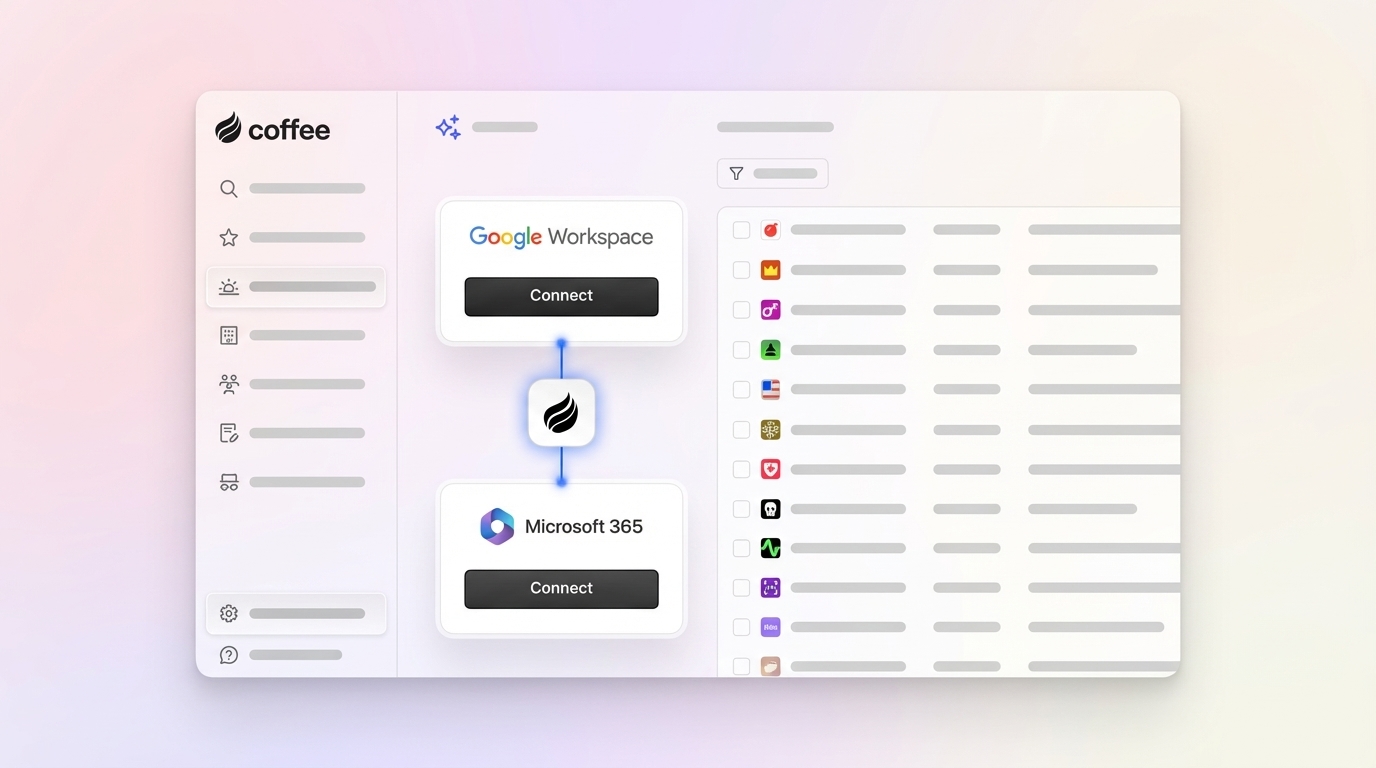
Coffee reduces the need for multiple point solutions by bringing core sales capabilities into a single environment. The platform is available in two configurations. The Standalone CRM serves small and mid-sized businesses that want an end-to-end system. The Companion App connects with Salesforce or HubSpot so larger organizations can enhance their existing CRM with Coffee’s automation and insights without replacing their current system.
Comparison: AI-First CRM (Coffee) vs. Legacy CRM (With Add-ons)
|
Feature |
AI-First CRM (Coffee) |
Legacy CRM (with Add-ons) |
|
Data Entry & Enrichment |
Automated, proactive, built-in |
Manual, separate tools, reactive |
|
Meeting Management |
AI-powered briefings, summaries |
Manual note-taking, separate tools |
|
Pipeline Intelligence |
Real-time, comparative snapshots |
Manual exports, costly add-ons |
|
Tech Stack Complexity |
Consolidated, integrated functionality |
Multiple disparate tools |
Case Study: Real-World Impact of Coffee
One company with tens of millions in revenue, focused on building custom AI solutions for Fortune 500 organizations, was managing sales activity in spreadsheets. Leadership recognized that this approach would not scale as they expanded the team and pipeline.
After evaluating Salesforce, HubSpot, and other options, the company selected Coffee. Key reasons included an intuitive interface that reps could adopt quickly, automatic contact creation powered by Google Workspace data, and simple weekly pipeline reviews through the Pipeline Compare feature. They also valued API access, which allowed them to use CRM data in their internal analytics and product workflows. Together, these capabilities helped them streamline processes and improve sales effectiveness.
Frequently Asked Questions About AI Sales Agents
How do AI sales agents address data security concerns?
Coffee prioritizes data security with SOC 2 Type 2 and GDPR compliance. The platform uses strict security controls to protect customer data and policies that prevent the use of customer data for AI training without consent. These measures help organizations meet compliance requirements while adopting AI-driven tools.
Can an AI sales agent integrate with my existing CRM like Salesforce or HubSpot?
Yes. Coffee offers a Companion App that connects with Salesforce and HubSpot through a straightforward authentication process. Data syncs into Coffee, where it can be enriched and analyzed. Teams can then choose which updated fields and insights to write back into the primary CRM, enhancing the existing system instead of replacing it.
What tangible results can I expect from implementing an AI agent in my sales tech stack?
Organizations using Coffee can expect less time spent on administrative work, with reps often saving 8 to 12 hours per week on manual data entry. More complete and accurate data supports faster deal progression, clearer pipeline visibility, and more reliable forecasts. Higher CRM adoption and improved morale often follow because the system feels helpful instead of burdensome.
How difficult is it to train my sales team on an AI sales agent platform?
Coffee is designed for quick adoption. The interface focuses on familiar workflows, and automation handles many of the tasks that usually require detailed training in traditional CRMs. Teams can focus their onboarding on understanding AI-generated insights and best practices rather than learning complex navigation or data entry processes.
What happens to our existing data when we implement an AI sales agent?
When an organization implements Coffee as a Standalone CRM, existing CRM data is imported and then enriched by Coffee’s AI-driven processes. For companies that use the Companion App with Salesforce or HubSpot, core data remains in the original system. Coffee enhances this data and writes back selected fields, creating greater transparency and quality over time without disrupting existing records.
Conclusion: Future-Proof Your Sales Tech Stack With Coffee as Your AI Agent
Challenges like fragmented data, manual entry, and rigid CRM systems do not have to limit sales performance. An AI sales agent such as Coffee can automate key workflows, unify customer information, and provide clear visibility into the pipeline. Coffee’s dual model, with both a Standalone CRM and a Companion App, offers flexibility for organizations at different stages of their sales tech journey. Request access to Coffee to evaluate how an AI-first CRM can support your team and improve the way you manage your sales operations.