
Key Takeaways
- Compliant CRM data enrichment reduces regulatory risk and prevents issues like fines, data gaps, and inaccurate forecasting.
- First-party data, clear consent tracking, and strict access controls form the core of a privacy-safe enrichment strategy.
- Careful vetting of third-party providers, data minimization, and defined retention policies keep enrichment aligned with global privacy laws.
- Transparent privacy communication and readiness for data subject access requests (DSARs) strengthen customer trust and data governance.
- Coffee’s agent-led CRM enrichment automates structured data capture and supports compliant workflows, and you can request access to Coffee here.
Why Compliant CRM Data Enrichment Is Non-Negotiable
Non-compliant enrichment exposes companies to regulatory fines, reputational harm, and long-term operational risk. Poor or unlawfully sourced data also undermines sales forecasts and wastes team capacity.
Non-compliance often leads to shadow CRMs where teams rely on spreadsheets instead of the official system, which weakens governance and reporting. Organizations that align enrichment with GDPR and regional privacy laws gain protection from fines while building trust with prospects and customers.
Coffee’s Companion App for Compliant Data Enrichment
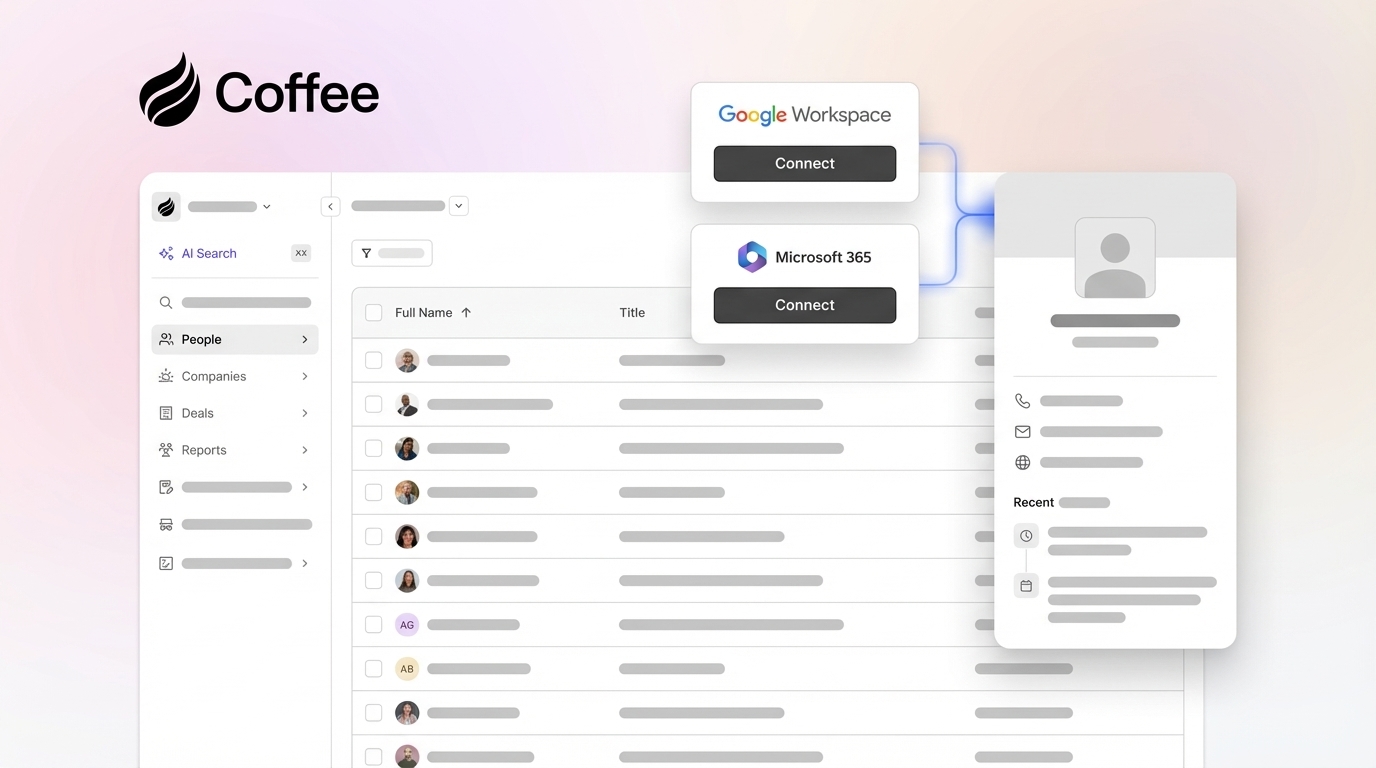
Coffee’s Companion App is an agent-led solution that automates data entry and enrichment directly inside Salesforce or HubSpot. The agent focuses on reliable data capture at the source, which supports consistent quality across records.
The agent pulls from licensed data partners, structures inputs from emails and meetings, and writes organized data back to the CRM. This reduces manual entry workload and helps address data quality challenges that affect a large share of sales reps.
Coffee’s AI Meeting Bot applies frameworks like BANT and MEDDIC, so conversations map into structured fields. The Pipeline Compare feature then uses this consistent data to highlight trends and gaps.

To evaluate Coffee’s agent for your CRM data enrichment workflows, request access and explore a guided setup.
7 Essential Best Practices for Compliant CRM Data Enrichment
1. Prioritize First-Party Data and Progressive Profiling
GDPR-aligned enrichment starts with first-party data collected directly through forms, surveys, and product interactions, then expands via progressive profiling over time. Customers share more detail in stages, with clear explanations of purpose.
First-party data and progressive profiling improve accuracy and reduce compliance risk by pairing transparency with explicit consent at each step. Coffee supports this approach by organizing interactions across email, meetings, and notes into structured CRM fields.
2. Implement Robust Consent Management Frameworks
Modern enrichment tools should track consent status directly in the record to align with GDPR, CCPA, and sector-specific rules. A clear framework defines when and how data may be used and enriched.
Effective systems log when consent was given, its purpose, and how long it applies, and they support access requests and retention rules. Coffee’s agent logs activities and creates auditable records that help data stewards demonstrate responsible processing.
3. Vet Third-Party Data Providers for Compliance and Transparency
Any enrichment vendor must follow GDPR, CCPA, and other regional privacy laws relevant to your operating markets. This requirement is especially important for organizations with European customers.
Verifying lawful collection practices, data processing agreements, and audit readiness is essential before integrating external data sources. Coffee relies on licensed providers to help support quality and compliance across enriched records.
4. Establish Data Minimization and Retention Policies
Privacy-first CRM design centers on data minimization, consent tracking, lifecycle controls, and access logging under frameworks such as CCPA, HIPAA, and GLBA. Teams should only collect fields that support defined business purposes.
Clear retention schedules, regular audits, and automated deletion routines prevent unnecessary data buildup. Coffee’s agent helps reduce noise by focusing enrichment on relevant, structured information rather than capturing every possible detail.
5. Enforce Least-Privilege Access Controls and Encryption
Role-based access controls should restrict who can view, edit, or export CRM data. Least-privilege practices and periodic permission reviews reduce the chance of unauthorized exposure.
Sensitive records also need encryption in transit with SSL or TLS and at rest with strong algorithms. Coffee integrates within existing CRM security models, respecting access rules and encryption standards while adding structured, high-quality data.
6. Prepare for Data Subject Access Requests (DSARs)
GDPR grants individuals rights to access, correct, delete, and port their personal data held by organizations. Individuals can also object to processing, opt out of sale, and request details on intermediaries holding their information.
Organizations need defined DSAR workflows, including ways to trace data sources, processing activities, and sharing with partners. Coffee’s structured capture of interactions and fields makes it easier to locate, review, and act on data related to a specific individual.
7. Maintain Transparent Privacy Policies and Communication
Privacy policies should be easy to find, clearly written, and updated when enrichment practices change. Users need straightforward options to see how their data is used.
Strong privacy communication includes update notices, clear consent flows, standardized DSAR responses, and logs of key privacy interactions. Coffee’s agent-based enrichment should sit within an understandable privacy narrative so customers know how automated data capture supports their experience.
CRM Data Enrichment Tool Comparison
|
Feature/Attribute |
Coffee’s Companion App |
Traditional Enrichment Tools |
Manual Processes |
|
Agent-Led Automated Data Ingestion |
Autonomous agent manages data entry and enrichment |
Requires manual setup and frequent configuration |
Fully manual with higher error risk |
|
Data Quality and Accuracy |
Structured data from licensed and verified sources |
Quality varies and often needs cleanup |
Inconsistent and dependent on individual habits |
|
CRM Integration |
Works natively within existing CRM workflows |
May need custom integration and maintenance |
No direct integration, which creates silos |

Teams that want automated, compliant enrichment can request access to Coffee’s Companion App and compare it to current tools and processes.
Frequently Asked Questions (FAQ)
How does Coffee support CRM data enrichment?
Coffee’s agent uses licensed data partners and structured capture of meetings, emails, and notes to write organized, useful information into your CRM. This supports accurate records for forecasting and pipeline reviews.
Can Coffee integrate with existing Salesforce or HubSpot setups?
Coffee connects directly to Salesforce and HubSpot and writes enriched data back into your existing fields. The agent respects current security settings and permissions.
What is the main risk of non-compliant CRM data enrichment?
Non-compliant enrichment increases the likelihood of regulatory fines, erodes customer trust, and produces unreliable data. These issues can push teams toward off-system tools, which complicates governance and reporting.
How does agent-led enrichment improve processes over manual methods?
Agent-led enrichment standardizes capture, applies consistent rules, and logs interactions. Manual methods vary by user, which often leads to gaps, duplicate work, and inconsistent fields.
What security standards does Coffee follow?
Coffee maintains SOC 2 Type 2 compliance and aligns with GDPR requirements. Data is not used to train public models, and security controls support strict handling of customer information.

Conclusion: Build a Compliant, High-Quality CRM Dataset
Compliant CRM data enrichment depends on strong inputs, clear consent, careful vendor selection, and transparent privacy communication. The practices in this guide provide a framework for aligning enrichment with global regulations while supporting accurate forecasts and efficient sales execution.
Coffee’s Companion App offers an agent-led approach that automates structured data capture inside your CRM and supports compliant workflows. To explore how Coffee can fit into your data enrichment strategy, request access to Coffee and review the platform with your sales and RevOps teams.