
Executive summary
- Enterprise CRMs that depend on manual data entry often struggle with data quality, user adoption, and accurate forecasting.
- AI-powered CRM agents automate data capture and maintenance, which reduces administrative work for sales teams and improves data reliability.
- Coffee can operate as a standalone CRM or as a companion to Salesforce or HubSpot, depending on process complexity and existing systems.
- Agent-based CRM implementations typically require less time and fewer technical resources than traditional enterprise CRM deployments.
- A structured decision framework helps teams match their process requirements, technical resources, and growth plans to the right CRM approach.
Teams that want to see how an AI-powered agent can support their sales process can request access to Coffee’s CRM agent.
Why Traditional Enterprise CRMs Fall Short For Modern Sales Teams
Enterprise CRMs were designed to centralize customer data and drive revenue growth. Many organizations instead see low adoption, inconsistent data, and rising administration costs. Legacy CRMs often fall short because they rely on manual data entry and older architectures.
The Manual Data Entry Trap
Traditional enterprise CRMs operate on a flawed assumption that busy sales professionals will consistently and accurately input data. This pattern breaks down in practice. Sales representatives spend about 71% of their time on administrative tasks, leaving only 35% for actual selling activities, based on market data shared by Coffee. Poor data input then leads to unreliable insights, reduced user adoption, and further data degradation.
Fragmented Tool Ecosystems
Enterprise sales teams often juggle multiple disconnected tools: Salesforce or HubSpot for record management, ZoomInfo for data enrichment, SalesLoft for outbound sequences, and Fathom for meeting recording. This tool mix creates integration challenges, increases costs, and turns sales representatives into data entry clerks instead of revenue producers.
Legacy Architecture Limitations
Platforms like Salesforce carry extensive historical evolution in their architecture that can create friction with modern data requirements. While these systems have adapted over time, many traditional CRMs still require additional customization or integrations to fully address complex data needs.
Key Evaluation Criteria For Enterprise CRM Agent Solutions
Effective CRM evaluation focuses on the ability to address long-term data quality and adoption challenges. Feature checklists matter less than how the solution operates day to day for sales teams.
Data Quality and Automation
Data input and maintenance sit at the core of any CRM evaluation. Solutions that depend on manual updates tend to see quality degrade over time. Intelligent agents like Coffee maintain accuracy through automated capture, enrichment, and ongoing maintenance.
User Experience and Adoption
CRM adoption rates directly influence data quality and system effectiveness. Systems that demand extensive training or add administrative work often face resistance. The ideal solution, such as Coffee, feels like an assistant that handles busywork instead of another system that users must feed.
Integration and Workflow Efficiency
Enterprise CRM solutions must connect to existing technology stacks while simplifying workflows. Coffee consolidates work by performing the roles of multiple tools, which reduces the need for separate systems and manual handoffs.
Scalability and Intelligence
Growing enterprises develop more complex CRM needs over time. The right solution becomes more useful as it processes more data, instead of more difficult to manage. Intelligent agents like Coffee gain context from activity and data history, which supports better recommendations and insights as usage expands.
Traditional CRM Platforms: A Detailed Analysis
Salesforce: The Enterprise Standard
Salesforce remains a dominant enterprise CRM platform and powers sales operations for many large organizations. Its strengths include broad customization options and a large ecosystem with many third-party integrations and apps on the AppExchange.
Strengths:
- Extensive customization and configuration options
- Large third-party ecosystem
- Advanced reporting and analytics capabilities
- Enterprise-grade security and compliance features
- Proven scalability for large organizations
Critical limitations:
- Significant manual data entry and maintenance requirements
- Complex implementations that often require specialized consultants
- User experience challenges that can limit adoption
- High total cost of ownership across licenses, customization, and maintenance
HubSpot: The Marketing-First CRM
HubSpot started as a marketing automation platform and later expanded into CRM functionality. This background shows in its user-friendly interface and strong marketing features, which appeal to smaller enterprises and marketing-led organizations.
Strengths:
- Intuitive interface that can support faster adoption
- Strong marketing automation capabilities
- Integrated product suite that reduces some tool fragmentation
- Accessible pricing at basic tiers
- Broad support and onboarding resources
Critical limitations:
- Ongoing need for manual data entry to maintain accuracy
- Less customization flexibility compared to Salesforce
- Fewer enterprise-grade capabilities for complex environments
- Pricing that increases quickly for advanced features
- Marketing-first architecture that may not fit sales-heavy operations
The Rise of AI-Powered CRM Agents
Recent advances in AI have enabled a different CRM model based on intelligent agents that actively manage data, workflows, and insights. These agents move beyond passive data storage by automating the labor-intensive processes that cause many data quality and adoption problems.
Coffee: The Autonomous CRM Agent
Coffee represents a newer category of CRM solution that focuses on an autonomous agent handling data management and routine tasks. Users do not need to spend as much time entering and updating information, because the Coffee agent manages data entry, enrichment, and analysis in the background.

Core agent capabilities include:
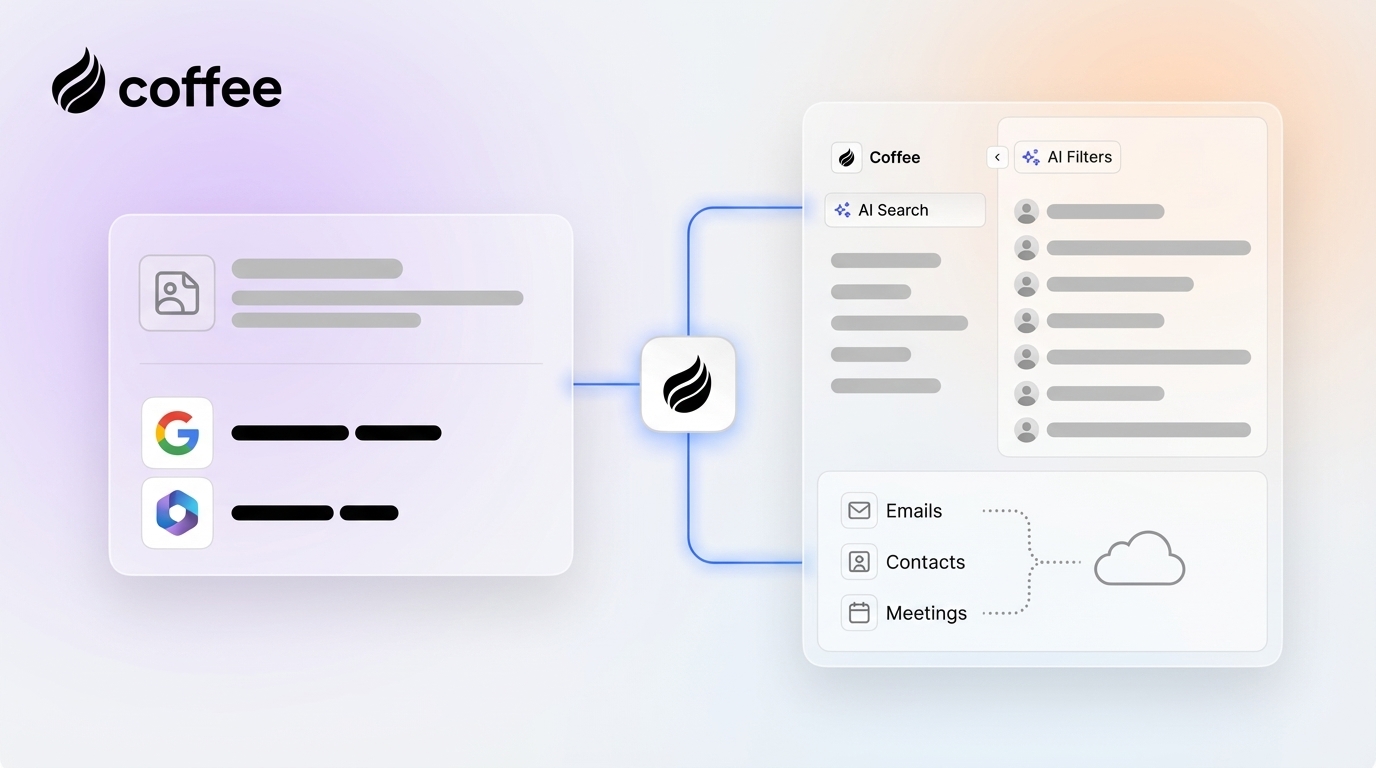
- Automatic contact and company creation from email and calendar data
- Real-time data enrichment with job titles, funding, and LinkedIn profiles
- Autonomous activity logging and deal state management
- AI-powered meeting preparation, recording, and follow-up automation
- Intelligent pipeline analysis with week-over-week change tracking

Dual deployment model:
Standalone CRM: Organizations that want a modern alternative to traditional CRMs can use Coffee as a fully autonomous platform where the agent manages the system of record. This model fits small to mid-sized companies, often with 1 to 20 employees, that have outgrown spreadsheets but find manual CRMs expensive or difficult to maintain.
Companion app: Businesses that already use Salesforce or HubSpot can deploy Coffee as an intelligent layer that improves data quality in the existing system. The agent manages data input and enrichment while keeping familiar workflows in place, which can help small to mid-market companies with low CRM adoption or poor data quality.

Head-to-Head Comparison: Traditional vs Agent-Based CRMs
|
Capability |
Traditional CRMs |
Coffee Agent |
Impact |
|
Data Entry |
Manual input required |
Fully automated |
About 8 to 12 hours saved per representative per week |
|
Data Quality |
Degrades over time |
Continuously maintained |
Improved accuracy with automated data capture |
|
User Adoption |
Often low due to manual work |
Higher, with minimal manual effort |
Better insights and forecasting |
|
Implementation |
3 to 6 months |
Days to weeks |
Faster time to value |
Data Management and Quality
Traditional approach: Legacy CRMs depend on manual data entry and periodic cleaning initiatives. Even with dedicated data cleaning tools, teams must invest ongoing human effort to maintain quality.
Agent-based approach: Coffee’s agent automatically captures and structures data from emails, calendars, and meetings. This process keeps data quality consistent without extra human effort. The agent enriches records with accurate information, tracks interactions, and maintains historical context that traditional systems may not capture without additional setup.
Workflow Automation and Intelligence
Traditional approach: Workflow automation in legacy CRMs often requires significant setup, technical expertise, and ongoing maintenance. Advanced capabilities like conversation intelligence and pipeline analytics can call for extra tools and integrations.
Agent-based approach: Coffee’s agent manages complex workflows automatically, from meeting preparation and note-taking to pipeline analysis. Features such as meeting briefings, automated summaries, and pipeline comparison turn reviews into more strategic discussions without extensive manual preparation.

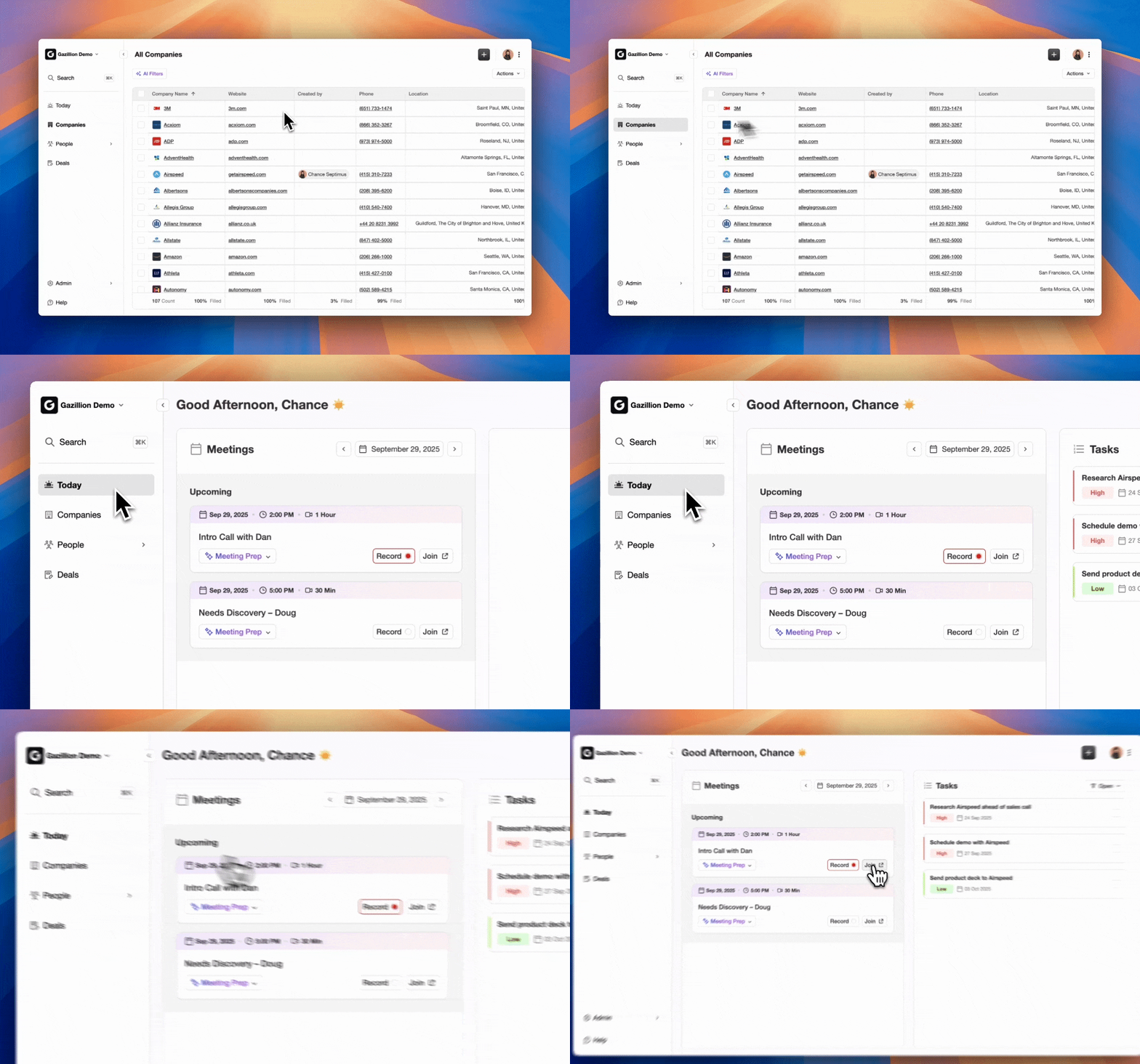
Sales teams that want to see how this model works in practice can request access to Coffee’s CRM agent and review automated workflows in their own environment.
Real-World Scenarios: When Each Solution Excels
Scenario 1: Large Enterprise With Complex Processes
Traditional CRM best fit: Organizations with complex, regulated processes that require extensive customization may choose Salesforce as a primary platform. Companies in industries such as pharmaceuticals or financial services often rely on specialized workflows built over years in traditional systems.
Agent-based advantage: Coffee’s companion app model improves data quality inside existing Salesforce or HubSpot instances. The agent manages standard data tasks while custom workflows and compliance-specific structures remain intact.
Scenario 2: Growing Mid-Market Company
Traditional CRM challenges: Mid-market companies often face the complexity and cost of enterprise CRMs while also outgrowing simple tools. Limited resources can make thorough CRM maintenance difficult.
Agent-based solution: Coffee’s standalone CRM offers robust capabilities with lower maintenance requirements. The agent manages data entry, enrichment, and reporting so the company can focus more on selling and less on CRM administration.
Scenario 3: Sales Team With Low CRM Adoption
Traditional CRM problems: When sales teams resist using CRM systems, data quality drops and managers lose clear visibility into the pipeline.
Agent-based impact: By removing most manual data entry, Coffee’s agent turns the CRM into a practical assistant. Users benefit from having their work captured and organized automatically, which encourages more consistent engagement with the system.
Total Value of Ownership Analysis
Implementation Complexity and Timeline
Traditional CRM implementation typically follows this pattern:
- Planning and requirements gathering: 4 to 8 weeks
- Configuration and customization: 8 to 16 weeks
- Data migration and testing: 4 to 8 weeks
- User training and adoption: 8 to 12 weeks
- Total timeline: about 6 to 12 months
Agent-based implementation with Coffee usually follows a shorter path:
- Initial setup and integration: 1 to 2 weeks
- Agent training on existing data: 1 to 2 weeks
- User onboarding: 1 to 2 weeks
- Total timeline: about 3 to 6 weeks
Ongoing Maintenance Requirements
Traditional CRM maintenance often includes:
- Regular data cleaning and deduplication
- System administration and user management
- Integration monitoring and troubleshooting
- Report creation and maintenance
- User training and support
Agent-based maintenance with Coffee focuses on:
- Occasional configuration updates
- Automatic data quality maintenance
- Automated reporting and insights
- An intuitive user experience that reduces training needs
Scalability and Future-Proofing
Traditional CRMs often become more complex and expensive as organizations grow. Additional licenses, customizations, and integrations can increase both costs and administrative overhead.
Agent-based solutions like Coffee are designed to scale with less manual administration. The agent handles increased data volume and user activity without requiring a proportional increase in technical resources.
Making the Right Choice: Decision Framework
Evaluate Your Current Pain Points
Choose a traditional CRM if:
- Your processes are complex and highly regulated, and they require extensive customization
- Your organization has dedicated CRM administrators and technical specialists
- Integration with legacy systems takes priority over ease of use
Choose an agent-based CRM with Coffee if:
- Data quality and user adoption are persistent challenges
- Your team wants to reduce administrative work for sales representatives
- Implementation speed and time to value are key priorities
Consider Your Organization’s Technical Resources
Traditional CRMs often require significant technical resources for implementation, customization, and ongoing maintenance. Organizations without dedicated administrators may find it difficult to realize the full value of these systems.
Agent-based solutions like Coffee are designed to be more self-managing. This structure makes them suitable for organizations that need robust capabilities without adding substantial complexity to their technology operations.
Assess Your Growth Trajectory
Rapidly growing organizations often find that traditional CRMs become bottlenecks as data volumes and user counts increase. Manual processes that once worked at a smaller scale can become unsustainable.
Agent-based solutions like Coffee are built to handle growth with less friction. The agent manages larger data sets and more interactions without requiring a large increase in administrative effort.
Implementation Best Practices
For Traditional CRM Deployments
Teams that select a traditional CRM platform can improve their outcomes by following these practices:
- Invest in data quality initiatives from the beginning
- Plan for comprehensive user training and ongoing support
- Budget for integration tools and data enrichment services
- Establish clear data governance policies
- Use a gradual rollout to manage change and gather feedback
For Agent-Based Solutions With Coffee
Teams that implement an intelligent CRM agent like Coffee can focus on these areas:
- Connect all relevant data sources early to give the agent full context
- Set clear expectations for which tasks the agent will manage
- Use automation features to reduce manual workload wherever possible
- Plan integrations with existing tools and workflows through Zapier or upcoming native integrations
Sales leaders who want to see how an autonomous CRM agent operates in practice can request access to Coffee’s solution and review a live deployment.
The Future of Enterprise CRM
The enterprise CRM landscape is shifting toward more automation and intelligent assistance. Organizations that continue to rely on manual data entry and passive database systems may face increasing challenges as AI-powered agents become more common.
Early adopters of agent-based CRM solutions like Coffee report improvements in data quality, user adoption, and sales efficiency. As these technologies mature, the performance gap between agent-powered and traditional CRMs is likely to widen.
Conclusion: Choosing Your CRM Strategy
The choice between traditional CRMs and intelligent agent solutions shapes how an organization manages customer relationships. Traditional platforms like Salesforce and HubSpot address many needs, yet they often leave data quality, user adoption, and efficiency issues unresolved when they depend heavily on manual input.
Coffee’s autonomous CRM agent offers an alternative that addresses these issues through automation and intelligence. By handling data entry, enrichment, and analysis, the agent helps turn the CRM into a reliable system that supports sales teams more directly.
Decision-makers evaluating CRM solutions can focus on total value of ownership, implementation complexity, and long-term scalability. Solutions like Coffee that reduce administrative workload while improving data quality and adoption can provide strong business value.
Organizations that adopt intelligent automation in their revenue operations are positioned to respond more quickly to market changes and sales opportunities. Whether deployed as a standalone agent-powered CRM or as a companion app that enhances existing platforms, agent-based solutions offer clear benefits in data consistency, user satisfaction, and sales efficiency.
Teams that want to address manual data entry and adoption challenges can request access to Coffee’s CRM agent and evaluate how intelligent automation fits their sales operations.
Frequently Asked Questions
What makes a CRM agent different from traditional CRM software?
A CRM agent actively manages customer data and workflows, while traditional CRM software passively stores information that users enter manually. Coffee’s agent automatically captures contact information from emails and calendars, enriches records, logs activities, and generates insights without requiring manual data entry. Traditional CRMs depend on users to input and maintain data, which often leads to quality issues and lower adoption rates.
Can an AI-powered CRM agent integrate with existing enterprise systems?
Modern CRM agents are designed to fit into existing technology ecosystems. Coffee offers two deployment models: a standalone CRM where the agent manages the full system, and a companion app that runs on top of existing Salesforce or HubSpot instances. The companion model allows businesses to keep their current system of record while adding intelligent automation for data management.
How do CRM agents handle data security and compliance requirements?
Enterprise-grade CRM agents follow strict security standards. Coffee is SOC 2 Type 2 and GDPR compliant, which helps protect customer data. The platform does not use customer data to train public AI models, which supports privacy and confidentiality.
What happens to existing CRM data when switching to an agent-based solution?
CRM agents like Coffee are designed to work with existing data and can import information from traditional CRMs. For organizations that choose the companion app model, no data migration is required. The agent improves data quality within the existing Salesforce or HubSpot instance.
How quickly can an enterprise implement a CRM agent solution?
CRM agent implementation typically proceeds faster than traditional CRM deployments. While traditional platforms can take 6 to 12 months to implement fully, Coffee’s agent usually deploys in 3 to 6 weeks. The agent connects to Google Workspace or Microsoft 365 and can begin populating the CRM with contacts and companies within days.