
Last updated: January 26, 2026
Key Takeaways
- Sales reps spend 72% of their time on admin tasks, and AI agents reclaim 8-12 hours weekly for selling.
- Organizations with strategic AI tool stacks achieve 43% higher win rates and 37% faster sales cycles.
- Coffee’s autonomous agents eliminate manual data entry by capturing emails, calendars, and call transcripts automatically.
- Coffee outperforms competitors like Salesforce and Outreach in full data automation and unstructured data handling.
- Transform your sales productivity with Coffee’s companion or standalone CRM — get started today.
From Passive Databases to Active AI Sales Agents
Sales tools now fall into four clear categories that shape how teams automate workflows. Legacy CRMs like Salesforce and HubSpot act as passive databases that still rely heavily on human maintenance, even though Salesforce adds automation tools such as Flow Builder and Einstein AI. Sales engagement platforms such as Outreach provide email sequences, cadences, and AI features like conversation intelligence and deal prediction. Conversation intelligence tools like Gong deliver call insights and automate some CRM data capture through syncing and logging.
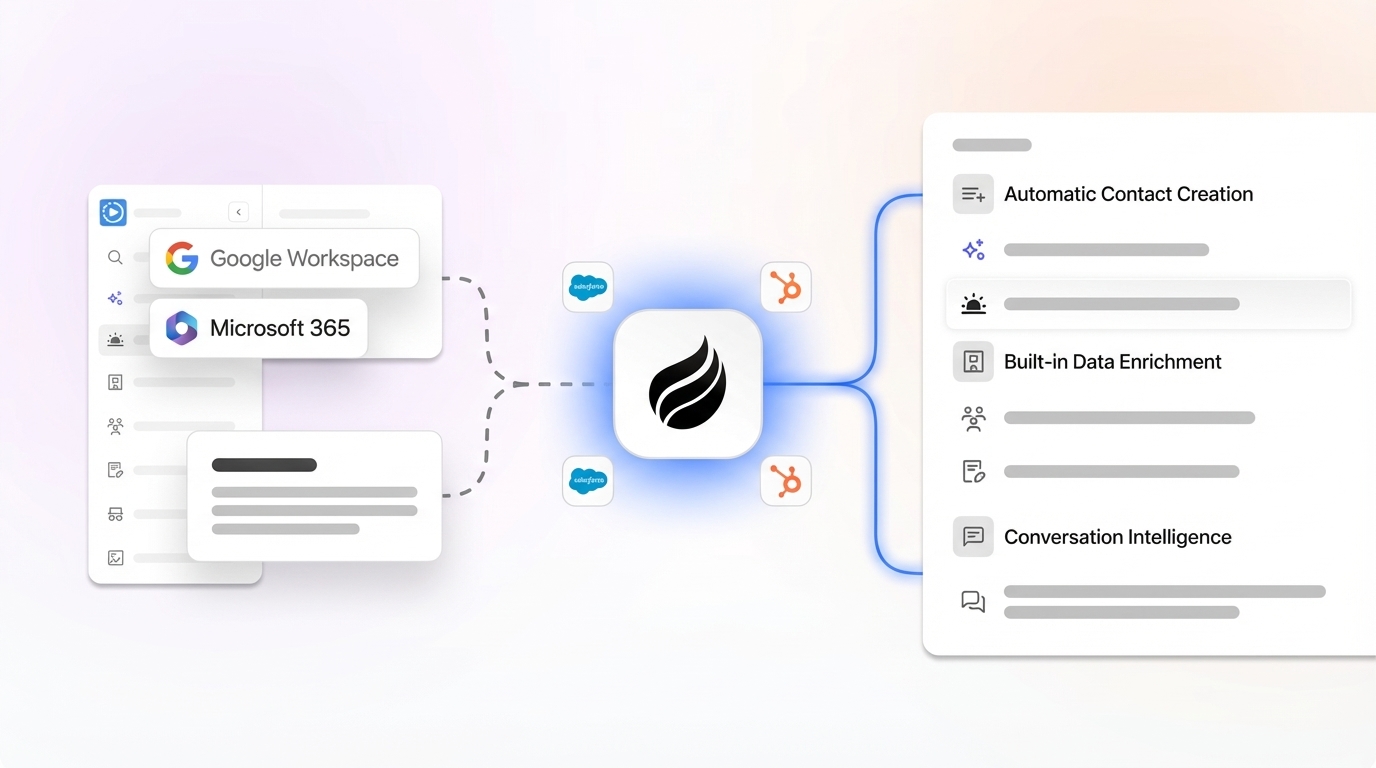
Autonomous agents form the newest and most transformative category, and Coffee leads this shift in sales workflow automation. These systems follow a “Good Data In, Good Data Out” approach, where intelligent agents handle data capture, enrichment, and logging without human effort. Active agents keep CRM data accurate and complete, instead of depending on busy reps to update records.
This change removes the core weakness of legacy systems, which assume that sales reps will consistently enter data. SaaS evolved from 2024 copilots to 2025-2026 AI agents that autonomously execute multi-step workflows like CRM prospecting, emailing, and deal updates. Coffee positions its agent as the connective tissue that turns fragmented tool stacks into a single, cohesive revenue engine.
Current Sales Tech Challenges Slowing Productivity
Sales teams have moved from simple task automation to AI-driven orchestration at record speed. Teams using intelligence-driven AI tools achieved 56% higher quota attainment than those using automation-only solutions. Results now depend on how well tools are implemented, not how many features they list.
Legacy CRMs still create friction for workflow automation, even with built-in automation features. HubSpot users report feeling “forced in their way” with frequent upgrades, while Salesforce users still spend significant time on data entry despite tools like Flow Builder. These systems often generate data silos where information spreads across multiple disconnected tools.
Manual data entry then fuels a cycle of poor adoption and weak forecasting. Duplicate records remain common, since Salesforce allows multiple Leads and Contacts while HubSpot enforces unique emails, which causes unreliable syncing and broken automations. Reps end up toggling between platforms, losing time and patience.
Modern productivity frameworks such as the 3-3-3 rule highlight the need for smarter automation. The 3-3-3 rule asks reps to spend 3 minutes finding 3 relevant insights about a prospect before outreach. Manual research does not scale across hundreds of accounts. At the same time, 78% of sales technology vendors planned major generative AI releases in 2025-2026, so the real differentiator has become execution quality, not feature lists.
Top Sales Workflow Automation Tools in 2026
Sales workflow automation tools vary widely in how they handle data entry, unstructured information, and real productivity gains. The comparison below focuses on capabilities that directly affect rep efficiency and data quality.
|
Tool |
Data Entry Automation |
Unstructured Data Handling |
Time Savings/Compatibility/Pricing |
|
Coffee |
Full AI agent (emails/calendars) |
Yes (transcripts, summaries) |
8-12 hrs/wk; SF/HubSpot companion/standalone; Simple seat pricing |
|
Salesforce |
Partial (Einstein manual prompts) |
Limited |
4-6 hrs; Native; High enterprise cost |
|
HubSpot |
Basic sequences |
No |
3-5 hrs; Native; Tiered scaling |
|
Outreach |
Email/sequences |
No |
5 hrs; SF compatible; Enterprise pricing |
|
Gong |
Call summaries |
Partial transcripts |
4 hrs; SF/HubSpot; High cost |
|
Salesloft |
Cadences |
No |
4-6 hrs; SF integration; Mid-market |
|
ZoomInfo |
Enrichment |
No |
3 hrs; SF compatible; Expensive |
|
Highspot |
Content management |
Limited |
2-4 hrs; SF integration; Enterprise |
|
Zime.ai |
Playbooks |
Partial |
4 hrs; CRM compatible; Mid-market |
|
Apollo.io |
Lead scoring |
No |
3 hrs; SF/HubSpot; Per lead pricing |
Coffee stands out as the only platform that unifies structured and unstructured data while supporting flexible deployment. ZoomInfo earns a 4.5/5 G2 rating but focuses mainly on data enrichment, and Zime.ai holds a 4.8/5 G2 rating for unifying CRM, call, and customer data. Coffee’s agent-first design solves the core gap in these point solutions by handling both CRM fields and unstructured communication data in one system.
How Coffee Automates Sales Workflows End to End
Coffee acts as an autonomous agent that removes manual data entry from the sales process. The platform scans Google Workspace or Microsoft 365, then automatically creates and enriches contacts, companies, and activities. Reps typically regain 8-12 hours per week that previously went to admin work.
The agent behaves like a pre- and post-meeting executive assistant. It prepares reps with briefings before calls, then drafts summaries, action items, and follow-ups immediately afterward. Coffee’s AI meeting bot joins Zoom, Teams, and Google Meet, records and transcribes conversations, and structures notes using BANT, MEDDIC, or SPICED so qualification data stays consistent.

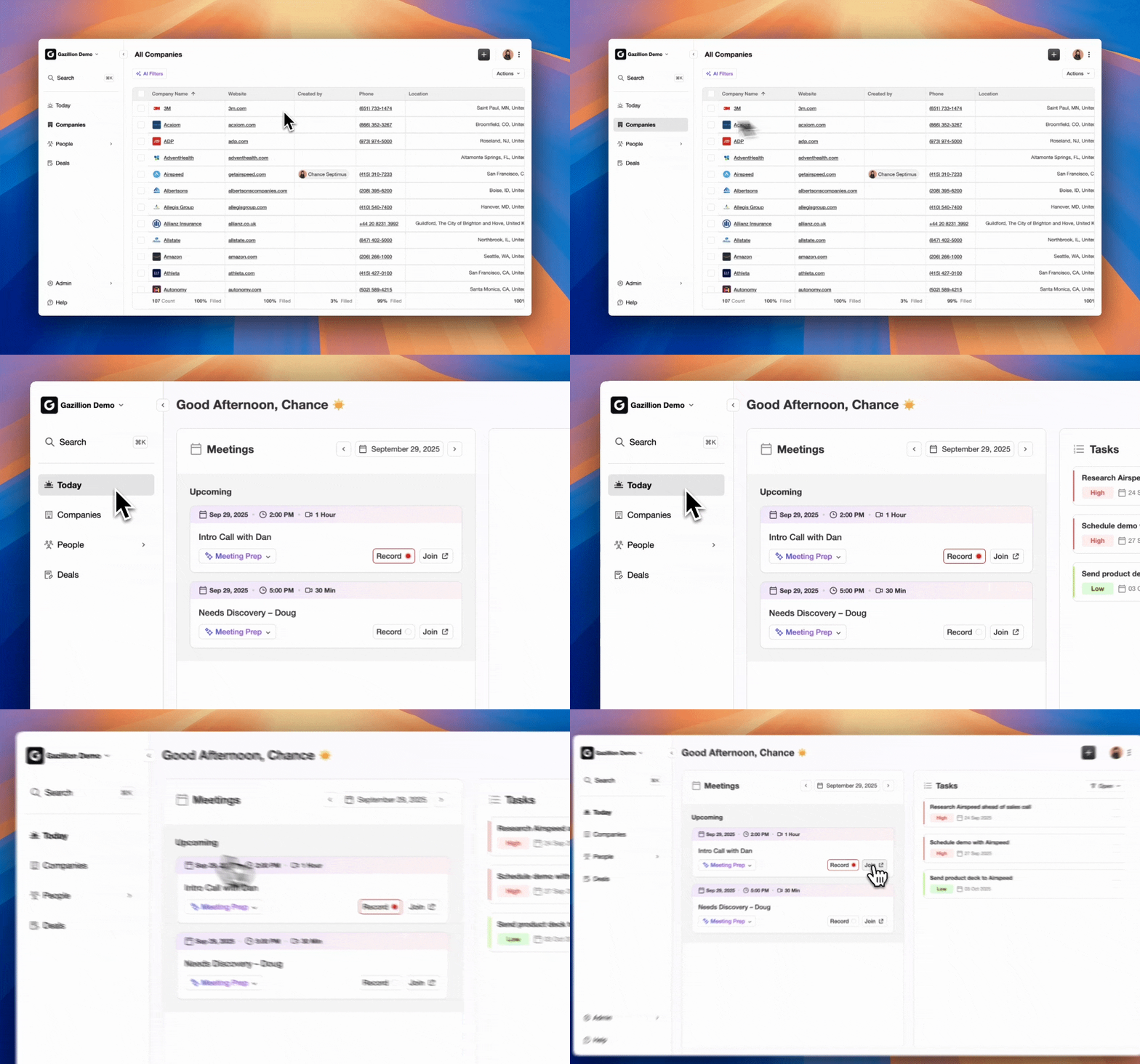
Coffee supports two deployment models to match different teams. The Standalone CRM fits small and mid-sized businesses that want a modern system instead of legacy CRMs. The Companion App runs as an intelligent layer on top of Salesforce or HubSpot. Teams can adopt Coffee’s agent without replacing their current stack.
Pipeline Compare gives leaders a clear view of week-over-week changes by surfacing progressed deals, stalled opportunities, and new pipeline. Pipeline reviews shift from manual spreadsheet reviews to focused strategy conversations. List Builder lets users type natural language prompts such as “Find me VPs of Sales in North America at companies with $10M+ funding using Salesforce” and then builds targeted lists.

Coffee’s data warehouse architecture preserves historical context that legacy CRMs lose when fields change. Forecasting and pipeline intelligence then rely on full interaction histories instead of static snapshots. The agent protects “Good Data In, Good Data Out” by maintaining data quality in the background.
A recent case study shows this impact in practice. A company with tens of millions in revenue previously ran sales from spreadsheets. They rejected Salesforce and HubSpot because of the manual work required and selected Coffee for automated data capture, actionable pipeline views, and API flexibility for custom briefings. Get started with Coffee to unlock similar gains.
Coffee holds SOC 2 Type 2 and GDPR compliance, which addresses common security concerns. Pricing stays simple with seat-based plans that include unlimited agent labor. Revenue leaders can calculate ROI easily because they only pay for human users, not usage-based AI meters.
Smart Trade-offs and Common Pitfalls in AI Sales Automation
Teams evaluating sales workflow automation need to weigh build-versus-buy choices against productivity gains and rollout complexity. High-performing companies are nearly three times more likely to redesign workflows for AI, focusing on operational reinvention instead of only models or data. Process redesign often drives more value than custom model development.
Integration depth strongly influences success in removing manual data entry. Coffee currently connects through Zapier, with deeper native integrations on the roadmap. Established platforms may offer broader native connectors, yet many lack the intelligence to automate full workflows. Teams must choose between richer automation with newer integration methods and lighter automation with older but widespread connectors.
Common pitfalls include tool sprawl and neglecting unstructured data such as calls, emails, and notes. Agentic workflows require new governance, since agents now handle roughly half of human tasks. Organizations need clear rules for what agents can do alone and where humans must stay in control.
Security and data handling questions often surface during evaluation. Coffee addresses these concerns with SOC 2 compliance and strict policies that prevent customer data from training public models. The agent processes data within secure environments, which avoids exposing sensitive information to external systems.
FAQ: Sales Productivity Software Questions
Which is the best workflow automation tool for sales productivity?
Coffee stands out as the leading workflow automation tool for sales productivity in 2026, delivering 8-12 hours of weekly time savings per rep. Unlike legacy CRMs that depend on manual data entry, Coffee’s autonomous agent captures, enriches, and logs sales activities directly from email and calendar data. The platform works either as a standalone CRM or as a companion app for Salesforce and HubSpot, so it fits almost any existing sales stack.
What is the 3-3-3 rule in sales?
The 3-3-3 rule in sales is a prospecting method where reps spend 3 minutes to find 3 relevant insights about a prospect before first outreach. This approach keeps outreach personalized without over-researching and makes early messages more specific and effective. The rule aligns with the reality that 80% of sales require at least five follow-ups, so informed and persistent outreach matters.
How to increase sales rep productivity?
Sales rep productivity increases when teams remove the 70% of time currently spent on admin work through intelligent automation. AI agents like Coffee handle data entry, contact enrichment, and activity logging automatically. Reps then focus on discovery, demos, and closing while automation manages CRM updates, meeting prep, and follow-up tasks. The most effective systems capture both structured and unstructured data without asking reps to type notes.
What’s the best automated CRM updates tool?
Coffee’s autonomous agent offers the most complete automated CRM updates by scanning email and calendar data to create contacts, companies, and activities. Basic automation tools still require manual triggers, while Coffee continuously monitors communication channels and updates CRM records in real time. The system manages structured fields and unstructured content such as call transcripts and email bodies, so activity logs stay complete without human effort.
How can automation improve productivity?
Automation improves productivity by removing repetitive tasks that consume 72% of a sales representative’s time. Organizations that deploy strategic AI sales stacks achieve 43% higher win rates through unified data and coordinated workflows. Automation delivers the strongest results when it covers the full journey from data capture to insights, not just isolated tasks. The most effective setups connect scattered tools into a single revenue engine that supports accurate forecasting and clear pipeline visibility.
Conclusion: Reclaim Selling Time with AI Sales Agents
The move from passive databases to active AI agents defines the next era of sales productivity. Coffee’s autonomous approach removes the manual data entry grind that consumes 72% of rep time and frees teams to focus on revenue-generating work. Get started with Coffee today to modernize your sales workflows and reclaim your team’s selling hours.