
Key Takeaways
- Coffee ranks #1 with a 9.5/10 automation score and a fully autonomous agent that removes manual CRM data entry for small US sales teams.
- Traditional CRMs like HubSpot and Pipedrive require heavy manual input, with reps spending 72% of their time on admin tasks instead of selling.
- Key evaluation criteria include automation depth (60% weight), pricing and ease of use (20%), and SOC2 compliance (20%) for teams of 1-20 reps.
- Coffee saves 8-12 hours per week per rep through automatic data capture from emails and calendars, meeting summaries, and pipeline intelligence.
- Get started with Coffee today for enterprise-grade automation and SOC2 Type 2 compliance tailored to small US sales teams.
Why Automation Now Defines Small US Sales Success
Small sales teams struggle most with fragmented data and clunky workflows that slow every deal. In 2026, 66% of business professionals cite time-consuming reporting and manual data entry as their biggest operational pain points. Legacy CRMs assume busy reps will keep data updated, but most reps never do this consistently.
Effective automated CRMs focus on automatic data entry and enrichment, intelligent meeting support, pipeline intelligence with history, and US SOC2 compliance. Strong data going into the system produces reliable reporting and forecasting. When no agent handles the repetitive work, CRMs shift from helpful tools into time sinks that reps avoid.

For small US sales teams, this problem hits harder than in large enterprises. Bigger companies can hire RevOps teams to babysit their CRM. Smaller teams need a system that runs itself, without constant manual upkeep or complex configuration.
Top 8 Automated CRMs Ranked by Automation Score
1. Coffee: Autonomous Agent CRM for Small US Teams (9.5/10)
Coffee operates as a truly autonomous CRM agent rather than a passive database. The agent scans emails and calendars, creates contacts and companies, enriches records with job titles and funding data, and logs activities automatically. It also joins meetings, produces summaries, and drafts follow-up emails directly in Gmail.
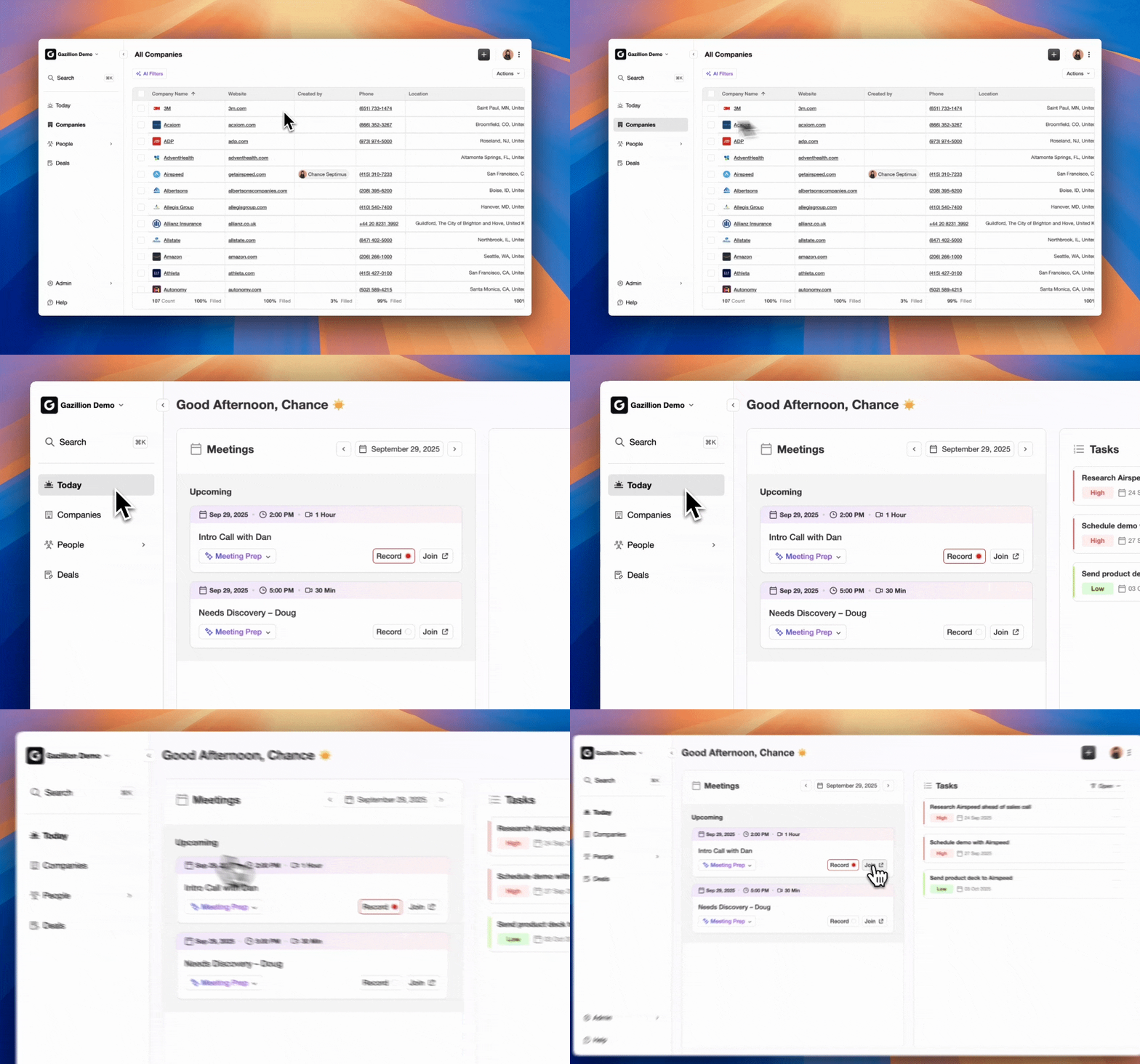
Core automation features include Pipeline Compare for visual week-over-week changes, List Builder for natural language prospecting, and tight integrations with Google Workspace and Microsoft 365. Coffee removes 8-12 hours of weekly manual data entry per rep while adding enterprise-grade pipeline intelligence.

One AI solutions company generating tens of millions in revenue replaced spreadsheets with Coffee and kept its CRM clean through automatic Google Workspace data capture. Pipeline Compare handled weekly pipeline reviews without extra work. API access supported custom briefing scripts so the team could treat Coffee as a true digital teammate.

Limitations: Some tools still connect through Zapier, with deeper native integrations planned. Best fit: Small to mid-sized teams that want an agent-first CRM. Pricing: Seat-based with unlimited agent labor included.
2. Pipedrive: Visual Pipeline Automation for Growing Teams (7.8/10)
Pipedrive focuses on pipeline automation with a visual drag-and-drop board and automatic deal creation from new contacts. The platform sends email nudges for stalled deals and offers pipeline automation features that help small teams keep deals moving.
The system tracks email interactions and supports workflow automation for recurring tasks. However, reps still handle most contact enrichment and meeting notes manually. Best fit: Teams that value visual pipeline management above deep automation. Pricing: Starting at $49 per user each month for Premium features.
3. HubSpot: Marketing-Led CRM With Light Automation (7.2/10)
HubSpot delivers solid automation in its free tier with pipeline tools, email tracking, and basic workflows. The platform includes AI features for lead management and deal forecasting. However, its foundation as a marketing platform with CRM added later limits its strength for pure sales automation.
Teams must invest time in setup and ongoing configuration. Data entry still depends heavily on reps, and the system lacks an autonomous agent that handles work end to end. Best fit: Organizations where marketing drives most of the buying journey. Pricing: Free tier available, with paid plans starting at $20 per seat each month.
4. Zoho CRM: Budget-Friendly CRM With Zia AI Assist (7.0/10)
Zoho CRM scores 9.0/10 for value and flexibility and includes the Zia AI assistant, which flags stalled deals and suggests next actions. It offers workflow automation, lead scoring, and anomaly detection that help keep data cleaner.
Zia AI provides suggestions and forecasting, while rules handle routine tasks. However, Zoho still lacks the full agent capabilities that Coffee provides. Best fit: Cost-conscious teams that want basic AI support without a large budget. Pricing: Starting at $14 per user each month for the Standard Plan.
5. Close: Sales Communication CRM for Calling Teams (6.8/10)
Close focuses on automation for calling and email sequences, with built-in dialer and communication tools that reduce the need for extra platforms. It includes workflow automation and pipeline management designed for active sales teams.
Reps still manage some contact details and deal updates manually. The platform shines for teams that live on the phone. Best fit: Inside sales teams with heavy outbound calling. Pricing: Starting at $19 per user each month.
6. Attio: Modern Interface With Limited Autonomy (6.5/10)
Attio offers a clean, modern interface and strong workflow automation but still behaves like a passive database. Reps must handle most data entry themselves, even though the UI feels smoother than older CRMs.
The platform supports flexible data views and powerful workflows but cannot match agent-powered autonomy. Best fit: Teams that care more about design and customization than full automation depth. Pricing: Custom pricing based on team size.
7. Day.ai: Productivity Add-On, Not Full CRM (6.2/10)
Day.ai specializes in unstructured data processing and productivity automation rather than full CRM coverage. It offers AI features for handling information but does not replace a complete CRM for sales teams.
The tool works better as a companion product than as the central system of record. Limited integrations further restrict its role for established teams. Best fit: Individual contributors who want personal productivity support. Pricing: Subscription-based with a limited free tier.
8. Clarify: Lightweight AI CRM for Very Small Teams (5.8/10)
Clarify belongs to the newer wave of “After ChatGPT” CRMs but lacks the integration depth that mature sales teams expect. It includes some AI features yet falls short of the comprehensive automation found in leading platforms.
The system offers a simple setup and straightforward interface. However, the integration ecosystem remains too thin for complex workflows. Best fit: Very small teams with basic requirements and simple processes. Pricing: Varies by feature set and team size.
Automation Comparison: Coffee vs Other CRMs
| CRM Platform | Automation Score | Data Entry Auto | Pricing (per user/mo) | US Security |
|---|---|---|---|---|
| Coffee | 9.5/10 | Full Agent | Seat-based | SOC2 Type 2 |
| Pipedrive | 7.8/10 | Partial | $49 | Standard |
| HubSpot | 7.2/10 | Manual | $20+ | Standard |
| Zoho CRM | 7.0/10 | AI Assist | $14 | Standard |
Coffee’s agent-first model earns the highest automation score because it removes manual data entry entirely. Other platforms provide workflows and AI helpers, but Coffee stands out as the only option that automates the full “data in” process. Teams often report about 50% lower total stack costs when Coffee replaces separate tools for enrichment, recording, and pipeline management.

How Small US Teams Can Choose and Roll Out an Automated CRM
The right automated CRM depends on your team size, sales motion, and existing tools. For teams that want maximum automation under $50 per user, Coffee delivers the strongest value with its autonomous agent. Existing HubSpot users can add Coffee’s Companion App to gain agent capabilities without a full migration.
Key implementation factors include total cost of ownership beyond licenses, API support for migrations, and access to a real trial. Many teams pick tools that promise automation but still rely on manual data entry, which creates hidden labor costs. US teams should also confirm SOC2 compliance and data residency coverage before rollout.
Get started with Coffee to test true CRM automation with a risk-free trial.
FAQ
What’s the best free automated CRM for small teams?
HubSpot offers a popular free tier, but Coffee delivers stronger automation through its autonomous agent that handles data entry and enrichment. Tasks that require manual work or paid add-ons in other systems come built in with Coffee. The agent’s autonomy creates more value than traditional free plans that only provide light automation.
How does HubSpot compare to Coffee for automation?
HubSpot depends on manual data entry and user discipline to keep records clean. Coffee’s agent captures and structures every customer interaction automatically. Coffee removes 8-12 hours of weekly CRM maintenance per rep, while HubSpot users still spend many hours on updates and cleanup.
What’s the best CRM for 1-20 US sales reps?
Coffee Standalone targets small US sales teams and brings enterprise-grade automation without extra complexity. The agent scales from a single rep to 20 reps with no additional RevOps support. SOC2 compliance ensures US security standards from day one.
How much do automated CRMs cost in 2026?
Coffee uses clear seat-based pricing with unlimited agent labor, so teams avoid confusing AI usage meters. Traditional CRMs range from $14 to $49 per user each month, but add-ons, integrations, and manual work often double the real cost. Coffee’s all-in-one agent model cuts total stack spend significantly.
How does Coffee compare to Pipedrive for data quality?
Coffee’s agent improves data quality by capturing and structuring every interaction automatically. Pipedrive relies on reminders and manual updates that many reps ignore. Coffee’s built-in data warehouse preserves full historical context, while Pipedrive’s relational database loses detail when fields change.
Conclusion: Coffee Leads Automated CRMs for Small US Teams
Coffee stands out as the top automated CRM for small US sales teams in 2026. Its autonomous agent removes the manual data entry that consumes 72% of a typical rep’s time and returns 8-12 hours per week for selling, while still meeting enterprise security and compliance standards.
Get started with Coffee today and shift your sales team from data entry work to focused, high-impact selling with a fully autonomous CRM agent.