
Key Takeaways from BANT in 2026 Sales Teams
- BANT methodology (Budget, Authority, Need, Timeline) remains essential for lead qualification, and qualified opportunities close at 33% higher rates.
- Real-world examples from SaaS, agencies, and enterprises show BANT scripts that filter out weak leads quickly and lift close rates up to 42%.
- Manual BANT execution wastes time on data entry, while AI agents automate qualification and log structured data directly into CRMs like Salesforce or HubSpot.
- Teams using AI-powered BANT create 45% more qualified pipeline and 3x lead qualification volume while cutting administrative work.
- Scale your BANT process with AI that automates BANT qualification so your team avoids manual entry and keeps criteria consistent.
How BANT Works: Budget, Authority, Need, and Timeline
BANT qualifies leads through four essential criteria: Budget (whether the prospect has funding allocated), Authority (whether they can make purchasing decisions), Need (whether they have a genuine business problem), and Timeline (when they plan to buy). Over half of sales professionals find BANT reliable for determining prospect viability.
Budget Questions:
- What is your current budget for solving this problem?
- How do you typically allocate funds for new software purchases?
- What would justify the investment in your organization?
Authority Questions:
- Who else would be involved in this decision?
- What is your role in the purchasing process?
- How are technology decisions typically made at your company?
Need Questions:
- What challenges are you facing with your current solution?
- How is this problem impacting your business?
- What happens if you do not solve this issue?
Timeline Questions:
- When do you need this solution implemented?
- What is driving the urgency around this project?
- Are there any upcoming deadlines or events influencing your timeline?
To see where BANT fits in your qualification strategy, compare it with other frameworks based on deal complexity and sales cycle length:
| Framework | Focus | Best For | Complexity |
|---|---|---|---|
| BANT | Budget & Timeline | High-volume, transactional | Low |
| MEDDIC | Enterprise stakeholders | Complex, long cycles | High |
| CHAMP | Challenges first | Consultative selling | Medium |
8 Real-World BANT Methodology Examples from Sales Leaders
1. SaaS SMB: Uncovering Hidden Budget in Agency Switch
A B2B tracking software company used BANT to qualify inbound leads during cold outreach. The SDR team followed a consistent structure for 20-minute discovery calls before booking demos.
Script Used:
- “Does your company deal with business-to-business clients?” (Need, confirms product fit)
- “Are you able to make decisions on purchasing software, and is there anybody else who needs to be involved?” (Authority, identifies decision-makers)
- “What sort of marketing do you currently do?” (Budget, qualifies existing investment)
- “Is this something you would be interested in implementing this quarter?” (Timeline, confirms urgency)
These questions uncovered issues early, prevented time waste on demos, and provided talking points for sales reps. The team filtered out 40% of leads more quickly and increased demo-to-close rates by 28%.
2. IT Services: Website Redesign Qualification in One Call
A small IT services firm received an inbound inquiry for a website redesign. Using BANT methodology, the rep qualified the prospect in a single discovery call instead of several exploratory meetings.
Qualification Results:
- Budget: $5,000–$10,000 allocated for the website project
- Authority: Marketing manager with sign-off authority confirmed
- Need: Current site could not support the upcoming product launch
- Timeline: 60-day deadline before the product launch event
The rep confirmed fit in one discovery call and advanced directly to proposal. This approach works well for high-velocity sales with 20–40 meetings monthly, sub-$20,000 ACV, and 30–60 day cycles.
3. Enterprise SaaS: Navigating Multi-Stakeholder Committees
A sales leader at a mid-market CRM company adapted BANT for complex enterprise deals with procurement teams and multiple decision-makers. The team used Coffee’s AI agent to log BANT qualification data from discovery calls and save 8–12 hours each week on manual note-taking.
Enhanced BANT Approach:
- Budget: “What has been allocated for CRM improvements this fiscal year?”
- Authority: “Walk me through how technology decisions get approved here.”
- Need: “What is the cost of your current CRM challenges?”
- Timeline: “What business events are driving this timeline?”
The AI agent structured responses according to BANT criteria and updated Salesforce records automatically. This systematic approach delivered the pipeline gains mentioned earlier while also reducing manual data entry work.
4. Marketing Agency: Qualifying Retainer Service Packages
A digital marketing agency serving mid-market companies created BANT scripts for qualifying inbound leads interested in marketing packages from $3,000 to $15,000 monthly. The team wanted to focus on prospects with both urgency and realistic expectations.
Discovery Framework:
- “What is your current marketing spend, and how is it performing?” (Budget and Need)
- “Who makes marketing investment decisions?” (Authority)
- “What is driving the need to change agencies now?” (Timeline and Need)
- “What would success look like in 90 days?” (Timeline and Need)
This framework highlighted prospects with real budgets and clear goals. The agency reduced proposal waste by 60% and improved close rates from 18% to 31% by focusing on BANT-qualified opportunities.
5. Manufacturing Software: Qualifying Long Implementation Cycles
A manufacturing software company selling $50,000–$200,000 solutions adapted BANT for 6–12 month implementation cycles. The team needed to find prospects with budget authority and realistic timelines for complex integrations.
Qualification Strategy:
- Budget: “What is the annual cost of your current inefficiencies?”
- Authority: “Who would champion this project internally?”
- Need: “How are these problems affecting your production metrics?”
- Timeline: “What business drivers would justify this investment timing?”
The reps focused conversations on business impact instead of feature lists. They improved forecast accuracy by 35% and cut average sales cycle length from 14 months to 9 months.
6. HR Technology: High-Volume SMB Lead Screening
An HR technology startup serving 50–500 employee companies used BANT for high-volume inbound qualification. The inside sales team processed more than 100 leads weekly and relied on the same AI-powered approach described earlier to keep data quality high at scale.
High-Velocity Script:
- “What is your current HR software budget?” (Budget, direct approach)
- “Are you the person who would make this decision?” (Authority, confirms stakeholder)
- “What HR challenges are costing you time or money?” (Need, quantifies pain)
- “When would you want this implemented?” (Timeline, establishes urgency)
The AI system logged responses directly into HubSpot with BANT scoring. This automation helped SDRs qualify three times more leads per day while keeping data consistent for forecasting.
7. Financial Services: Targeting Compliance-Driven Buyers
A financial services technology company selling compliance software to banks and credit unions modified BANT to reflect regulatory timelines and complex approval processes. The team focused on buyers facing specific compliance pressure.
Compliance-Focused Questions:
- “What is budgeted for compliance technology this year?” (Budget)
- “Who needs to approve compliance software purchases?” (Authority)
- “Which regulatory requirements are you struggling to meet?” (Need)
- “Are there any upcoming audits or deadlines?” (Timeline)
This approach highlighted institutions with real regulatory urgency instead of general interest. The team improved win rates by 42% by concentrating on prospects with deadlines and allocated budgets.
8. Consulting Services: Sorting Exploratory vs Funded Projects
A management consulting firm specializing in digital transformation used BANT to qualify $25,000–$100,000 project opportunities. The firm needed a clear way to separate casual conversations from funded initiatives.
Project Qualification Framework:
- “Is there budget allocated for this transformation project?” (Budget)
- “Who is sponsoring this initiative at the executive level?” (Authority)
- “What is the business case driving this project?” (Need)
- “What is the target completion date?” (Timeline)
The team required clear answers to all four BANT criteria before building proposals. They reduced unpaid proposal work by 70% and increased project close rates from 22% to 38%.
Scale BANT with 2026 AI Agents from Coffee
AI agents qualify leads based on BANT criteria through multi-turn conversations, handling discovery and qualification questions 24/7. Coffee’s AI agent structures meeting notes according to BANT methodology, removes manual data entry, and keeps qualification standards consistent.

Coffee’s agent joins sales calls, captures BANT responses, and logs structured data directly into your CRM. Sales leaders use Coffee either as a standalone system for SMBs or as a companion to Salesforce and HubSpot, which gives accurate pipeline insights without extra admin work.
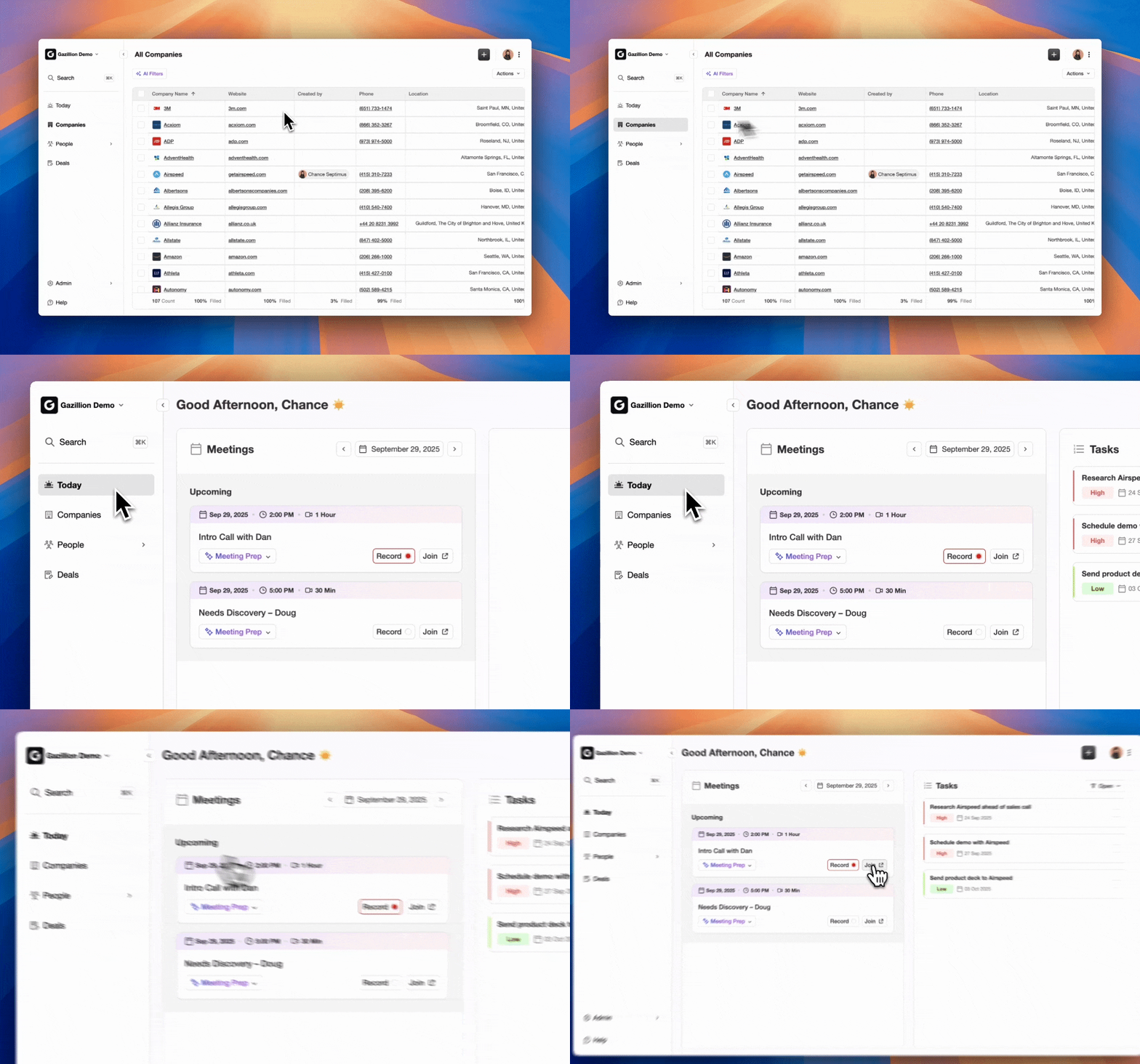
Key automation features include AI-powered meeting summaries with BANT scoring, automatic contact enrichment, and pipeline intelligence that tracks qualification changes over time. Start automating your BANT qualification to eliminate qualification inconsistencies and see how Coffee structures meeting data in real time.

BANT Pitfalls and Modern Hybrid Frameworks
Common BANT limitations include assuming buyers have ready answers early in sales cycles and rigid application that feels transactional. Modern teams also face distributed authority in buying committees, shifting budgets during long cycles, and prospects without clear timelines during research phases.
Successful 2026 approaches combine BANT’s speed for initial qualification with deeper methodologies like MEDDIC for complex deals. Modern teams use BANT for top-of-funnel filtering and MEDDIC for serious opportunities. This hybrid approach balances efficiency with depth.
BANT FAQs for Sales Leaders
What is BANT in sales qualification?
BANT is a lead qualification framework that evaluates prospects based on four criteria: Budget (financial capacity), Authority (decision-making power), Need (business problem), and Timeline (purchase urgency). It helps sales teams prioritize leads with a higher probability of closing by confirming that prospects have both the means and motivation to buy.
What are effective BANT qualification questions for SDRs?
Effective BANT questions include budget inquiries such as “What is allocated for solving this problem?”, authority questions such as “Who else would be involved in this decision?”, need-focused prompts such as “How is this challenge impacting your business?”, and timeline questions such as “When do you need this implemented?”. Open-ended questions reveal real qualification details and avoid shallow yes or no answers.
How does Coffee automate BANT qualification?
Coffee’s AI agent captures BANT responses during sales calls and structures the information in your CRM according to BANT, MEDDIC, or SPICED. The agent joins meetings, transcribes conversations, identifies qualification-related responses, and logs data without manual input. This keeps qualification standards consistent and removes the administrative burden that causes 71% of reps to spend too much time on data entry.
When should you use BANT vs MEDDIC for qualification?
BANT works best for high-volume, transactional sales with shorter cycles, smaller deal sizes, and straightforward buying processes. MEDDIC suits complex enterprise sales with multiple stakeholders, longer cycles, and higher deal values. Many teams use BANT for initial lead filtering and then switch to MEDDIC for opportunities that move into serious consideration stages.
What impact does proper BANT qualification have on close rates?
BANT-qualified opportunities close at higher rates than unqualified prospects, according to lead qualification research. Strong BANT implementation also shortens sales cycles by keeping reps focused on prospects with real buying intent, allocated budgets, and realistic timelines. Teams that apply BANT consistently report better forecast accuracy and less time spent on unqualified opportunities.