
Key Takeaways for Small Sales Teams Using BANT
- The BANT framework (Budget, Authority, Need, Timeline) helps small sales teams qualify prospects in about 15 minutes per call and cut time spent on poor‑fit leads.
- A simple 6-step checklist (ICP research, discovery questions, post-call scoring, CRM logging, weekly reviews, and iteration) creates 30-50% faster qualification.
- Specific BANT questions such as “What budget have you set aside?” and “When do you need this in place?” fit naturally into discovery calls.
- BANT outperforms MEDDIC for small teams selling to SMBs with fast cycles and lower deal sizes, because it stays simple and easy to apply.
- Automating BANT with AI-powered qualification tools frees your team from manual note-taking so they can spend more time selling.
How BANT Works for Small Sales Teams in 2026
BANT evaluates prospects across four critical dimensions: Budget (financial capacity), Authority (decision-making power), Need (business pain), and Timeline (urgency to buy). This clear structure gives small teams a fast way to decide whether a prospect deserves more time.
41% of sales professionals value BANT's adaptability, which suits small teams handling fast-moving sales cycles. Unlike MEDDIC's enterprise complexity, BANT delivers quick qualification without overwhelming resource-limited teams.
The following comparison shows how BANT stacks up against MEDDIC on setup time, complexity, and ideal use cases for small teams:
| Framework | Setup Time | Complexity | Ideal For |
|---|---|---|---|
| BANT | 15 minutes | 4 simple questions | Fast-moving SMB sales |
| MEDDIC | Weeks of training | 6 detailed elements | Enterprise deals |
For small teams managing 20-40 meetings monthly with mid-sized deals, BANT provides a practical balance of structure and speed.
6-Step BANT Checklist for Small Sales Teams
This 6-step process helps you roll out BANT qualification across your sales workflow.
1. Prepare Your Ideal Customer Profile (ICP) Research
Document your target customer's typical budget ranges, decision-makers, common pain points, and buying timelines. This research gives reps context so their BANT questions feel relevant and specific.

2. Weave BANT Questions Into Discovery Calls
Integrate qualification questions naturally throughout conversations instead of running through a rigid checklist. Use the specific scripts in the next section to keep the call conversational.
3. Score Prospects Immediately After Each Call
Rate each BANT element on a simple scale (Strong, Moderate, Weak) right after the conversation. Waiting even an hour makes you forget qualification signals that felt obvious during the call.
4. Log Results in Your CRM
Record BANT scores and key notes in dedicated CRM fields so your whole team sees the same picture. Consistent logging supports better forecasting and handoffs.

5. Run Weekly BANT Review Sessions
Review recent opportunities, look for patterns in qualification, and spot bottlenecks. Use conversion data to decide which questions work and which ones confuse prospects.
6. Iterate and Improve Your Questions
Refine wording and scoring criteria based on real outcomes and team feedback. Small tweaks over time create a BANT process that matches your market and sales style.
Pro Tip: Avoid yes or no questions. Ask follow-ups like “What factors influenced that budget decision?” to uncover the real story behind each answer.
Proven BANT Questions to Use on Discovery Calls
These question frameworks help you gather BANT information naturally during discovery calls without sounding scripted.
Budget Questions:
- “What budget have you set aside for this type of solution?”
- “What investment range are you considering?”
- “How do you typically approach budgeting for new tools?”
Authority Questions:
- “Who else would be involved in this decision?”
- “What's your typical approval process for purchases like this?”
- “Who would need to sign off on moving forward?”
Need Questions:
- “What's driving you to look for a solution now?”
- “What happens if you don't solve this problem?”
- “How is this impacting your team currently?”
Timeline Questions:
- “When do you need this solution in place?”
- “What's driving that timeline?”
- “Are there any specific deadlines we should be aware of?”
BANT Discovery Script Example for Small Teams
This 5-minute discovery script shows how to weave BANT qualification into a natural conversation.

Opening: “Thanks for taking the time today. I'd love to learn more about your current challenges and see if we might be able to help. Tell me what's prompting you to look for a solution like ours.”
Need Discovery: “That sounds frustrating. How is this impacting your team's productivity?” [Listen] “What happens if you can't solve this in the next few months?”
Timeline Exploration: “When would you ideally want to have a solution in place?” [Listen] “What's driving that timeline? Are there specific deadlines or events we should know about?”
Authority Mapping: “Who else would be involved in evaluating and deciding on a solution like this?” [Listen] “What's your typical process for making decisions about new tools?”
Budget Discussion: “To make sure we're aligned, what kind of investment range are you considering for solving this problem?” [Listen] “How do you typically approach budgeting for initiatives like this?”
This conversational flow collects complete BANT information while keeping a consultative tone that prospects respect.
Automating BANT with Coffee's AI Agent
Manual BANT qualification consumes valuable selling time for small teams. Coffee's AI Agent changes this by automatically joining calls, transcribing conversations, and structuring notes according to BANT criteria. The Agent enriches prospect data and logs everything directly to your CRM, delivering the time savings mentioned earlier compared to manual processes that 71% of reps hate.
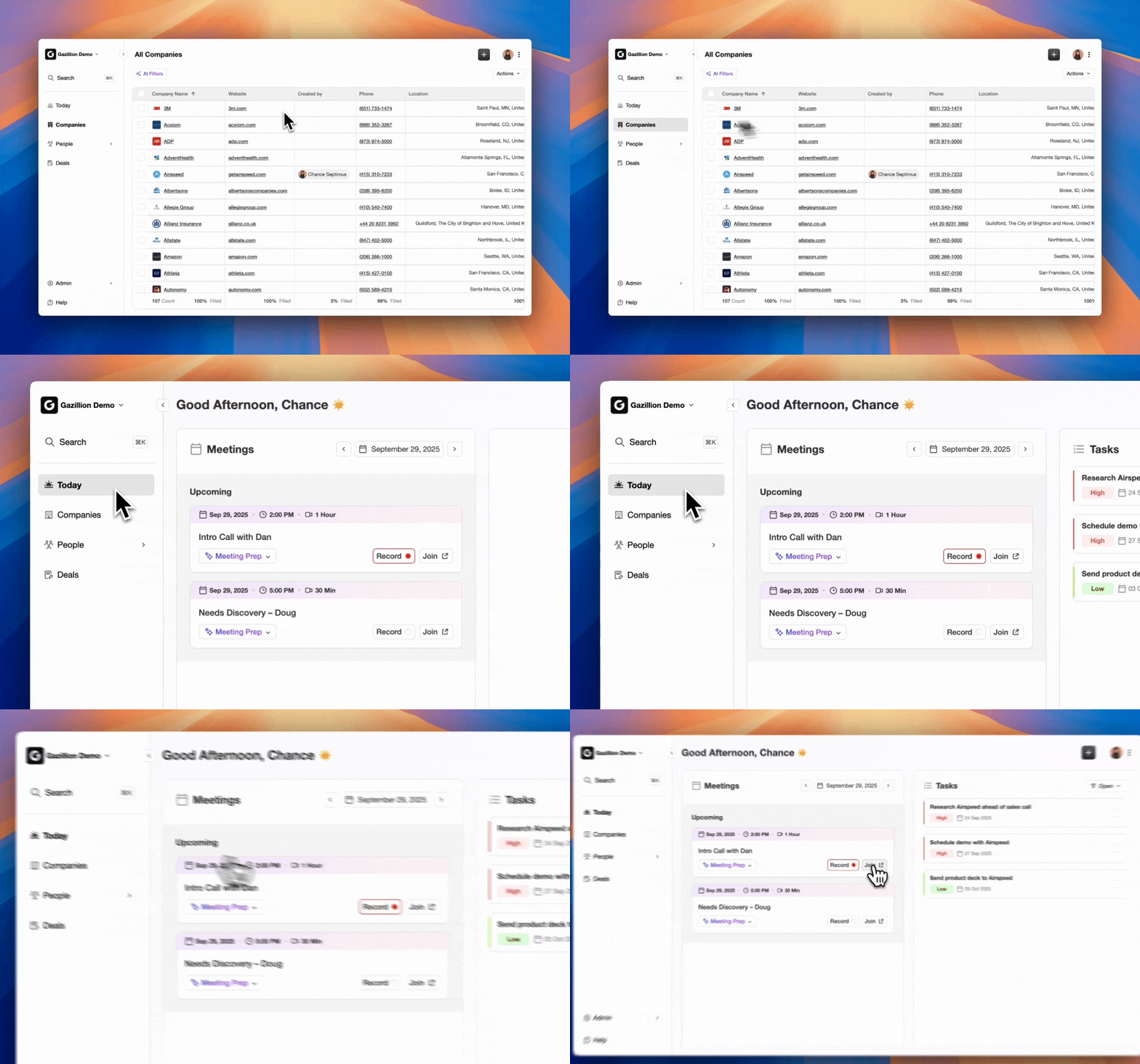
Whether you use Coffee as a standalone CRM or as a companion to Salesforce or HubSpot, the Agent captures unstructured conversation data and converts it into structured BANT insights automatically.
One small team replaced their qualification spreadsheets with Coffee's automated BANT capture and achieved 3x higher conversion rates by focusing only on fully qualified prospects. Real-time qualification scoring removed guesswork and sharpened forecast accuracy.
See how Coffee automates qualification to free your team from manual BANT scoring and keep them focused on selling.
Is BANT Still Effective for Small Teams? BANT vs MEDDIC
BANT remains highly effective for small teams in 2026, especially when paired with AI. AI meeting assistants now capture BANT details automatically, which removes manual note-taking and keeps qualification standards consistent.
Companies using mature lead qualification processes like BANT see 36% higher win rates compared to teams without structured frameworks. For small teams working fast-moving sales cycles, BANT's simplicity supports quicker decisions than complex alternatives such as MEDDIC.
BANT works best when small teams need to qualify 20-40 prospects monthly with short sales cycles and focused deal sizes. MEDDIC's comprehensive approach fits enterprise deals with many stakeholders and long evaluation periods.
Frequently Asked Questions
What is a BANT checklist?
A BANT checklist is a structured framework that evaluates prospects across four key criteria: Budget (financial capacity to purchase), Authority (decision-making power), Need (business pain requiring solution), and Timeline (urgency to buy). Small teams use this checklist during discovery calls to quickly identify sales-ready prospects and avoid wasting time on unqualified leads. The checklist usually includes specific questions for each element and scoring criteria to rate prospect qualification strength.
How does BANT compare to MEDDIC for small teams?
BANT works better for many small teams because it stays simple and fast. Reps can learn it in about 15 minutes and focus on four essential qualification criteria, which suits high-velocity sales environments. MEDDIC demands weeks of training and covers six complex elements that fit enterprise deals with multiple stakeholders. Small teams with shorter sales cycles benefit more from BANT's quick qualification approach, while MEDDIC serves larger organizations with complex buying processes.
How does Coffee automate BANT?
Coffee's AI Agent automates BANT qualification by joining sales calls, transcribing conversations in real time, and extracting Budget, Authority, Need, and Timeline information from prospect discussions. The Agent turns unstructured conversation data into organized BANT scores and logs everything directly to your CRM without manual data entry. Coffee also enriches prospect records with additional firmographic data and creates automated follow-up tasks based on qualification results, which saves sales teams many hours each week on administrative work.
What are effective BANT questions to ask prospects?
Effective BANT questions include: For Budget: “What investment range are you considering?” and “How do you typically approach budgeting for new tools?” For Authority: “Who else would be involved in this decision?” and “What's your approval process for purchases like this?” For Need: “What's driving you to look for a solution now?” and “What happens if you don't solve this problem?” For Timeline: “When do you need this solution in place?” and “What's driving that timeline?” These open-ended questions gather qualification information naturally without sounding like an interrogation.
What does a BANT template for small teams include?
A BANT template for small teams includes: 1) Pre-call ICP research preparation, 2) Discovery question scripts for each BANT element, 3) Post-call scoring criteria using Strong, Moderate, and Weak ratings, 4) CRM logging requirements with dedicated BANT fields, 5) A weekly review process for analyzing qualification patterns, and 6) Guidelines for improving questions based on outcomes. The template should stay simple enough for immediate use while still giving structure for consistent qualification across team members. Include specific question examples and scoring definitions so everyone stays aligned.
Small sales teams that implement BANT qualification often see 30-50% faster prospect evaluation and significant pipeline accuracy improvements. The framework's simplicity supports quick adoption, while AI automation through Coffee removes most manual qualification work. Stop chasing unqualified prospects and start focusing on sales-ready leads. Try Coffee's automated BANT capture to transform your sales efficiency.