
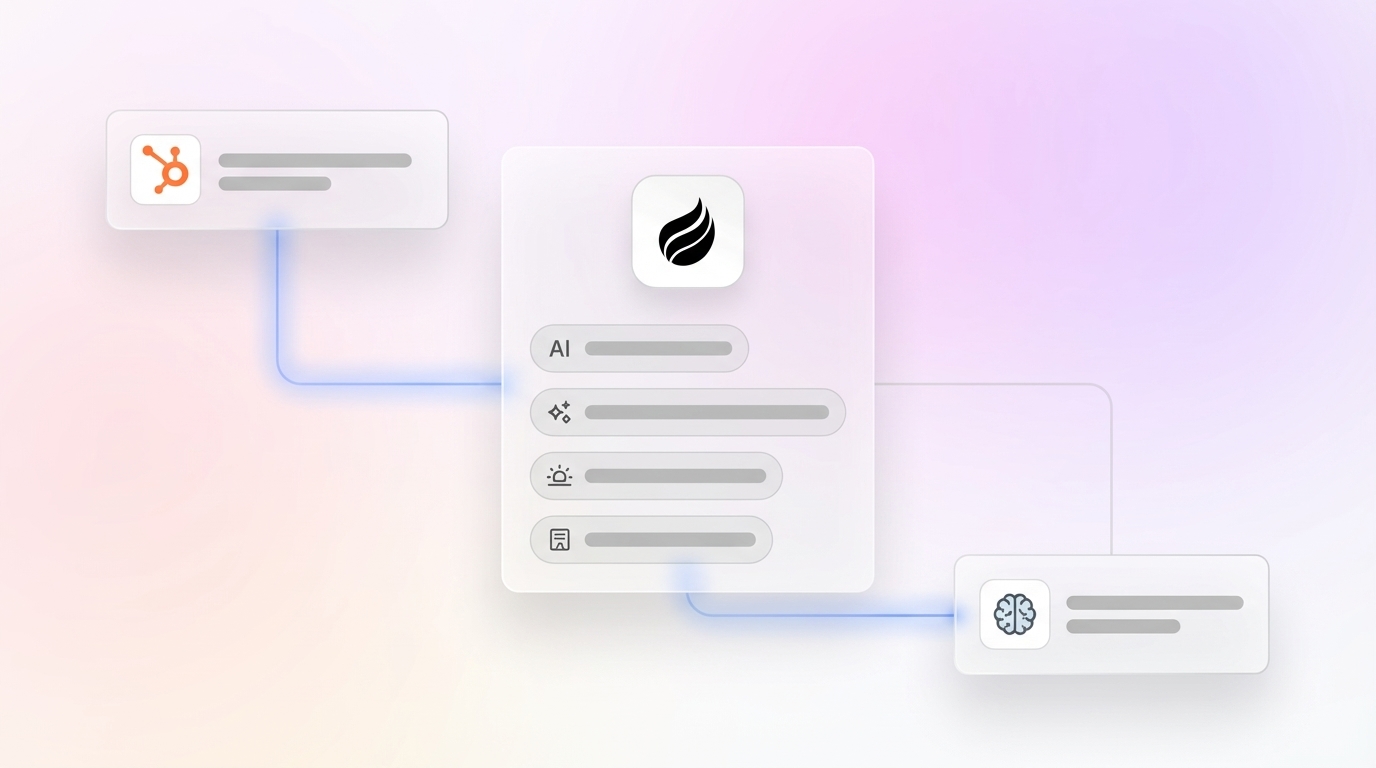
Key Takeaways for HubSpot AI Automation
- Sales reps regain lost productivity when AI-first tools handle manual data entry for HubSpot instead of humans.
- Coffee ranks as the top choice for HubSpot teams, with a companion agent that saves 8-12 hours per user each week.
- Native HubSpot sync delivers faster, more reliable, and richer data than Zapier-based connections, as the comparison table shows.
- HubSpot Breeze’s credit limits create unpredictable costs, while Coffee offers unlimited automation through a clear seat-based model.
- Transform your HubSpot workflows with Coffee’s transparent pricing that scales AI agent labor with your team size.
How We Evaluated AI-First CRM Tools for HubSpot
Our evaluation focused on how smoothly each tool connects with HubSpot, with native integrations ranking above Zapier-based setups. We reviewed agent autonomy for handling unstructured data from emails, calls, and meetings. We also assessed data quality improvements, pipeline insight generation, ease of deployment for SMB and mid-market teams, transparent 2026 pricing and ROI, and how well each product supports user adoption.
We conducted hands-on testing of each platform’s HubSpot integration, including Coffee’s companion agent setup process. Native integrations provide reliable real-time data syncing with deep data points and the fastest setup experience compared to third-party alternatives.
Coffee as the AI Companion Agent for HubSpot
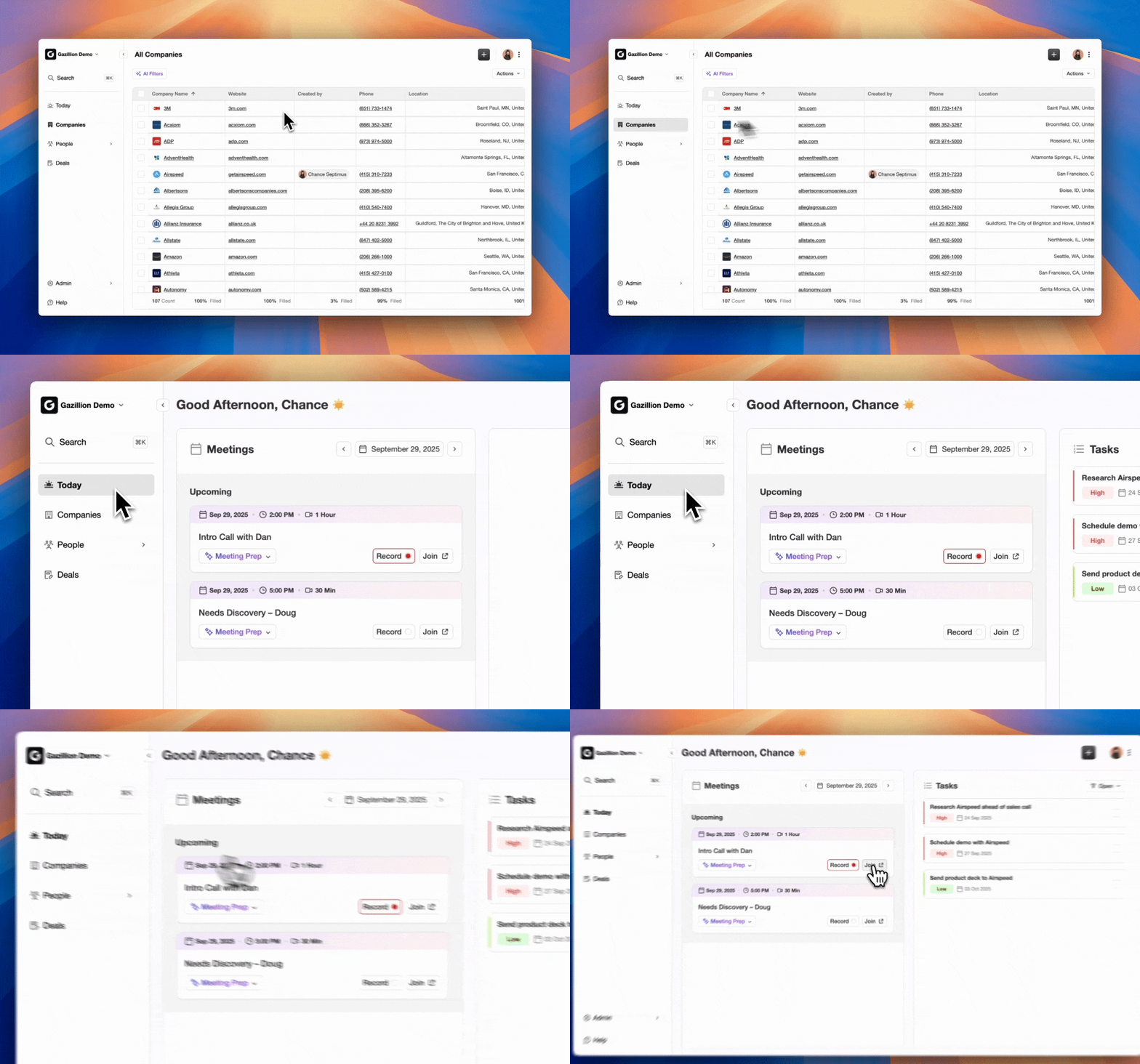
Coffee acts as an autonomous companion agent that connects with HubSpot and removes the need for manual data entry. The platform automatically creates and enriches contacts from Google Workspace, deploys meeting bots for call recording and transcription, and syncs pipeline intelligence back to HubSpot records. Coffee released improved summary templates in November 2025, which teams can customize to match workflows and write back to Coffee, HubSpot, or Salesforce.

Key strengths include 8-12 hours per week time savings through automated data handling, supported by SOC 2 Type 2 compliance that lets enterprise teams trust the system with sensitive data. This security foundation underpins Coffee’s built-in data warehouse, which tracks historical pipeline changes that would otherwise require manual logging. Because Coffee can operate as either the system of record or a companion layer, it fits HubSpot-committed teams that want autonomous data automation without changing their core CRM. The 2026 pricing follows a transparent seat-based model that scales predictably as headcount grows.

Native vs Zapier Integration Comparison for HubSpot Teams
The table below highlights how native HubSpot integrations outperform Zapier-based connections across sync quality, automation depth, and setup time. Pay attention to how tools with native sync typically require under an hour to configure, while Zapier-dependent options demand longer setup and introduce more moving parts.
| Tool | Native HubSpot Sync | Data Automation Depth | Setup Time |
|---|---|---|---|
| Coffee | Yes – Companion Agent | Full autonomous data in/out | Simple authentication |
| HubSpot Breeze | Yes – Built-in | Credit-limited automation | Immediate |
| Gong | Yes – Two-way sync | Call intelligence focused | 30 minutes |
| Apollo | Yes – Real-time sync | Prospecting automation | 45 minutes |
| Clay | Yes – API direct | Full automation workflows | 60 minutes |
| Day.ai | Via Zapier | Basic productivity | Under 2 hours |
| Clarify | Via Zapier | Relationship mapping | 2+ hours |
| Attio | Via API/Zapier | Custom workflows | 3+ hours |
Native HubSpot integrations provide reliable real-time data syncing with deep data points, fastest setup, and no additional software costs compared to Zapier alternatives that add latency and complexity. As the table shows, these native advantages translate into shorter implementation times and lower ongoing maintenance overhead.
HubSpot Breeze Compared to AI-First Alternatives
HubSpot Breeze AI offers basic automation but falls short for teams that need always-on AI support. It suffers from shallow automation capabilities and credit limits that pause AI-driven workflows when monthly caps are reached. Unused credits reset each month without rollover, which forces teams to forecast usage or risk mid-month interruptions.
True AI-first alternatives such as Coffee provide unlimited agent labor without credit constraints, so automation continues at full strength as activity scales. This model delivers consistent workflows, predictable costs, and better alignment with growing sales and success teams.
Choosing an AI-First HubSpot Tool and Rolling It Out
Start by mapping your specific needs to each tool’s strengths, since Coffee suits HubSpot teams that want comprehensive automation while specialized tools focus on narrower use cases. Once you identify the right fit, run a pilot implementation to validate impact before a full rollout. These pilots should include clear governance rules for AI outputs so quality standards stay high from day one.
Throughout evaluation and rollout, avoid Zapier complexity when a native integration exists, because native options reduce both setup time and ongoing maintenance. Explore Coffee’s pricing options to see how seat-based automation can match your current team size and future growth.
FAQ
Does Coffee integrate natively with HubSpot?
Coffee currently connects to HubSpot through Zapier, with a native companion agent integration on the near-term roadmap. Once the native integration launches, the platform will sync contact creation, meeting summaries, and pipeline intelligence back to HubSpot records through simple authentication. This deeper connection will remove the Zapier dependency while keeping HubSpot as your system of record.

How does HubSpot Breeze compare to Coffee?
HubSpot Breeze runs on a credit-based system that creates unpredictable costs and can pause automation when limits are reached. Coffee uses a transparent seat-based model that includes unlimited agent labor, which keeps automation running without credit concerns. Breeze delivers basic AI features inside the HubSpot ecosystem, while Coffee offers broader autonomous data handling, including meeting bots, pipeline intelligence, and historical tracking through its built-in data warehouse.
Which AI-first CRM tool is best for mid-market teams?
Coffee stands out for mid-market teams that rely on HubSpot and want deeper automation without changing CRMs. The platform delivers the time savings mentioned earlier through automated data entry while maintaining enterprise-grade security with SOC 2 Type 2 compliance. Coffee’s companion agent approach lets teams extend their existing HubSpot investment instead of replacing it.
What are 2026 pricing trends for AI CRM tools?
Vendors are moving toward transparent seat-based pricing models like Coffee’s simple seat-based structure and away from unpredictable credit systems. Teams increasingly expect unlimited AI agent labor to be included in subscription costs rather than metered usage that creates budget uncertainty. This shift reflects a broader demand for scalable automation that finance teams can forecast with confidence.
How do teams measure ROI from AI-first CRM tools?
Leading teams track time savings, with Coffee users reporting that they recover the 8-12 hours per week noted above from automated data entry. Pipeline accuracy improvements and faster deal cycles provide additional proof points for ROI. Teams that adopt AI automation also see higher quota attainment and better forecast accuracy because data stays consistent and pipeline tracking runs autonomously.
Conclusion: Why Coffee Leads AI-First HubSpot Automation
Coffee stands out as the leading AI-first CRM tool for HubSpot integration in 2026, delivering autonomous data automation that reshapes sales productivity. HubSpot Breeze offers native features but remains constrained by credit limits, and specialized tools focus on narrower use cases. Coffee instead provides broad companion agent capabilities that remove manual workflows across the customer lifecycle.
See how Coffee’s companion agent can eliminate manual data entry in your HubSpot workflow and bring AI-driven automation into your daily operations.