
Key takeaways
- Traditional CRMs and collaboration tools create friction through manual data entry, scattered information, and low adoption, which slows teams and weakens decision-making.
- Conversational intelligence uses AI agents to capture and structure interactions across channels so teams gain reliable, real-time insight instead of siloed notes and incomplete records.
- Teams that automate meeting workflows, data entry, and enrichment free up hours each week for selling, strategy, and higher quality collaboration across departments.
- Successful CI adoption in 2026 depends on change management, data security, and clear ROI metrics, not just adding another tool to the tech stack.
- Coffee’s AI CRM Agent helps teams implement conversational intelligence quickly, automate busywork, and collaborate from a single, accurate source of truth. Explore Coffee pricing and plans.
Why Team Collaboration Needs an Upgrade: The Limitations of Traditional Tools
Many teams still rely on legacy CRMs and scattered collaboration tools that require constant manual updates. Market data from Coffee shows that 71% of sales reps feel they spend too much time on data entry, leaving only 35% of their time for selling.
This manual approach fragments information across emails, spreadsheets, and side tools. Team members often see CRM as a chore, so records remain incomplete and parallel workflows appear in tools like spreadsheets or personal notes. Leadership then makes decisions on partial data instead of a unified, accurate view of customers and deals.
Understanding Conversational Intelligence (CI) and the Power of AI Agents in Collaboration
Conversational intelligence shifts systems from passively storing data to actively generating insight from everyday communication. CI tools capture, structure, and analyze calls, meetings, and messages so teams can work from timely, trustworthy information rather than scattered notes.
AI agents like Coffee’s Agent act as the operational core of CI. These agents unify data, automate repetitive tasks, and surface insights without constant human input. Team members get accurate context in their existing workflows instead of manually searching and updating systems.
Core components of conversational intelligence include:
- Automated capture across channels: Calls, meetings, and emails are recorded and transcribed with no extra work for reps.
- Contextual data processing: Transcripts and notes convert into structured records tied to contacts, accounts, and deals.
- Pre- and post-interaction assistance: Teams receive concise briefings before meetings and summaries or follow-ups afterward.
- Pipeline and performance insights: Reliable data supports forecasting, coaching, and strategic reviews.
Teams can experience these capabilities in practice with Coffee’s AI CRM Agent. Get started with Coffee to see how CI fits into existing workflows.
Core Benefits of CI for Enhancing Team Collaboration and Productivity
Boosting productivity by automating tedious tasks
Conversational intelligence reduces the hours teams spend entering notes, logging activities, and updating fields. Coffee’s Agent automatically writes CRM entries from emails, calendars, and calls, which can save many reps 8 to 12 hours per week. That time shifts from administrative work to relationship building, deal strategy, and coaching.
Driving insight-driven decisions and strategic alignment
CI converts raw interactions into a structured, accurate dataset. Coffee’s Agent ensures that customer, activity, and deal data stays current, so pipeline reviews, forecasts, and territory planning reflect reality instead of guesswork. Leaders rely on consistent information across sales, marketing, and success teams, which improves planning and execution.
Accelerating meeting efficiency and follow-up
Coffee’s Agent prepares teams with quick briefings, joins meetings to record and transcribe, and produces summaries with next steps. Follow-up notes and draft emails appear automatically for review, which shortens the time from conversation to action and reduces missed tasks after busy days of calls.

Enhancing cross-functional communication and alignment
With data captured and organized in one place, teams share a single source of truth about accounts and opportunities. Coffee’s Agent makes calls, emails, and meeting outcomes accessible across departments, so marketing, sales, and customer success can coordinate on one consistent customer story.
Simplifying tech stacks for smoother collaboration
Coffee’s Agent combines capabilities that often sit in separate tools, including CRM, enrichment, recording, and forecasting. Fewer logins and fewer manual connections between systems mean conversations stay connected to the right contacts, accounts, and metrics without extra effort from the team.
How Coffee’s Agent Elevates Team Collaboration with Conversational Intelligence
Coffee’s Agent represents a shift from static CRM databases to an active AI assistant that maintains data quality and supports collaboration. Instead of requiring reps to feed the system, the agent does most of the administrative work and presents organized information back to the team.
Automatic data entry and enrichment
Coffee’s Agent scans emails and calendars to create and update contacts, companies, and activities automatically. The agent enriches these records with details such as roles, funding, and social profiles through licensed data partners, which gives every team member a fuller picture of each account without extra research.

AI-powered meeting management
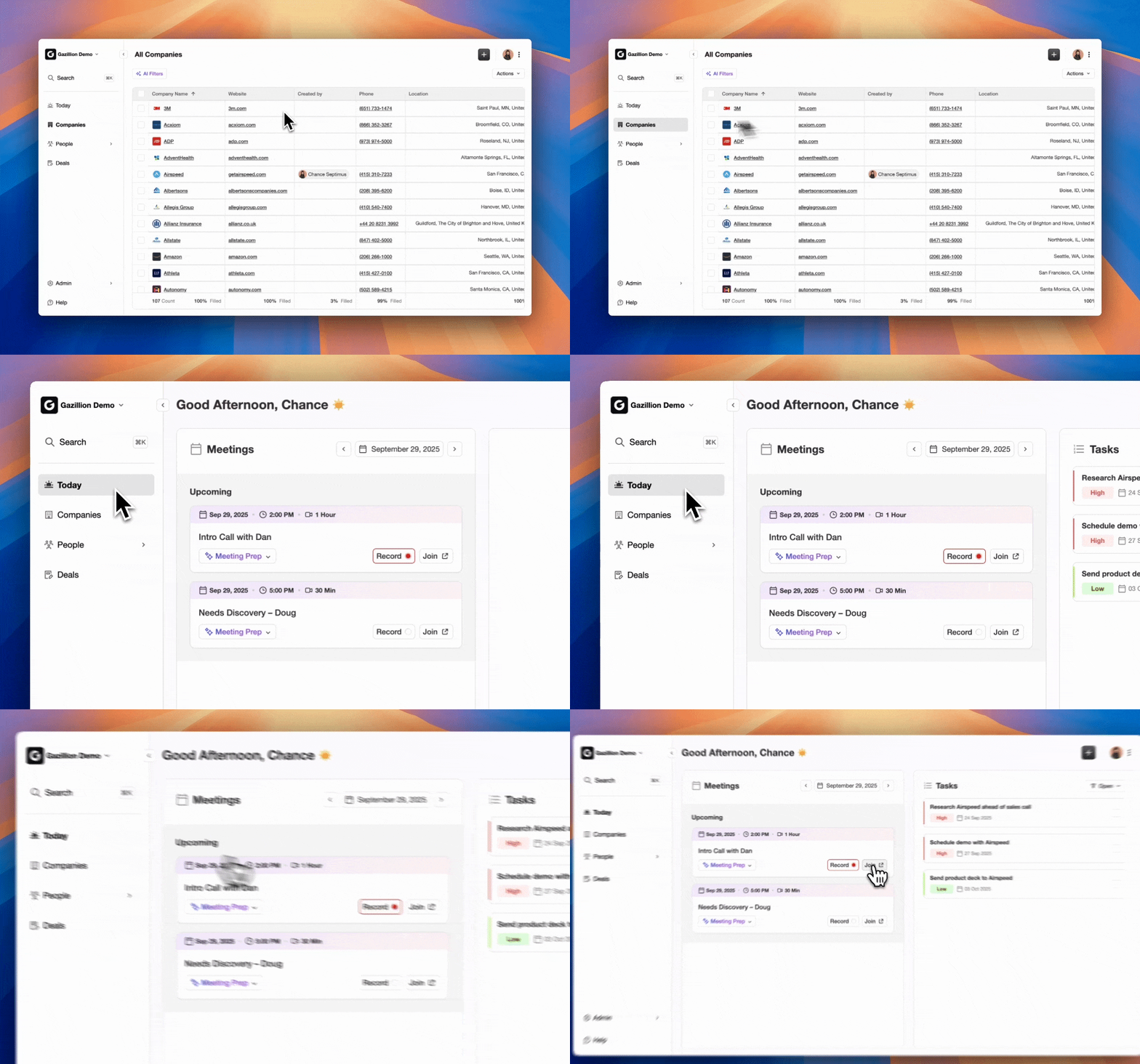
The agent supports the full meeting lifecycle. Teams receive context before calls, including recent activity and key contacts. Coffee’s Agent joins meetings to record and transcribe conversations, then summarizes main points and action items. Draft follow-up emails appear in Gmail so reps can review, adjust, and send quickly.
Pipeline intelligence for strategic overview
Coffee’s Agent tracks deal changes and surfaces week-over-week movement across the pipeline. Features such as Pipeline Compare highlight new, progressing, and stalled opportunities, so pipeline reviews can center on risks, next steps, and resource allocation instead of manual status checks.
Consolidating the tech stack for simplicity
Coffee’s Agent performs the functions of several tools, including core CRM, data enrichment, call recording, and forecasting. This consolidation reduces costs, decreases context switching, and helps collaboration happen in one workspace instead of across many disconnected platforms.
Teams that want a clearer, more automated collaboration environment can evaluate Coffee in their own workflows. Review Coffee pricing and get started.
Strategic Considerations for Implementing Conversational Intelligence in 2026
Assessing your organization’s readiness for AI-powered collaboration
Successful CI adoption starts with understanding current pain points and habits. Organizations should look at how much time teams spend on manual updates, how consistent CRM usage is, and how many side tools hold critical information. Teams that already use modern automation or database tools generally transition more smoothly to an AI agent like Coffee’s.
Ensuring data security and privacy with CI solutions
Security and privacy remain essential as more interactions flow through AI systems. Coffee maintains SOC 2 Type 2 certification and GDPR compliance and keeps customer data used for internal analysis separate from any public model training. This approach supports strong privacy standards while still enabling powerful automation and insight.
Integrating with existing CRM and communication systems
Coffee offers both a full CRM and a companion mode that works alongside existing CRMs. This dual approach lets organizations adopt conversational intelligence without forcing an immediate system replacement. Teams can start by automating capture and insight, then move more workflows into Coffee as needed.
Measuring ROI and key success metrics
Clear metrics help demonstrate the value of CI. Teams can track time saved on manual tasks, forecast accuracy, pipeline visibility, and adoption rates. Data quality indicators, such as completeness of contact and activity records, also show whether the agent is creating a more reliable foundation for collaboration.
Common Pitfalls to Avoid When Enhancing Team Collaboration with CI
Underestimating change management and user adoption
Even strong technology can fail if teams see it as extra work. Leaders should involve users early, show concrete examples of tasks the agent will handle, and provide training focused on daily workflows. Coffee’s Agent gains traction fastest when reps see that it reduces effort rather than adding new reporting demands.
Tracking only surface-level metrics
Basic activity counts matter, but the deeper value of CI comes from understanding conversation quality, customer themes, and deal risks. Coffee’s Agent gives teams access to both quantitative and qualitative insight, which supports better coaching, product feedback loops, and account planning.
Overlooking the human role in collaborative AI
AI agents work best as partners to human teams. Coffee’s Agent handles data processing and routine updates, while people keep ownership of strategy, judgment, and relationships. Clear guidelines on responsibilities help teams use the agent confidently without feeling replaced.
Conclusion: Moving to a More Collaborative, Insight-Driven Workflow with Coffee’s Agent
Conversational intelligence powered by AI agents offers a practical path to more effective collaboration in 2026. By automating data capture, enrichment, and meeting workflows, Coffee’s Agent reduces friction that has long surrounded CRM use and cross-team alignment.
Teams that adopt CI gain more accurate data, clearer insight into their pipeline, and more time for strategic work. This shift benefits individual contributors and leadership, creating a shared view of customers and deals that supports better decisions at every level.
Request a Coffee demo to see how an AI CRM agent can support your team’s collaboration, insight, and productivity.
|
Collaboration aspect |
Coffee’s Agent |
Traditional CRM |
Fragmented solutions |
|
Data accuracy |
Automated capture and enrichment keep records current and consistent |
Manual entry often leads to incomplete or outdated information |
Data stored across many tools creates gaps and conflicts |
|
Admin time saved |
Many reps gain 8 to 12 hours per week through automation |
Frequent manual updates and maintenance consume work time |
Time lost switching between systems and reconciling data |
|
Insight generation |
Accurate pipeline intelligence and meeting analysis support decisions |
Reporting quality depends heavily on user discipline |
Insights remain trapped in disconnected tools and documents |
|
Team adoption |
Higher adoption as the agent reduces administrative effort |
Complex interfaces and manual workflows limit engagement |
Complex, multi-step workflows discourage consistent usage |