
In today’s fast-paced sales environment, the ability to act on current data is critical. Yet, many teams struggle with outdated CRM systems that delay insights and burden reps with manual tasks. This article dives into the evolving market for sales tools, where real-time processing is becoming a game-changer. We’ll explore how platforms like Coffee, an AI-first CRM, exemplify this trend by automating workflows, unifying data, and delivering immediate clarity to boost sales efficiency.
Understanding the Sales Tech Landscape: A Shift Toward Real-Time Solutions
The sales technology market has seen rapid growth, with global spending on CRM software surpassing $50 billion annually as organizations seek tools to optimize performance. However, a gap persists between the promise of these tools and their actual impact. Many legacy systems, built for a slower era, fail to keep pace with modern buyer expectations for personalized, timely interactions. This has spurred demand for solutions that prioritize speed and automation, reflecting a broader trend toward real-time data processing in business applications.
Research highlights the stakes: sales teams using outdated data lose an estimated 12% of potential revenue due to missed opportunities. Meanwhile, companies adopting advanced automation report up to a 15% increase in deal closure rates. As competition intensifies, the ability to access and act on fresh insights is no longer optional, it’s essential. Platforms like Coffee are leading this shift, offering a glimpse into how AI-driven, real-time tools can address longstanding pain points in sales operations. Let’s break down these challenges and the value of emerging solutions.
Why Outdated Sales Data Slows You Down
Sales teams often lose ground because of stale or incomplete CRM data. Without current information, reps miss critical context about customer needs, slowing deal progress and straining relationships. Many traditional CRMs scatter data across disconnected tools, forcing reps to waste time piecing together insights manually.
Statistics paint a clear picture: 71% of sales professionals say they spend too much time on data entry, leaving only about 35% of their week for actual selling. This imbalance reduces productivity and CRM adoption. Coffee steps in with automated data capture, ensuring information stays current and actionable without extra effort.
How Manual Tasks Drain Your Team’s Productivity
Time is a sales rep’s most valuable asset, yet many spend hours logging notes, updating records, and copying emails into CRMs after every interaction. This administrative load pulls focus away from building relationships and closing deals, eating into a significant chunk of their day.
The cost is measurable. When top performers are tied up with clerical work, businesses miss out on potential revenue. Coffee tackles this issue by automating data entry, saving reps an estimated 8 to 12 hours weekly, freeing them to prioritize selling over paperwork.
The Cost of Delayed Insights on Deal Strategy
Customer interactions often reveal key signals, like buyer hesitations or deal opportunities. In traditional CRMs, these insights surface long after the moment has passed, leaving teams unable to act when it matters most. Managers miss chances to step in and guide at-risk deals or push promising ones forward.
Such delays can hurt deal speed. When competitors respond faster to customer cues, they gain an edge. Coffee counters this with real-time data processing, delivering relevant information instantly to influence outcomes while opportunities are still live.
Longer Sales Cycles from Poor Visibility
Without immediate access to deal progress, sales cycles drag on. Legacy systems leave leaders working with outdated reports, leading to misallocated resources and reactive rather than strategic pipeline management. This lack of clarity increases customer acquisition costs and slows overall momentum.
Coffee offers a solution with tools that provide clear, current pipeline visibility, helping teams spot and address inefficiencies before they escalate. Request access to see how this works in practice.
What Real-Time Processing Brings to Sales Teams
Real-time processing means capturing and syncing customer data the moment it happens, unlike older systems that batch updates with delays. This approach keeps CRM records fresh, supporting faster decisions and actions across the sales process.
By automatically integrating emails, meetings, and other interactions, platforms with this capability create a live view of customer relationships. For teams using Coffee, this translates to an edge in competitive situations, allowing quicker responses to customer needs over rivals stuck with delayed systems. The benefits are clear in faster adjustments and improved outcomes.
Coffee: A Leader in AI-Driven Real-Time CRM
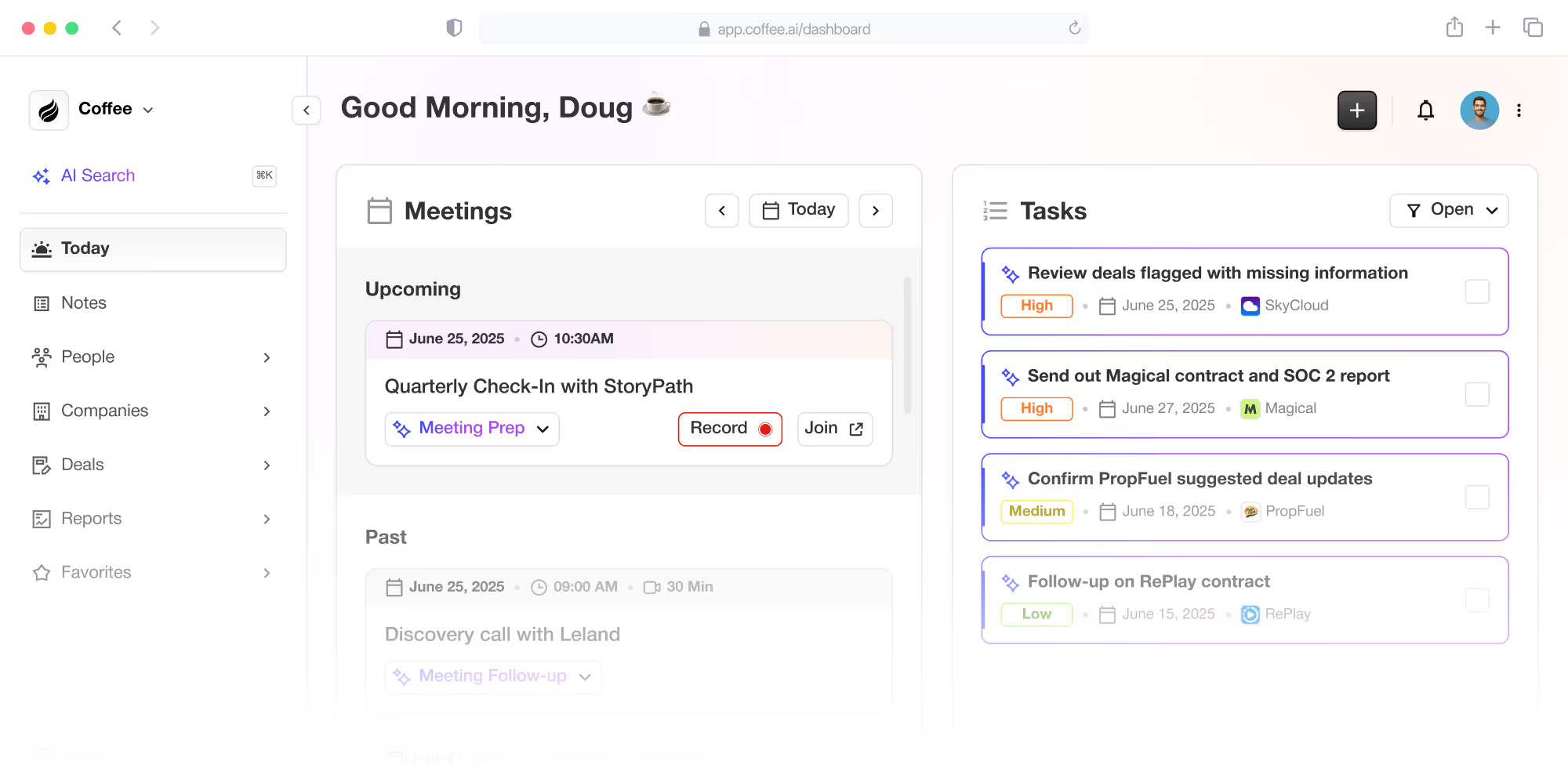
As part of the broader move toward real-time sales solutions, Coffee stands out with its AI-first CRM platform. Designed to handle instant data capture and analysis, it addresses the core limitations of older systems through automation and unified data management. While other tools retrofit AI onto legacy frameworks, Coffee builds it into the foundation, offering a streamlined approach for modern sales teams.
Key features include:
- Instant data capture from emails and calendars, updating contacts and activities without manual input.
- AI-driven meeting support, with pre-meeting briefings, live transcription, and automated follow-up summaries.
- Pipeline analysis tools that provide week-over-week comparisons at a click, using historical data snapshots.
- A unified system combining structured data, like deals, with unstructured data, like call notes, reducing tool sprawl.
Request access to explore Coffee’s capabilities firsthand.
Key Benefits of Real-Time Processing with Coffee
Save Time by Eliminating Manual Data Entry
Automating data updates from emails and calendars saves sales reps an estimated 8 to 12 hours each week. Coffee also enriches records with details like job titles, cutting the need for extra tools and simplifying workflows. This efficiency lets reps focus on selling while managers spend less time chasing data and more on strategy.
Improve Meetings with Instant Context
With real-time briefings before meetings and automated summaries after, Coffee ensures reps are prepared and follow-ups are handled efficiently. Summaries can align with sales frameworks like BANT, supporting consistent deal qualification and stronger customer engagements.
Speed Up Deals with Clear Pipeline Updates
Coffee’s pipeline tools offer instant visibility into deal progress and risks, enabling timely interventions. Leaders can track changes without manual reports, improving resource allocation and potentially shortening sales cycles compared to traditional setups.
How Coffee Compares to Traditional CRMs
Many older CRMs struggle with the speed and integration needed for real-time data, relying on batch updates or manual effort. Coffee, by contrast, uses an AI-first design to process information as it happens. Its built-in data warehouse captures historical changes for instant analysis, consolidating multiple functions into one platform to cut costs and fragmentation.
| Feature | Coffee (Real-Time Processing) | Traditional (Batch Processing) |
|---|---|---|
| Data Accuracy | Always current, automated | Often outdated, manual errors |
| Insight Timing | Immediate, actionable | Delayed, after-the-fact |
| Deal Speed | Faster through proactive moves | Slower due to reactive approach |
| Pipeline Oversight | Instant, detailed visibility | Delayed, less precise |
Common Questions About Real-Time CRM
What Does Real-Time Processing Mean for Sales?
This technology captures and syncs sales data as interactions happen, keeping records up to date without delays. Coffee automates this, blending emails, meetings, and other inputs into a full view of customer relationships for better decision-making.
How Does Coffee Differ from Older CRMs?
While some traditional systems lag with delayed updates or manual tasks, Coffee processes data instantly using AI. Its data warehouse tracks every change, enabling quick pipeline insights without the clunky workflows of legacy tools.
Can Coffee Boost Sales Results?
Coffee’s real-time updates and automation free reps to focus on selling, while pipeline visibility supports faster, smarter decisions. These features can improve deal progress and overall efficiency for many teams.
Is Data Safe with Coffee’s Platform?
Coffee maintains strict security standards, including SOC 2 Type 2 and GDPR compliance. Real-time processing includes safeguards to protect data, using it only for sales workflows, not external AI training.
How Soon Can Teams See Benefits from Coffee?
Many notice productivity gains within the first week, thanks to automated data tasks. Broader impacts on sales activity and data quality often build over 30 to 60 days as real-time benefits compound.
Conclusion: Stay Ahead with Real-Time Sales Tools
Outdated CRM data and manual workloads are persistent hurdles rooted in systems not built for today’s pace. Real-time processing offers a way forward, automating tasks and delivering insights when they’re most useful. As part of this trend, Coffee provides an AI-first platform that captures data instantly, helping teams respond quicker and sell smarter in a competitive market.
Ready to streamline your sales process? Request access to Coffee today and see how real-time intelligence can lift your team’s performance.