
Last updated: March 30, 2026
Key Takeaways
- AI agents handle CRM data entry so reps spend far more time selling instead of updating records.
- Regular pipeline hygiene checks and automated enrichment prevent data rot and shadow CRMs.
- Conversation intelligence and the 3-3-3 pipeline rule keep deals moving and increase sales velocity.
- Predictive analytics, lead scoring, and Pipeline Compare dashboards support forecast accuracy in the 85–90% range.
- Coffee’s autonomous CRM agent works as an SMB system or Salesforce/HubSpot companion to accelerate revenue growth and improve close rates — get started with Coffee today.
Core Requirements for Effective Sales Pipeline Management
Strong pipeline intelligence starts with the right systems and data access. You need a CRM such as Salesforce, HubSpot, or a standalone platform, plus Google Workspace or Microsoft 365 integration. Your team also needs a basic grasp of metrics like conversion rates and sales velocity. These foundations support the “good data in” principle that drives 35% more selling time and 30% accuracy improvements when paired with AI automation.
10 Steps to Improve Your Sales Pipeline Intelligence
1. Audit Current Pipeline Hygiene with AI
Start by revealing the real state of your pipeline data. Deploy AI agents to scan your existing pipeline for data rot, missing contact information, and stale opportunities. Coffee’s autonomous agent detects gaps in deal records through activity logging and flags opportunities that have not progressed by tracking pipeline changes. This audit shows how much manual cleanup is required before automation can produce reliable insights.
2. Automate Data Entry and Enrichment for Reps
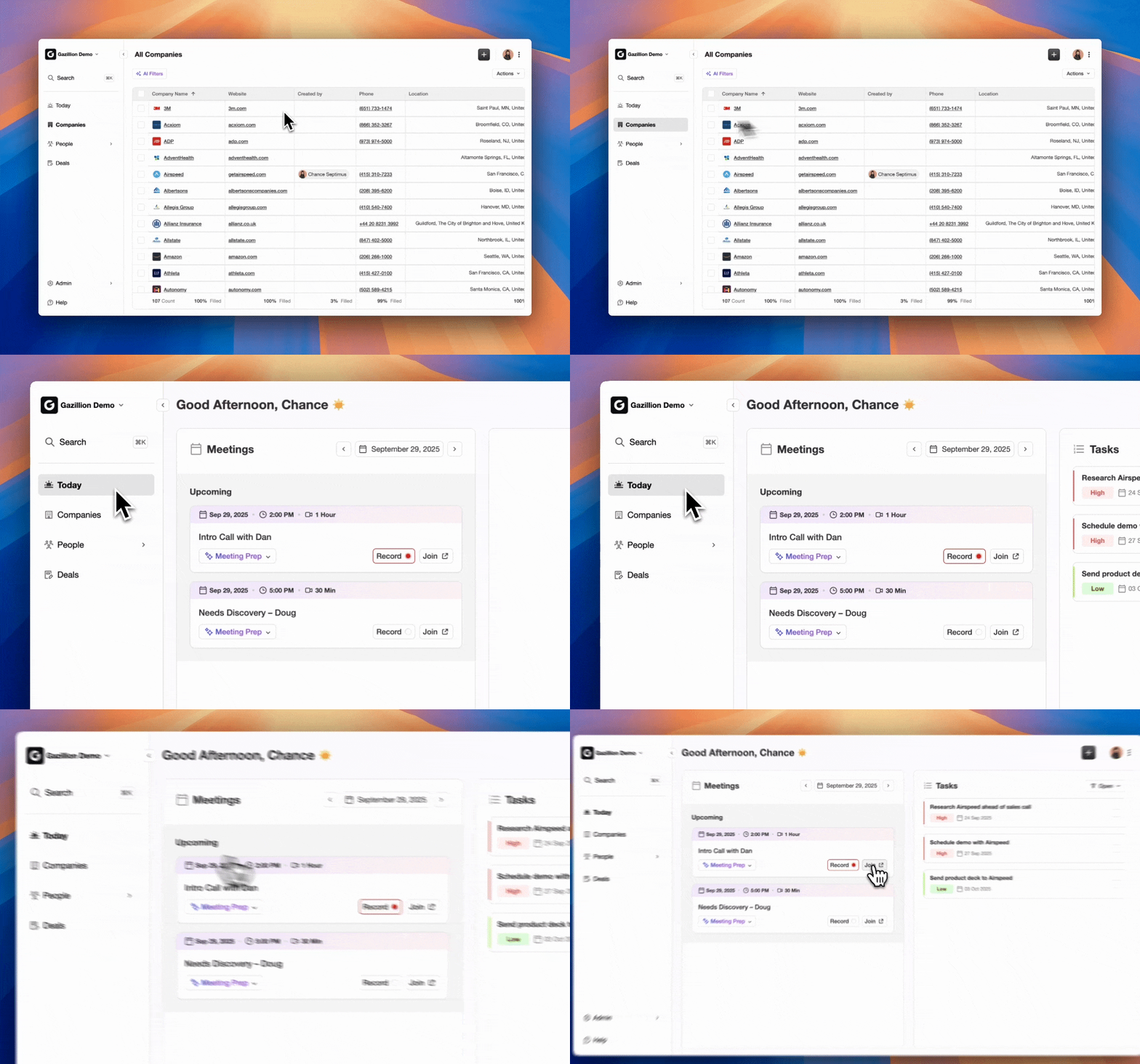
Replace manual CRM updates with AI-driven data capture. Implement AI agents that ingest emails, calendars, and meeting transcripts to automatically create and enrich CRM records. Coffee saves sales reps 8–12 hours per week by logging activities, enriching contact profiles with job titles and company data, and maintaining accurate deal histories. Choose Coffee Standalone for SMBs or Coffee Companion for existing CRM installations to avoid tools that still depend on constant human input.
3. Add AI Conversation Intelligence to Every Call
Turn sales conversations into structured, searchable data. Deploy autonomous agents that join sales calls, transcribe discussions, and log qualification data using frameworks like BANT or MEDDIC. Coffee’s meeting bot captures every customer interaction, generates post-call summaries, and fills CRM fields with buying signals and next steps. Reps finish calls with complete records already in place instead of spending time on follow-up data entry.
4. Simplify and Govern Sales Pipeline Stages
Use a clear structure so every deal sits in the right stage. Structure your pipeline using the 3-3-3 rule: a maximum of three stages before qualification, three stages during evaluation, and three stages for closing. This simplified structure only works when deal data stays consistently accurate, which makes Coffee’s AI essential. By capturing activity states and updating records in real time, Coffee keeps deals in the correct stage without relying on busy reps to make manual changes.
5. Boost Sales Velocity with Precise Lead Scoring
Focus your team on prospects most likely to convert. Implement AI-powered lead scoring that analyzes 50+ data points including firmographics, behavioral tracking, and intent signals. Coffee’s natural language list builder supports commands like “Find VPs of Sales at $10M+ companies using Salesforce in North America.” The system then prioritizes prospects that match your ideal customer profile so reps spend time on high-value opportunities.

6. Use Predictive Analytics for Reliable Forecasts
Move from gut-feel forecasting to data-backed projections. Use AI agents with built-in data warehouses that track complete interaction histories for accurate forecasting. Coffee analyzes unstructured data from emails and calls alongside structured CRM data to deliver clear pipeline insights and forecasts through features like Pipeline Compare. This approach separates autonomous agents from passive tools that only store data.
7. Review Pipeline Health with Compare Dashboards
Give leaders and reps a shared, current view of pipeline movement. Visualize week-over-week pipeline changes through automated dashboards that highlight progressed deals, stalled opportunities, and new additions. Coffee’s Pipeline Compare feature removes the need for manual spreadsheet exports by tracking all pipeline movements automatically. Pipeline reviews then shift from interrogation about data quality to strategic conversations about how to advance deals.
8. Connect Sales Data Streams into One View
Create a single, consistent record of every customer touchpoint. Unify email, calendar, CRM, and communication platforms through one AI agent instead of switching between multiple tools. Coffee consolidates the sales stack by handling enrichment, recording, and forecasting jobs that usually require separate products. This consolidation lowers cost and complexity while keeping data consistent across the entire pipeline.
Get started with Coffee to improve sales pipeline intelligence and avoid the overhead of managing disconnected point solutions.
9. Multi-Thread Deals and Refine Your ICP
Protect deals from stalling when a single champion goes quiet. Use AI-generated briefings to prepare reps to engage multiple stakeholders within target accounts. Coffee identifies key contacts from emails and calendars, enriches them with roles and context through meeting briefings, and tracks interactions to support multi-threading. Multi-threading produces 2.4x higher close rates by reducing dependence on one relationship.

10. Close the Feedback Loop with Win/Loss Coaching
Turn every closed deal into a coaching asset. Use autonomous deal analysis that generates insights from closed opportunities without lengthy post-mortem meetings. Coffee uses captured conversation data, summaries, and pipeline tracking to identify patterns in wins and losses. These insights feed continuous feedback loops that improve rep performance based on real customer interactions.
Key Metrics to Track for Pipeline Intelligence
Track these four core metrics to measure how AI-powered pipeline intelligence affects your sales performance over time.
| Metric | Industry Benchmark | Target with Coffee | Improvement |
|---|---|---|---|
| Win Rate (SMB) | 28-35% | Improved through automation | Significant lift |
| Sales Velocity | $1,200/day | Increased via efficiency | 2x faster |
| Forecast Accuracy | 64-71% | Enhanced precision | Improved accuracy |
| Time Selling | 28-30% | 65-70% | +35% more selling |
Companies implementing weekly pipeline velocity tracking achieve 87% forecast accuracy compared to 52% for irregular tracking, which shows how consistent measurement and AI automation work together.
Common Pitfalls and Pro Tips for a Healthier Pipeline
Many teams struggle with shadow CRMs when reps avoid clunky systems. Prevent this by using AI agents with intuitive co-pilot experiences that reps actually want to use. Coffee’s conversational interface improves adoption because it serves reps instead of forcing them to serve the software. Strong signals of success include close rate improvements around 30% and sub-five-minute response times to new leads. Focus on pipeline velocity instead of raw volume, since sales teams using automation achieve 29% higher lead conversion rates through better-quality data.
FAQ
What is sales pipeline intelligence?
Sales pipeline intelligence turns fragmented customer data into actionable revenue forecasts through automated data collection, analysis, and insights. It removes manual CRM updates by using AI agents to capture every customer interaction, enrich contact records, and predict deal outcomes based on historical patterns and real-time signals.
What is the best AI for pipeline management in 2026?
Coffee stands out as a leading autonomous CRM agent for pipeline management, with both Standalone and Companion models. Unlike passive tools that depend on human data entry, Coffee actively manages the sales workflow from lead capture to deal analysis. This approach keeps data quality high so insights remain accurate.
How does Coffee compare to Salesforce for pipeline intelligence?
Coffee operates as an autonomous agent, while Salesforce functions as a passive database that needs manual maintenance. Coffee automatically captures unstructured data from emails and calls and offers SOC2-compliant security with transparent per-seat pricing instead of complex feature-based metering.
What is the 3-3-3 rule for sales pipeline stages?
The 3-3-3 rule structures pipelines with a maximum of three stages before qualification, three stages during evaluation, and three stages for closing. This framework prevents pipeline bloat and supports consistent deal progression. AI agents like Coffee then organize opportunities into the right stages based on conversation analysis and buying signals.
How much can AI improve sales pipeline performance?
AI-powered pipeline intelligence can deliver measurable gains such as higher close rates, faster sales velocity, more time spent selling, and stronger forecast accuracy. These improvements come from removing manual data entry, providing real-time deal insights, and enabling predictive analytics based on complete customer interaction histories.
Master Pipeline Intelligence with AI Agents in 2026
Manual CRM updates and spreadsheet-based pipeline reviews drain sales productivity. The 10 AI-powered steps above, combined with Coffee’s autonomous agent capabilities, create a cleaner pipeline, faster cycles, and stronger conversion rates by keeping high-quality data flowing into your system automatically. Modern sales teams improve pipeline intelligence in 2026 by shifting from passive databases to active AI agents that handle busywork while reps focus on selling.
Get started with Coffee to improve sales pipeline intelligence and turn manual revenue operations into predictable, AI-driven growth.