
In today’s fast-paced sales landscape, staying ahead means cutting through endless data, tools, and tasks to focus on what drives real results. Many sales professionals grapple with fragmented systems and time-consuming admin work, leaving little room for strategic planning. This guide offers a practical approach to using an AI CRM, with Coffee as a prime example, to streamline goal setting and prioritization, helping you boost productivity and hit targets with precision.
Understanding the Modern Sales Landscape: Challenges and Shifts
The sales world has evolved dramatically over the past decade. Teams now navigate a flood of data from multiple sources, including CRM platforms, social media, email interactions, and market analytics. While this wealth of information holds potential, it often overwhelms reps who must sift through it to find actionable insights. A Salesforce report highlights that 57% of sales professionals feel bogged down by administrative tasks, diverting focus from closing deals.
Adding to the complexity, sales tools have multiplied. Reps often switch between separate systems for CRM, data enrichment, call tracking, and outreach, creating disconnected workflows. This fragmentation makes it tough to build a unified view of customers and priorities, slowing down decision-making. Meanwhile, buyer expectations have risen, with prospects demanding personalized, timely engagement based on deep insights.
Traditional CRM systems, while foundational, often fall short in this dynamic environment. They rely heavily on manual data entry and offer limited predictive capabilities, leaving teams reacting to past trends rather than anticipating future opportunities. The shift toward AI-driven solutions represents a broader trend in sales technology, where automation and intelligence are redefining how goals are set and achieved. Platforms like Coffee exemplify this movement, offering tools to unify data, automate routine tasks, and deliver forward-looking insights.
Why Sales Priorities Are Hard to Pin Down
Data Overload and Fragmented Tools
Sales teams today drown in data from countless platforms, making it hard to focus on metrics that matter. With information scattered across CRM systems, email threads, and third-party tools, getting a clear picture of priorities becomes a struggle. This fragmentation often leads to missed opportunities or wasted effort on low-value tasks.
Using multiple tools for different functions, like tracking leads in one system and logging calls in another, creates silos. Sales reps lose time piecing together insights, which delays critical decisions. A unified approach is essential to see the full scope of customer interactions and pipeline health.
Time Lost to Admin Work
Manual data entry eats up valuable hours. Sales reps often spend significant portions of their day updating records, logging interactions, or inputting contact details instead of engaging with prospects. This repetitive work reduces focus on strategic planning and deal-closing activities.
Without automation, even basic tasks like scheduling follow-ups or enriching contact data drain mental energy. Over time, this administrative burden can lower morale and hinder performance, as reps feel stuck in a cycle of busywork rather than meaningful progress.
Limited Insights from Traditional Systems
Older CRM platforms often provide historical data without actionable guidance for the future. They can show past performance but rarely predict trends or highlight emerging opportunities. This gap leaves sales teams adapting too slowly to market shifts or customer needs.
An intelligent system that analyzes patterns and suggests next steps is vital. Without it, setting informed goals or adjusting priorities in real time becomes a guessing game, risking stagnant growth or misaligned efforts.
Step 1: Build a Strong Foundation with SMART Sales Goals
Define Clear and Trackable Objectives
Start by setting goals that are Specific, Measurable, Achievable, Relevant, and Time-bound, commonly known as SMART goals. Instead of aiming vaguely to “boost sales,” target a precise outcome like “increase qualified leads by 20% this quarter.” This clarity guides your daily actions and keeps efforts aligned.
Track progress with concrete metrics, such as conversion rates or number of deals closed. Ensure goals are realistic by assessing your team’s capacity and market conditions. Tie them to broader company objectives, and set deadlines to maintain urgency and focus. Regular check-ins help keep everyone accountable.
How AI Enhances Goal Setting
AI tools like Coffee simplify SMART goal creation by pulling together historical data and current pipeline metrics. The platform offers a clear view of performance trends, such as average deal size or sales cycle length, helping leaders set targets grounded in reality rather than estimates.
With automated reporting, you can spot patterns across different time frames or market segments. This data-driven approach ensures goals are both ambitious and attainable, factoring in your business’s unique cycles and external factors.
- Track conversion rates at each pipeline stage to gauge improvement areas.
- Analyze past deals to set benchmarks for future targets.
- Review team performance to balance workloads effectively.
Step 2: Focus on What Matters with Strategic Prioritization
Rank Activities by Impact
Not all tasks contribute equally to your goals. Audit your workflow to separate high-impact activities, like engaging qualified prospects or crafting proposals, from low-value ones, such as excessive email sorting or unnecessary meetings. Focus your energy on actions that directly advance deals or build relationships.
Medium-impact tasks, like general networking, still play a role but shouldn’t dominate your day. Minimize time on routine admin work by automating where possible. This ruthless focus ensures you’re moving closer to targets with every effort.
Using AI for Smarter Focus
Coffee uses AI to analyze your pipeline and interactions, pinpointing deals needing immediate attention or risks of stalling. Its natural language query tool lets you filter prospects by specific criteria, such as job title or recent funding, ensuring outreach targets the most promising leads.
- Prioritize deals based on data, not intuition.
- Identify stalled opportunities to re-engage before they slip away.
- Target high-potential prospects with tailored criteria.
Step 3: Reclaim Time by Automating Routine Tasks
Eliminate Repetitive Work
Admin tasks like logging calls, updating records, or researching contacts consume hours that could be spent selling. Review your daily routine to distinguish between essential planning and repetitive maintenance tasks. Automating the latter frees up time for customer engagement and strategy.
Common areas to automate include data entry after meetings, contact updates, and standard follow-up emails. Reducing this workload allows sales reps to maintain momentum on high-value activities without getting bogged down.
Efficiency with Coffee’s Automation
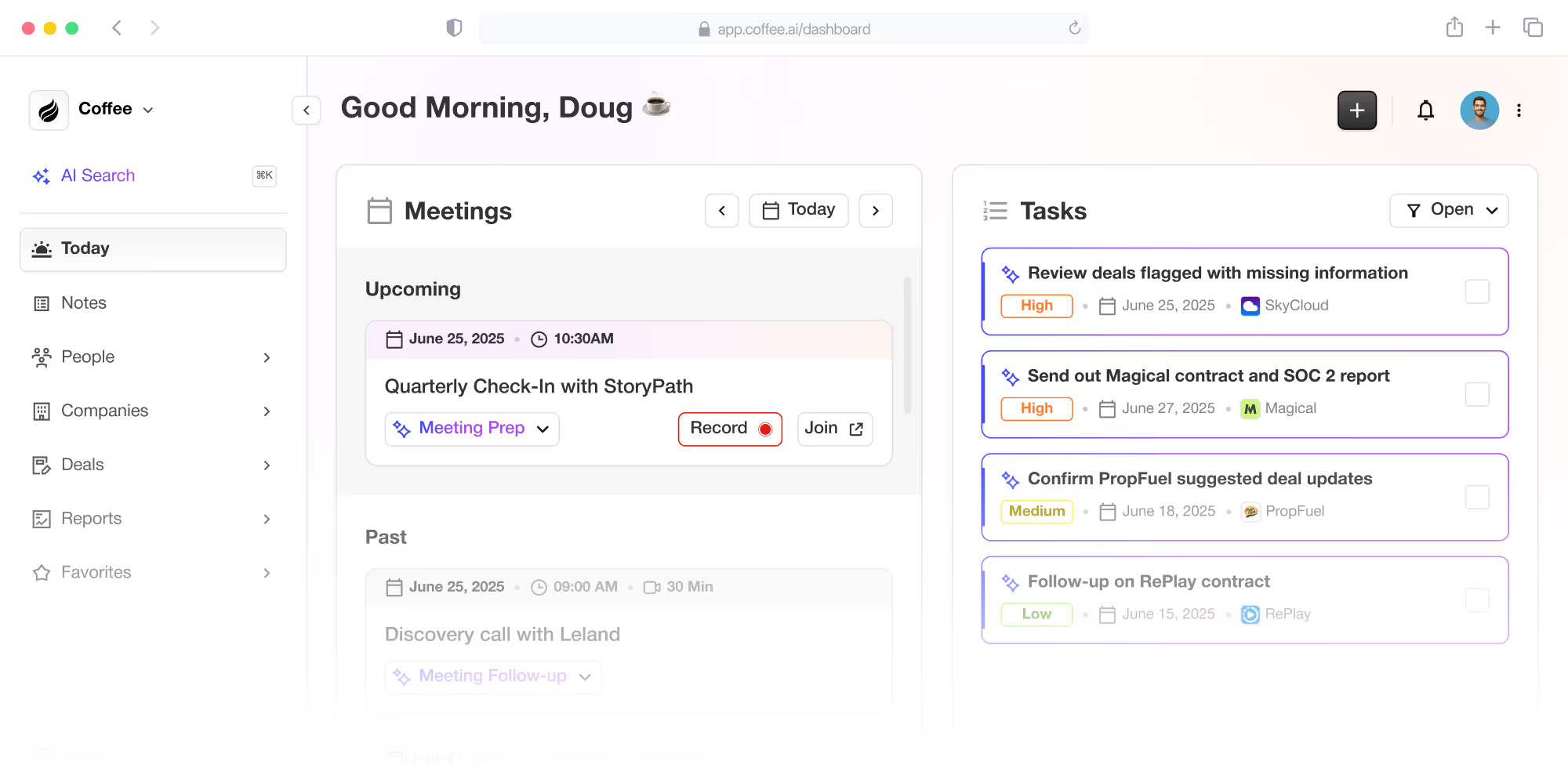
Coffee tackles repetitive tasks head-on by integrating with Google Workspace or Microsoft 365 to handle data management automatically. It creates and enriches contact records, logs interactions, and even joins video calls to transcribe discussions, summarize key points, and draft follow-ups.
This level of automation means less time spent on updates and more on selling. Coffee’s system also pulls in fresh data from partners to keep records current, reducing the need for separate research tools. Sales teams can regain 8 to 12 hours weekly for revenue-focused work.
- Auto-log emails and meetings without manual input.
- Get AI-generated meeting summaries for quick follow-ups.
- Keep contact data current with automated enrichment.
Step 4: Monitor Progress with Real-Time Pipeline Updates
Set Up Consistent Tracking
Keep tabs on goal progress with regular reviews of key metrics. Schedule weekly pipeline checks, monthly goal assessments, and quarterly strategy sessions. Look at both activity levels, like meetings held, and outcomes, such as deals closed, to understand your trajectory.
Choose metrics tied directly to your SMART goals, ensuring they’re updated automatically for accuracy. This ongoing visibility helps catch issues early and keeps the team aligned on priorities without manual reporting overhead.
Coffee’s Pipeline Insights
Coffee provides a “Pipeline Compare” feature that tracks changes over time, showing new opportunities, progressed deals, or stalled ones. Unlike traditional systems needing manual exports, this tool captures historical snapshots for instant analysis, maintaining data quality without extra effort.
- See week-over-week pipeline shifts at a glance.
- Spot stalled deals to take timely action.
- Maintain accurate data with automatic updates.
Step 5: Adapt and Improve with Data-Driven Insights
Review and Adjust Regularly
Continuous improvement is key to hitting sales goals. Set a rhythm for weekly tweaks, monthly trend analysis, and quarterly deep dives into performance. Look at hard numbers, like pipeline speed, alongside softer feedback, such as customer responses, to refine your approach.
Stay open to change based on what the data shows. If a strategy isn’t working, pivot quickly rather than sticking to outdated plans. This flexibility helps your process evolve, driving better results over time.
Coffee’s Role in Optimization
Coffee delivers consolidated analytics to spot bottlenecks and refine strategies. Its AI digs into performance patterns, offering guidance on where to focus. The natural language query feature also aids in targeting high-potential leads, keeping efforts sharp and effective.
- Identify sales process gaps with AI insights.
- Adjust targeting based on real performance data.
- Focus on promising segments with tailored queries.
How Coffee Stands Out in Boosting Sales Productivity
Versatile Solutions for Any Setup
Coffee offers two products to fit different needs: a Standalone CRM for a full AI-driven system and a Companion App that enhances existing Salesforce or HubSpot setups. This flexibility lets any team tap into AI benefits without overhauling current tools, aligning with the industry shift toward intelligent sales tech.
Benefits for Sales Leaders
Leaders gain a clear view of team performance and pipeline health through Coffee’s real-time dashboards. Automated reporting cuts down on data crunching, while features like Pipeline Compare enable strategic discussions during reviews, focusing on deal progress and resource needs.
Advantages for Sales Reps
Reps benefit from reduced admin tasks, with Coffee logging activities and preparing meeting briefs automatically. AI guidance helps prioritize high-value leads, and streamlined follow-ups keep engagement high. This user-friendly design boosts adoption, ensuring the tool supports daily selling rather than complicating it.
Comparing Coffee to Other AI CRM Options
While Coffee excels in automation and integration, other platforms like Gong focus heavily on conversation intelligence, capturing call insights but offering less in pipeline management. Clari provides strong forecasting but may require more setup for small teams. Each tool has trade-offs: Gong prioritizes interaction data over workflow efficiency, and Clari emphasizes prediction at the cost of user simplicity.
Coffee balances automation, pipeline tracking, and ease of use, making it a versatile choice for teams of varying sizes. Its dual-product approach addresses a wider range of needs compared to competitors, fitting into the trend of AI tools that reduce friction in sales processes. Weigh your team’s focus, whether it’s call analysis, forecasting, or overall efficiency, when choosing a solution.
Common Questions About Coffee’s AI CRM
How does Coffee solve data fragmentation issues?
Coffee unifies structured data, such as contacts and deals, with unstructured data from emails and calls into one platform. By integrating with Google Workspace or Microsoft 365 and pulling from data partners, it centralizes customer information, cutting down on time spent toggling between systems.
Can Coffee reduce time spent on data entry?
Yes, Coffee automates data entry by creating records, logging activities, and enriching contact details upon connecting to your email and calendar. This shift lets reps prioritize selling over manual updates, addressing a key inefficiency in traditional CRMs.
What actionable insights does Coffee offer?
Coffee’s AI examines pipeline data and interaction history to suggest next steps, unlike older CRMs focused on past reports. It highlights priority actions and high-potential opportunities, guiding reps to focus efforts effectively.
Does Coffee work with Salesforce or HubSpot?
Coffee’s Companion App integrates with Salesforce and HubSpot, adding AI features like data enrichment and meeting summaries without disrupting existing workflows. You control which insights sync back to your primary CRM, preserving your setup while enhancing capabilities.
How does Coffee maintain data accuracy?
Coffee ensures data quality through automated updates and validation. It refreshes contact info via data partners, logs interactions in real time, and stores historical snapshots, providing reliable data for goal setting and prioritization.
Conclusion: Elevate Your Sales Game with AI Tools like Coffee
Navigating sales goals doesn’t have to mean wrestling with scattered tools or endless admin work. AI CRMs, exemplified by Coffee, bring together data, automate mundane tasks, and offer clear guidance on priorities, letting your team focus on building connections and closing deals.
Follow the five steps in this guide: set SMART goals with solid data, prioritize high-impact tasks, automate routines, track progress closely, and adapt based on insights. This framework, powered by intelligent tech, builds a cycle of improvement that drives consistent results.
Whether you’re looking for a full CRM or an add-on to Salesforce or HubSpot, Coffee offers practical tools to reclaim time and sharpen focus. Ready to see the impact of AI on your sales process? Request access to Coffee’s platform today and take the first step toward smarter sales productivity.