
In today’s fast-paced sales environment, technology is reshaping how teams connect with customers. AI, in particular, has become a game-changer, streamlining processes and sharpening strategies. Among its many applications, meeting scheduling within AI CRMs stands out as a vital tool for boosting productivity and speeding up deal cycles. This guide dives into the evolving market landscape, exploring how intelligent scheduling addresses real challenges for sales leaders. We’ll break down the benefits, weigh the trade-offs, and spotlight solutions like Coffee as part of a broader trend toward smarter sales enablement.
The demand for efficient sales tools is growing as businesses face pressure to close deals faster while maintaining strong relationships. Traditional methods often fall short, bogging down reps with repetitive tasks and fragmented data. AI steps in to fill these gaps, offering automation and insights that redefine workflows. Scheduling, once seen as a minor administrative chore, now plays a central role in creating seamless customer experiences and driving measurable outcomes. Let’s explore this shift, grounded in research and practical insights, to understand its impact on modern sales teams.
Why Meeting Scheduling Matters More Than Ever
The Real Impact of Inefficient Scheduling
Inefficient meeting scheduling quietly drains resources in ways many sales leaders overlook. Sales reps often spend 8 to 12 hours weekly on administrative tasks, with coordination eating up a big chunk of that time. This isn’t just about lost hours; it means fewer opportunities to engage with prospects and close deals.
The ripple effects are costly. Missed meetings due to clunky processes can lose potential clients. Constant email back-and-forth burns out reps, lowering morale. Worse, when meeting details aren’t captured in the CRM, pipeline data becomes unreliable, making forecasting a guessing game. Older tools like spreadsheets or basic calendars often fail to meet modern demands, leading to errors and wasted effort across the sales cycle.
Without a systematic way to track meeting outcomes, sales leaders struggle to get a clear view of deal progress. Poor data quality forces reliance on subjective updates rather than hard facts, undermining strategic decisions.
Scheduling as a Key Part of the Sales Journey
Smart sales teams see scheduling as more than a logistical step; it’s a chance to impress prospects from the first touch. A smooth, professional process builds trust, while a disjointed one can turn off potential clients before a conversation even starts.
Buyers today expect interactions tailored to their needs. A scheduling system that accounts for their preferences and handles logistics automatically sets a positive tone. Beyond individual touchpoints, the data from these interactions offers valuable insights into behavior patterns, ideal meeting times, and channel effectiveness, helping refine outreach and allocate resources better.
Understanding AI-Driven Scheduling in CRMs
How AI Redefines Meeting Coordination
AI brings a new level of efficiency to scheduling by focusing on data-driven decisions. It analyzes past interactions to recommend the best meeting times based on factors like time zones, prospect roles, and typical engagement patterns. This goes well beyond just finding open calendar slots.
Availability management gets a boost with AI. It syncs calendars, factors in travel or prep time, and anticipates conflicts before they happen. Personalized communication, tailored to a prospect’s history or industry, also improves response rates. Plus, automated reminders and rescheduling options keep meetings on track, while post-call actions ensure follow-ups happen without delay.
The Broader Impact on Sales Workflows
AI turns scheduling into a proactive part of revenue generation. Instead of reps juggling emails and calendars, the system handles logistics and suggests strategic timing for outreach based on data like past successes or key dates in the sales cycle.
Before meetings, AI compiles detailed briefings with prospect backgrounds and conversation tips. After, it summarizes discussions, identifies next steps, and updates CRM records instantly. This keeps the pipeline accurate and ensures no detail slips through, letting reps focus on selling rather than admin work.
Mapping the Evolution of Scheduling Tools
Scheduling solutions have come a long way. Early tools focused on basic calendar syncs, requiring manual input and offering little connection to wider sales processes. Later versions added reminders and CRM links, but they still demanded significant effort to keep data consistent.
Now, AI-native platforms shift the focus from mere efficiency to strategic impact. They deliver insights, automate workflows, and predict outcomes, aligning closely with sales goals. Current trends point to personalized outreach, deeper integrations with conversation tools, and smarter timing recommendations. Automation is key to crafting relevant, timely messages for prospects.
Want to see how this works in action? Request access to explore AI-driven scheduling for your team.
Coffee’s Innovative Take on Meeting Management
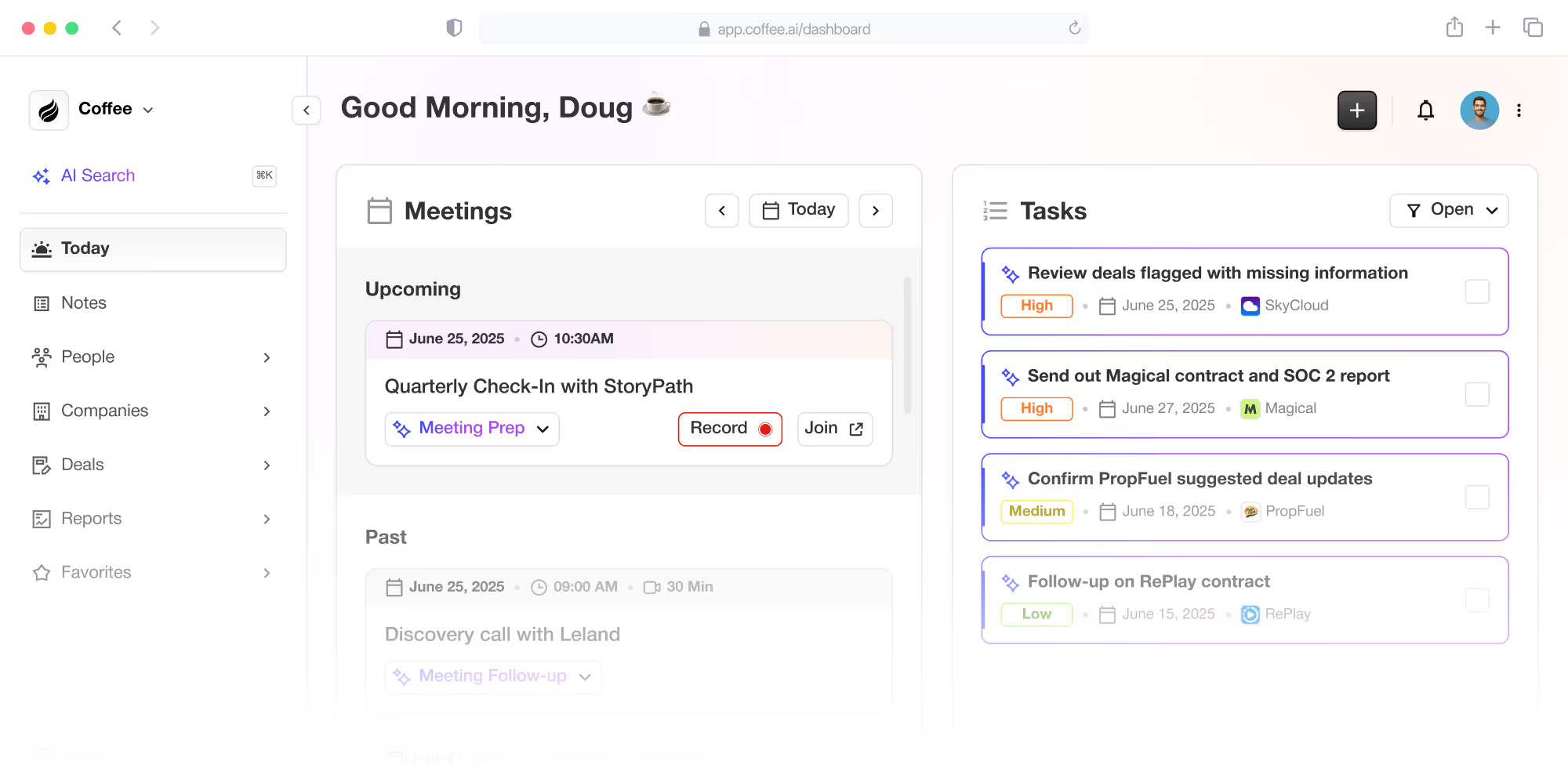
As part of the wave of AI-powered sales tools, Coffee stands out by weaving meeting intelligence into a full CRM experience. It doesn’t just handle scheduling; it enhances every step of customer engagement with practical automation.
Simplifying Before and After Meetings
Coffee cuts out manual prep work by creating detailed briefings for each meeting. These include prospect details, past interactions, and suggested talking points, all accessible from a central dashboard. The system uses data to recommend strategies that match prospect profiles and industry patterns, leading to more effective conversations.
After meetings, Coffee automates summaries, action items, and follow-up drafts tied to email tools like Gmail. This means reps can send personalized messages quickly, keeping momentum without extra effort.
Smart Meeting Capture and Notes
Coffee’s AI joins calls on platforms like Google Meet or Zoom, recording and analyzing discussions in real time. It transcribes accurately, highlights key points, and picks up on cues like objections or buying interest that manual notes might miss. This creates a searchable record for future reference and better account handling.
Follow-up emails are drafted with specific references to the call, maintaining continuity and strengthening ties with prospects. This level of detail helps reps stay aligned with client needs.
Aligning with Sales Frameworks
Coffee adapts to popular sales methods like BANT or MEDDIC, organizing meeting insights into these structures. It flags critical details, such as budget talks or decision-maker roles, ensuring consistent qualification across deals. By automating CRM updates with this data, it gives leaders a clear, objective view of the pipeline without relying on manual input.
This aligns with broader trends in using AI to enhance tailored engagement while keeping team processes uniform.
Key Decisions for Sales Leaders on AI Scheduling
Should You Build or Buy an AI Solution?
Choosing between building a custom AI tool or buying a ready-made CRM solution is a big decision. Custom builds seem affordable at first but often demand heavy resources for development and upkeep. They also lag in adopting the latest AI updates or best practices.
Established CRMs like Salesforce offer basic scheduling, but they may lack advanced AI features. Standalone tools can fill specific gaps, yet they often create isolated data pools that hurt overall insights. Integrated options, like Coffee, combine scheduling with broader sales functions, providing faster setup, consistent data, and ongoing improvements.
Tracking Returns and Encouraging Team Use
Measuring the value of AI scheduling means looking at clear metrics: time saved per rep, meeting attendance rates, faster deal cycles, and better data accuracy. Reps often save 8 to 12 hours weekly on routine tasks, a direct boost to their focus on selling.
Other gains include higher meeting-to-deal conversions and quicker movement through sales stages, thanks to timely follow-ups and insights. For adoption, the tool must show immediate value to reps. Hands-on training and regular wins shared with the team help maintain consistent use over time.
Comparing AI Scheduling to Older Tools
| Feature | Coffee AI CRM Scheduling | Standalone Tools | Legacy CRM Add-ons |
|---|---|---|---|
| Data Capture | Automatic from emails and calls | Mostly manual input | Limited to calendar sync |
| Meeting Automation | Briefings and follow-ups by AI | Basic reminders only | Notifications, no content |
| Sales Framework Fit | Auto-aligns with BANT/MEDDIC | Not supported | Needs manual setup |
| Pipeline Updates | Instant CRM integration | Manual updates needed | Minimal data flow |
Avoiding Common Scheduling Mistakes
Overlooking Scheduling’s Strategic Role
Many leaders view scheduling as a minor task, missing its potential to stand out in a competitive market. This mindset limits investment in better tools, costing teams in productivity and missed deal opportunities. Scheduling shapes prospect impressions and data quality, directly affecting long-term performance.
Dealing with Disconnected Tools
Using multiple, unconnected tools for scheduling creates data silos and extra work. Reps waste time moving information between systems, increasing errors. A unified approach, where data flows naturally into sales processes, reduces this burden and supports better reporting.
Missing Out on Personalized Outreach
Generic messages no longer cut it in crowded inboxes. Low response rates often stem from a lack of tailored communication. Customized outreach is crucial to grab attention. AI can analyze data to adapt messages, significantly boosting engagement at scale.
Failing to Optimize Meeting Timing
Focusing only on booking speed ignores meeting quality. Timing matters, with data showing afternoon slots on weekdays cutting no-show rates. Proper time zone handling and thorough prep also play a big role in driving better outcomes.
Ready to improve your scheduling game? Request access to see how AI can refine your sales process.
Answers to Common Questions on AI Scheduling
What Makes AI Scheduling More Productive?
AI scheduling saves time by automating full workflows, not just calendar slots. It handles coordination, notes, and follow-ups, freeing reps from 8 to 12 hours of weekly admin tasks. It also improves meeting outcomes with data-driven suggestions and real-time insights, building over time for even greater impact.
Does AI Really Improve Outreach Personalization?
AI excels at tailoring outreach by drawing on CRM data, past interactions, and industry context. It adjusts tone, timing, and content to match prospect profiles, enabling high-quality customization across large volumes, unlike manual efforts that can’t keep up.
How Does AI Ensure Accurate Pipeline Data?
AI captures meeting details automatically, processes them objectively, and updates CRM records instantly. This cuts out human error and delays common in manual entry, providing reliable data on buying signals and deal progress for better forecasting.
What Should You Plan for During Implementation?
Implementation needs attention to technical setup, like system compatibility and security, as well as team training for smooth adoption. Define success metrics early and commit to regular reviews to keep improving the process.
How Soon Can You Expect Results from AI Scheduling?
Time savings often show up within the first week, with broader benefits like improved conversions visible in 30 to 60 days. The impact grows as AI learns from your data, offering sharper insights and automation over time.
Final Thoughts: Boost Your Sales with Smart Scheduling
AI-powered scheduling in CRMs has become essential for sales teams aiming to stay ahead. Moving from manual tasks to automated, insight-driven workflows changes how deals are won. Coffee illustrates this shift, offering a unified way to manage meetings while delivering actionable data that speeds up cycles and grows revenue.
Teams adopting these tools see clear gains: reps save hours weekly, prospects get better experiences, and leaders gain trustworthy pipeline views. As AI continues to advance, waiting to adopt risks losing ground to competitors. Take the next step now. Request access to Coffee’s platform and see how intelligent scheduling can power your sales growth.