
In today’s competitive sales environment, choosing a CRM with strong integration capabilities is vital for leaders and RevOps teams. Effective integration connects data sources, automates repetitive tasks, and ensures data accuracy across platforms, directly impacting sales productivity. This guide explores the evolving landscape of CRM solutions, comparing Coffee’s AI-driven integration—available as a standalone CRM or a companion app—with established platforms like HubSpot. By outlining key considerations and focusing on data unification and workflow automation, we aim to help sales teams make informed decisions for better efficiency.
The CRM market has shifted significantly over the past decade. Traditional systems, once the backbone of sales operations, now face challenges with data silos and manual processes as businesses adopt diverse tech stacks. Meanwhile, newer AI-powered tools aim to bridge these gaps by unifying data and reducing workload. Coffee stands as part of this emerging trend toward intelligent, flexible CRM solutions. Let’s dive into how integration capabilities affect sales outcomes and where tools like Coffee and HubSpot fit in this changing landscape.
Request access to see how Coffee can improve your sales operations through smarter integration.
Why Poor CRM Integration Hurts Sales Performance
Weak integration between CRM systems and other tools creates hidden costs that impact sales results. Many organizations overlook these issues, treating them as minor inconveniences rather than critical business challenges that need addressing.
Fragmented Data Slows Down Sales Reps
Data spread across multiple systems, such as CRM platforms, email tools, and call logs, forces sales reps to spend time piecing information together. This reduces their focus on actual selling. Sales reps often spend only about 35% of their time on active selling due to these inefficiencies.
Manual Data Entry Wastes Valuable Time
Instead of streamlining work, many CRMs burden teams with repetitive data entry. Sales reps often update records manually across disconnected tools, cutting into time that could be spent closing deals. This constant switching between systems adds unnecessary mental strain and reduces overall output.
Key Factors to Evaluate CRM Integration Capabilities
Selecting the right CRM integration requires a clear set of priorities. Below are the essential factors to consider when assessing solutions for your sales team.
- Data Consistency Across Systems: Look for tools that combine customer data from various sources, including emails and call notes, into a unified view without manual effort.
- Automation of Routine Tasks: Prioritize systems that automatically log activities, update records, and manage workflows like follow-ups or meeting prep.
- Support for AI and Growth: Choose platforms built to handle AI-driven insights and large data sets as your business scales.
- Simple Setup and Upkeep: Opt for solutions that reduce setup time and ongoing maintenance through user-friendly design and automation.
HubSpot’s Integration Features: Benefits and Challenges
HubSpot is widely recognized for its accessible CRM and broad integration options. Here’s a balanced look at what it offers and where it may fall short for sales teams with complex needs.
What HubSpot Does Well
HubSpot provides a large marketplace of integrations with popular business tools. For teams focused on marketing automation or simple setups, its ecosystem often meets basic connectivity needs effectively.
Where HubSpot Faces Limits
HubSpot’s structure, initially built for marketing, can struggle with detailed sales data, especially unstructured information like meeting transcripts. This can create gaps for teams needing deeper insights or advanced automation in their sales processes.
How Coffee AI CRM Enhances Integration for Sales Teams
As part of a broader trend toward AI-driven solutions, Coffee offers a fresh take on CRM integration. Built with artificial intelligence at its core, it focuses on unifying data and automating tasks to support modern sales teams.
Unifying Data with AI Technology
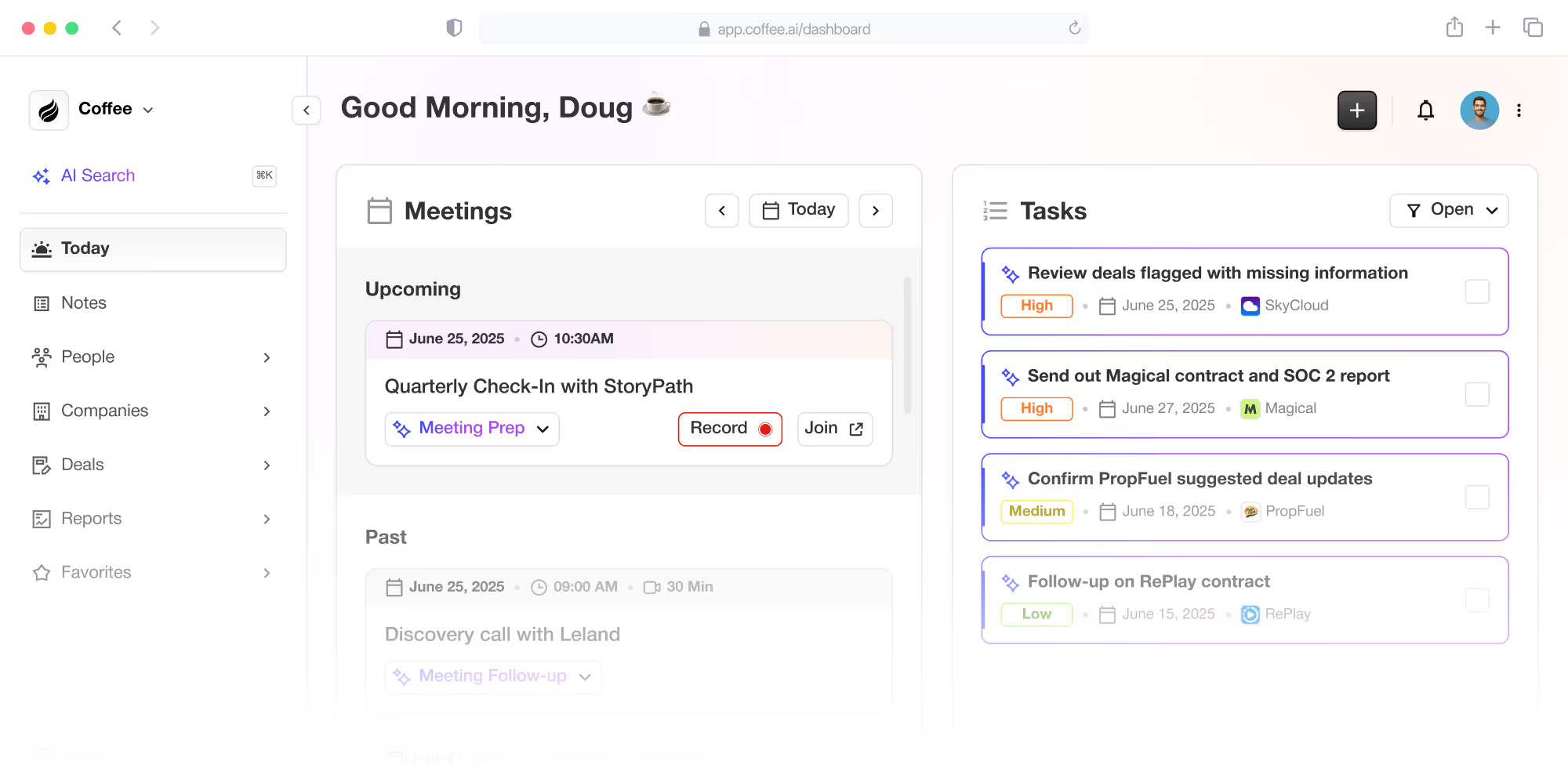
Coffee automatically pulls in and organizes data from emails, calendars, and call recordings. It merges this information into a single, clear customer profile, reducing the silos common in older CRM systems. Its data storage approach also supports detailed analytics for better sales decisions.
Automation to Reduce Manual Tasks
Once connected to tools like Google Workspace or Microsoft 365, Coffee creates contacts and logs interactions without user input. It enriches records with details like job titles or company data from external sources, keeping information up to date. Meeting tools provide summaries, action items, and follow-up drafts, while pipeline analysis offers quick insights into deal progress.
Wide Connectivity Options
Coffee integrates natively with key platforms and uses Zapier to link with thousands of other apps. This ensures your existing tools work together without friction.
Flexible Usage Models
Coffee adapts to different needs through two options. Its standalone CRM suits smaller businesses looking for an AI-focused system. For teams using HubSpot or Salesforce, Coffee’s companion app adds AI features while syncing data seamlessly with minimal setup.
Request access to learn how Coffee’s approach can fit your integration needs.
Comparing Integration: Coffee AI CRM vs. HubSpot
Let’s break down how Coffee and HubSpot stack up across key integration aspects.
| Feature | Coffee AI CRM | HubSpot CRM |
|---|---|---|
| Data Unification | Handles both structured and unstructured data for a complete view | Reduces some data gaps but struggles with complex inputs |
| Automation | Automatically builds records and logs activities | Offers some automation but often needs manual updates |
| Data Enrichment | Integrated AI updates contact details automatically | Relies on external tools or manual input |
Coffee’s design prioritizes AI to deliver integration features that HubSpot’s framework may not fully match, especially for intricate sales needs.
Long-Term Benefits of Strong CRM Integration
Integration isn’t just a technical feature, it shapes your team’s efficiency and costs over time. Coffee’s focus on automation simplifies setup and training, while its scalability adapts to growth. Consolidating tools also cuts licensing fees and reduces complexity, improving data quality as reps adopt the system more readily.
Deciding on the Right Integration Path with Coffee
Your organization’s needs will guide whether Coffee’s standalone CRM or companion app fits best. Smaller teams of 1-20 employees often benefit from the standalone version for its simplicity and AI focus. Larger teams tied to HubSpot can use the companion app to add intelligence without disrupting current workflows.
Request access to find the best Coffee solution for your team.
Common Questions About Coffee’s Integration
Does Coffee Connect with Tools Beyond HubSpot and Salesforce?
Yes, Coffee integrates with Google Workspace, Microsoft 365, and offers Zapier support for thousands of apps, ensuring broad compatibility across your tech stack.
How Does Coffee Handle Existing HubSpot Data?
When used as a companion app, Coffee syncs with your HubSpot data through a straightforward setup. You control which AI-enriched insights update back to HubSpot, maintaining continuity.
How Does Coffee’s AI Boost Sales Productivity?
Coffee automates data capture, record updates, and activity tracking. Features like meeting summaries and pipeline insights can save reps 8-12 hours weekly, freeing them to focus on selling.
Final Thoughts on CRM Integration for Sales Growth
Choosing the right integration capabilities directly shapes your sales team’s success. Coffee, as a leader in AI-driven CRM trends, tackles data silos and manual tasks with unified data and automation. Whether as a standalone system or a companion to HubSpot, it offers practical ways to boost efficiency.
Request access to Coffee today and explore how its integration features can support your sales goals.