
Sales leaders face a pivotal choice when selecting the right tools for analytics and reporting. With the sales tech market evolving rapidly, options range from established platforms like HubSpot to innovative AI-driven CRMs like Coffee. This comparison explores how each stacks up in critical areas such as data integration, AI insights, automation, and usability, helping you decide what best fits your team’s needs.
How Sales Analytics Impacts Team Performance and Forecasting
Your sales analytics platform plays a central role in uncovering opportunities and predicting outcomes. Weak tools lead to unreliable forecasts and wasted time on manual tasks, pulling focus away from closing deals. Without clear insights, sales leaders often react to issues rather than plan ahead.
This ripple effect hits hard. Reps tied up with data entry miss out on connecting with prospects. Fragmented data hides key signals about deal progress or pipeline risks. Over time, inconsistent information undermines trust in the system, lowering usage and compounding problems.
On the other hand, robust analytics can shift the game. Real-time pipeline visibility, automated reporting, and predictive insights empower proactive strategies. When data from emails, calls, and CRM records comes together, teams spot trends and refine their approach with accuracy.
AI is reshaping this space by making advanced insights more accessible. Many traditional CRMs restrict deeper analytics to higher-priced plans, leaving smaller teams with basic options. Upgrading for better features often means a steep cost jump. AI-driven tools bridge this gap, offering powerful capabilities without the hefty price tag, letting sales teams focus on selling rather than struggling with data.
Key Factors in Choosing a Sales Analytics Tool
Selecting the right sales analytics platform means looking at several deciding factors. These elements show whether a tool will genuinely improve your operations or just add complexity to your setup.
- Data Integration: Top platforms pull together data from emails, calls, calendars, and CRM records for a full view of customer interactions, cutting through silos for precise analysis.
- AI Insights: Advanced tools use machine learning to predict trends, flag risks, and highlight opportunities, moving beyond static charts to actionable recommendations.
- Automation: Systems that handle data entry and reporting tasks automatically free up time for sales reps to focus on client-facing work.
- User Experience: Intuitive design drives consistent use among reps. Higher adoption means better data quality, boosting the accuracy of insights.
- Overall Cost: Beyond subscription fees, factor in setup, training, and maintenance expenses. Solutions needing heavy customization can drive up costs over time.
Coffee: AI-Driven Sales Analytics for Modern Teams
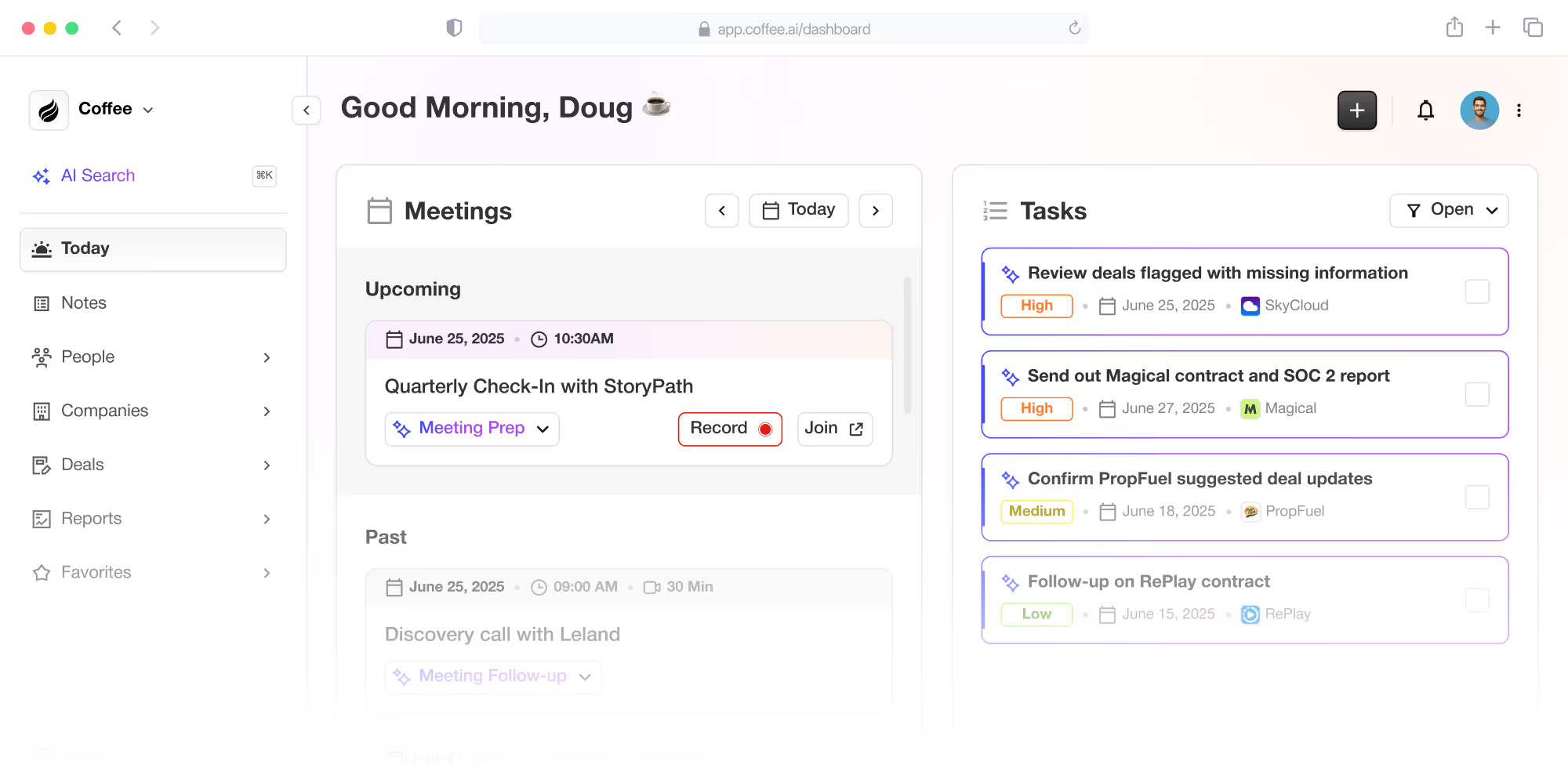
Coffee stands out as a fresh take on sales analytics, built with AI at its foundation. Unlike older systems that tack on AI as an afterthought, Coffee tackles common pain points like manual data entry and scattered information with a streamlined, intelligent approach.
Here’s what sets Coffee apart:
- Automated Data Capture: By linking to Google Workspace or Microsoft 365, Coffee builds and updates contact records, logs activities, and tracks interactions without any manual input.
- Pipeline Tracking: Its “Compare” feature shows week-over-week pipeline shifts at a glance, turning routine reviews into strategic discussions instead of spreadsheet slogging.
- Meeting Insights: An AI bot joins calls on Google Meet, Teams, or Zoom, recording, transcribing, and summarizing key points, while drafting follow-up emails to save time.
- Unified Data: Coffee blends structured CRM entries with unstructured content like email threads and call notes, offering deeper insights than field-limited systems.
- Smart Prospecting: Sales teams can build targeted lists with natural language queries, such as finding sales VPs at mid-sized firms using specific tools, all in one step.
Coffee offers flexibility with two setup options: a standalone CRM for smaller teams or a companion app for HubSpot and Salesforce users. This means you can gain AI benefits without overhauling your current system. Request access to Coffee and see how it fits your workflow.
HubSpot Sales Analytics: What Works and What Falls Short
HubSpot is a go-to CRM for many small to mid-sized businesses, blending sales and marketing functions. Its analytics strengths include user-friendly dashboards, clear pipeline views, and tight integration with marketing data for a broad customer perspective.
Yet, HubSpot has notable drawbacks in its analytics capabilities:
- Data Depth Issues: Granularity and integration limits can hinder detailed tracking and nuanced analysis.
- Cost Barriers: Advanced reporting tools are locked behind pricier plans, leaving basic tiers with gaps.
- Manual Input: Some data entry tasks remain manual, pulling reps away from selling and risking inconsistent records.
- Design Constraints: Its framework struggles with real-time, AI-based analysis of unstructured content.
- Growth Limits: Contact limits and tiered upgrades can strain scalability for expanding teams.
- Reporting Gaps: Handling complex data like call transcripts often requires extra tools.
Comparing Coffee and HubSpot on Sales Analytics
Let’s break down how Coffee and HubSpot measure up across essential analytics criteria for sales leaders.
| Category | Coffee (AI-Driven) | HubSpot (Traditional) |
|---|---|---|
| Data Integration | Automatic blending of structured and unstructured data | Some manual entry; struggles with unstructured content |
| AI Insights | Pipeline tracking and call summaries built-in | Basic insights; predictive tools often cost extra |
| Automation | Handles data entry, meeting notes, and reports | Limited automation; deeper features need add-ons |
| Reporting Ease | Instant, automated reports with pipeline history | Dashboards require manual tweaks for customization |
| Scalability | Flexible data storage; works with existing CRMs | Contact caps and upgrades challenge growth |
| Value | Cuts manual tasks and consolidates tools | Tied to specific plans and use cases |
Getting the Most Value from Sales Analytics Tools
Cost isn’t just about monthly fees when picking a sales analytics platform. Traditional CRMs often pile on expenses through setup, training, and upkeep. Coffee’s AI focus aims to lower these burdens with automation and simplicity.
Setup with Coffee is straightforward, connecting quickly to email and calendar tools for instant data flow. This cuts down on lengthy implementation and consulting fees common with older systems. Its user-friendly design also means less training time, as reps can jump in with minimal guidance.
By combining features like data enrichment and call analysis into one platform, Coffee reduces the need for multiple subscriptions. Automated processes improve data consistency too, as reps are more likely to use a tool that saves them effort, leading to sharper insights over time.
For HubSpot or Salesforce users, Coffee’s companion app adds AI capabilities without disrupting current setups, offering a practical way to upgrade analytics. Request access to Coffee to explore this option for your team.
Common Questions on AI Sales Analytics
What Limits Traditional CRM Analytics?
Systems like HubSpot often lack depth in data detail, rely on manual updates, and struggle with unstructured content like emails or call notes. Advanced features are typically tied to expensive plans, and real-time AI analysis can be hard to achieve without extra tools.
How Does AI Enhance Sales Analytics?
AI processes diverse data types in real time, spotting patterns and predicting outcomes. It automates pipeline monitoring and reporting, keeping insights current and actionable, so leaders can focus on strategy instead of data crunching.
Will AI CRMs Work with HubSpot?
Coffee integrates smoothly with HubSpot as a companion app, syncing data and adding AI insights without changing your existing setup. This preserves workflows while enhancing capabilities.
Ready to boost your sales analytics with AI? Request access to Coffee and see the difference.
Conclusion: Drive Sales Success with AI Analytics
Choosing between traditional CRMs and AI-driven platforms shapes your team’s edge in a data-focused market. While HubSpot covers basic reporting, its manual tasks and data limits can hold teams back. Coffee addresses these gaps with automation and unified insights, aiming to make CRMs a valued tool for reps.
Adopting AI analytics can lift productivity and strengthen client ties through better data. Sales leaders looking to enhance efficiency can test this approach with Coffee. Request access today to learn more.
“