

Key Takeaways
- Legacy CRM analytics drain sales productivity through manual data entry, fragmented tools, and unreliable reporting.
- AI-first CRMs use autonomous agents to capture, enrich, and analyze data in real time, improving forecast accuracy and decision-making.
- Meeting intelligence, natural language querying, and automated workflows turn unstructured conversations into structured, report-ready insights.
- Consolidated tech stacks and automated compliance reduce costs and risk while maintaining a single, reliable source of truth.
- Coffee provides an AI-first CRM agent that automates data capture, reporting, and insights so sales teams can focus on selling. Get started with Coffee.
The Problem with Legacy CRM Analytics: A Drain on Your Sales Team
Legacy CRMs reduce selling time by forcing reps to maintain data manually. Coffee market data shows that 71% of sales reps spend too much time on data entry, leaving only about one-third of their time for actual selling activities.
Fragmented systems make this worse. Teams juggle tools for records, enrichment, outreach, and call recording, then try to stitch it all together. Unstructured data like emails and call transcripts often never reach the CRM, and simple databases overwrite history when fields change. Adoption drops, shadow spreadsheets appear, and analytics lose reliability.
Why AI-First CRM Is the Future of Analytics and Reporting in Sales
AI-first CRMs shift from passive databases to active agents. Coffee acts as an autonomous CRM agent that captures tasks, logs interactions, enriches records, and syncs systems so data stays accurate without constant manual work.
Core Capabilities That Improve Data Accuracy
- Automated data entry and enrichment: Coffee creates and enriches contacts, companies, and activities, saving reps many hours per week while keeping records complete and consistent.
- AI-powered meeting management: Coffee joins calls, records and transcribes them, and structures notes with frameworks such as BANT, MEDDIC, or SPICED, so conversations become searchable, analyzable data.
- Pipeline intelligence and comparison: Real-time views show week-over-week changes, highlighting new, progressed, or stalled deals and improving forecast reliability.
- Natural language list builder: Users can request lists such as “VPs of Sales in North America at companies with more than 10M in funding using Salesforce,” then use those lists for targeting or reporting.
Get started with Coffee to move from manual reporting to automated, AI-driven analytics.

9 Ways AI-First CRM Transforms Analytics and Reporting
1. Improve Forecast Accuracy with Pipeline Intelligence
AI-first CRMs monitor pipeline changes continuously, not just at forecast meetings. Coffee tracks deal movement automatically so sales leaders see which opportunities are advancing, stalling, or shrinking without waiting for reps to update spreadsheets.
Tactical implementation: Use Coffee’s pipeline comparison views to review weekly changes, then coach reps on stalled or at-risk deals based on objective activity data.
2. Turn Meeting Conversations into Structured Insights
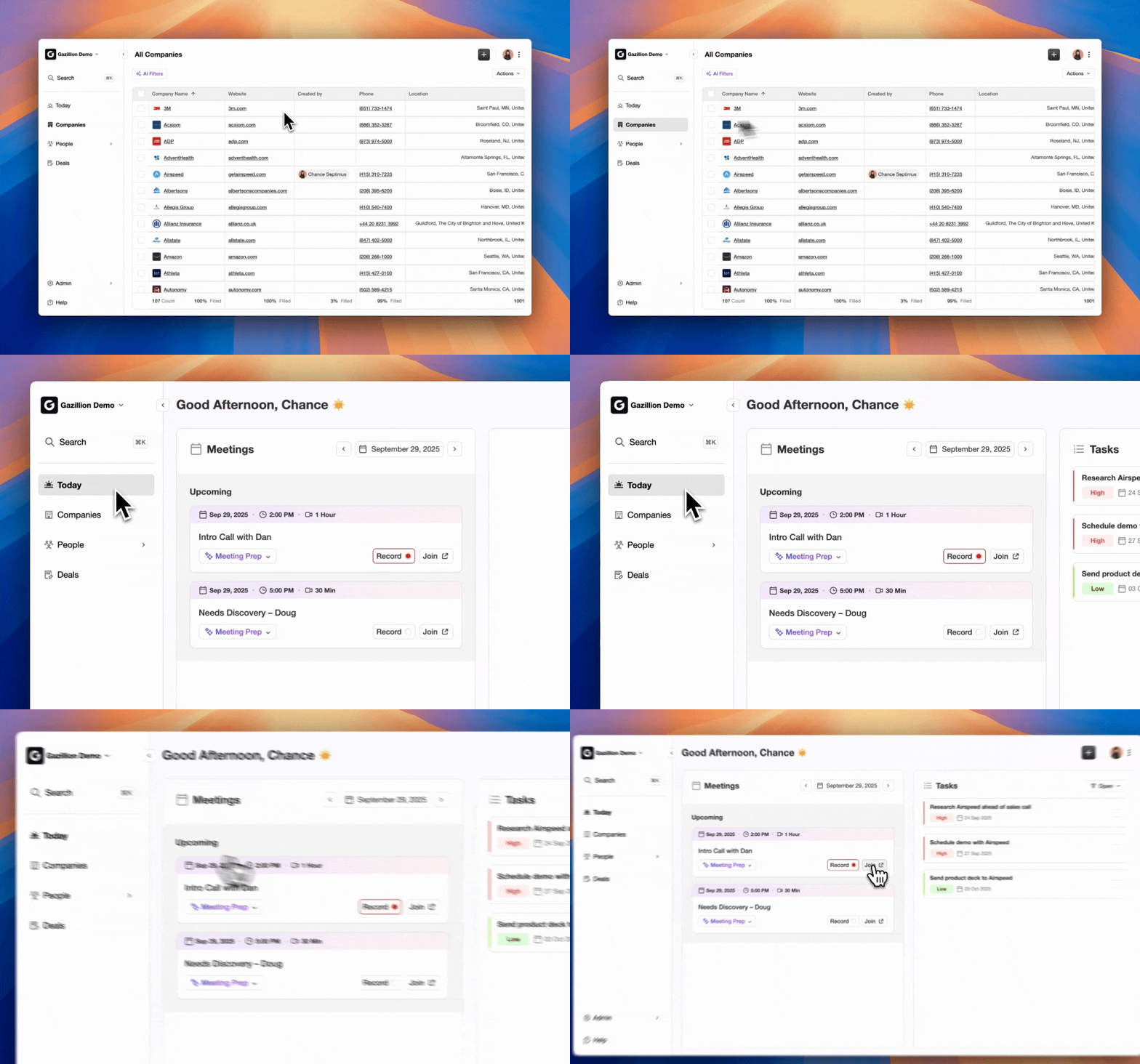
Meeting data becomes a major analytics driver when it is captured and organized. Coffee records calls, transcribes them, and structures notes so leaders can analyze themes such as objections, buying signals, and next steps across deals.
Tactical implementation: Enable Coffee’s meeting bot for key stages in your sales process so every discovery, demo, and negotiation contributes consistent data to your reports.
3. Reduce Busywork with Automated Activity Logging
Reps gain selling time when the CRM logs their work for them. Coffee captures emails, meetings, and updates in the background so deal histories stay complete without constant reminders or admin blocks on the calendar.
Tactical implementation: Configure Coffee to auto-create contacts, accounts, and activities from calendars and inboxes, then measure time returned to reps versus manual logging.
4. Get Instant Answers with Natural Language Queries
Natural language querying removes the need for complex filters or report builders. Coffee lets managers ask for views such as “all open opportunities without activity in 21 days” and delivers results that are ready to act on or export.
Tactical implementation: Adopt Coffee’s list builder for both prospecting and reporting so frontline managers and reps can answer data questions without help from operations or analytics specialists. Get started with Coffee to use natural language analytics in your team.

5. Strengthen Qualification with Fresh, Enriched Data
Qualification depends on current, complete information. Coffee enriches records and logs engagement automatically so reps can prioritize accounts by fit, intent, and recent activity instead of relying on stale or partial data.
Tactical implementation: Use Coffee’s enrichment and activity history to define your ideal customer profile and build views that highlight accounts matching those signals.
6. Monitor Performance in Real Time
Leaders benefit from live insight into pipeline health. Coffee updates fields such as last activity, next step, and stage change times automatically, allowing managers to see performance trends without waiting for end-of-month reports.
Tactical implementation: Create dashboards that use Coffee’s real-time fields to track activity levels, stage conversion rates, and aging by owner or segment.
7. Focus Coaching on What Actually Drives Revenue
AI-first analytics reveal which behaviors correlate with closed revenue. Coffee combines logged activities, meeting notes, and pipeline outcomes so teams can see which actions and talk tracks lead to wins.
Tactical implementation: Review Coffee’s data on high-performing deals, then turn those patterns into coaching guidelines, playbooks, and training content for the broader team.
8. Simplify Your Sales Tech Stack
Consolidation reduces costs and data gaps. Coffee covers CRM, enrichment, call intelligence, and pipeline analytics in one environment, which limits integration overhead and improves consistency across reports.
Tactical implementation: Audit overlapping tools and migrate core workflows like enrichment and meeting intelligence into Coffee so reporting draws from a single source of truth.
9. Support Compliance and Data Quality Automatically
Automated capture and standardized processes help maintain compliance. Coffee supports frameworks such as GDPR and SOC 2 Type 2 while keeping records consistent, which improves both audit readiness and trust in analytics.
Tactical implementation: Align your data retention and access policies with Coffee’s controls, then rely on its automated logging to support internal reviews and external requirements. Get started with Coffee to align analytics with your compliance needs.
AI-First CRM Analytics vs. Traditional CRM
AI-first CRMs differ from traditional systems in how they capture, process, and surface data. This table summarizes key distinctions that affect analytics quality and day-to-day reporting.
|
Feature / Capability |
Traditional CRM Analytics |
AI-First CRM Analytics (Coffee) |
Advantage of AI-First |
|
Data capture |
Manual entry, siloed data |
Automated via an AI agent |
More complete, consistent data |
|
Data processing |
Basic relational databases |
Unified structured and unstructured data |
More complete customer view |
|
Pipeline insights |
Historical trends, manual updates |
Continuous, agent-driven analysis |
Higher forecast confidence |
|
Reporting |
Manual queries, static reports |
Natural language, dynamic views |
Faster, more flexible insight |
|
Workflow automation |
Basic, pre-defined rules |
Adaptive, AI-driven workflows |
Meaningful time savings |
|
User experience |
Data entry chore |
Helpful copilot and assistant |
Higher adoption and data quality |
Conclusion: Use AI-First Analytics to Support Sales Growth
Sales teams now compete on how well they use data, not just how much they collect. Manual, fragmented CRM processes struggle to keep up, while AI-first systems like Coffee maintain accurate records and deliver timely insights with less effort from reps.
Applying these nine approaches helps organizations move from reactive reporting to proactive guidance. Get started with Coffee to equip your sales team with an AI agent that keeps data clean, surfaces actionable analytics, and supports more predictable growth.
Frequently Asked Questions About AI-First CRM Analytics
How does Coffee’s AI agent improve analytics quality?
Coffee’s agent scans calendars and email, creates and enriches records, and logs activities without manual work. This consistent, automated capture reduces missing data and errors, so reports and dashboards reflect what is actually happening in the field.
Can Coffee work alongside my existing CRM, such as Salesforce or HubSpot?
Coffee can operate as a companion layer on top of existing systems. After a simple connection, the agent syncs, enriches, and writes insights back into tools such as Salesforce or HubSpot, improving their analytics without requiring a full migration.
How is AI-first CRM analytics different from traditional BI tools?
Traditional BI tools sit on top of static datasets and focus on visualization. Coffee’s AI-first analytics sit inside daily workflows, collect and clean data in real time, and then provide timely, contextual insights that guide actions within the CRM itself.
What results can teams expect after adopting Coffee?
Teams typically see cleaner data in the first week as Coffee starts capturing and enriching records automatically. Reps recover hours previously spent on admin within a few weeks, and leaders gain more reliable pipeline visibility as the agent accumulates activity and meeting data.