
Last updated: January 6, 2026
Key Takeaways
- Sales teams regain selling time when AI captures CRM data directly from emails, calls, and meetings instead of relying on manual updates.
- Deal qualification, meeting prep, and follow-up become more consistent when AI agents structure notes and actions using your chosen sales methodology.
- Continuous AI-driven pipeline monitoring improves forecast accuracy by flagging stalled deals and missing information before reviews.
- Lead scoring, routing, and data quality improve when AI enriches records, enforces rules, and assigns work based on real engagement signals.
- Dedicated AI-first platforms, such as Coffee, centralize automation, so one AI agent can handle data entry, meetings, pipeline insights, and workflows in a single place.
1. Automate Real-Time CRM Data Entry from Sales Activities
Manual data entry reduces selling time and often creates incomplete CRM records. AI CRM task automation can capture real sales activity from calls, emails, and meetings, then update CRM fields in the background.
You can replace manual logging with an AI agent that monitors communication channels and turns unstructured content into structured records. The agent creates and updates contacts, accounts, and activities, and links them to the right opportunities.
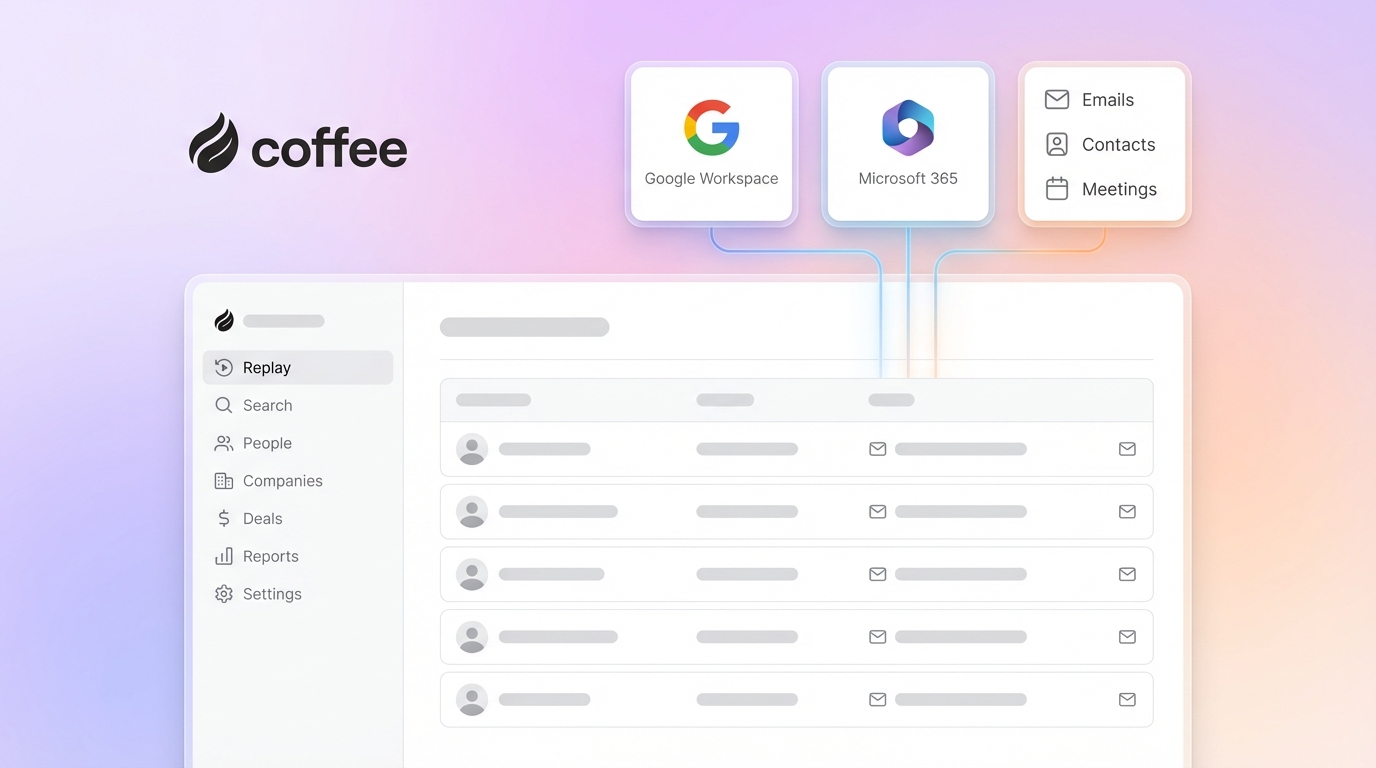
Coffee’s AI Agent connects to Google Workspace or Microsoft 365 and scans emails, calendars, and meeting transcripts to auto-create contacts, companies, and activities. It associates every interaction with the correct record, so reps do not have to act as data entry clerks.

Effective setup starts with connecting your communication tools to an AI-first CRM that can read and interpret messages and transcripts. The AI should automatically extract contact details, meeting outcomes, next steps, and deal signals with minimal manual intervention.
2. Deploy Intelligent Deal Stage and Qualification Field Updates
Consistent deal qualification helps leaders understand pipeline quality, but reps rarely have time to fill every field. AI agents can listen to sales conversations and populate qualification frameworks based on what prospects actually say.
Coffee’s AI Agent structures notes using frameworks such as BANT, MEDDIC, or SPICED. When a prospect mentions budget, authority, timelines, or pain points, the AI adds these details to the right fields without extra work from the rep.
Configuration works best when you map phrases and discussion topics to your sales methodology. For example, when prospects discuss implementation dates or urgency, the AI can update timeline fields and adjust deal stages to reflect real momentum.
3. Implement AI-Driven Meeting Management and Follow-Up Automation
Meetings drive deals forward, yet preparation, note-taking, and follow-up consume large blocks of time. AI sales assistants can handle these steps so reps stay present in the conversation.
Coffee’s Meeting Management features support this workflow. The AI Agent prepares a “Today” page before each meeting with attendee details, roles, and past context. During the call, it joins as an AI bot to record and transcribe across Zoom, Teams, and Google Meet. Afterward, it generates summaries, highlights next steps, and drafts follow-up emails in Gmail for the rep to review and send.

Teams gain the most value when the AI links follow-up actions to specific conversation outcomes. You can configure tasks such as sending recaps, updating stages, logging next steps, and scheduling new meetings so deals continue moving without long gaps.
4. Establish Automated Pipeline Intelligence and Risk Detection
Accurate pipeline reviews depend on up-to-date, consistent data. AI agents can monitor deal health across the funnel and surface risk before forecast calls.
Coffee’s Pipeline Compare view shows week-over-week changes. Teams can quickly see which deals progressed, which stalled, and which new opportunities entered the pipeline. Because the Coffee Agent stores interaction history in a built-in data warehouse, managers can shift reviews from data clean-up to strategic planning.
Stronger pipeline intelligence often includes:
- Alerts for deals with no recent activity within a set timeframe
- Flags on opportunities are missing key qualification fields
- Views that highlight deals with slipping close dates or shrinking deal sizes
These signals help leaders coach reps on specific deals instead of spending time hunting for basic information.
5. Create Workflow-First Automation for Lead Scoring and Assignment
Lead routing improves when scoring models reflect how prospects behave, not just who they are on paper. AI can update scores continuously based on real engagement.
Effective models combine:
- Firmographic data such as company size, industry, and region
- Behavioral signals such as email engagement, website visits, and meeting attendance
- Buying signals, such as budget mentions or project timelines captured in conversations
Once you have a scoring model, the CRM can assign leads automatically based on territory, expertise, or current workload. This approach reduces response time and keeps rep capacity balanced.
6. Automate Data Validation and Quality Control Processes
Reliable reporting depends on clean data. AI can enforce data standards at the point of entry instead of waiting for quarterly clean-up projects.
Strong data quality workflows often include:
- Validation rules that block stage advancement without required fields, such as the decision-maker or the next step
- Prompts that ask reps for missing details when gaps appear
- Automated checks that look for duplicate or outdated records
Coffee strengthens data quality at the source by enriching records with titles, funding information, and LinkedIn profiles through licensed data partners. Teams no longer need separate enrichment tools, and CRM fields stay accurate and complete.

7. Deploy All-in-One AI Agents for Comprehensive Sales Support
Sales teams see the clearest benefits when one AI agent coordinates multiple tasks across the CRM instead of many disconnected tools. AI-enabled CRMs reduce administrative load and keep reps focused on selling and relationships.
Coffee follows this approach with a single AI Agent that manages data entry, meeting management, pipeline insights, and workflow automation. The agent operates as a unified intelligence layer that supports your existing tech stack.
Teams can use Coffee either as an AI-first CRM for growing organizations or as a companion app for Salesforce or HubSpot. This flexibility allows you to adopt AI automation on top of your current system or replace older CRM workflows when the time is right.
Frequently Asked Questions
How does AI-powered CRM automation differ from traditional workflow automation?
Traditional CRM automation uses fixed, rule-based triggers that require manual setup and frequent adjustments. AI-powered automation adapts to real sales behavior and conversation context to make decisions in real time. Instead of relying only on predetermined workflows, AI watches natural sales activity, updates CRM fields, and triggers follow-ups so automation aligns with how your team actually works.
What specific tasks should I prioritize for AI automation in my CRM?
You can start with repetitive, high-volume tasks that take time away from selling. Data entry from sales activities usually delivers the fastest impact. Meeting preparation and follow-up, then deal stage and qualification updates, are strong next steps. Pipeline intelligence and list building help managers and RevOps teams plan more effectively. Focus early automation on capturing real interactions, and keep human judgment for pricing, strategy, and complex negotiations.
How can I ensure AI automation improves rather than compromises data quality?
Quality improves when the AI captures information directly from emails, calls, and meetings instead of relying on manual notes. Look for AI agents that monitor these channels and write data into the CRM in a structured way. Combine this with validation rules that block incomplete records from progressing and with automatic enrichment from reliable data partners. A “good data in, good data out” mindset helps every report and forecast.
What should I expect in terms of time savings and efficiency gains?
Teams that adopt AI-powered CRM automation often reclaim many hours each week for selling activities. Removing manual data entry, meeting documentation, and routine follow-ups gives reps more time for discovery, demos, and negotiation. Leaders gain time back as well by spending less effort on manual pipeline review and data clean-up.
How do I choose between standalone AI-first CRMs and AI companion apps for existing systems?
The right choice depends on your current CRM investment, team size, and appetite for change. Small and mid-sized teams that feel constrained by manual work in legacy systems may benefit from a standalone AI-first CRM that centralizes automation. Teams with large investments in platforms such as Salesforce or HubSpot can add an AI companion app to introduce intelligent automation while maintaining current processes. Evaluating both options helps you decide whether to enhance your existing setup or move toward a more modern CRM foundation.