
The CRM market has seen significant growth over the past decade, with tools like HubSpot becoming central to sales strategies across industries. However, a persistent challenge remains: many sales teams underutilize these platforms, resulting in incomplete data, inefficient processes, and missed revenue opportunities. Research indicates that up to 70% of CRM implementations face adoption issues, often due to perceived complexity or lack of immediate value for sales reps. This gap between investment and usage reflects a broader tension in the sales technology landscape, where powerful tools must balance functionality with ease of use to deliver real results. This guide explores actionable strategies to improve HubSpot adoption by addressing resistance through structured support and innovative AI solutions, with a focus on practical value for sales teams. Coffee, an AI-powered companion app, serves as a notable example of how technology can bridge this gap, alongside other approaches that contribute to a growing trend of automation in sales workflows.
Why Sales Reps Hesitate with HubSpot: Key Barriers to Adoption
Sales reps often resist HubSpot due to a perception that it consumes more time than it saves. This productivity paradox creates immediate pushback, as reps prioritize short-term efficiency over long-term benefits. Understanding this mindset is the first step to building effective support systems.
Experienced reps, in particular, may feel their existing methods, such as spreadsheets or personal email systems, work well enough. They often see little direct benefit in adapting to a new tool, especially if it feels like an added layer of complexity to their daily routine.
Limited access to ongoing help also plays a role. Without clear, immediate support, reps abandon systems that frustrate them. When challenges arise, the lack of quick solutions reinforces their reluctance to engage with the platform.
Another issue is the sense that HubSpot serves management more than reps. If the tool feels like a reporting obligation rather than a practical aid for prospecting or deal tracking, usage drops. Ongoing support must focus on demonstrating daily value to shift this perception.
Manual data entry further discourages adoption. Even with some automation in place, many setups still require significant manual input, which feels like a drain on time that could be spent selling. Breaking this cycle of disengagement requires addressing these pain points directly.
Foundation for Success: Initial Steps to Improve HubSpot Adoption
Set Measurable Goals for HubSpot Engagement
Defining clear adoption targets helps track progress and identify areas needing support. Metrics like full login rates in the first week or 95% daily users by month one provide actionable benchmarks. These goals create focus for support efforts.
Track both behavior and outcomes. Behavioral metrics, like login frequency or feature usage, show how reps interact with HubSpot. Outcome metrics, such as data accuracy or deal speed, reflect the business impact. Combining these gives a full picture of adoption health.
HubSpot offers tools to monitor these indicators. Custom reports can display rep engagement and deal activity to gauge support impact. Review these weekly in the first month, then monthly, to spot trends and adjust strategies.
Gain Leadership Support and Build a HubSpot-Friendly Culture
Strong leadership commitment drives lasting adoption. Cultural reinforcement from leaders, paired with technical enablement, is critical for success. If leaders bypass HubSpot for other tools, reps notice and follow suit.
Leaders should use HubSpot for reviews, pipeline analysis, and team discussions. When reps see it as the central resource for decisions, its importance becomes clear. Celebrating wins, like deals closed using HubSpot data, further embeds this value.
Investing in support resources also signals priority. Allocating time, budget, and flexibility for training shows reps that adoption matters beyond mere compliance. This builds a culture where HubSpot is a tool for success, not a burden.
Crafting a Strong Support System for HubSpot Users
Offer Tailored, Immediate Help for HubSpot Challenges
Generic training falls short for sustained engagement. Customized guidance boosts adoption, with 70% of companies seeing gains from personalized systems. Support must match individual rep needs and usage patterns.
Provide multiple help options. HubSpot offers resources like AI-driven help, live chat, and community forums. Internally, add role-specific guides, quick video tutorials, and access to knowledgeable colleagues for a well-rounded system.
Use a tiered approach. Start with self-service tools like FAQs or HubSpot’s help features. Then offer peer support through champions. Reserve formal training for complex issues. Focus on key struggle points, like deal transitions or follow-ups, to prevent disengagement.
Want to cut down on manual data entry slowing adoption? Explore how Coffee automates CRM tasks.
Build Internal Experts and Encourage Peer Learning
Internal champions and peer training sustain long-term usage. These advocates provide real-time help and model best practices. Choose champions for their enthusiasm, not just rank, and equip them with advanced training.
Set up regular champion-led activities, like weekly tips or monthly demos. Reward their efforts with recognition or growth opportunities. Peer learning often resonates more than formal instruction, as it comes from colleagues who understand sales challenges.
Highlight HubSpot’s Automation and AI Benefits
HubSpot’s built-in automation can drive adoption by cutting repetitive tasks. Features like auto-logging calls, AI lead scoring, and one-click updates save time. Show reps how these directly improve their workflow.
Focus training on practical tools. Email tracking signals prospect interest. Activity logging reduces manual input. Meeting tools streamline scheduling. Many users value AI features for efficiency and insights. Ongoing support should prioritize these benefits to build engagement.
Strengthening HubSpot with Coffee’s AI Companion
Streamline Data Tasks with Coffee for Better Adoption
Manual data entry remains a hurdle in many HubSpot setups, often reducing rep engagement. Coffee, an AI companion app, integrates with HubSpot to automate these tasks, saving time and aiming to improve usage rates. This reflects a wider movement in sales tech toward reducing workload through intelligent tools.
Coffee scans emails and calendar invites to create contacts and enrich records with details like job titles or company info, potentially saving reps 8-12 hours weekly. This time can shift to core selling activities, aligning with the goal of making CRM a helpful tool rather than a chore.
For meetings, Coffee delivers AI-generated briefings with attendee and history data. It records and transcribes calls on platforms like Zoom or Google Meet, then summarizes discussions, identifies tasks, and drafts follow-up emails for review. This minimizes post-call manual work.
Pipeline management also benefits. Coffee’s comparison feature tracks weekly changes, highlighting deal progress or stalls without requiring manual updates. Syncing with HubSpot is simple, allowing enriched data to flow back seamlessly while maintaining familiar workflows.
Compared to other tools, Coffee stands out for its focus on automation depth and HubSpot compatibility. While alternatives like Gong.io offer strong call analytics, they may lack the same level of data enrichment. Clari excels in forecasting but might not address data entry directly. Coffee’s emphasis on reducing mundane tasks positions it as a valuable addition for adoption-focused teams, though assessing specific needs ensures the right fit.
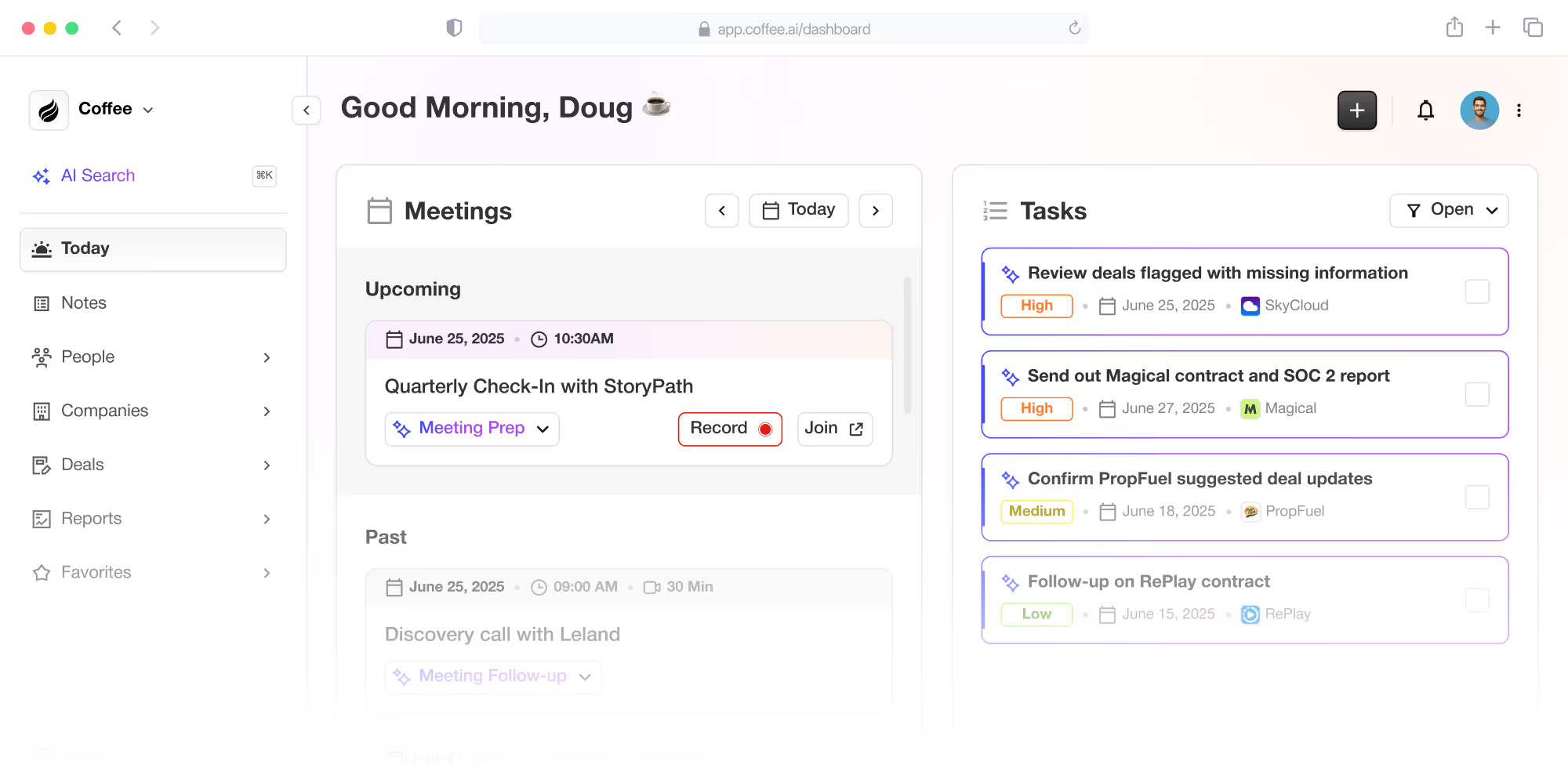
Ready to enhance HubSpot usage with AI? See how Coffee complements your system.
Tracking and Refining Your HubSpot Adoption Plan
Analyze Usage Data to Spot HubSpot Challenges
Continuous monitoring reveals where support needs adjustment. Detailed tracking through HubSpot reports shows feature usage and links to deal results. Focus on early signs of struggle, like declining logins or low activity updates.
Look for patterns in bottlenecks. Reports can flag deals with no engagement for targeted help. Use custom dashboards to track metrics like data completeness or email tracking usage, reviewed weekly by leaders.
Gather Feedback to Improve HubSpot Support
Regular input from reps keeps support relevant. Clear workflows boost ongoing engagement. Offer varied feedback channels, from surveys to casual talks, ensuring reps see their ideas lead to changes.
Hold monthly reviews to discuss HubSpot pain points and solutions. Act on suggestions quickly and communicate updates. Track common support queries to address systemic gaps with better resources or simplified processes.
Signs of Success: How HubSpot Adoption Improves
Effective support shows in measurable gains. Login frequency, feature usage, and data accuracy rise within 90 days. Reps start asking about advanced features and sharing success stories, indicating a shift in perception.
Pipeline quality improves with consistent updates and reliable forecasts. Deal speed may increase as reps leverage insights for faster responses. Overall, a culture develops where HubSpot feels integral to sales work, not just a requirement.
Long-Term Tactics to Maintain HubSpot Engagement
Once adoption stabilizes, keep momentum with rewards for proficiency, like certification programs. Introduce advanced features gradually, such as custom reporting, to maintain interest. Tools like Coffee can further support prospecting with natural language queries, enhancing HubSpot’s core functions.
Integrate with other stack tools for a cohesive experience. Evolving support programs to match growing team skills ensures HubSpot remains a valued asset over time.
Common Concerns About HubSpot Adoption and Support
What Causes Low HubSpot Usage Among Sales Reps?
Resistance often stems from the perception that HubSpot takes more time than it saves. Veteran reps may stick to familiar methods, seeing little personal gain. Limited support access and a culture viewing CRM as a management tool also hinder engagement.
How Does Tailored Support Boost HubSpot Usage?
Customized help meets specific rep needs, offering relevant guidance at the right time. With varied channels like self-service tools and peer advice, reps gain confidence, solve issues, and explore more HubSpot features.
Do AI Tools Really Help HubSpot Adoption?
AI tools address core adoption barriers by automating repetitive tasks. Coffee, for instance, handles data entry and meeting follow-ups, freeing reps to focus on selling. This growing trend in sales tech can shift how CRMs are perceived and used.
Which Metrics Track HubSpot Adoption Effectively?
Monitor behavioral indicators like login rates and feature usage, alongside outcomes like deal speed and data quality. Early warning signs, such as reduced activity, allow for timely support adjustments to prevent broader issues.
How Soon Can Improved Support Impact HubSpot Adoption?
Initial gains often appear within 2-4 weeks, with logins and basic usage rising. Deeper engagement, like workflow integration, builds over 90 days. Full maturity may take 6-12 months, depending on support consistency and team size.
Final Thoughts: Turn HubSpot into a Core Sales Asset
Improving HubSpot adoption relies on making it a practical tool for reps through consistent support and automation. Personalized help, internal champions, and AI solutions like Coffee address common barriers, potentially leading to better data and efficiency.
The path forward involves ongoing optimization and responsiveness to rep feedback. As part of a broader shift toward streamlined sales tech, tools like Coffee reduce manual tasks, allowing support to focus on strategy over compliance.
Ready to support your team’s HubSpot journey? Discover how Coffee can enhance adoption and performance.