
Salesforce dominates the CRM market as a powerful tool for sales teams, yet many leaders find it falls short of expectations. Despite its robust capabilities, the platform often burdens reps with manual tasks. Over 70% of sales reps spend excessive time on data entry, diverting focus from selling. Meanwhile, insights remain hidden in disjointed systems and dated reports. This gap between potential and reality highlights a broader trend in the CRM landscape: basic functionality alone cannot meet modern sales demands. As organizations invest billions annually in Salesforce, the challenge lies in tailoring it to specific needs. The AppExchange ecosystem offers a solution, providing thousands of apps to address inefficiencies and customize workflows. By integrating targeted tools, companies can turn Salesforce into a dynamic sales driver, aligning with the industry’s shift toward automation and intelligence. Among these innovations, Coffee stands out as a prime example, enhancing Salesforce with AI-driven features while reflecting the market’s push for streamlined, tech-forward solutions.
Why Salesforce Needs Enhancement for Maximum Impact
Even with significant investment, many sales teams using Salesforce grapple with persistent issues. Manual data entry, unreliable forecasts, and limited pipeline visibility sap productivity. Reps often spend just 35% of their time on actual selling, bogged down by administrative tasks.
The core issue is not Salesforce’s design, but its reliance on manual effort for data upkeep and insight generation. Without proper integrations, teams juggle disconnected tools, which can complicate processes and erode efficiency gains.
The AppExchange offers a way forward. With over 9,000 apps tailored to solve issues like data entry and workflow gaps, it enables teams to customize Salesforce into a more effective platform. Choosing the right tools can significantly improve sales outcomes.
1. Automate Data Entry with AI for Better Efficiency
Accurate data is the backbone of any sales strategy, but manual input often leads to errors and gaps in Salesforce. Reps waste hours logging emails or updating records, time better spent on closing deals.
AI-driven automation apps fix this by capturing and enriching data without user effort. These tools sync with email and calendar systems to build contact profiles, pulling in details like job roles or company info from trusted sources.
Setup is straightforward: link your Google Workspace or Microsoft 365 account, and the tool scans communications to update records. It also logs activities, ensuring pipeline data stays current without manual updates.
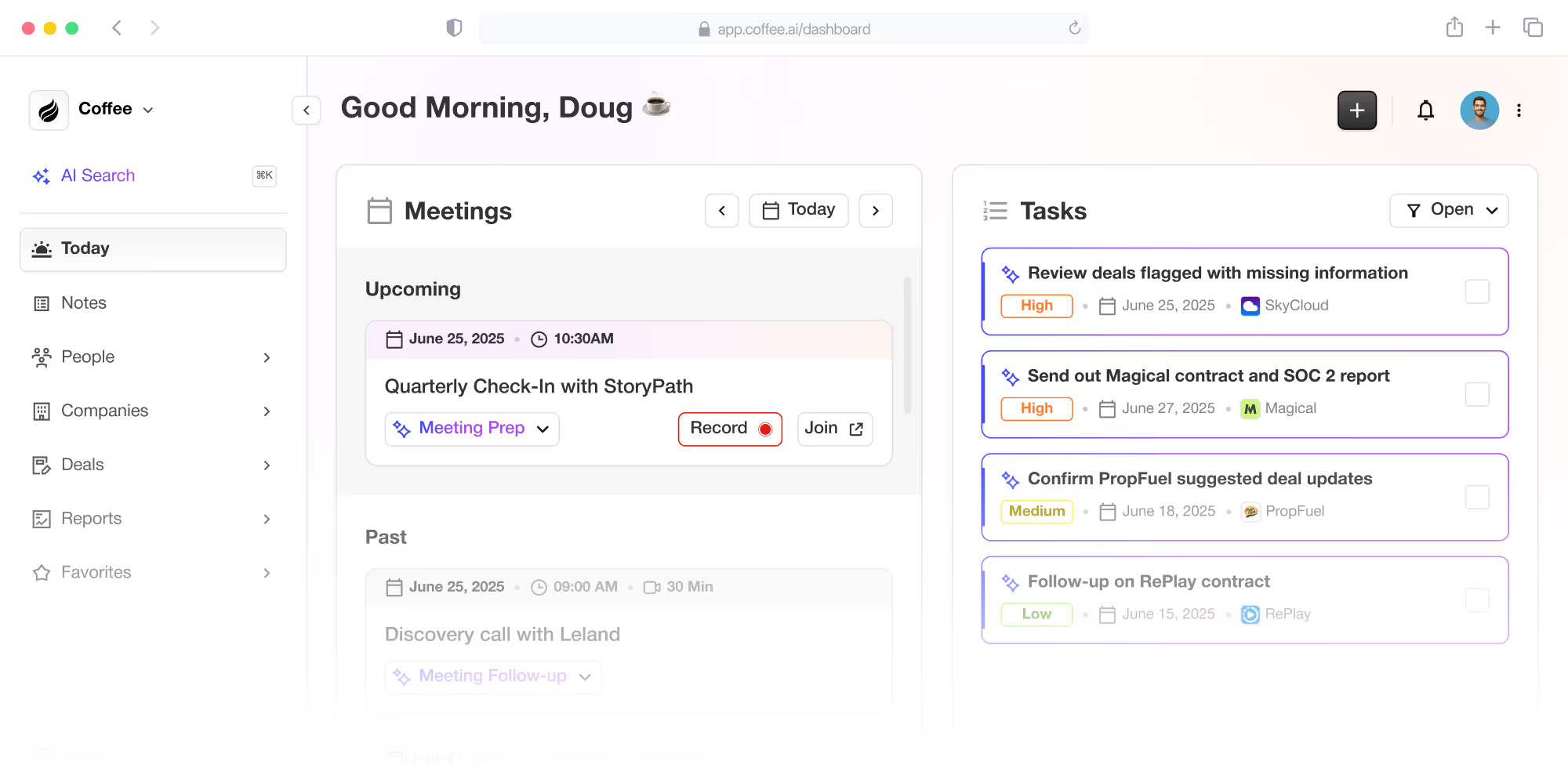
Coffee’s Companion App excels here, integrating with Salesforce to automate data capture from emails and calendars. It enriches records and can save reps 8-12 hours weekly on data tasks, making Salesforce more proactive while preserving existing processes.
2. Gain Deeper Insights with Advanced Analytics
Standard Salesforce reports often lack the depth sales leaders need for strategic decisions. Basic dashboards miss critical trends, leaving teams without clear direction on opportunities or issues.
Advanced analytics apps offer detailed visualizations and predictive insights. Real-time tools help spot opportunities and refine forecasting, providing a clearer view of pipeline health and rep performance.
These apps feature customizable dashboards to track key metrics and highlight anomalies. For instance, SplashBI Sales Analytics delivers detailed reports and drill-down options to uncover reasons behind pipeline shifts or win/loss patterns.
To implement, define your critical metrics and set up dashboards within Salesforce. The best tools also offer mobile access and alerts for timely action on performance dips.
3. Improve Pipeline Visibility for Accurate Forecasts
Forecasting accuracy remains a challenge for many Salesforce users. Standard reports often fail to predict outcomes or flag risks early, hindering effective planning.
Pipeline management apps provide detailed tracking beyond basic stages. They offer week-over-week comparisons, risk alerts for stalled deals, and scoring to prioritize likely wins. Custom dashboards enable quick risk identification for proactive adjustments.
Historical data snapshots help analyze trends in deal speed and win rates, giving leaders a full picture of revenue potential over time.
Coffee’s Pipeline Compare feature simplifies this with instant week-over-week analysis. It eliminates manual data exports, showing deal progress and new opportunities directly, turning pipeline reviews into focused strategy sessions.
4. Streamline Outreach with Engagement Tools
Consistent communication is vital for sales success, but managing it manually in Salesforce risks missed follow-ups and uneven messaging across channels.
Engagement apps automate outreach within Salesforce, offering email sequences, follow-up triggers, and templates. They track metrics like response rates and suggest optimal contact times for different prospects.
Setup involves creating workflows based on Salesforce events, like email opens or deal stages. Tools also support team collaboration to avoid duplicate outreach. Report Sender aids in sharing key updates via email to keep stakeholders aligned.
Analytics from these apps link outreach efforts to pipeline growth, ensuring a structured yet personal approach to customer interactions.
5. Capture Meeting Insights with AI Automation
Sales meetings yield critical information, but manual note-taking is time-consuming and prone to omissions. Key action items can easily slip through the cracks.
AI meeting tools record calls, transcribe discussions, and summarize key points automatically. They identify action items and analyze conversation patterns for better sales tactics. Automated summaries reduce errors in reporting for clearer follow-up.
Integrate these with platforms like Zoom or Teams to capture and share insights. Some tools even provide pre-meeting briefs with relevant deal context.
Coffee’s AI Meeting Bot automates this process, joining calls to transcribe and summarize discussions. It drafts follow-up emails and logs insights into Salesforce using frameworks like BANT or MEDDIC, cutting post-meeting admin work significantly.
6. Boost Productivity with Workflow Automation
Repetitive tasks in Salesforce, like lead assignment or data updates, drain time that reps could spend on selling. Inconsistent processes further compound inefficiencies.
Workflow automation apps handle routine actions with rule-based systems. They update fields, send emails at key stages, and ensure uniform process execution. Sales Cloud automates data capture to improve focus on high-value tasks.
Start by mapping your sales process to pinpoint automatable tasks. Salesforce Service Analytics identifies areas for productivity gains through automation.
Effective automation frees reps to build relationships and move deals forward, with features like data validation ensuring pipeline accuracy.
7. Unify Your Tech Stack for Simpler Operations
Many sales teams use multiple tools alongside Salesforce, creating a fragmented setup that’s hard to maintain. This can lead to data mismatches and high costs.
Data unification apps consolidate functions like enrichment, analytics, and automation into one platform within Salesforce. They reduce complexity while maintaining data consistency across functions. Integrations extend core capabilities but can be streamlined with unified tools.
Evaluate your tech stack to eliminate redundant tools. Consolidation cuts costs, simplifies training, and improves user adoption with fewer systems to navigate.
A unified approach enhances visibility into sales activities and forecasting, supporting consistent execution across teams.
|
Feature |
Coffee Companion App |
Standard Salesforce |
Multiple Point Solutions |
|
Manual Data Entry |
Reduced via AI automation |
Heavy manual workload |
Depends on tool setup |
|
Pipeline Intelligence |
Real-time comparison tool |
Limited to basic reports |
Needs costly extras |
|
Meeting Automation |
AI-driven summaries |
Manual note entry |
Separate app required |
|
Data Quality |
Auto-enriched records |
Relies on rep input |
Varies across tools |
Key Questions About Enhancing Salesforce
How Do AppExchange Apps Solve Data Entry Issues?
AppExchange apps tackle data entry challenges with automation that captures and updates customer info. They scan emails and calendars to populate records, pulling details like job titles from data providers, reducing manual research for reps.
Which AppExchange Categories Matter Most for Sales?
Critical categories include Sales Automation for task reduction, Analytics for data insights, Data Enrichment for record accuracy, Forecasting for revenue prediction, Communication for outreach, and Workflow Management for process consistency. AI-enhanced tools in these areas often deliver the strongest results.
How Do Apps Improve Pipeline Forecasting?
Forecasting apps enhance Salesforce with predictive analytics and trend tracking. They analyze deal patterns and market factors for better revenue projections, while scenario modeling helps leaders assess future impacts and manage deals proactively.
What Unique Value Does Coffee Bring to Salesforce?
Coffee’s Companion App integrates as an AI layer to cut manual tasks in Salesforce. It automates data capture, enriches records, summarizes meetings, and provides pipeline insights with tools like Pipeline Compare, consolidating multiple functions into one cohesive solution.
What to Consider When Choosing AppExchange Apps?
Prioritize apps with tight Salesforce integration for seamless workflows. Look for proven impact on metrics like time savings, assess total costs including setup and support, and favor tools that consolidate features over adding complexity. Check vendor plans for long-term scalability.
Conclusion: Elevate Salesforce with Smart Integrations
Salesforce lays a solid foundation for sales operations, but its full value emerges with targeted AppExchange apps. From AI automation to pipeline tools, these integrations address core challenges in data management and productivity.
Focus on solutions that simplify workflows and boost adoption. With the right enhancements, teams can improve data accuracy and forecasting while freeing reps for revenue-focused work.
As AI reshapes sales, organizations leveraging intelligent tools may outpace those sticking to basic Salesforce. Explore how to cut manual tasks and gain insights with Coffee’s Companion App to strengthen your Salesforce setup.