
The CRM market has evolved rapidly, driven by the need for efficiency in sales processes. Automation, particularly in tools like Salesforce, has become a cornerstone for modern sales teams, with features like contact creation from email saving hours of manual work. Yet, this shift toward automation brings a pressing concern: data security. As organizations handle vast amounts of sensitive customer information, the risk of breaches or compliance failures looms large. Industry reports highlight that data breaches cost companies an average of $4.45 million globally in 2023 due to compromised systems and unprotected integrations. This guide dives into the balance between leveraging automation for growth and protecting critical data, focusing on secure solutions for Salesforce users while reflecting on broader market trends.
The Core Issue: Data Security Risks in Salesforce Automation
Automation in Salesforce often involves connecting email systems to create contacts automatically. While this boosts efficiency, it introduces specific security risks that must be addressed to protect customer data.
- Over-Privileged Access: Integration accounts and non-human identities used in automation may have excessive permissions, creating potential entry points for unauthorized access if not restricted properly.
- OAuth Token Exposure: Third-party apps rely on OAuth tokens for integration, but if these tokens are mishandled or stolen, they can allow undetected access to sensitive Salesforce data.
- Third-Party Vulnerabilities: Each additional tool or integration, such as email parsing apps, expands the attack surface. Unsecured APIs or service accounts can expose communication data.
- Compliance Gaps: Capturing personal data from emails without proper controls risks violating regulations like GDPR or CCPA, especially if information is stored without consent.
A Practical Approach: Securing Automation in Salesforce
Sales teams need tools that deliver automation without sacrificing data protection. Secure platforms address these concerns by embedding robust safeguards into their design, ensuring both productivity and peace of mind for businesses of all sizes.
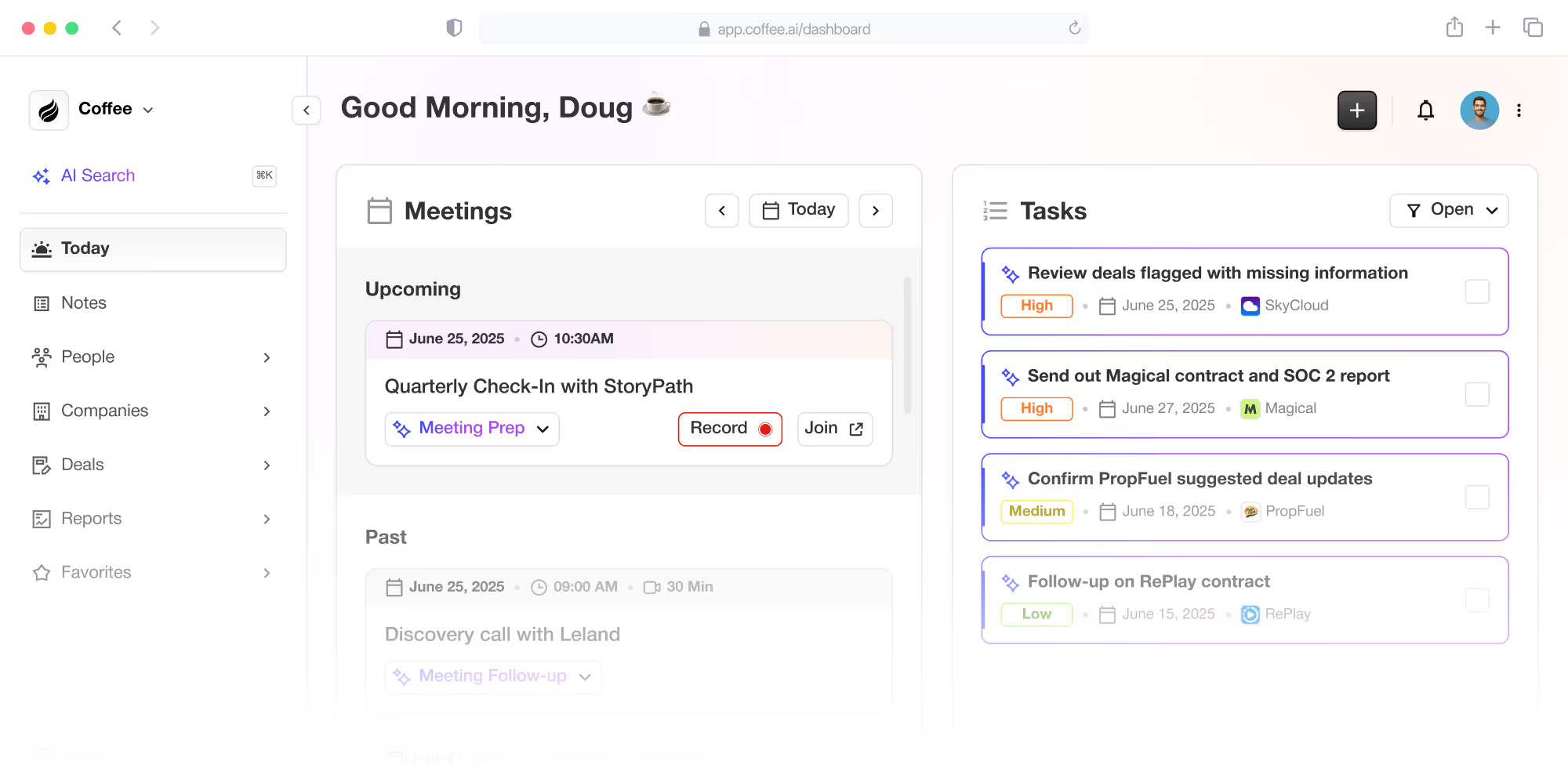
As an example of this trend toward secure automation, Coffee stands out with its AI-first CRM and companion app for Salesforce and HubSpot. It automates contact creation from email by scanning Google Workspace or Microsoft 365 accounts, pulling relevant details from emails and calendar invites, and enriching records with data like job titles or company size from verified sources. What sets Coffee apart is its focus on security, adhering to SOC 2 Type 2 and GDPR standards to handle data responsibly. This makes it a reliable choice for sales teams looking to streamline workflows while maintaining strict control over customer information.
Other tools in the market, such as Zapier or native Salesforce features, also offer automation but vary in their security focus. Zapier provides broad integration options, though its vast ecosystem can sometimes lead to inconsistent security across connected apps. Salesforce’s built-in tools are secure within their environment but may lack the flexibility of third-party solutions for specific tasks like email parsing. Coffee, by contrast, balances ease of use with compliance, positioning it as a strong contender among emerging secure automation solutions.
Interested in exploring secure automation for your team? Request access to Coffee and see how it can fit into your Salesforce setup.
Key Security Features to Look for in Automation Tools
When choosing an automation solution for Salesforce, prioritize platforms with specific protective measures that address common risks.
- Compliance Standards: Look for adherence to SOC 2 Type 2 and GDPR, which indicate a commitment to data privacy and secure handling during automated processes.
- Protected Integrations: A tool should connect with Salesforce through a streamlined, secure authentication process, minimizing exposure while syncing email data.
- Data Enrichment Controls: Automation platforms should enrich contact records with accurate, verified information while ensuring that data flows remain protected.
Actionable Steps: Best Practices for Securing Salesforce Data
Protecting data during automation requires intentional strategies. Follow these steps to reduce risks while maintaining efficiency.
First, ensure compliance with privacy regulations. Use tools that align with SOC 2 Type 2 and GDPR guidelines to handle personal information from emails responsibly. Regular audits can help identify gaps in data practices.
Next, secure your integrations. Opt for solutions with simple, controlled authentication methods to connect with Salesforce, avoiding over-privileged access points that could expose data.
Finally, review third-party tools carefully. Limit the number of integrations and verify the security policies of each app, especially for email-based automation where sensitive communication is involved.
Real-World Example: Secure Automation Driving Results
A mid-sized company generating tens of millions in revenue, focused on AI solutions for Fortune 500 clients, faced challenges with disorganized data in spreadsheets. After exploring CRM options, they adopted Coffee for its secure automation features. The platform integrated with Google Workspace to create contacts automatically, filtered out irrelevant data like spam, and provided pipeline visibility through advanced tools. With API access for custom needs, they streamlined sales processes while keeping data secure, demonstrating how automation and protection can work together effectively.
Common Concerns About Salesforce Data Security and Automation
Many sales leaders have valid worries about balancing automation with data protection. Below are key issues and straightforward explanations of how secure tools address them.
One concern is the risk of over-privileged access or compromised OAuth tokens. These can expose data during automation, especially with email integrations. Secure platforms counter this by limiting permissions and using protected authentication methods.
Another issue is maintaining data privacy. Automation must comply with regulations like GDPR when processing personal information from emails. Platforms adhering to strict standards ensure data is handled with care.
Lastly, compatibility with existing Salesforce settings often comes up. A well-designed companion app integrates without disrupting current security configurations, enhancing rather than complicating data protection.
Final Thoughts: Embracing Secure Automation for Salesforce
Automating contact creation in Salesforce offers clear benefits for productivity, but it demands careful attention to data security. Solutions like Coffee exemplify the trend toward secure, AI-driven tools that prioritize both efficiency and compliance with standards like SOC 2 Type 2 and GDPR. By adopting a trusted platform, sales teams can scale operations confidently, knowing customer data remains protected.
Ready to enhance your Salesforce setup with secure automation? Request access to Coffee and experience how it supports productivity without compromising security.