
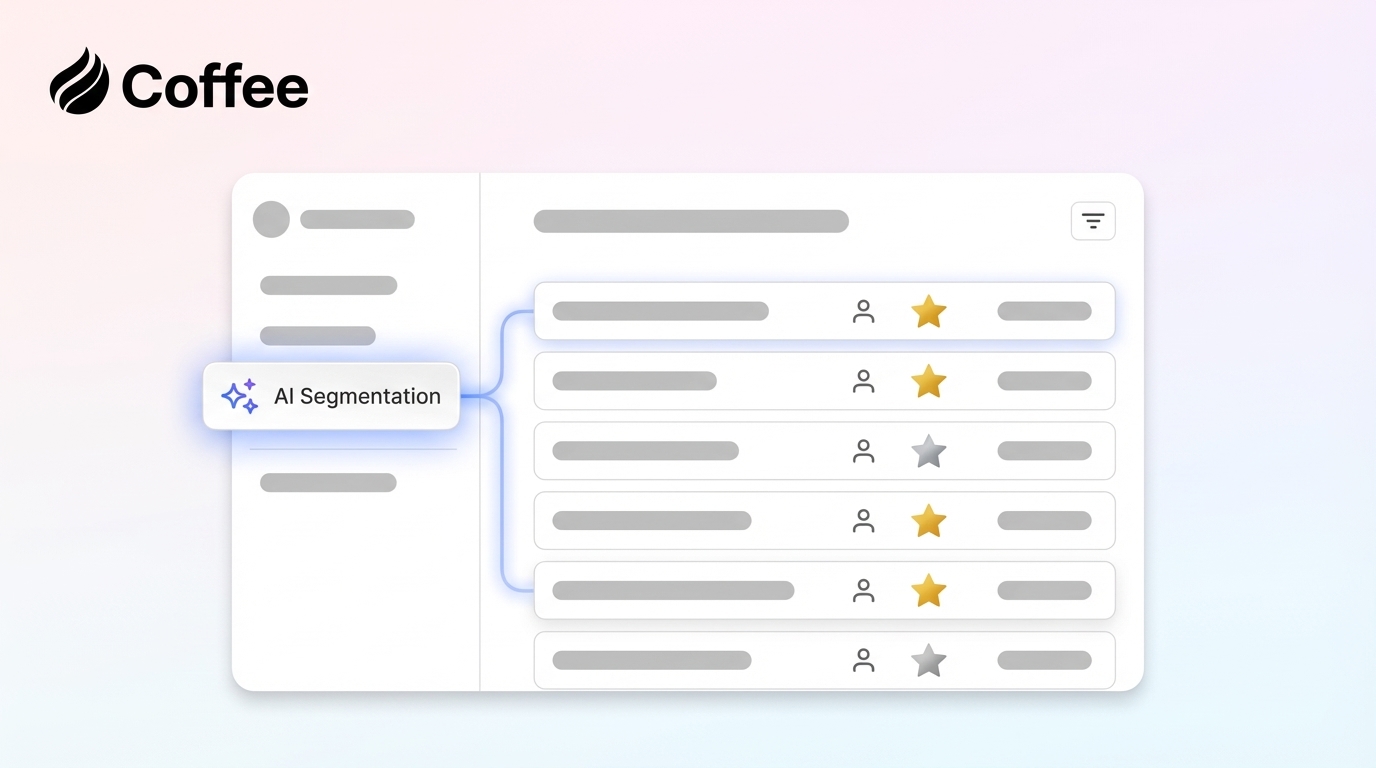
In today’s B2B sales landscape, the integration of artificial intelligence with customer relationship management platforms like Salesforce is reshaping how sales teams operate. With buyers conducting extensive research before engaging, and sales cycles becoming more complex, the need for precise segmentation and opportunity prioritization has never been more critical. Traditional CRM setups often struggle with fragmented data and time-intensive manual tasks, leaving gaps in efficiency and insight. AI offers a pathway to address these challenges by automating processes, unifying data, and providing actionable intelligence. This guide explores the evolving role of AI in Salesforce, its practical benefits for sales and RevOps leaders, and how tools like Coffee’s Companion App fit into this broader trend of intelligent sales enablement. Request access to see how Coffee can enhance your Salesforce experience.
Why AI-Driven Segmentation Matters for Salesforce Users
Salesforce users face growing pressure to adapt to a fast-paced, data-driven sales environment. AI-driven segmentation provides a way to organize customer data more effectively, helping teams target the right prospects at the right time with tailored strategies.
Challenges with Traditional Salesforce Segmentation
Many traditional Salesforce setups rely on manual data entry and static segmentation methods that can struggle to keep up with dynamic markets. Data fragmentation often occurs when customer information is spread across multiple systems or updated without retaining historical records, unless features like Field History Tracking are active. Sales reps, burdened by these inefficiencies, sometimes turn to external tools like spreadsheets, creating data silos outside the CRM.
This setup can limit a team’s ability to gain a full picture of customer behavior, reducing the effectiveness of segmentation and slowing down sales cycles. Addressing these gaps with modern solutions is essential for staying competitive.
How AI Improves Sales Efficiency
AI can automate repetitive tasks, such as logging customer interactions or updating records, freeing sales teams to focus on relationship-building and deal-closing. By pulling together data from emails, meetings, and other touchpoints, AI tools offer a clearer view of customer needs and opportunities. This automation reduces workload while improving the accuracy of customer profiles used for segmentation.
Specific Gains from AI Integration
Integrating AI with Salesforce can save sales reps significant time, often between 8 and 12 hours per week, by handling data entry and enrichment tasks. This allows more focus on strategic priorities like account planning. AI also helps identify high-value opportunities faster, ensuring efforts are directed where they matter most.
A Closer Look at AI-Driven Segmentation for Sales Teams
AI-driven segmentation goes beyond basic CRM categories by analyzing a wider range of data points for more precise customer grouping. This approach helps sales teams craft targeted outreach based on real-time insights.
What Sets AI Segmentation Apart
Unlike static methods, AI segmentation incorporates both structured data from CRM fields and unstructured data, like email content or meeting notes. This creates richer customer profiles, capturing subtle patterns or behaviors that manual processes might overlook. The result is a more personalized sales approach aligned with each prospect’s stage in the buying journey.
AI’s Role in Data Analysis
AI tools continuously analyze customer interactions across platforms, identifying trends and signals that inform sales strategies. When integrated with Salesforce, these tools ensure all relevant data, from communication history to deal status, is accessible and actionable. This ongoing analysis helps teams prioritize opportunities based on current information rather than outdated reports.
Core Elements of AI-Enhanced Segmentation
- Automated Data Collection: AI scans emails and calendars to update contact and company records without manual effort, maintaining accuracy.
- Pipeline Tracking: Features like week-over-week deal progress comparisons help teams spot advancing or stalled opportunities quickly.
- Opportunity Focus: AI highlights high-potential deals by analyzing data patterns, guiding sales reps on where to invest their time.
The Bigger Picture: AI’s Growing Influence in the Salesforce Ecosystem
The CRM market is shifting as AI becomes a central component of sales technology. Buyers now often complete much of their decision-making process independently, expecting sales interactions to be highly relevant and timely. AI helps meet these expectations by enabling earlier engagement and more informed outreach.
Addressing Legacy Salesforce Gaps with AI
Older Salesforce configurations can face issues with unstructured data or tracking historical changes unless specific settings are enabled. Manual updates in these systems risk data loss or inconsistency, impacting analysis. AI tools bridge these gaps by maintaining comprehensive data records and automating input, ensuring a reliable foundation for insights. AI adoption is increasingly vital for overcoming such limitaions in CRM systems.
The Emergence of AI Companion Tools
As demand grows for customized CRM enhancements, companion apps that add AI capabilities to Salesforce are gaining traction. These tools integrate directly with existing systems, providing advanced automation and analytics without requiring a full platform overhaul. Coffee’s Companion App stands out in this space, offering a practical way to modernize Salesforce with AI-driven features. Request access to learn more about Coffee’s capabilities.
Key Factors for Adding AI to Your Salesforce Setup
Implementing AI in Salesforce requires careful planning to align with organizational goals and existing workflows. Below are some considerations to ensure a successful integration.
Should You Build or Buy an AI Solution?
Developing a custom AI system in-house demands significant resources, technical expertise, and ongoing maintenance. For many organizations, this approach delays results and increases costs. Partnering with established platforms like Coffee provides immediate access to tested AI features, regular updates, and faster implementation, often at a lower total cost.
Why Data Quality Is Non-Negotiable
AI relies heavily on accurate, complete data to deliver meaningful insights. Incomplete or outdated records can skew results, reducing effectiveness. Ensuring data integrity through automated updates and enrichment from reliable sources is a critical step before deploying AI in Salesforce workflows.
Integrating AI Without Disrupting Workflows
A well-designed AI tool should enhance, not complicate, daily operations. Solutions like Coffee work within the familiar Salesforce interface, adding automation and insights behind the scenes. This minimizes learning curves and boosts adoption among sales teams accustomed to existing processes.
Tracking the Impact of AI on Performance
Evaluating AI’s value involves measuring both time savings and revenue outcomes. Key metrics include hours saved on administrative tasks, often 8 to 12 per rep weekly, and improved visibility into deal pipelines. These indicators help quantify AI’s contribution to efficiency and growth over time.
Coffee’s Companion App: A Leading Example of AI for Salesforce
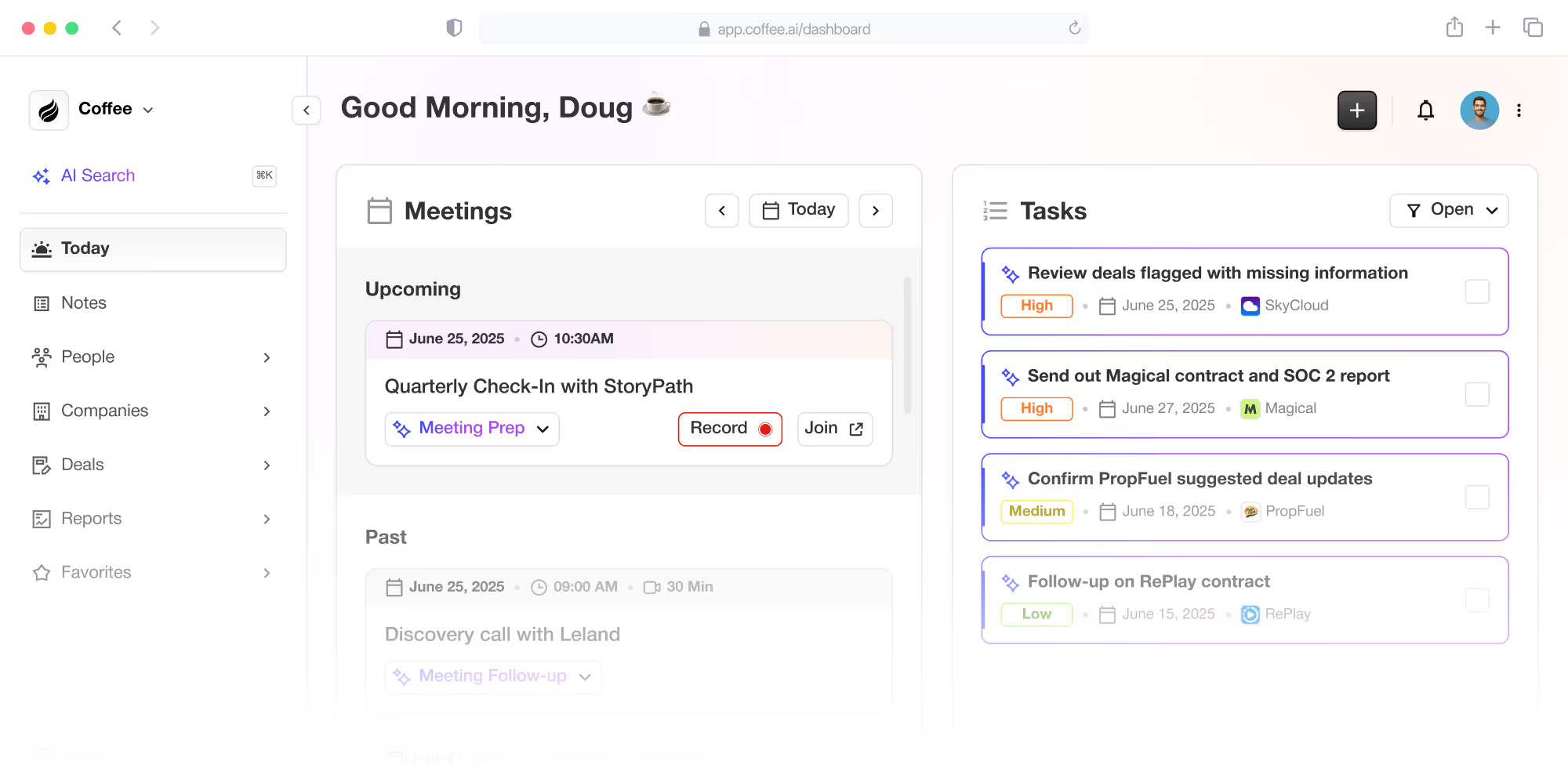
As part of the broader trend toward AI-enhanced CRMs, Coffee’s Companion App offers a focused solution for Salesforce users. It prioritizes automation and actionable intelligence, turning Salesforce into a more effective tool for sales teams. By integrating seamlessly, Coffee helps reps save time and prioritize opportunities without overhauling their current systems.
How Coffee Works with Salesforce
Coffee connects to Salesforce through a straightforward authentication process, syncing data into a modern warehouse designed for detailed analysis. It also links with tools like Google Workspace and Microsoft 365 to capture customer interactions from emails and calendars, creating a unified view directly within Salesforce.
Key Benefits for Salesforce Users
- Automated Data Handling: Coffee updates and enriches contact and company data, cutting down manual work by an estimated 8 to 12 hours per week per rep.
- Pipeline Insights: A built-in comparison feature tracks deal progress over time, making pipeline reviews more efficient by highlighting key changes.
- Simplified Tech Stack: Coffee combines multiple functions, like data enrichment and analytics, into one platform, reducing costs and complexity.
- User-Friendly Design: By automating tasks and offering practical insights, Coffee makes Salesforce a valuable ally for reps, improving engagement and data accuracy.
Ready to enhance your Salesforce with AI? Request access to Coffee’s Companion App and explore its impact firsthand.
Navigating Challenges in AI Implementation
Adopting AI for Salesforce isn’t without hurdles. Understanding potential obstacles and planning ahead can help ensure a smoother rollout and lasting impact.
Evaluating Readiness for AI
Before integrating AI, assess your organization’s data quality, technical setup, and team preparedness. Tools like Coffee ease the transition with user-friendly features that align with Salesforce, reducing friction during adoption.
Common Issues to Avoid
- Data Inconsistencies: Inaccurate data can limit AI’s effectiveness. Automated enrichment helps maintain quality for better results.
- Team Misalignment: AI impacts various roles, so coordination across sales and operations is necessary for success.
- Neglecting Engagement: AI tools need regular use to provide value. Intuitive designs encourage consistent interaction from users.
Factors for Sustained AI Success
Long-term benefits from AI depend on ongoing use and adaptation. Features that save time and deliver clear value to reps foster consistent engagement. Regular feedback and updates to the system also help maintain relevance as sales needs evolve.
Common Questions About AI in Salesforce
Below are answers to frequent concerns about integrating AI with Salesforce, providing clarity on its practical impact.
How Does AI Boost Efficiency in Salesforce?
AI reduces manual workload by automating tasks like data entry, saving reps an estimated 8 to 12 hours weekly. This frees time for relationship-building while features like pipeline analysis offer direct insights within Salesforce.
Can Coffee Replace Multiple Tools in Our Stack?
Yes, Coffee consolidates functions like data enrichment and pipeline tracking into a single integration with Salesforce, helping reduce tool overlap and associated costs.
What About Data Security with AI Tools?
Coffee follows strict security standards, including SOC 2 Type 2 and GDPR compliance. It uses secure authentication and ensures data isn’t shared for external AI training, giving users control over what syncs with Salesforce.
Will AI Help if Reps Avoid Using Salesforce?
Coffee is built to make Salesforce more appealing to reps by automating tedious tasks and providing useful insights, saving significant time each week. This shifts Salesforce from a chore to a helpful tool.
How Soon Can We See Results from AI?
Time savings from automation are often noticeable within the first week, with broader benefits like improved pipeline management becoming evident within 30 to 90 days as teams adapt to AI workflows.
Conclusion: Elevate Your Salesforce with AI
AI represents a major step forward for CRM, addressing longstanding issues with manual processes and disconnected data in Salesforce environments. Tools like Coffee’s Companion App exemplify this trend, enhancing existing systems with automation and intelligence to drive efficiency and growth.
For organizations aiming to maximize their Salesforce investment, Coffee offers a practical way to integrate AI without disruption. Staying ahead in today’s competitive B2B sales market means leveraging these advancements. Request your personalized demo today to experience the potential of AI in your CRM strategy.