Written by: Doug Camplejohn, CEO & Co-Founder, Coffee | Last updated: June 24, 2026
Key Takeaways for Small Sales Teams
-
Most 2026 CRMs still force manual data entry, so reps spend most of their time logging calls and updating stages instead of selling.
-
Agent-first platforms like Coffee capture email, calendar, and call data automatically, which prevents spreadsheets from replacing the official CRM.
-
Guided onboarding and a 14-day free trial cut setup from weeks to hours, so teams of 1–10 reps can adopt a hands-off CRM quickly.
-
Automatic enrichment, meeting summaries, and pipeline intelligence keep data accurate without ongoing maintenance from reps or admins.
Best CRM Picks by Small-Team Size
|
Team Size |
Best Fit |
Why |
|---|---|---|
|
1–5 reps (no existing CRM) |
Coffee Standalone |
Agent-first CRM, zero manual entry, 14-day free trial, guided onboarding |
|
1–10 reps (on HubSpot or Salesforce) |
Coffee Companion |
Deploys as an intelligent layer, no migration required |
|
1–10 reps (budget-first, partial automation acceptable) |
Pipedrive + AI add-ons |
Lower entry price, requires manual field updates and separate enrichment tools |
Why Small Sales Teams Need Zero Ongoing Human Data Work
Most small sales teams lose a large share of selling time to CRM updates, which drags down revenue and forecast accuracy. For a team of five reps, that imbalance compounds quickly, so pipeline forecasts degrade, follow-ups slip, and the CRM turns into a liability instead of an asset.
Legacy CRMs built before large language models cannot reliably ingest unstructured data such as email threads, call transcripts, and meeting notes without human help. When a rep forgets to log a call or update a stage, that context disappears. Spreadsheets and Notion docs then become the real workspace, while the CRM turns into an expensive reporting formality.
Agent-based systems in 2026 can now handle the full data-in loop autonomously. Teams that adopt this model no longer need to assume that humans will keep the CRM current.
How We Evaluated AI CRMs for Small Teams
-
Automation Depth, whether the tool captures data without human triggers.
-
Hours Saved Per Rep Per Week, based on vendor-cited or independently verified figures.
-
5-User Starting Price, the monthly cost at the smallest practical team size.
-
Setup Hours, time from sign-up to a fully populated CRM.
-
B2B Fit, suitability for deal-based, multi-stakeholder sales cycles.
-
Data Quality, enrichment depth and accuracy without third-party tools.
-
Integrations, native connections compared with Zapier dependency.
-
Security, including SOC 2 Type 2 and GDPR compliance.
-
Scalability, viability as the team grows from 5 to 20 reps.
Side-by-Side Automation and Pricing Comparison
|
Tool |
Automation Depth |
5-User Starting Price (mo.) |
Setup Hours |
|---|---|---|---|
|
Coffee (Standalone) |
Full agent: auto-contacts, enrichment, meeting bot, pipeline compare, significant weekly time savings per rep |
Seat-based, view current rates |
|
|
Coffee (Companion for SF/HubSpot) |
Full agent layer on existing CRM, auto-logs, enriches, and writes back, cuts weekly admin time for each rep |
Seat-based, view current rates |
Low, single auth connection |
|
HubSpot Sales Hub (Starter) |
Partial, email logging semi-automatic, deal updates, enrichment, and forecasting need manual input or paid add-ons |
$20 per seat per month (or ~$15 per seat annually), up to 5 seats, add-ons increase cost materially |
Medium, setup wizard exists but data hygiene requires ongoing admin |
|
Pipedrive Lite (entry plan, formerly called Essential) |
Low-to-partial, activity reminders automated, data entry, enrichment, and meeting notes stay manual without third-party tools |
$70/mo for 5 seats at $14/seat billed annually, AI features gated to higher tiers |
Low initial setup, ongoing manual maintenance required |
Note: HubSpot and Pipedrive pricing reflects publicly listed 2026 rates. Coffee pricing is seat-based with agent labor included at no additional metered cost; visit the Coffee pricing page for current figures.
Compare Coffee plans and see which one fits your team size.
AI Sales Tools That Truly Remove Data Entry
AI tools that help small sales teams most in 2026 remove the data-entry loop instead of automating isolated tasks. A meeting recorder that never writes back to the CRM, or an enrichment tool that needs CSV imports, still creates manual work.
The highest-value tools share three traits. They capture data from existing workflows such as email, calendar, and calls without rep action. They enrich and structure that data automatically. They also surface pipeline intelligence without manual exports. Coffee’s January 2026 AI search release answers natural-language pipeline questions like “Which deals are stuck in negotiation?”, and that accuracy depends on fully automated data capture.
Setup and Onboarding Effort for Small Teams
Setup friction often decides whether a small team ever adopts a CRM. Coffee introduced integrated billing, a 14-day free trial, and guided onboarding in December 2025, which cut time-to-value from weeks to hours.
HubSpot’s setup wizard helps with basics but leaves data hygiene, custom properties, and pipeline configuration to an admin. Pipedrive installs quickly but forces manual pipeline design decisions upfront. Salesforce Enterprise usually needs dedicated admin time measured in days or weeks, which rarely suits a lean team.
Automatic Data Capture and Enrichment Details
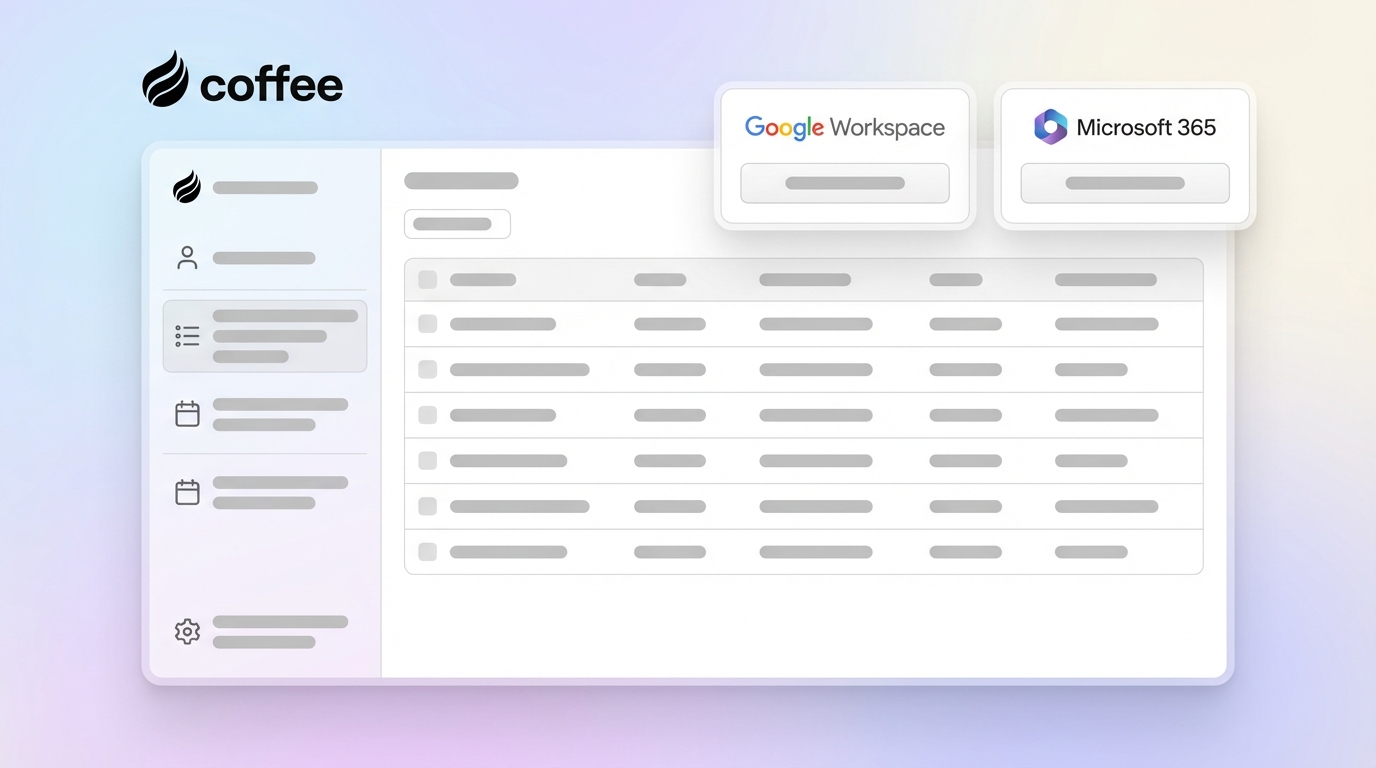
Hands-off data capture means the CRM starts filling itself as soon as you connect a calendar and inbox. Coffee’s agent scans Google Workspace or Microsoft 365 to auto-create contacts, companies, and activity logs from day one.

This foundational capture extends to financial systems. The Stripe integration (January 2026) automatically imports customers, enriches records, and marks paid invoices as Closed Won, so deal states update with zero rep input. QuickBooks support followed in February 2026 and gives teams on that platform the same hands-off syncing of invoices and payment statuses in real time.
HubSpot and Pipedrive log some email activity automatically but still rely on manual deal updates and paid enrichment add-ons for firmographic data.
Meeting Management and Follow-Up Automation
Coffee’s agent joins Zoom, Teams, and Google Meet calls, records and transcribes them, then drafts summaries and follow-up emails in Gmail for rep review. Custom Meeting Briefings and Summaries, released in February 2026, let teams define exact output formats such as executive summaries, BANT notes, or detailed technical breakdowns.

HubSpot offers meeting scheduling and basic call logging at Starter tier, while AI summaries sit behind the higher-cost Sales Hub Professional plan. Pipedrive focuses on scheduling and depends on third-party tools for transcription and summaries.
Pipeline Intelligence and Reporting Accuracy
Pipeline intelligence only works when the underlying data stays complete and current. Coffee’s Pipeline Compare feature visualizes week-over-week deal movement, including progressed, stalled, and new deals, without spreadsheet exports, because the agent maintains a continuous deal history.
The February 2026 Intelligence layer stores ICP definitions, competitor context, and product specifics so AI suggestions feel tailored instead of generic. HubSpot’s reporting is robust at Professional tier but depends on clean manual data. Pipedrive’s forecasting is functional yet rests entirely on rep-maintained deal stages.
Visitor Identification and Suggested Leads
Coffee includes website visitor identification as a built-in capability. A single tracking pixel identifies anonymous visitors by name, title, email, and LinkedIn profile, then sends real-time Slack alerts for high-fit accounts.
The standout feature is Suggested Leads. Coffee applies the team’s buyer persona and recommends the two or three contacts inside a visiting company that deserve outreach first, instead of returning a raw company match or a long undifferentiated people list. HubSpot and Pipedrive do not include visitor identification at their entry-level tiers.

Pricing Transparency for Small Sales Teams
Coffee uses seat-based pricing and includes the agent’s labor for data capture, enrichment, meeting management, and pipeline updates without extra metered fees. HubSpot’s Starter tier looks accessible, but AI features, enrichment, and forecasting tools sit behind Professional at roughly $450 or more per month for five seats, so the real cost of a hands-off setup rises quickly.
Pipedrive’s Essential tier is the lowest-cost option in this comparison but delivers the least automation. Matching Coffee’s hands-off experience usually requires stacking several third-party tools.
Integration Complexity and Existing Stacks
Coffee currently connects to many external tools through Zapier, and deeper native integrations are on the roadmap. For teams already on Salesforce or HubSpot, the Companion model connects through a single authentication step and writes enriched data back to the existing system of record.
HubSpot’s native integration library is extensive yet often adds per-integration cost and configuration work. Pipedrive integrates broadly through Zapier and its marketplace but still needs manual mapping for most workflows.
Best-Fit CRM Scenarios for Small Teams
Early-stage teams (1–10 reps, no existing CRM): Coffee Standalone offers a direct path. The agent populates the CRM from day one through email and calendar sync, which removes the blank-database problem that kills adoption in traditional tools.
Teams committed to Salesforce or HubSpot: Coffee Companion adds the agent layer without migration. It addresses low adoption and dirty data by handling the data-in process autonomously while the existing system of record stays in place.
Operational Considerations as Your Team Scales
Scaling from 5 to 20 reps magnifies every data-quality issue already present. A CRM that needs manual entry at 5 reps demands far more admin effort at 20.
Coffee’s agent scales with headcount without adding administrative overhead, because the agent performs the labor instead of reps or a RevOps hire. Teams should check whether their chosen platform’s pricing model penalizes growth and whether automation depth holds at higher rep counts without extra point solutions.
Risks and Limitations to Keep in Mind
Hidden maintenance: Partially automated CRMs often need periodic data audits to catch fields that never received values. Even agent-based systems benefit from quarterly ICP and persona reviews to keep AI suggestions accurate, although this strategic calibration differs from the tactical cleanup that manual-entry systems require.
Incomplete automation: Beyond maintenance, no platform covers every edge case. Unusual deal structures, non-standard meeting formats, or niche integrations may still need manual handling.
Integration gaps: Coffee’s current third-party integrations rely on Zapier outside its native connections. Teams with complex stacks should confirm specific integration needs before committing.
Overbuying: A three-rep team running high-volume transactional sales may not need advanced pipeline intelligence. Match automation depth to real workflow complexity instead of buying for hypothetical future scenarios.
Choosing the Best CRM for a Small Company
The best CRM for a small company keeps data accurate without asking reps to maintain it. For teams under 20 people without a dedicated admin, that requirement points to an agent-first architecture.
Traditional CRMs built for large enterprises introduce configuration complexity and ongoing maintenance costs that can erase productivity gains. A simple test helps here. If a rep misses logging several calls in a week, the CRM should still reflect accurate deal state. Legacy and partially automated tools usually fail that test. Agent-first systems that capture activity from email and calendar automatically usually pass.
See how Coffee keeps pipeline data accurate from day one.
Decision Framework and Quick Checklist
Use these criteria to match your team to the right tool:
-
Existing CRM investment: If you already use Salesforce or HubSpot, evaluate a Companion model before planning a migration.
-
Current logging rate: If your team logs fewer than 80% of activities today, a tool that relies on manual entry will not fix adoption.
-
Meeting summaries: If you need summaries written back to deal records automatically, confirm that this feature is native, not an add-on.
-
Enrichment costs: Check whether enrichment is included or needs a separate ZoomInfo or Apollo subscription, then stack costs accordingly.
-
Natural-language answers: Confirm whether the platform can answer “what’s closing this month?” in plain language without a custom report.
-
All-in 5-user cost: Compare the full monthly cost for five users, including AI features, enrichment, and meeting automation, not just the entry-tier headline price.
Conclusion: Pick the CRM That Needs the Least Human Labor
The shortest path to accurate CRM data for a small sales team removes humans from the data-entry loop. Partial automation, where some fields log automatically but deal stages, enrichment, and meeting notes still need rep action, preserves the core failure mode of legacy systems.
Agent-first platforms that capture structured and unstructured data autonomously, enrich records without third-party tools, and surface pipeline intelligence without manual exports form a different category. For teams of 1–10 reps in 2026, the key question is which CRM requires the least ongoing human labor to stay accurate.
Review Coffee plans built for small teams, with agent labor included.
Frequently Asked Questions
What does “hands-off CRM” actually mean for a small sales team?
A hands-off CRM automatically captures every relevant sales activity, including emails sent, calls made, meetings held, and deals advanced, without asking a rep to log anything. It enriches contact and company records from external data sources without a separate subscription, generates meeting summaries and follow-up drafts after calls, and updates pipeline stages based on real activity instead of rep input.
The practical test is whether the CRM stays accurate if a rep never opens it to enter data. Truly hands-off systems pass that test, while partially automated systems do not.
Can a small team use Coffee if they are already on HubSpot or Salesforce?
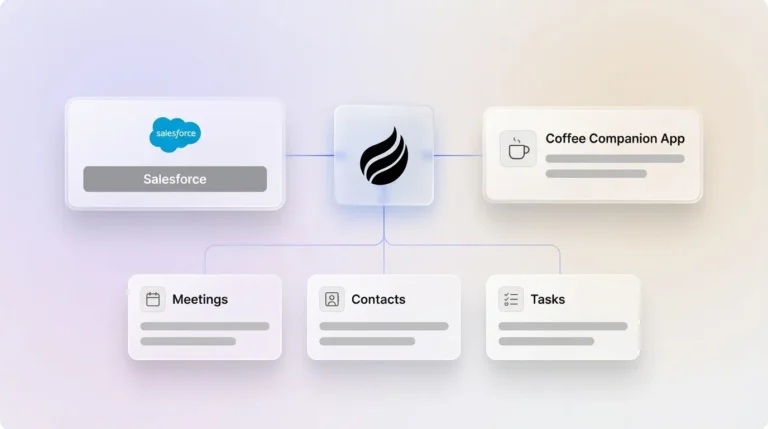
Small teams on HubSpot or Salesforce can add Coffee through the Companion model. The Coffee Agent connects through a single authentication step and works as an intelligent layer on top of the existing system of record.
It handles the data-in process by logging activities, enriching records, and capturing meeting notes, then writes that data back to HubSpot or Salesforce automatically. The existing CRM remains the system of record, and Coffee removes the manual work required to keep it accurate.
How long does it take to set up Coffee and see value?
Coffee is built for same-day value. Connecting Google Workspace or Microsoft 365 prompts the agent to start scanning emails and calendars immediately, which auto-creates contacts, companies, and activity logs.
A guided onboarding flow and a 14-day free trial reduce time from sign-up to a populated CRM to a few hours. Teams do not need a dedicated admin or RevOps resource for setup, and the agent handles ongoing data hygiene after the initial connection.
Is Coffee secure enough for a B2B sales team handling sensitive deal data?
Coffee is SOC 2 Type 2 and GDPR compliant, and customer data does not train public AI models. For most small B2B sales teams, this compliance posture meets standard security requirements.
Teams in heavily regulated industries such as healthcare or financial services, with multi-year security review processes, sit outside Coffee’s current ideal customer profile and should consider enterprise-grade platforms with extended documentation.
What happens to CRM data quality as the team grows beyond 10 reps?
Agent-first CRMs maintain data quality at scale because the agent’s workload does not grow in the same way human data entry does. Adding a rep to Coffee adds another inbox and calendar for the agent to monitor, not another person responsible for logging their own activity.
For teams growing from 5 to 20 reps, the main operational task is keeping the agent’s ICP definition, competitor context, and product specifics current so AI suggestions stay accurate. Coffee’s Intelligence layer stores this context centrally and supports that ongoing calibration without per-rep configuration.