Written by: Doug Camplejohn, CEO & Co-Founder, Coffee
Executive summary:
- Many sales teams struggle with accurate forecasting because traditional CRMs depend on manual data entry and fragmented systems.
- AI-driven proactive CRMs automate data capture, unify information, and provide more reliable inputs for revenue forecasts.
- Coffee is an AI-first CRM that connects to everyday tools, reduces manual work, and turns communications and meetings into structured sales data.
- Features such as automated enrichment, historical pipeline snapshots, and the “Compare” view give leaders clearer visibility into trends and risks.
- Organizations can use Coffee to improve forecast confidence, reduce administrative burden, and support more data-informed planning.
Many businesses struggle with forecasting because they rely on outdated tools and processes. Sales leaders need dependable revenue predictions to plan hiring, inventory, and resources, yet traditional CRMs often fall short due to fragmented data and manual workflows.
Legacy CRMs that rely heavily on manual data entry tend to create information silos and inefficiencies. Forecasts built on this data can be difficult to trust. AI-driven proactive CRM systems such as Coffee offer an alternative by focusing on automation and data unification to strengthen forecasting.
To enhance your sales predictions with AI-powered tools, request access to Coffee’s AI-powered forecasting capabilities and see how they can support your sales strategy.
Understand Why Legacy CRMs Struggle With Reliable Sales Forecasts
Traditional CRMs were designed to centralize customer relationships and sales data, yet they often introduce obstacles for forecasting because of how they collect, store, and surface information.
Recognize How Poor Data Quality And Fragmentation Limit Forecasting
Reliable forecasts start with complete, accurate data. Legacy CRMs often fall short because customer information is spread across multiple systems. Contact details may live in one tool, communication history in another, and deal progression in spreadsheets that sales reps maintain as “shadow CRMs.”
This fragmentation creates gaps in forecasting models. When deal stages are not tracked automatically and customer interactions are not consistently recorded, the data set becomes incomplete, and accurate forecasting becomes more difficult.
See The Impact Of Manual Data Entry And Time Burden On Accuracy
Manual data entry is a core challenge in many traditional CRMs. Sales reps spend significant time logging activities and updating fields, which takes time away from selling. As a result, information is often incomplete, outdated, or inconsistent, which weakens forecast reliability.
When sales leaders do not trust CRM data, they often rely on lengthy pipeline review meetings and manual spreadsheet exports. These workarounds consume time, introduce extra steps, and do not scale well as teams and deal volume grow.
Account For Outdated Architecture And Limited Real-Time Insights
Many legacy CRMs were built before modern data warehousing and AI became common in business operations. These systems can struggle with the volume and variety of today’s sales data, especially when they are not configured to use newer technologies or capture unstructured information from emails, calls, and meetings.
As a result, valuable sales intelligence such as sentiment from call transcripts or buying signals from email threads may not be fully captured or analyzed. Some traditional CRMs may also have difficulty providing real-time insights for dynamic forecasting when they are not properly set up.
Use AI-Driven Proactive CRM To Strengthen Sales Forecasting
AI-driven proactive CRMs represent a shift from static record-keeping to predictive sales intelligence. Instead of waiting for users to update records, platforms such as Coffee capture and analyze sales data continuously to support more informed forecasting.
The key difference is the combination of automation and intelligence. Legacy CRMs often require humans to enter and interpret data. AI-driven systems like Coffee automatically capture information from customer interactions, reduce data gaps, and create a stronger foundation for forecasts.
To improve your sales forecasting with proactive intelligence, request access and see how Coffee’s AI-driven tools can support your revenue predictions.
Coffee: Use An AI-First CRM To Improve Sales Forecasting
Coffee takes an AI-first approach to sales technology, building the CRM on automation and data unification rather than adding AI onto older architecture. This design aims to address common limitations of traditional systems and better support forecasting.
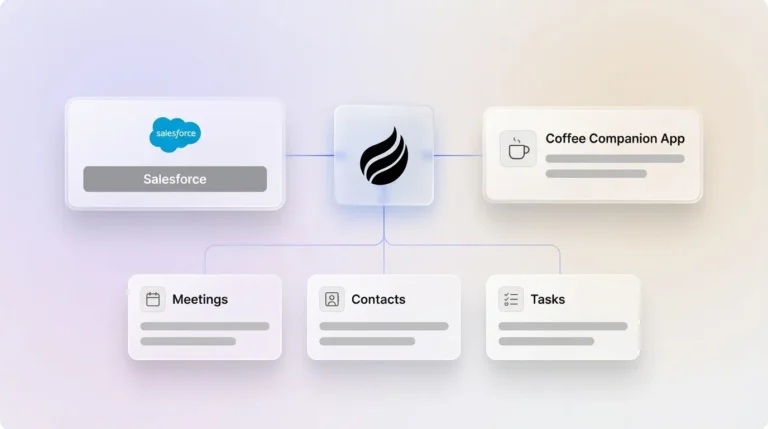
Coffee can operate as a standalone CRM for growing businesses or as a companion app that enhances existing CRM installations. In both cases, the platform focuses on reducing manual data entry and providing pipeline intelligence so sales leaders can make more informed predictions.
Close Data Gaps With Automated Data Entry And Enrichment
Coffee begins with automated data collection. By connecting to Google Workspace or Microsoft 365, Coffee captures and structures customer interactions without requiring sales reps to log every activity.
Emails, calendar events, and other customer touchpoints automatically create and enrich contacts and companies in the CRM. Coffee’s AI adds details such as job titles and company information from licensed data partners, providing built-in enrichment that supports prospecting and account management.
This automated approach helps address data quality issues by ensuring that ongoing customer communications flow into the CRM. The result is a more complete view of deal progression and customer engagement to support forecasting.
Improve Visibility With AI-Powered Pipeline Intelligence And The “Compare” Feature
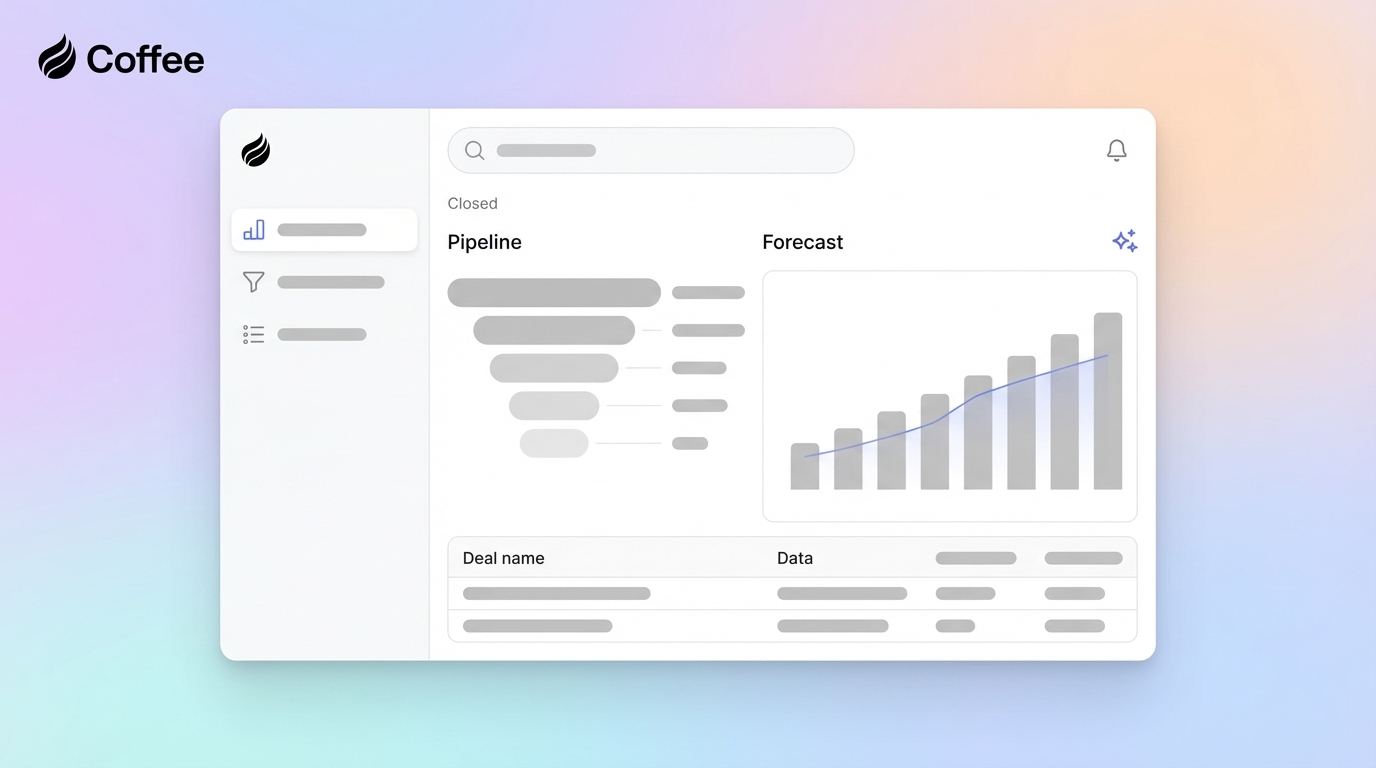
Coffee includes a built-in data warehouse that stores historical snapshots of the sales pipeline. This architecture powers Coffee’s “Compare” feature, which turns pipeline review into a structured analysis instead of a manual exercise.
With a single click, sales leaders can see week-over-week pipeline changes and identify which deals progressed, stalled, or newly entered the funnel. This visibility reduces guesswork in pipeline management and provides a clearer basis for forecast adjustments. Unlike some traditional CRMs that overwrite historical data, Coffee preserves the history of each deal’s progression for trend analysis.
Turn Customer Interactions Into Forecasting Intelligence With AI Meeting Management
Customer meetings and calls contain rich information that is often hard to capture in traditional CRMs. Coffee’s AI meeting management focuses on converting these conversations into structured data that can inform forecasts.
Coffee’s AI meeting bot joins Google Meet, Microsoft Teams, and Zoom calls to record and transcribe discussions. After each call, the AI generates summaries, highlights action items, and drafts follow-up emails, and it can organize key points using sales frameworks such as BANT, MEDDIC, or SPICED. This process helps capture critical signals for forecasting that might otherwise be overlooked or left in personal notes.
Compare Traditional CRMs To Coffee’s AI Proactive CRM For Forecasting
The contrast between legacy CRM forecasting and Coffee’s AI-first approach becomes clear when you examine specific factors that influence revenue predictability.
|
Attribute |
Traditional CRM Forecasting |
Coffee’s AI Proactive CRM |
|
Data Quality |
Often fragmented and dependent on manual input |
Unified and grounded in communications data |
|
Data Entry |
Manual, time-consuming, and prone to error |
Automated, saving reps an estimated 8-12 hours per week |
|
Real-time Insights |
Limited or delayed when not properly configured |
Comprehensive, using both structured and unstructured data |
|
Pipeline Visibility |
Basic and often supported by manual exports or spreadsheets |
Granular and dynamic through tools such as the “Compare” feature |
|
User Adoption |
Frequently low and viewed as administrative work by reps |
Higher, designed to fit into daily workflows and assist reps |
|
Historical Analysis |
Limited when historical data is not preserved |
Complete deal history retained to support trend analysis |
These differences translate into practical business outcomes. Coffee’s automated approach helps sales reps spend more time selling and less time updating records, while sales leaders gain clearer visibility into the pipeline for decision-making.
Frequently Asked Questions (FAQ) About AI Proactive CRM Forecasting
How does an AI proactive CRM support forecasting compared to traditional methods?
AI proactive CRMs such as Coffee support forecasting by reducing manual data collection and unifying data sources. Instead of relying on sales reps to log every interaction, Coffee automatically captures emails, calls, and meetings to build a more complete data set. This broader coverage creates a stronger foundation for forecast models.
Can an AI-driven CRM help address the challenges of inaccurate sales forecasts?
An AI-driven CRM can help reduce inaccuracies that affect resource planning and strategy. Coffee uses comprehensive, near real-time data to support more consistent predictions, which helps sales leaders make decisions and address pipeline risks earlier.
How does Coffee address common CRM challenges like poor user adoption and manual data entry?
Coffee addresses adoption by positioning the CRM as an AI-powered assistant that supports daily work. It removes most manual data entry by automatically capturing information from tools such as Gmail and calendars. Coffee also provides pre-meeting briefings and automated follow-ups that help reps prepare and respond, which encourages regular use and improves data quality for forecasting.
How does Coffee leverage AI to provide pipeline intelligence for forecasting?
Coffee’s pipeline intelligence relies on a data warehouse that preserves the history of each deal’s progression. The “Compare” feature lets sales leaders view pipeline changes over time and quickly identify deals that have advanced, stalled, or been created. This level of detail supports more data-driven forecast adjustments.
What makes Coffee different from traditional CRMs that add AI features?
Coffee is built as an AI-first platform with automation and intelligence at the core of its architecture. Traditional CRMs often add AI features on top of existing systems. Coffee instead focuses on capturing high-quality data from communications and workflows by default, which enables capabilities such as automatic activity logging and historical pipeline comparison.
Conclusion: Support Growth With Coffee’s AI Proactive CRM Forecasting
Sales forecasting that depends on incomplete CRM data is becoming less sustainable as sales cycles and buyer behavior grow more complex. Organizations benefit from pairing their sales process with AI-driven intelligence to support revenue planning and growth.
Legacy CRMs often struggle to deliver the data quality and insight needed for reliable forecasting because of manual processes and configuration constraints. Coffee’s AI-first approach addresses these issues by automating data capture, organizing customer intelligence, and providing pipeline visibility through features such as Compare.
Sales teams using Coffee can spend more time on customer conversations and less on administrative updates. Sales leaders gain greater confidence in forecasts built on more complete and timely data, which supports more predictable growth.
To explore a different approach to forecasting with Coffee, request access today to enhance your sales forecasting with Coffee’s AI-powered platform and see how proactive CRM technology can support your business.