
Last updated: February 21, 2026
Key Takeaways
- Sales reps waste 71% of their time on non-selling tasks like manual CRM data entry, which leaves only 35% for selling.
- AI agents that automate meeting notes remove errors, log data automatically, and create action items in Salesforce or HubSpot.
- Coffee outperforms Fireflies, Avoma, and Gong with full-cycle autonomy, native CRM sync, and pre and post-meeting orchestration.
- A 7-step Coffee setup connects calendars, CRMs, and meeting platforms for seamless enrichment, summaries, and pipeline insights.
- Sales teams can reclaim 8 to 12 hours weekly and improve forecasting accuracy by getting started with Coffee today.
Why Sales Teams Should Automate Meeting Notes in Their CRM
Sales teams that rely on manual CRM updates lose most of their selling time to admin work. Sales reps spend 60% of their time on non-selling tasks like manually entering customer notes into the CRM, while Gartner research confirms that 50% of rep time goes to admin work alone. This reality creates scattered data across legacy Salesforce and HubSpot instances, lost context from calls, and shadow CRMs in spreadsheets that damage forecast accuracy.
5 Ways Automation Transforms Sales
- Auto-logging removes manual CRM updates and reduces data entry errors
- Action items convert automatically to tasks with clear ownership and assignment
- Enrichment fills contact and company fields without separate ZoomInfo subscriptions
- Briefings prepare reps with account and deal context before every meeting
- Pipeline insights emerge from clean, structured data that supports accurate forecasting
Top AI Tools for CRM Meeting Notes in 2026
|
Tool |
CRM Sync |
Agent Autonomy |
Pricing/Insights |
|
Coffee |
Native SF/HubSpot standalone + companion |
Unifies structured and unstructured data autonomously |
Simple seat-based pricing + data warehouse |
|
Fireflies |
Basic sync via Zapier |
AI summaries and action items with transcription, manual review often recommended |
Per-seat pricing + storage limits |
|
Avoma |
Field mapping on Business plan |
Notes and summaries, approval required for many updates |
Tiered pricing with limited automation depth |
|
Gong |
Revenue intelligence focus |
Analytics only, no standalone CRM capability |
Enterprise pricing with no companion mode |
Coffee leads this group with pre and post-meeting orchestration and McKinsey-validated 15 to 20% time savings through workflow automation. Unlike point solutions, Coffee’s agent manages the full cycle autonomously while supporting both standalone and companion deployment models. Get started with Coffee to replace fragmented tool stacks with a single autonomous layer.
How to Automate Notes in Salesforce or HubSpot with Coffee
1. Connect Google Workspace or Microsoft 365
Start by authenticating your email and calendar systems so Coffee’s agent can scan for contacts, meetings, and context. Once connected, the agent immediately begins identifying prospects and opportunities from your existing communications.
2. Authenticate Your CRM in Standalone or Companion Mode
Salesforce and HubSpot users can enable companion mode with a simple OAuth connection. New teams without a CRM can deploy Coffee’s standalone CRM, where the agent functions as the complete system of record.
3. Turn On the AI Bot for Zoom, Teams, and Meet
Configure Coffee’s meeting bot to auto-join scheduled calls across Zoom, Microsoft Teams, and Google Meet. The agent manages recording permissions, transcription, and speaker identification without manual setup on each call.
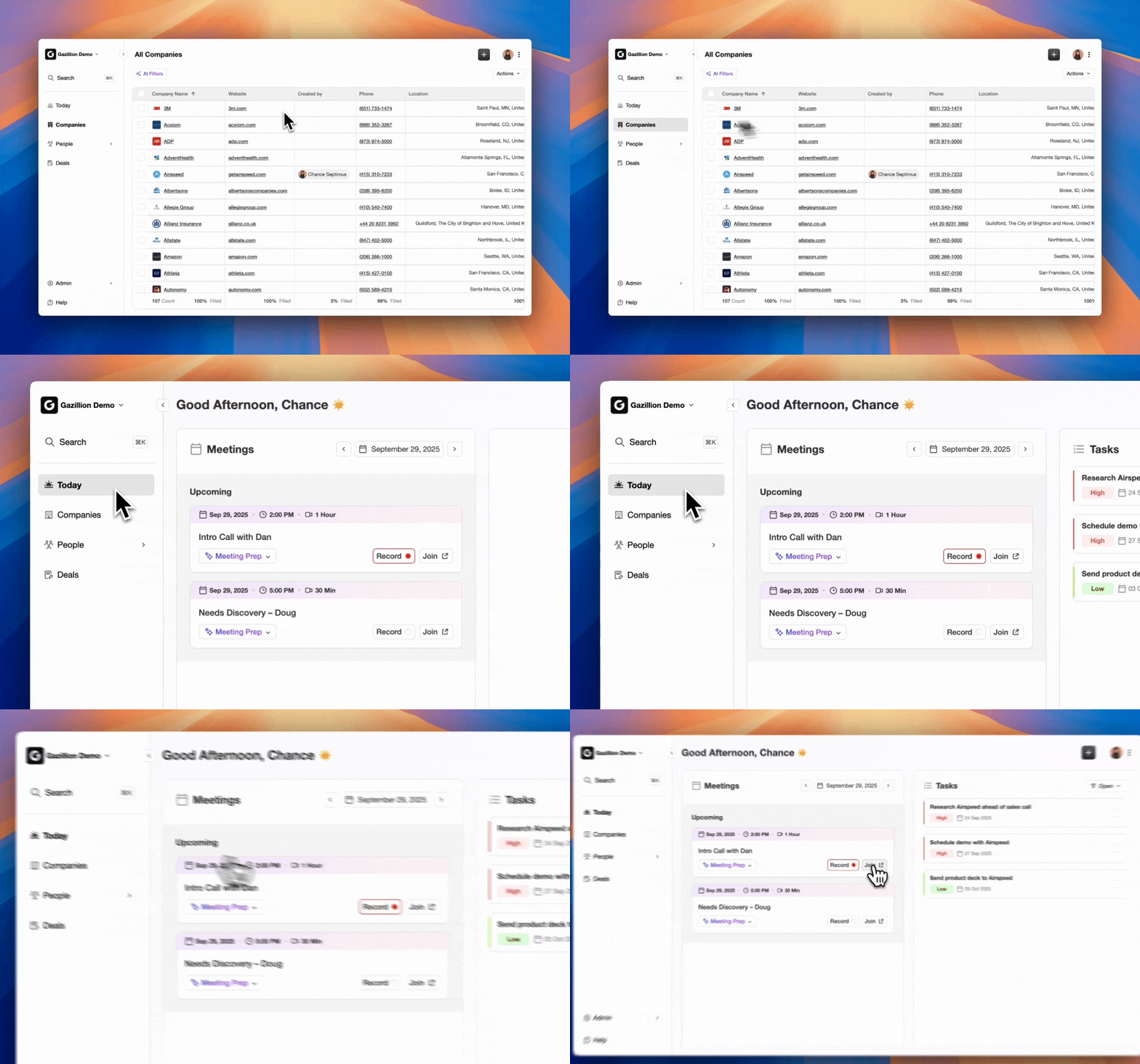
4. Align Notes with Your Sales Methodology
Configure the agent’s note-taking to match your qualification framework such as BANT, MEDDIC, or SPICED. Coffee then populates methodology fields automatically based on real-time conversation analysis.
5. Create Auto-Summaries and Action Items
After each meeting, the agent generates structured summaries, identifies next steps, and drafts follow-up emails in Gmail for your review and sending. Reps move directly from the call to a ready-to-send follow-up and clean CRM notes.

6. Sync and Enrich CRM Records
The agent updates contact records, company information, and deal stages while enriching data with job titles, funding details, and LinkedIn profiles through licensed partnerships. Reps work from complete profiles instead of hunting for missing details.
7. Review Pipeline Insights and Compare Deals
Use Coffee’s Pipeline Compare to visualize week-over-week changes, progressed deals, and stalled opportunities without exporting data into spreadsheets. Leaders gain a clear view of movement in the pipeline in a few clicks.
Pro Tip: Many teams forget to enable calendar sync and then struggle with mismatched records, but Coffee’s agent automatically associates meetings with the correct CRM records through intelligent matching. The agent manages full-cycle orchestration autonomously, while point tools often require manual stitching across apps.
How Coffee Works as an Autonomous CRM Agent
Coffee’s agent goes far beyond basic note-taking and supports briefings, data enrichment, follow-up orchestration, and pipeline intelligence. One company generating tens of millions in revenue from custom AI solutions abandoned spreadsheets for Coffee’s agent after rejecting Salesforce and HubSpot as too manual for their team.

The Coffee agent delivered automated contact creation from Google Workspace, actionable Pipeline Compare features for weekly reviews, and API access for custom briefing workflows. This approach fits small to mid-market teams using Salesforce or HubSpot that need an intelligent layer to maintain data quality without extra human effort.
Pro Tips, Troubleshooting, and Advanced Coffee Workflows
Traditional tools often suffer from common HubSpot sync failures, while Coffee’s agent retries intelligently with built-in error handling. Advanced workflows include natural language list-building such as “Find VPs of Sales in North America at $10M+ funding companies using Salesforce” and SOC2 compliance that satisfies enterprise security requirements.

Agentic AI evolution in 2025 to 2026 enables autonomous CRM handling that saves sales reps 1 to 5 hours weekly compared with traditional manual processes. Coffee’s agent embodies this shift from co-pilot support to a fully autonomous system for meeting notes, qualification, and follow-ups.
Frequently Asked Questions About Coffee and CRM Notes
Does Coffee sync meeting notes to Salesforce?
Coffee provides Salesforce integration that works autonomously in both standalone and companion modes. The agent manages authentication, field mapping, and continuous sync without extra admin work.
How does Coffee compare to Gong for CRM automation?
Coffee delivers full agent-cycle automation with data warehouse capabilities and standalone CRM options, while Gong focuses primarily on revenue intelligence without standalone deployment. Coffee also manages pre-meeting briefings, post-meeting summaries, and CRM updates autonomously.
What is the pricing for HubSpot companion mode?
Coffee uses simple seat-based pricing where you pay for human users while the agent’s unlimited labor is included. The platform avoids complex metering on AI usage or processes and instead offers straightforward per-seat costs with full agent capabilities.
Which AI meeting note taker works best for sales teams?
Coffee leads for CRM-specific autonomy and handles both structured and unstructured data with native integrations. Unlike transcription-only tools, Coffee’s agent manages the complete workflow from pre-meeting briefings to pipeline insights.
Can Coffee handle Zoom and Microsoft Teams calls?
Coffee’s agent auto-joins Zoom, Teams, and Google Meet calls for recording and transcription. The agent manages permissions, speaker identification, and post-meeting processing without manual intervention on each call.
Turn Meeting Notes into CRM Intelligence with Coffee
Sales teams that remove the 71% time waste on manual data entry see a clear return from Coffee’s autonomous agent. Coffee converts scattered meeting notes into structured CRM intelligence that supports accurate forecasting and faster pipeline movement. Get started with Coffee today and deploy a tireless CRM agent that works alongside every rep.