Written by: Doug Camplejohn, CEO & Co-Founder, Coffee
Key Takeaways from Gong Objection Analysis
- Manual objection analysis in Gong wastes time, with reps spending 71% on non-selling tasks. Use this 7-step process to filter calls by stage and outcome, then uncover clear objection patterns.
- Classify objections into five major categories (Price, Timing, Authority, Need, Trust) using Gong’s Spotlight search so you can coach specific skills instead of guessing.
- Analyze rep responses with Gong’s AI for tone and sentiment, spot trends across calls, and map patterns to the 4 P’s framework (Probe, Paraphrase, Pivot, Progress).
- Turn insights into coaching plans with role-plays and scripts. Teams that follow this approach often see 15–30% win rate improvements and more reliable forecasts.
- Automate Gong analysis 2x faster with Coffee’s AI agent for contextual objection detection and CRM integration. See pricing and start your free trial to eliminate manual analysis work.
7-Step Workflow for Analyzing Objections in Gong Sales Calls
This 7-step workflow turns Gong sales call analysis from slow manual review into a repeatable coaching system using Gong’s filters, Spotlight search, and Labs features.
Step 1: Segment Calls by Stage and Outcome
Segment calls by deal stage and outcome so you can see where objections appear and which ones actually derail deals. The table below highlights three essential filter types and how each reveals specific objection patterns.
| Filter Type | Description | Objection Use Case |
|---|---|---|
| Stage=Discovery | Filter by pipeline stage | Spot early “need” objections |
| Outcome=Lost | Filter by deal result | Identify deal-killing objections |
| Rep Performance | Filter by individual rep | Target coaching opportunities |
Step 2: Search Transcripts for Objection Keywords
Gong’s transcript search functionality helps you surface objection moments quickly with Spotlight search. Focus on phrases like “too expensive,” “not now,” “need to think about it,” and “not a priority” to pull objection-heavy snippets across your call library.
Step 3: Classify Objections into Core Categories
Group objections into the five major categories that most often derail deals. This classification answers the common question “What are the 5 major sales objections?” and the table below shows which types appear most often and cause the biggest problems, so you can prioritize coaching time.
| Objection Type | Gong Search Query | Frequency/Impact |
|---|---|---|
| Price | “budget OR expensive OR cost” | 30–40% of deal derailments |
| Timing | “not now OR later OR next year” | 25–30% of stalled deals |
| Authority | “need approval OR boss OR decision” | 20–25% of qualification issues |
| Need | “not sure OR don’t need OR working fine” | 15–20% of discovery gaps |
Step 4: Analyze Rep Responses to Objections
Gong’s AI evaluates tone, pacing, and sentiment shifts to show how reps react during objection moments. Review successful calls and look for patterns: top performers often pause before responding, ask clarifying questions, and follow a consistent structure. Track deal risk scores alongside these patterns to see which responses keep deals alive.
Step 5: Spot Objection Trends Across Calls
Use Gong Labs and deal groups to identify cross-call insights that go beyond single conversations. Compare objection frequency by industry, deal size, or sales stage to uncover systematic gaps that coaching can address across the team.
Step 6: Map Objections to Sales Stages and the 4 P’s
Map common objections to sales stages and structure your handling with the proven 4 P’s methodology. This framework answers “What are the 4 P’s of objection handling?” and gives reps a simple playbook to follow.
- Probe: Ask clarifying questions to understand the real concern.
- Paraphrase: Repeat back what you heard to confirm understanding.
- Pivot: Redirect the conversation toward value and solutions.
- Progress: Move the deal forward with specific next steps.
Step 7: Turn Insights into Coaching Plans
Convert your objection analysis into clear coaching plans for objection handling in sales. Start by creating role-play scenarios based on the real objections you identified in earlier steps so reps can practice with language they actually hear.
Next, build response scripts for the most common situations, using the 4 P’s framework from Step 6 as your template. Finally, track improvement metrics through follow-up call analysis to see whether coaching changes behavior and improves win rates.
Upgrade to 2x Faster Analysis with Coffee’s AI Agent
The 7-step process above delivers strong insights, but it requires manual effort at every stage. Teams that review dozens of calls each week often struggle to keep up with filtering, searching transcripts, classifying objections, and logging notes into the CRM.
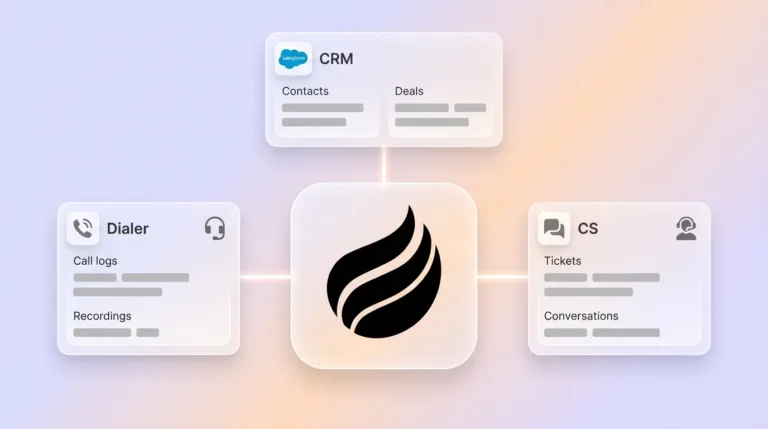
Coffee’s AI agent removes most of that manual work by automating data capture, CRM integration, and call processing. The Coffee agent acts as a tireless analyst, processing transcripts with MEDDIC and BANT methodologies and logging structured insights directly to Salesforce or HubSpot.
Coffee saves sales teams 8–12 hours per week by unifying data from emails, calendars, calls, and CRM records. Unlike manual analysis that needs constant human attention, Coffee’s agent handles the busywork automatically.
| Aspect | Manual Gong | Coffee-Powered | Benefit |
|---|---|---|---|
| Time Investment | Most of day on admin (see above) | Automated processing | More selling time |
| Data Integration | Manual CRM updates | Auto-sync to SF/HubSpot | Always current data |
| Pattern Recognition | Human-dependent spotting | AI-powered insights | Consistent coaching |
Pro Tip: Many teams ignore unstructured data from emails and follow-ups, which hides important objections. Coffee processes all customer touchpoints, so these signals feed directly into your coaching system.
Avoid This Pitfall: False positives in objection identification waste review time. Coffee’s contextual AI improves accuracy by understanding conversation flow and intent.
Ready for automated sales call analysis? See how Coffee’s agent handles the busywork for your team.
Troubleshooting Common Pitfalls in Gong Objection Analysis
False Positive Objections: Manual keyword searches often flag statements that are not true objections. Coffee’s contextual AI understands conversation flow to distinguish genuine concerns from casual mentions.
This accuracy problem grows as you scale manual analysis across more calls. Low Adoption Issues: Teams often abandon manual analysis when it becomes too time-consuming, and the volume of false positives increases review time. Coffee’s agent fixes both problems at once by reducing false positives through context and removing the data entry grind that hurts adoption.
Expected Outcomes: 15% Win Rate Bump in 30 Days
Sellers who successfully defend against objections achieve 64% close rates, which outperforms typical industry averages. Teams that implement systematic objection analysis see about 25% better forecast accuracy and can track progress using Pipeline Compare features to measure improvement over time.
Frequently Asked Questions
How does Coffee integrate with Gong?
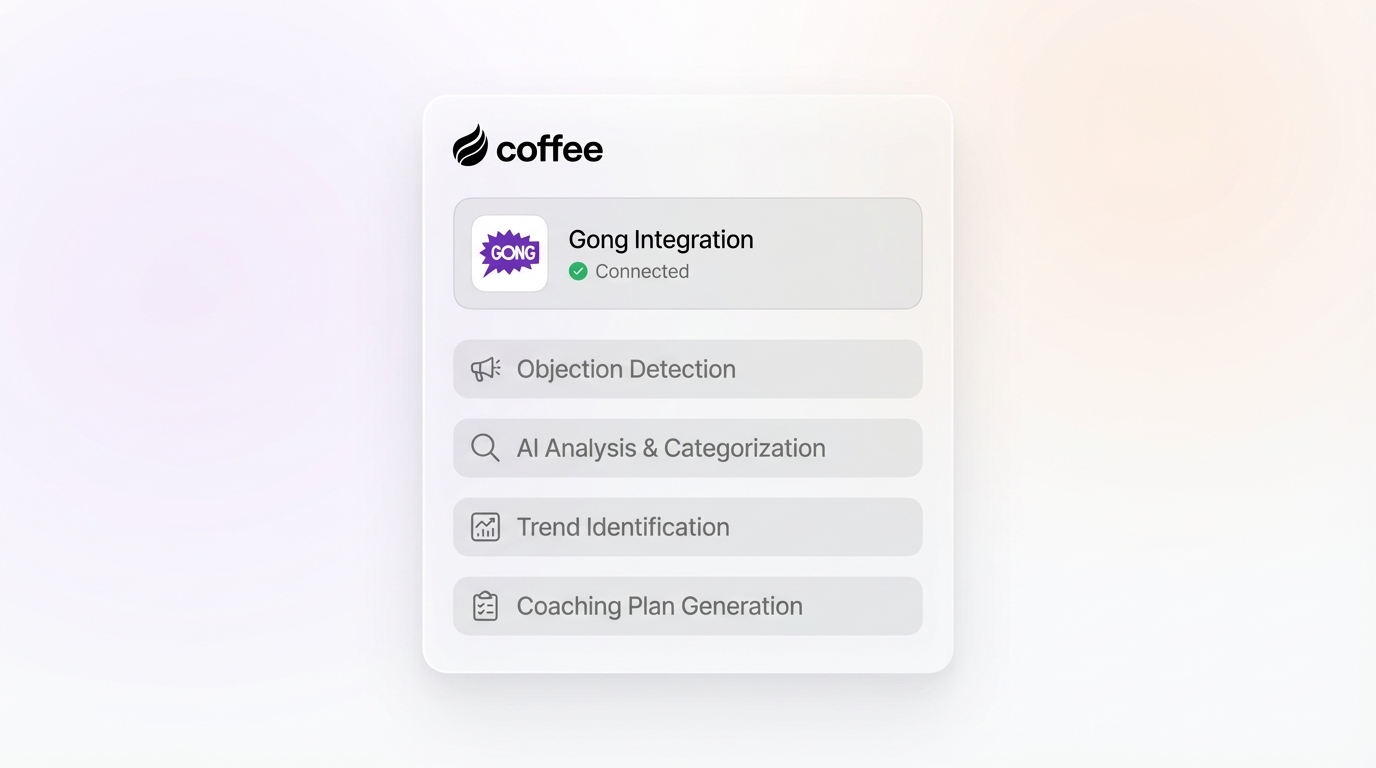
Coffee’s agent connects via Zapier to sync call data and insights to your CRM, unifying intelligence with emails, calendars, and deal records. Deeper native integrations are on the roadmap.
What if I use Salesforce?
Coffee’s Companion App works on top of Salesforce or HubSpot as a tireless assistant. It handles objection logging and analysis while your existing CRM remains the system of record.
What are the 4 P’s of objection handling?
The 4 P’s framework, detailed in Step 6, provides a simple structure: Probe the objection, Paraphrase to confirm, Pivot to value, and Progress the deal forward.
What are the 5 major sales objections?
The five categories covered in Step 3 are Price, Timing, Authority, Need, and Trust. Each category calls for a different coaching focus and response strategy.
How should I handle objections in sales calls?
Combine the 7-step Gong analysis workflow with Coffee’s automation. Identify objection patterns, coach reps on structured responses, and track improvement metrics across future calls.
Can Coffee analyze sales objections with AI?
Yes. Coffee’s AI agent automatically flags objection patterns, organizes them for coaching analysis, and pushes insights into your CRM workflow so managers can act on them.
Conclusion: Turn Gong Objections into a Repeatable Coaching Engine
Mastering objection analysis in Gong sales calls requires a clear process and smart automation. The 7-step framework gives you the structure, and Coffee’s AI agent adds the speed and accuracy needed to analyze sales objections at scale. Together, they shift objection handling in sales from reactive firefighting to a proactive coaching strategy.
Track your 15% win rate growth. Start your Coffee trial and measure results in 30 days.