
Key Takeaways
- AssemblyAI excels in call transcription, sentiment analysis, and topic detection but still needs API development for full CRM automation, which limits non-technical teams.
- Coffee’s autonomous CRM Agent automates end-to-end workflows, including data entry, meeting orchestration, and pipeline intelligence, saving reps 8-12 hours weekly.
- Coffee offers native CRM integrations with Salesforce and HubSpot, which are easier and more reliable than AssemblyAI’s API-based connections.
- Key evaluation criteria for 2026 include end-to-end automation, SMB scalability, and SOC 2 compliance, where Coffee delivers stronger ROI.
- Switch to Coffee’s autonomous agent for complete revenue automation that turns sales calls into closed deals without manual effort.
How Revenue Intelligence Turns Sales Calls Into Revenue
Revenue intelligence platforms turn sales conversations into clear, usable insights that support better decisions and faster deal cycles. Core capabilities include accurate transcription and speaker identification, real-time sentiment analysis to flag emotional shifts, and topic and entity detection that surfaces competitor mentions, pricing, and timelines.
These platforms also provide automated coaching insights based on winning conversation patterns and connect directly with your CRM to keep data in one place. Modern buyers now expect tools that deliver measurable outcomes, such as 8-12 hours per week in time savings through automation.
The most important evaluation criteria for 2026 include:
1. End-to-end automation that removes manual busywork entirely
2. SMB-friendly scalability that does not require developer resources
3. Native CRM integrations that go beyond basic API connections
4. A data warehouse architecture that preserves historical context
5. SOC 2 compliance and enterprise-grade security standards
Traditional revenue intelligence tools focus on extracting insights from calls but often stop there. They rarely automate the full path from conversation to CRM entry to follow-up actions.
AssemblyAI Revenue Intelligence Features for Sales Calls
AssemblyAI’s conversation intelligence suite offers several strong capabilities for sales call analysis.
1. AI Call Summarization: Automatic summarization turns hours of audio into concise, actionable insights. Sales managers can quickly review call outcomes and coach reps on successful conversation patterns that can drive 15% higher win rates.
2. Sentiment Analysis: Speech Understanding Models perform Sentiment Analysis to detect emotional tone throughout conversations. Sales teams can see when prospects become engaged or resistant during different parts of the pitch.
3. Topic and Entity Detection: The platform identifies critical revenue signals, including budget mentions, implementation timelines, competitor references, and pricing discussions. These signals directly affect deal progression and forecasting accuracy.
4. Real-Time Coaching Insights: Real-time agent coaching with precise speech understanding models provides live guidance during calls. Reps receive suggested responses to common objections, which improves performance and consistency.
5. LLM Gateway Integration: LLM Gateway applies Large Language Models to transcripts for custom analysis such as summarizing key objections, generating follow-up emails, or extracting action items.
AssemblyAI performs well at extracting insights from conversations and offers API support for workflow integrations. However, non-technical teams often face challenges when they try to turn those APIs into full automation.
2025 user feedback notes that call insights are strong, but CRM integration can be complex. Many teams report authentication issues and ongoing development work before they reach reliable automation.
Why Coffee’s Autonomous Agent Outperforms AssemblyAI
Coffee operates as a true autonomous CRM Agent that supports both small and mid-sized businesses. Teams can use Coffee as a Standalone CRM or as a Companion App that upgrades existing Salesforce or HubSpot setups.
Unlike AssemblyAI’s API-driven model, Coffee automates the entire revenue workflow out of the box.

1. Automatic Data Entry and Enrichment: Coffee’s agent automatically creates and enriches contacts, companies, and activities by scanning emails and calendars. Reps typically save 8-12 hours each week. Every interaction is logged with the right context, so managers see a complete history.

2. AI-Powered Meeting Orchestration: The Coffee Agent acts like a pre- and post-meeting executive assistant. It prepares briefings with attendee context, then generates summaries, action items, and follow-up emails in Gmail for quick review and sending.

3. Pipeline Intelligence with Compare Feature: The agent captures a complete interaction history in a built-in data warehouse. Coffee then provides week-over-week pipeline views that highlight progressed deals, stalled opportunities, and new additions without manual spreadsheet exports.
4. Autonomous Activity Logging: The agent logs “last activity” and “next activity” automatically. Deal states stay current without human intervention, which solves the core CRM adoption problem for many teams.
5. Complete Stack Consolidation: Coffee replaces several tools by handling CRM, enrichment, recording, and forecasting in one unified, agent-led platform.
Here is how Coffee’s agent-led approach compares with AssemblyAI’s API model:
| Feature | AssemblyAI | Coffee |
|---|---|---|
| Call Transcription | API-based processing | Agent joins calls automatically |
| CRM Data Sync | API integrations | Native auto-sync with enrichment |
| Pipeline Intelligence | Insights signals only | Full Compare with historical data |
| Workflow Automation | API-driven workflows | End-to-end agent automation |
Get started with Coffee to see how an autonomous agent can transform your entire revenue process instead of only improving call analysis.
Coffee vs. AssemblyAI for SMB Sales Teams
Both platforms extract valuable insights from sales conversations, but they differ sharply in automation depth and integration approach.
Key Similarities:
• Advanced speech-to-text transcription accuracy
• Sentiment analysis and topic detection
• Meeting summarization capabilities
• Integration with popular video conferencing platforms
Critical Differences:
1. Automation Depth: Coffee deploys an autonomous agent that manages the full workflow from call to CRM entry out of the box. AssemblyAI supports automation only through custom API development.
2. CRM Integration: Coffee offers native integration with automatic data sync. AssemblyAI users report reliability issues in automated data entry that often require custom API work.
3. ROI Impact: Coffee delivers higher ROI by automating the entire workflow, while AssemblyAI focuses mainly on insight generation.
Trade-offs: AssemblyAI can offer lower upfront costs for teams that only need basic transcription and analysis. Coffee delivers greater value for teams that want complete automation and unified CRM data.
How Coffee Works in Practice
Coffee follows a simple, guided implementation process that fits into existing sales workflows.
1. Simple Setup: Teams authenticate with Google Workspace or Microsoft 365 and connect their CRM for the Companion App.
2. Agent Deployment: The Coffee Agent immediately starts scanning emails, calendars, and joining scheduled calls.
3. Replacing Legacy Habits: Teams shift away from manual processes as the agent takes over data unification and activity logging.
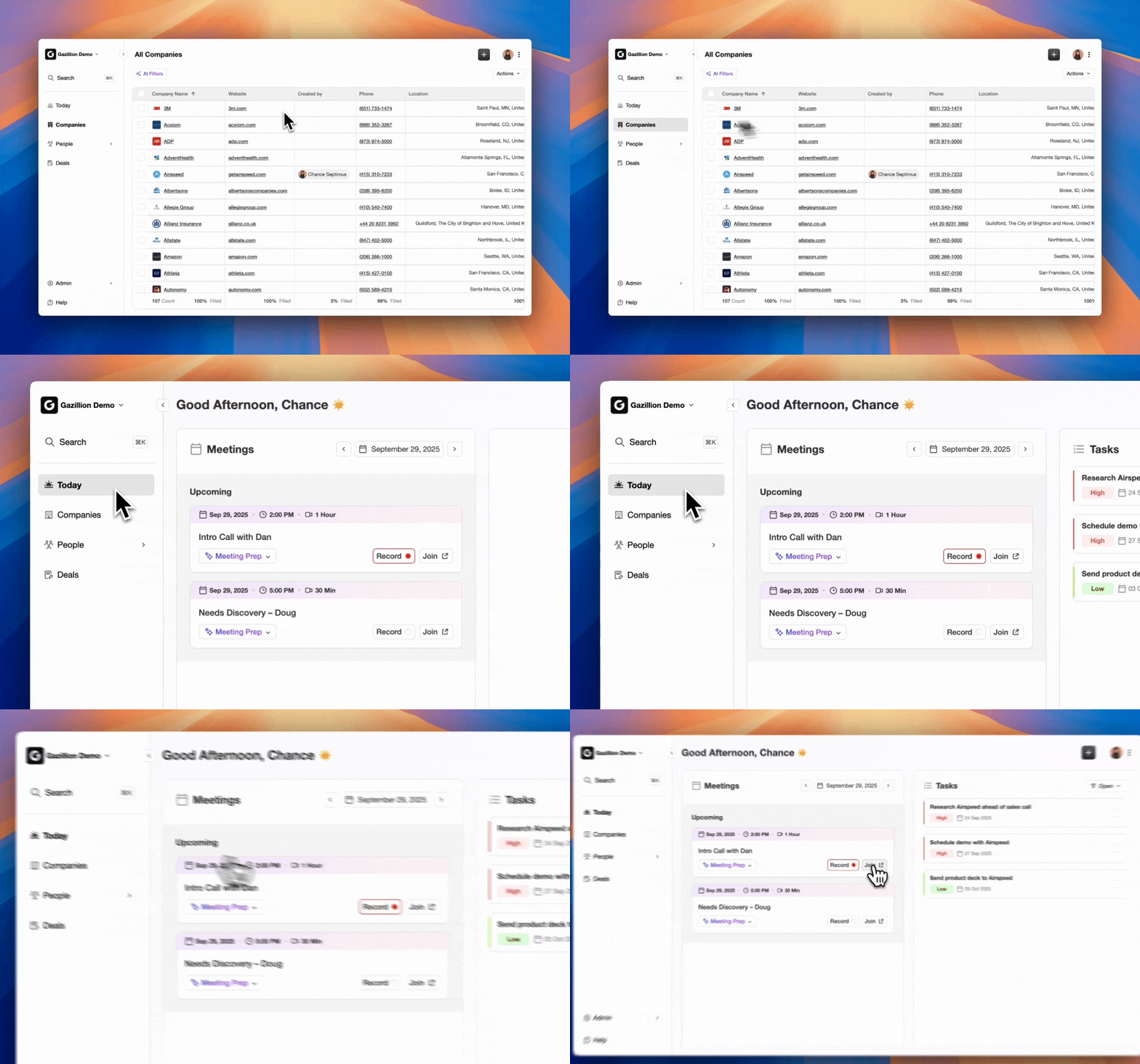
One company generating tens of millions in revenue managed sales in spreadsheets and knew that manual entry would not scale. The team rejected Salesforce and HubSpot because those tools still required heavy manual work.
Coffee’s autonomous agent solved that problem by creating contacts automatically from Google Workspace and surfacing actionable pipeline insights through the Compare feature. The team also used API access for custom briefing scripts. The agent fit smoothly into their daily routine and removed the data entry burden that had blocked CRM adoption.

FAQ
What is the main difference between AssemblyAI and Coffee for sales call insights?
AssemblyAI focuses on extracting insights from sales calls through transcription, sentiment analysis, and topic detection with API support for workflows. Coffee operates as an autonomous CRM Agent that analyzes calls and also updates your CRM, creates follow-up tasks, and orchestrates the entire sales workflow without human intervention.
Which platform offers stronger CRM integration for revenue intelligence in 2026?
Coffee provides deeper CRM integration as an autonomous agent that works as a standalone CRM or as a companion app for Salesforce and HubSpot. The agent automatically syncs data, enriches contacts, and maintains accurate records without manual entry. AssemblyAI offers API-based integrations with CRMs like Salesforce and HubSpot, which often require development work.
How does speech AI improve sales forecasting accuracy?
Coffee’s agent captures complete conversation history in a built-in data warehouse. This history supports accurate pipeline analysis and forecasting based on real deal progression patterns. The Pipeline Compare feature tracks week-over-week changes automatically, which gives leaders reliable forecasting data without manual spreadsheets or guesswork.
What are AssemblyAI’s main limitations for CRM automation?
User reviews consistently state that AssemblyAI performs well at call analysis but needs API development for full CRM automation. The platform offers flexible integrations but can add complexity for teams without technical resources that want end-to-end automation.
What agent-led automation trends are shaping sales technology in 2026?
Salesforce’s 2026 State of Sales report shows that 54% of organizations now deploy AI agents across the sales cycle. Top-performing teams are 1.7x more likely to use autonomous agents. Adoption has shifted from basic transcription tools to agent-led platforms that automate entire workflows from prospecting through deal closure.
Conclusion and Next Steps
AssemblyAI delivers strong capabilities for sales call insights and analysis, which suits teams that mainly want conversation intelligence. Coffee’s autonomous CRM Agent goes further by providing full revenue automation that turns calls into closed deals through end-to-end workflow management.
SMB sales teams that want to remove manual data entry and reach true CRM automation gain more value from Coffee’s agent-led approach. Get started with Coffee today and let an autonomous agent handle revenue intelligence while your team focuses on selling.