
Key Takeaways for Teams Replacing Aviso
- Aviso’s AI forecasting leaves gaps in full autonomous CRM workflows, so sales reps still lose 8-12 hours weekly to manual data entry and coordination.
- Top alternatives like Coffee go deeper on agent capabilities, with complete automation for data entry, unstructured data processing, and pipeline intelligence.
- Coffee leads as the #1 choice for SMB and mid-market teams, working as a standalone CRM or Salesforce/HubSpot companion and saving 8-12 hours per week.
- Evaluation criteria focus on native integrations, 82-87% forecast accuracy, SOC2 compliance, and removal of roughly 71% of manual task time.
- Choose Coffee today for a truly autonomous CRM agent and end-to-end revenue execution autonomy.
What Matters Most When Evaluating Autonomous CRM Agents
Autonomous CRM agents must handle automatic data entry and enrichment, execute workflows without human help, and process unstructured data such as emails and call transcripts. They also need native CRM integrations with Salesforce and HubSpot plus accurate pipeline intelligence. Advanced revenue intelligence platforms reach 82-87% forecast accuracy compared to 64-71% for traditional methods.
Security requirements such as SOC2 and GDPR compliance, transparent seat-based pricing, and fast implementation timelines drive SMB and mid-market adoption. The real test is simple. The agent should remove the 71% of time reps waste on manual tasks and unlock roughly 35% more selling time.
Top 10 Aviso Revenue Intelligence Alternatives
#1 Coffee: Best Choice for Fully Autonomous CRM Agents
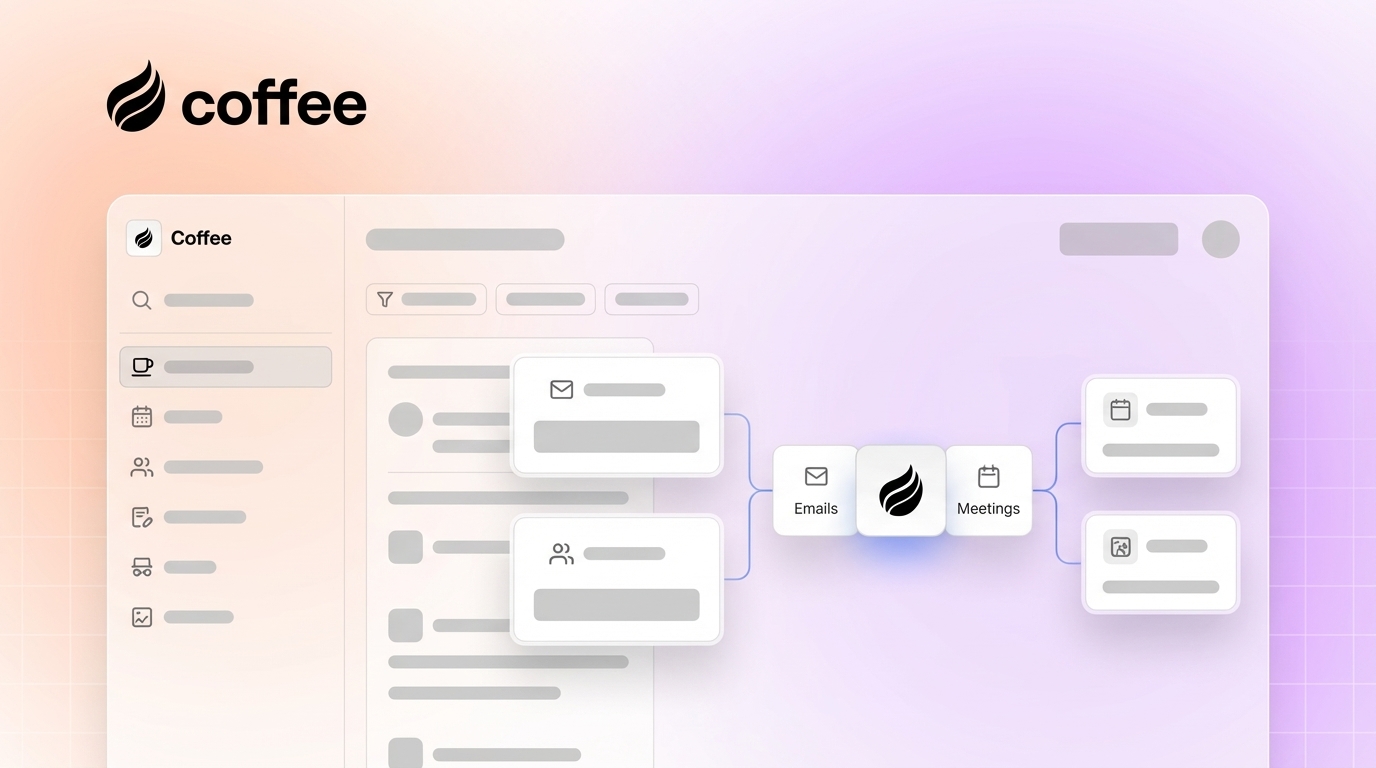
Coffee operates as a truly autonomous CRM agent built for SMB and mid-market teams that want real automation, not just analytics. The agent auto-creates and enriches contacts, orchestrates meetings with AI bots, and delivers Pipeline Compare intelligence while keeping data clean through a “Good Data In, Good Data Out” approach.

Strengths: Works as a standalone CRM or companion for Salesforce and HubSpot, saves 8-12 hours per rep each week through full automation, processes structured and unstructured data, and uses simple Google or Microsoft authentication.
Limitations: Product roadmap still expanding deeper third-party integrations beyond current Zapier connectivity.
Ideal for: Teams that dislike data entry, growing sales orgs, and companies outgrowing spreadsheets but unwilling to maintain CRM records manually.

Pricing: Transparent seat-based model that includes unlimited agent labor.
#2 Clari: Enterprise-Grade Forecasting for Salesforce Shops
Clari leads enterprise forecasting with mature roll-up capabilities and native Salesforce integration. Clari manages $10 trillion in revenue with Clari Copilot estimated at $120-160 per user each month. It delivers automated pipeline inspection with real-time analysis.
Strengths: Two-way Salesforce sync, approval workflows, and strong analytics visualization.
Limitations: Implementation often takes 8-12 weeks, which slows time to value.
Ideal for: Enterprise teams with dedicated Salesforce admins and tolerance for complex setup.
#3 Gong: Conversation Intelligence With Forecasting Support
Gong dominates conversation intelligence and supports forecasting through call and deal insights. Gong reports 81% forecasting accuracy and AI-driven deal risk assessment. Gong Assistant lets users query customer data in natural language, and Gong Enable (2026) adds AI Call Reviewer for automated coaching.
Strengths: Deep conversation insights, reality-based forecasting, competitive intelligence, and roughly $250 per user pricing.
Limitations: Gaps in CRM sync often require manual work, and teams still need other tools for full pipeline management.
Ideal for: Sales teams that prioritize call analysis and coaching over complete CRM automation.
#4 Salesforce Agentforce: Native Agents for Salesforce-First Enterprises
Salesforce Agentforce brings quote-to-cash automation directly into the Salesforce CRM environment. Salesforce Agent 360 tools handled 5,000 additional tickets per week and delivered a 14% productivity increase in large deployments.
Strengths: Native Salesforce integration, access to the full Salesforce ecosystem, and enterprise-grade security.
Limitations: Pricing often feels high for SMB teams and works best for orgs already fluent in Salesforce.
Ideal for: Large enterprises heavily invested in Salesforce with strong admin and RevOps resources.
#5 RevenueGrid: Salesforce Activity Capture and Guided Selling
RevenueGrid focuses on email and calendar sync automation and positions itself as a Salesforce companion for activity capture. The platform highlights guided selling workflows and opportunity management for Salesforce users.
Strengths: Robust email integration, guided selling processes, Salesforce-native architecture, and AI-driven forecasting.
Limitations: Limited conversation intelligence and a narrow focus on activity capture instead of full autonomy.
Ideal for: Salesforce teams that mainly need reliable activity logging without full agent capabilities.
#6 People.ai: Revenue Operations Analytics and Data Unification
People.ai delivers revenue operations intelligence through activity capture and pipeline analytics. Review platforms rate it 4.4 out of 5 for its data unification approach and RevOps focus.
Strengths: Support for multiple CRMs, activity scoring, and pipeline change tracking.
Limitations: Users still interpret data manually, and the platform offers limited autonomous workflow execution.
Ideal for: RevOps teams that want analytics dashboards and insights rather than hands-off agents.
#7 Revenue.io: Coaching-Focused Aviso Alternative for Salesforce
Revenue.io presents itself as a leading Aviso alternative for Salesforce-centric teams, with a focus on activity-based forecasting instead of heavy predictive modeling. The product centers on call coaching and activity management.
Strengths: Salesforce-native design, activity-based insights, and strong call coaching tools.
Limitations: Manual forecast adjustments remain common, and unstructured data processing stays limited.
Ideal for: Sales orgs that value coaching and call quality more than deep automation.
#8 BoostUp: Forecast Accuracy for Mid-Market Salesforce Teams
BoostUp delivers AI-powered forecasting with close Salesforce integration and a focus on predictive insights. The platform scores 4.7 out of 5 in 2026 revenue intelligence rankings for its forecasting capabilities.
Strengths: High forecast accuracy, Salesforce integration, and an intuitive interface.
Limitations: Limited autonomous data entry and continued need for manual pipeline hygiene.
Ideal for: Mid-market teams that want accurate forecasts but can live without full automation.
#9 6sense: Predictive Account and Intent Intelligence
6sense excels at predictive account intelligence and intent data analysis for account-based programs. The platform earns praise for predictive capabilities but often feels expensive for mid-market buyers.
Strengths: Account-based intelligence, rich intent data, and predictive scoring.
Limitations: High cost, complex implementation, and limited CRM automation.
Ideal for: Enterprise ABM teams with large budgets and mature marketing operations.
#10 Outreach: Sales Engagement With Light Revenue Intelligence
Outreach delivers sales engagement automation with bi-directional CRM sync and basic revenue intelligence features. The platform centers on sequence automation, email tracking, and forecasting support.
Strengths: Email sequence automation, multi-channel outreach, and a broad integration ecosystem.
Limitations: Engagement-focused product that stops short of full agent-driven CRM management.
Ideal for: Outbound-heavy teams that value sequences and engagement over deep CRM intelligence.
2026 Comparison Snapshot and Emerging Agent Trends
| Tool | Auto-Logging | Unstructured Data | Pipeline Intel | CRM Fit |
|---|---|---|---|---|
| Coffee | Yes | Yes | Yes | Standalone/SF/HubSpot |
| Aviso | Yes | Yes | Yes | Salesforce |
| Clari | Yes | Partial | Yes | Salesforce |
| Gong | Partial | Yes | Partial | Multi-CRM |
Coffee leads on agent depth when compared with Aviso and Clari. The 2026 trend favors autonomous agents that finally fix the “bad data in” cycle that has hurt CRMs for years. Modern platforms now blend conversation intelligence, email tracking, and content engagement to show complete deal health.

How to Choose an Aviso Alternative and Roll It Out
Coffee fits teams that want unified data autonomy and full agent capabilities in one product. Clari suits enterprises that prioritize forecasting and already maintain strong Salesforce admin support. Total cost of ownership improves when one autonomous agent replaces several point solutions.
Manual tools keep the data entry grind alive and slow down sales teams. Coffee’s implementation uses only Google or Microsoft authentication, which removes the 8-12 week setup cycles common with legacy platforms. Get started with Coffee to deploy autonomous CRM agents that actually do the work.
Conclusion: Why Coffee Leads Aviso Alternatives in 2026
Coffee leads Aviso revenue intelligence alternatives for autonomous CRM agents in 2026. Competitors often cover only parts of the workflow, such as Gong for conversations or Clari for forecasting. Coffee instead delivers complete autonomous CRM management in one system.
The Coffee agent handles data entry, orchestrates meetings, and provides pipeline intelligence without human intervention. For RevOps leaders comparing options, the decision comes down to passive databases versus active agents. Get started with Coffee and experience the next stage of revenue operations.

FAQ
What are autonomous CRM agents?
Autonomous CRM agents are AI systems that execute complete workflows without human intervention. Traditional CRM software stores data passively and waits for users to update records. Autonomous agents instead capture information from emails and calendars, enrich contact records, log activities, and generate insights automatically. They remove the manual data entry that consumes 71% of sales reps’ time and free teams to focus on selling.
How does Coffee compare to Aviso for data entry automation?
Coffee automates data entry end to end through its autonomous agent, while Aviso offers Agentic AI focused on CRM logging and data unification. Coffee’s agent scans Google Workspace or Microsoft 365 to auto-create contacts, enrich company records, and log all activities without human involvement. Aviso concentrates more on forecasting accuracy through AI-powered data processing.
What is the best Aviso alternative for existing Salesforce users?
Coffee’s Companion App works well for Salesforce users that want autonomous CRM management. Clari often requires an 8-12 week implementation, and Gong provides limited CRM sync for full pipeline control. Coffee’s agent integrates directly with existing Salesforce instances and keeps Salesforce as the system of record.
The agent handles data entry, meeting orchestration, and pipeline intelligence while Salesforce remains the central database. This approach removes the need for expensive consulting projects or long setup cycles.
What are 2026 pricing trends for revenue intelligence platforms?
Seat-based pricing has become the standard in 2026, with platforms charging per human user while including unlimited AI agent labor. Coffee leads this model with clear, transparent seat-based pricing. The shift reflects how companies now value autonomous agents, paying for human seats while receiving unlimited automated work from AI.
How do you measure ROI from autonomous CRM agents?
Teams measure autonomous CRM agent ROI through time savings and gains in selling time. Coffee users save 8-12 hours per week that previously went to manual data entry, which translates to roughly 35% more time for live selling activities. Additional metrics include forecast accuracy improvements, faster pipeline velocity, and savings from consolidating multiple tools into one autonomous agent.
The strongest signal of ROI appears when sales reps start viewing the CRM as a helpful co-pilot instead of a burdensome database.