
Key Takeaways
- Sales teams waste 71% of their time on manual data entry, and Coffee’s agent-based automation removes this work, saving 8 to 12 hours per rep each week.
- Coffee ranks #1 for CRM enrichment, delivering hands-free accuracy similar to ZoomInfo while keeping total cost of ownership lower through autonomous agents.
- Traditional databases like ZoomInfo and Apollo depend on manual uploads and list management, while Coffee enriches CRM data directly from email and calendar activity.
- Accuracy under 3% bounce, Salesforce and HubSpot integrations, and full agent automation all tilt the evaluation in Coffee’s favor.
- Upgrade CRM enrichment with Coffee’s pricing plans and get compliant, automated enrichment built for SMB and mid-market teams.
How We Scored CRM Enrichment and Contact Databases
We focused on the criteria RevOps managers and sales leaders rely on when they evaluate CRM data quality. Accuracy carried 30% of the score because bounce rates directly affect deliverability and sender reputation. CRM integrations followed at 25%, since native Salesforce and HubSpot syncs keep workflows smooth for sales teams.
|
Criteria |
Weight |
Key Metrics |
|
Accuracy |
30% |
Bounce rate <3% |
|
CRM Integration |
25% |
Native SF/HubSpot sync |
|
Automation Level |
20% |
Agent vs manual processes |
|
Total Cost |
15% |
Annual TCO including implementation |
|
Security & Compliance |
10% |
SOC2, GDPR readiness |
Top 9 B2B Contact Databases for CRM Enrichment in 2026
1. Coffee: Autonomous CRM Agent for Hands-Free Enrichment
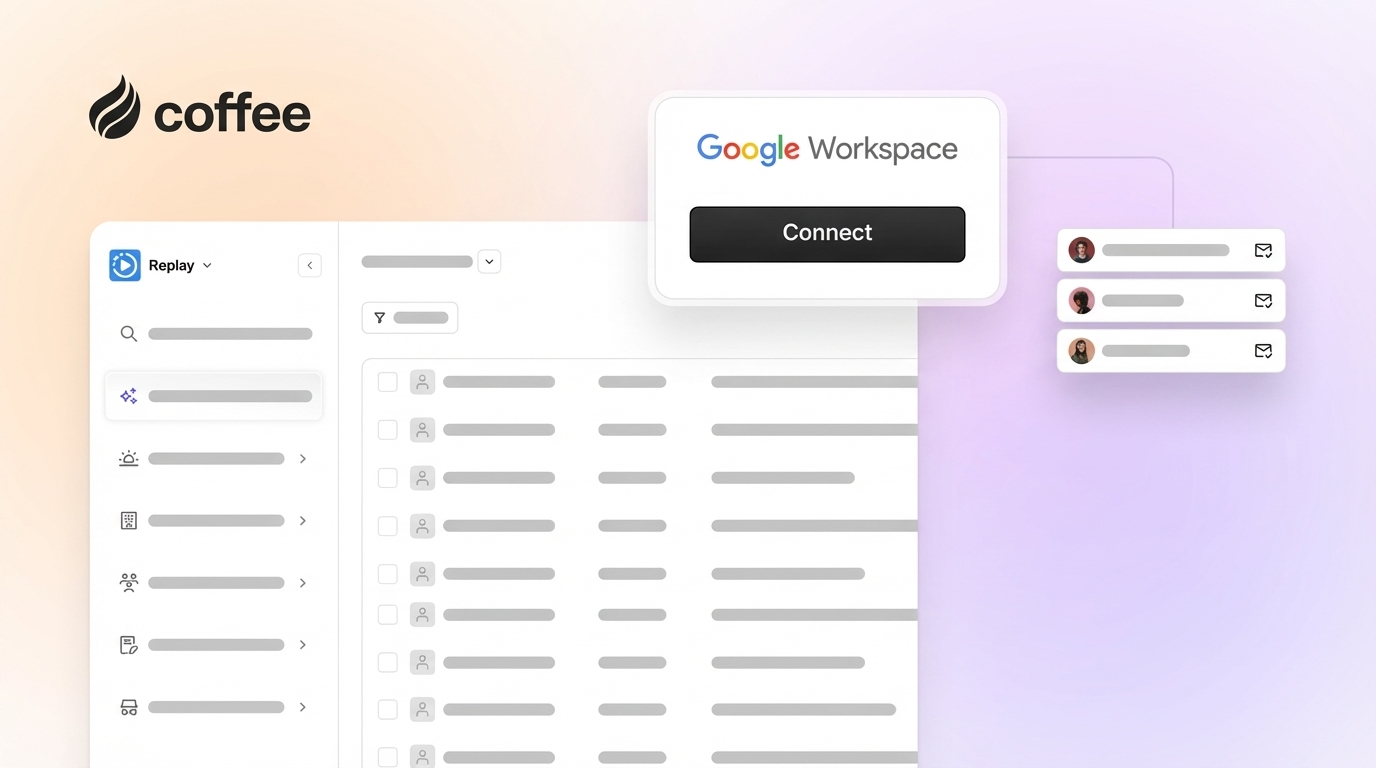
Coffee uses an autonomous agent that creates, enriches, and logs contacts from Google Workspace or Microsoft 365. Traditional databases depend on manual uploads and validation, while Coffee’s agent watches email and calendar activity and keeps CRM records clean in the background.

Strengths:
- Hands-free automation removes manual data entry for sales and RevOps teams
- High accuracy supported by licensed data partnerships
- Companion app for Salesforce and HubSpot users
- 8 to 12 hours of weekly time savings per sales rep
Best For: SMB and mid-market teams that want to remove the “data entry grind” and still keep high data quality.

Pricing: Seat-based model with unlimited agent labor included. Try Coffee and compare it against your current enrichment costs.
2. ZoomInfo: Enterprise-Grade Volume and Intent Data
ZoomInfo serves large enterprises that need huge contact volumes and rich intent data. Annual costs of $15,000 to $40,000 and manual upload work, however, create overhead that many smaller teams cannot absorb.
Strengths:
- Very large B2B contact database with more than 100 million profiles
- Advanced intent data and detailed technographic insights
- Robust Salesforce and HubSpot integrations
Limitations:
- High total cost of ownership with layered pricing tiers
- Manual list building and upload steps for many workflows
- Often needs a dedicated admin or RevOps owner
Best For: Enterprise teams that have dedicated RevOps resources and budget for deep intent data.
3. Apollo: Sales Engagement Plus Contact Data
Apollo combines a contact database with email sequencing and sales engagement tools in one platform. Plans start at $49 per month and offer better value than ZoomInfo for many mid-market teams, but automation still trails agent-based tools.
Strengths:
- Integrated prospecting and outreach in a single workflow
- Roughly 85% accuracy with real-time email verification
- Chrome extension that supports LinkedIn prospecting
Limitations:
- Contact discovery depends on user-defined filters and AI helpers
- Automation depth remains lower than agent-based platforms
- Credit-based pricing can grow expensive at higher volumes
4. Cognism: GDPR-Compliant Data for EMEA
Cognism focuses on GDPR-compliant data for European markets, which helps companies that target EMEA while staying aligned with regulations.
Strengths:
- GDPR-compliant data collection and processing practices
- Strong coverage of European contacts and companies
- Real-time phone number verification
Limitations:
- Limited coverage for North American markets
- Higher per-contact pricing than many competitors
- Less agent-based automation than advanced platforms
5. Lusha: LinkedIn-Centric Prospecting
Lusha focuses on LinkedIn prospecting through its browser extension and supports quick contact discovery for social selling workflows.
Strengths:
- Smooth LinkedIn integration for reps
- Mobile app that supports prospecting on the go
- Competitive pricing for small teams
Limitations:
- Bulk enrichment does not scale as well as enterprise tools
- Accuracy can vary by region and segment
- Workflows usually start with user actions, not automation
6. Kaspr: Privacy-First Prospecting with GDPR Focus
Kaspr positions itself as a privacy-first option with strong GDPR compliance, but its smaller database limits CRM enrichment at scale.
Strengths:
- Clear focus on privacy and compliance
- Integration with LinkedIn Sales Navigator
- Transparent data sourcing practices
Limitations:
- Smaller database than leading providers
- Less automation depth than agent-based solutions
- Higher per-contact costs for many use cases
7. Clearbit via HubSpot Breeze: Native HubSpot Enrichment
Clearbit now lives inside HubSpot’s Breeze intelligence layer and offers native enrichment for HubSpot users, but it lacks the flexibility of standalone tools.
Strengths:
- Native integration for HubSpot customers
- Automatic enrichment triggers on key events
- Strong focus on company-level data
Limitations:
- Only available within the HubSpot ecosystem
- Contact coverage varies by data source
- Less capable than multi-CRM, agent-based platforms
8. Seamless.AI: AI-Driven Contact Discovery
Seamless.AI uses artificial intelligence for contact discovery and offers Autopilot features that streamline list building and verification.
Strengths:
- AI-driven discovery for new contacts
- Real-time verification of contact data
- Chrome extension that fits into prospecting workflows
Limitations:
- Accuracy often still needs manual verification
- Limited CRM automation compared to agents
- Credit-based pricing model can add cost at scale
9. UpLead: Budget-Friendly Enrichment for SMBs
UpLead serves small businesses with affordable pricing and solid enrichment features that support growing teams.
Strengths:
- Low entry-level pricing for early-stage teams
- Real-time email verification on contacts
- Basic integrations with popular CRMs
Limitations:
- Smaller database coverage than larger vendors
- List building still depends on user-defined filters
- Automation features lag behind agent-based platforms
Feature and TCO Comparison Across Leading Tools
|
Tool |
Accuracy Rate |
CRM Integration |
Automation Level |
Starting Price |
TCO Advantage |
|
Coffee |
High (on par with leading providers) |
Native Companion |
Full Agent |
Seat-based |
Yes |
|
ZoomInfo |
85-90% |
API Integration |
Manual |
$15K+/year |
No |
|
Apollo |
85% |
API Integration |
Automated workflows |
$49/month |
Moderate |
|
Cognism |
88% |
API Integration |
Automated |
Custom pricing |
No |
|
Lusha |
80-85% |
Advanced sync |
Automated workflows |
$29/month |
Limited |
Coffee delivers the lowest total cost of ownership because it removes the need for dedicated data management roles while still providing deep automation. Traditional tools often demand ongoing maintenance, and Coffee’s agent quietly handles that work in the background.

Why RevOps Teams Prefer Agent Automation
RevOps professionals often feel stuck managing manual database tasks instead of strategic work. Common integration issues such as validation rule failures, missing required fields, and API limits create constant maintenance overhead.
Coffee’s agent architecture removes these headaches by structuring data to match CRM rules and keeping sync active without human input. This “good data in, good data out” approach protects CRM accuracy and avoids the usual trade-off between data quality and team efficiency.

How to Choose a CRM Enrichment Tool Without Costly Mistakes
SMB and mid-market teams usually get the best balance of accuracy, efficiency, and cost from Coffee’s agent-based automation. Enterprise teams with complex custom workflows may still need ZoomInfo’s breadth of features, but they should calculate true total cost of ownership, including admin time and maintenance.
Teams often underestimate implementation time, ignore credit consumption patterns, and forget to budget for ongoing data maintenance. Sync failures from validation rules and permission gaps can damage CRM trust and hurt sales performance.
Test integrations in a sandbox, define clear success metrics, and only then commit to annual contracts. Book a Coffee demo and compare your current enrichment workflow with an agent-based approach.
Frequently Asked Questions About CRM Enrichment Tools
What is the most accurate B2B contact database for CRM enrichment?
Coffee delivers top-tier accuracy for CRM enrichment through an autonomous agent that monitors and validates contact data from email and calendar activity. Traditional databases depend on periodic refreshes, while Coffee captures ground-truth data directly from live business conversations and keeps records current in real time.
How do ZoomInfo, Apollo, and Coffee compare for CRM enrichment?
ZoomInfo excels in database size and intent data but needs heavy manual management and carries a high total cost of ownership. Apollo offers integrated sales engagement but still requires manual list building and credit management. Coffee removes manual steps through agent automation, matches leading accuracy, and often cuts total cost of ownership by about 50% while staying hands-free for reps.
What is the best free B2B contact database for accurate CRM enrichment?
Most vendors provide time-limited trials instead of permanent free tiers. Coffee delivers strong value during trials by showing immediate ROI through automated enrichment that replaces manual data entry. Free tiers from other tools usually include strict limits that do not reflect real CRM enrichment needs.
Is Kaspr effective for B2B data enrichment compared to other tools?
Kaspr offers strong GDPR compliance but has less automation and smaller coverage than leading platforms. Teams that focus on European compliance can see value from Kaspr, while Coffee’s agent-based model usually delivers better efficiency and accuracy for broader CRM enrichment needs.
What are the key 2026 updates in B2B contact database technology?
In 2026, vendors are shifting toward agent-based automation that removes manual database work. HubSpot’s Breeze integration reflects how traditional providers respond to AI trends, while Coffee’s autonomous agent architecture currently offers one of the most advanced examples of AI-driven CRM enrichment.
Conclusion: Agent-Based Automation Sets the New CRM Standard
Traditional B2B contact databases create constant maintenance work that Coffee’s autonomous agent removes. Established providers such as ZoomInfo and Apollo still serve specific enterprise needs, yet Coffee points toward a future where intelligent automation keeps CRM data clean without human effort.
SMB and mid-market teams that want to end manual data entry while keeping enterprise-grade accuracy can rely on Coffee’s agent architecture for strong value. Get started with Coffee and see how hands-free CRM enrichment feels in your own stack.