Written by: Doug Camplejohn, CEO & Co-Founder, Coffee | Last updated: July 18, 2026
Key Takeaways for Startup CRM Buyers
- Bootstrapped solo-founder teams need same-day setup and near-zero admin work, so Coffee Standalone or HubSpot Free fit best.
- Sales-led startups with 5–10 reps gain the most from proactive automation that removes manual data entry, where Coffee’s AI agent is purpose-built.
- Teams already using Salesforce or HubSpot can add Coffee’s Companion App as an agent layer without a rip-and-replace migration.
- Reps spend 5.5 hours per week on manual CRM entry, and Coffee’s agent cuts this to near zero by handling capture and enrichment autonomously.
- Eliminate manual data entry from your sales workflow today with Coffee.
The Real Problem Founders Face
Roughly 70% of a sales rep’s week goes to non-selling work, including CRM admin, research, and internal tasks. The data-entry burden is specific and measurable: sales reps spend 5.5 hours per week on manual CRM entry and record updates, which consumes nearly 14% of a standard 40-hour work week. For small B2B teams, CRM input time averages 118 minutes per day (~9.8 hours per week).
The financial impact compounds quickly. For small sales teams, time spent on CRM administration can equal a full-time employee’s annual output at a substantial annual cost. This pressure creates a well-documented shadow-CRM pattern. Sales teams often have poorly defined or ignored sales processes, and reps revert to spreadsheets and Notion when the official system demands more than it delivers.
Why These Evaluation Criteria Matter
This comparison focuses on the specific problems described above, especially data entry, adoption, and forecasting trust. Each platform is scored against six criteria that reflect how well it reduces manual work and supports real-world startup workflows from pre-seed through Series B.
- Data quality and automation depth, which measures how much manual entry the platform removes instead of requires.
- Implementation effort, which covers time from signup to a live, rep-facing pipeline.
- User adoption, which reflects the likelihood that reps open the tool daily after 30 days.
- Google Workspace / Microsoft 365 integration, which looks for native bidirectional sync without BCC hacks or third-party middleware.
- Pipeline visibility without spreadsheets, which evaluates forecasting and week-over-week change tracking inside the product.
- Total cost of ownership, which includes seat price plus hidden admin time, add-ons, and implementation overhead.
Automation-Level Comparison Across Leading CRMs
The table below ranks six platforms on automation depth, setup speed, and estimated hidden admin hours per rep per week. All figures come from platform documentation, independent benchmarks, and the sources cited throughout this article.
| Platform | Automation Depth | Setup Speed | Hidden Admin Hours / Rep / Week |
|---|---|---|---|
| Coffee (Standalone or Companion) | Proactive agent, which auto-creates contacts, logs activity, drafts follow-ups, enriches records, and runs Pipeline Compare without prompting | Same day via Google Workspace or Microsoft 365 auth | Near zero, since the agent handles data-in autonomously and saves an estimated 8–12 hours per week |
| HubSpot Breeze | Reactive agents for prospecting, content, and support, and most Breeze features require Professional or Enterprise plans plus credit or outcome-based usage fees | 1–3 days, with a free tier available but automation locked behind paid tiers | Moderate, since reps still log unstructured data manually and manual CRM data entry costs sales teams 5.5 hours weekly per rep in 2026 without additional tooling |
| Pipedrive AI Assistant | Monitors deal activity and surfaces prompts when deals go quiet, but lacks true agentic action that updates records or runs end-to-end workflows autonomously | Same day, with an intuitive visual pipeline and high adoption | High, because email and call logging remain largely manual |
| Attio AI Workflows | AI-powered triggers for multi-step automations and AI Attributes that auto-fill custom fields by summarizing records or running external web research agents | 1–2 days, since the flexible data model requires configuration | Moderate-to-high, with strong results for technical teams and a steeper curve for non-technical reps |
| Zoho Zia | Predictive lead scoring, churn prediction, natural language workflow creation, and anomaly detection, with 700+ pre-built actions via a no-code builder | 2–5 days, since the broad feature set increases configuration time | Moderate, because Zia reduces some entry but unstructured data capture still requires add-ons |
| Clarify / Day.ai | Clarify’s AI sales agent handles about 90% of routine data entry, auto-detecting deals from email and calendar signals, while Day.ai focuses on unstructured data productivity | Same day, with minimal configuration before AI delivers value | Low for seed-stage teams, but integration depth is limited for established Salesforce or HubSpot instances with quotas, forecasting, and required fields |
Setup Speed and Data Capture Depth
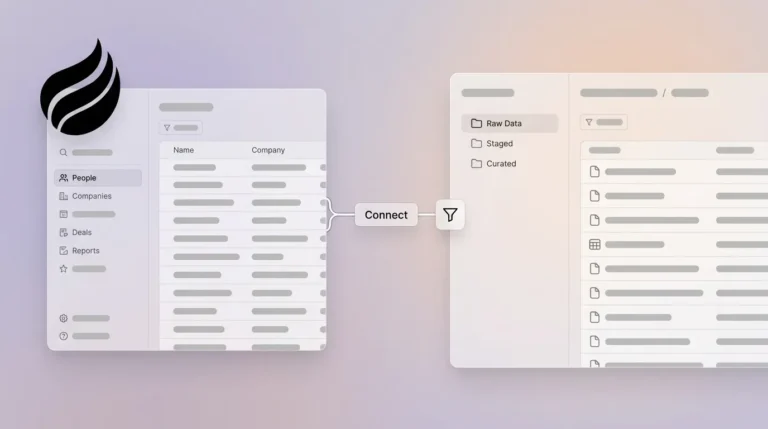
Coffee connects to Google Workspace or Microsoft 365 through a single authentication step. The agent then operates autonomously. It scans email threads to identify new contacts and infer company relationships, tracks when each contact was last engaged and when follow-up is due, and pulls job titles, funding data, and LinkedIn profiles from licensed data partners. It also joins calls on Zoom, Teams, or Meet to record, transcribe, and generate BANT, MEDDIC, or SPICED-structured summaries. Teams avoid manual imports, BCC forwarding, and Zapier dependency for core data capture.

HubSpot Breeze and Zoho Zia capture some email activity natively but still rely on reps to log call outcomes and update deal stages. Pipedrive’s email sync is strong, yet call and meeting notes remain a manual task without a separate add-on. Attio’s AI Attributes auto-fill fields from web research but do not join live calls or process unstructured transcript data at the same depth. Clarify performs well for seed-stage teams with simple pipelines, while its integration with complex Salesforce or HubSpot configurations, including custom required fields, quota logic, and multi-currency forecasting, remains materially shallower than Coffee’s Companion App.
Usability and Adoption for Early Teams
High CRM adoption remains difficult for many businesses, and 43% of CRM customers use fewer than half the features they pay for. The adoption problem usually stems from data entry rather than training. When reps must serve the software instead of the software serving them, shadow CRMs appear within weeks.
Coffee addresses this at the architectural level. The agent handles data-in autonomously, so reps open the tool to read briefings and review pipeline intelligence instead of entering records. Pipedrive earns consistently high adoption scores for its visual pipeline UX, but reps still carry the logging burden. HubSpot’s free tier supports unlimited users and works as a legitimate starting point, yet automation workflows, scoring, and advanced support sit behind paid tiers. Zoho’s breadth creates configuration overhead, and 76% of CRM features go unused by contractors and SMB teams.

Manager Visibility and Forecasting Accuracy
Coffee’s Pipeline Compare feature visualizes week-over-week changes, including progressed deals, stalled opportunities, and new additions, without CSV exports or manual preparation. The agent captures history in a built-in data warehouse, so the output comes from ground-truth activity data instead of rep-reported stage updates.
HubSpot’s forecasting tools perform well at Professional tier and above. Pipedrive’s visual pipeline works for deal-stage tracking, but forecasting accuracy depends on rep discipline in updating records. Zoho Zia generates sales forecasts through natural language queries. Many SaaS CRMs contain substantial dirty data, which compounds the shadow-CRM pattern described earlier. When CFOs stop trusting forecasts, the official system loses credibility at both the rep and executive level, while Coffee’s agent-enforced data quality aims to prevent this from the start.
Integration Reality and Long-Term Flexibility
Coffee’s native Google Workspace and Microsoft 365 sync covers the core data-capture loop without middleware. Broader integrations currently run through Zapier, and deeper native connections sit on the roadmap. For teams already on Salesforce or HubSpot, the Companion App writes enriched data and AI-generated insights back to the primary CRM through a simple authentication, which preserves existing workflows, required fields, and quota logic.
Native integrations beat Zapier connectors for speed, reliability, and cost, and Coffee’s roadmap prioritizes closing that gap. Teams evaluating Clarify or Day.ai alongside an existing Salesforce or HubSpot instance should validate integration depth against their specific required fields and forecasting configuration before committing.
Best-Fit Use Cases by Buyer Archetype
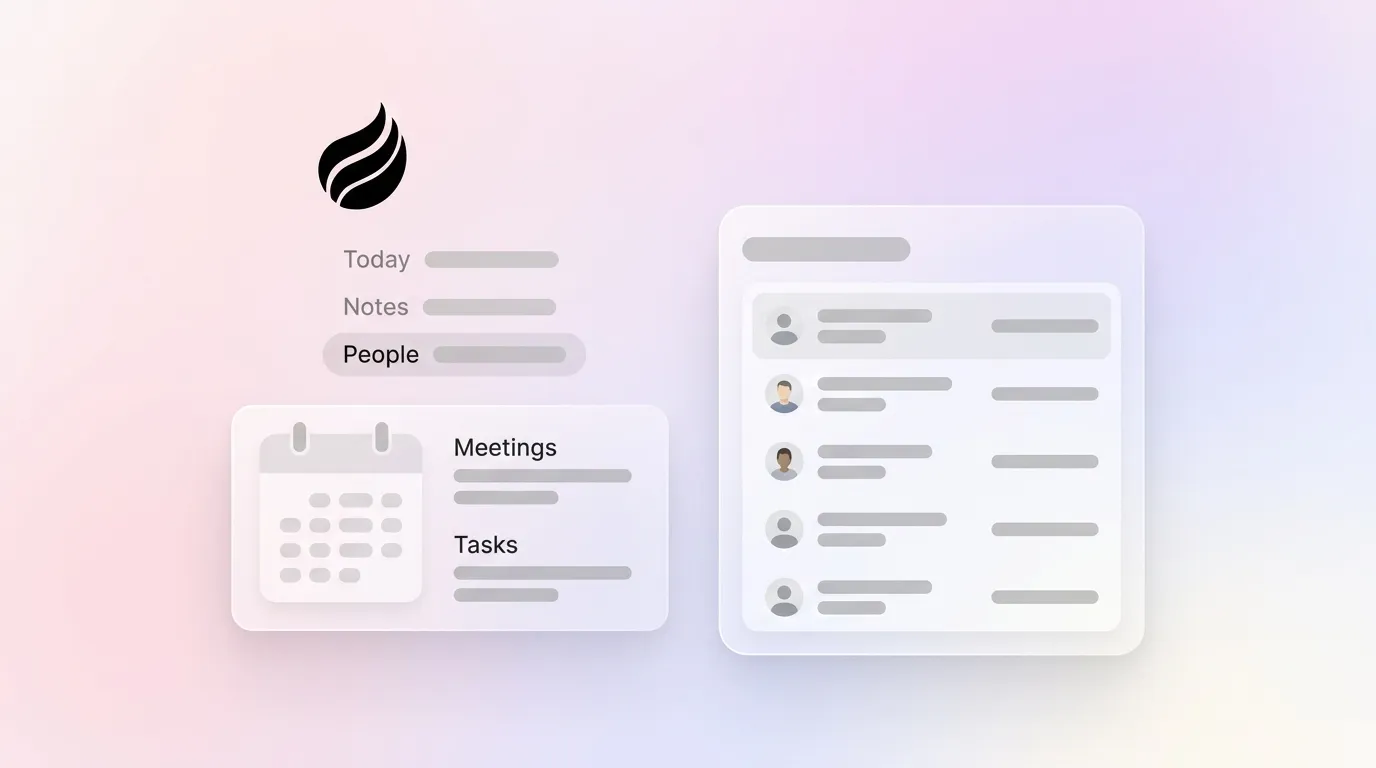
Bootstrapped solo-founder teams (1–5 people): Coffee’s Standalone CRM delivers same-day setup, automatic contact creation from email and calendar, and a “Today” page briefing that replaces the morning CRM audit. HubSpot Free works as a viable no-cost starting point if the team is marketing-led and not yet ready to pay for automation. Pipedrive Essential suits founders who want a disciplined visual pipeline without AI overhead.

Sales-led startups with 5–10 reps: This is Coffee’s primary archetype. The agent eliminates the weekly data-entry burden described earlier, joins every call, drafts follow-ups in Gmail, and surfaces Pipeline Compare for weekly reviews, all without a RevOps hire or a dedicated CRM admin. See how Coffee’s agent handles data-in for sales teams and reclaim selling time across your entire team.

Teams already committed to Salesforce or HubSpot: Coffee’s Companion App deploys as an agent layer on top of the existing system of record. It handles data-in, including contact creation, activity logging, call transcription, and enrichment, and writes structured insights back to Salesforce or HubSpot. Teams gain accurate pipeline data without replacing their existing platform or retraining reps on a new system.
Risks and Limitations to Consider
Every platform in this comparison carries trade-offs that founders should evaluate honestly.
- Coffee: Broader third-party integrations currently rely on Zapier, so teams with complex tech stacks may need to manage additional middleware. This Zapier dependency also explains why large enterprises with multi-department custom workflows fall outside Coffee’s current ICP, since the platform focuses on speed and simplicity rather than deep customization. Teams in heavily regulated industries such as healthcare or finance that require multi-year security reviews should validate compliance timelines before committing.
- HubSpot: Licensing fees represent only 30–40% of total CRM spend, and add-ons, implementation, and annual escalation clauses increase costs significantly at scale.
- Pipedrive: Pipeline UX is strong, but the AI Assistant does not autonomously update records or run end-to-end workflows, which keeps the data-entry burden on reps.
- Attio: The product works well for technical, data-model-first teams, while non-technical early-stage sales reps face a steeper configuration curve.
- Zoho: Functionality is broad and pricing is competitive, yet feature density creates adoption risk for teams without a dedicated admin or RevOps resource.
- Clarify / Day.ai: Autonomous data capture performs well for seed-stage simplicity, while integration depth with established Salesforce or HubSpot instances that use custom required fields and quota logic remains materially limited compared to Coffee’s Companion App.
Decision Framework Summary for Startup Teams
| Team Size | Sales Motion | Budget Signal | Recommended Starting Point |
|---|---|---|---|
| 1–5 people, founder-led | Outbound or relationship-led | Lean / bootstrapped | Coffee Standalone or HubSpot Free, then Coffee when pipeline volume grows |
| 5–10 reps, sales-led | Outbound, inbound, or mixed | Seed / Series A runway | Coffee Standalone, since the proactive agent removes admin burden at this stage |
| 10–50 people, existing Salesforce / HubSpot | Complex, multi-stakeholder | Series A / Series B | Coffee Companion App as an agent layer on the existing system of record |
| 50+ people, enterprise motion | Territory management, CPQ, ERP | Series B+ with RevOps | Salesforce or HubSpot Enterprise plus Coffee Companion App for data quality |
Frequently Asked Questions
How long does it take to implement Coffee?
Coffee supports same-day implementation for most teams. Connecting Google Workspace or Microsoft 365 through a single authentication step activates the agent immediately. The agent begins scanning emails and calendars to auto-create contacts, log activity, and populate the pipeline without manual configuration. Most teams have a live, rep-facing pipeline within hours of signup, with no implementation consultants and no certification required.
How difficult is it to migrate existing data into Coffee?
Teams moving from spreadsheets or Notion can rely on Coffee’s agent to handle contact creation automatically from existing email and calendar history, which reduces manual import work significantly. Teams on Salesforce or HubSpot that want to keep their existing system of record can use the Companion App model, which removes migration entirely. Coffee operates as an agent layer on top of the existing CRM and writes enriched data back without a platform switch.
Does Coffee integrate with the tools my team already uses?
Coffee natively integrates with Google Workspace and Microsoft 365 for email and calendar sync and joins calls on Zoom, Teams, and Google Meet. The Companion App integrates directly with Salesforce and HubSpot, including support for custom required fields, quota logic, and forecasting configurations. Broader third-party integrations are currently available through Zapier, and deeper native connections are on the product roadmap. Coffee’s data enrichment is built in, which removes the need for separate tools like Apollo or ZoomInfo for most use cases.
Is Coffee SOC 2 Type 2 and GDPR compliant?
Coffee is SOC 2 Type 2 and GDPR compliant. Customer data is not used to train public AI models. Teams in standard B2B environments can deploy Coffee without additional security review. Teams in heavily regulated industries such as healthcare or finance that require multi-year compliance validation should contact Coffee directly to assess fit before committing.
What is Coffee’s pricing model, and is there a free option?
Coffee uses seat-based pricing, so you pay for human seats and the agent’s labor is included without metering on LLM usage or automated processes. Billing avoids complex per-action or per-resolution structures. Coffee does not currently offer a permanent free tier, and the pricing page lists current plan details and trial options. For teams evaluating whether Coffee fits their stage, the fastest path is a live trial against a real pipeline rather than a feature checklist comparison.
Conclusion: Choosing a Proactive Agent Instead of a Passive CRM
The 2026 CRM market has split into two categories. Some platforms act as passive databases that require humans to work as data-entry clerks, while others behave as proactive agents that handle data-in so teams get accurate intelligence out. HubSpot, Pipedrive, Attio, and Zoho have all added AI layers, yet their core architectures still depend on rep discipline to maintain data quality. Clarify and Day.ai move closer to autonomous capture but lack the integration depth required by teams already running Salesforce or HubSpot at scale.
As the only platform architected from the start as a proactive agent rather than a passive database with AI features bolted on, Coffee delivers this automation whether deployed as the system of record for 1–20 person teams or as the data-quality engine on top of an existing Salesforce or HubSpot instance. The result is accurate pipeline intelligence without the weekly admin tax that currently consumes one full-time employee’s worth of output across every 5-person sales team.
Deploy Coffee’s proactive agent and put your pipeline data in the hands of an agent that never stops working.