Written by: Doug Camplejohn, CEO & Co-Founder, Coffee
Key Takeaways
- Hands-off CRMs remove manual data entry, so startups reclaim up to 65% of sales time for selling instead of admin work.
- Coffee stands out as the leading autonomous CRM agent for 1-20 employee teams, fully automating contacts, meetings, and pipelines.
- Salesflare focuses on email auto-logging, HubSpot adds free AI features, Attio delivers real-time data, and Folk supports lean micro-teams.
- Agent-based systems like Coffee handle both structured and unstructured data, saving each rep 8-12 hours every week.
- Startups gain strong ROI with Coffee’s unlimited agent labor; get started with Coffee today for zero data entry CRM.

Why Startups Need a Hands-Off CRM in 2026
Founders and sales reps lose valuable selling time when they act as data entry clerks inside traditional CRMs. Sales professionals spend about 65% of their time on administrative tasks instead of building relationships and closing deals.
Modern startups need CRMs that automatically capture data from every touchpoint, enrich contact records without manual research, log all email and call interactions, and surface pipeline insights without spreadsheet exports. The real difference now sits between passive systems that only store human-entered data and active agents that autonomously gather, interpret, and update information.
2026 industry trends show CRMs shifting from passive databases into active participants that handle routine work like follow-ups, lead qualification, and pipeline updates based on behavior and learned preferences. This evolution lets startups keep customer data accurate while focusing people on high-value conversations and strategy.
Bootstrapped companies feel the impact of hidden labor costs inside their total cost of ownership, not just subscription fees. A hands-off CRM cuts those operational costs while improving data quality and driving higher adoption across the team.
Top Hands-Off CRMs for Startups: Detailed Comparison
1. Coffee – Best Overall Autonomous CRM Agent
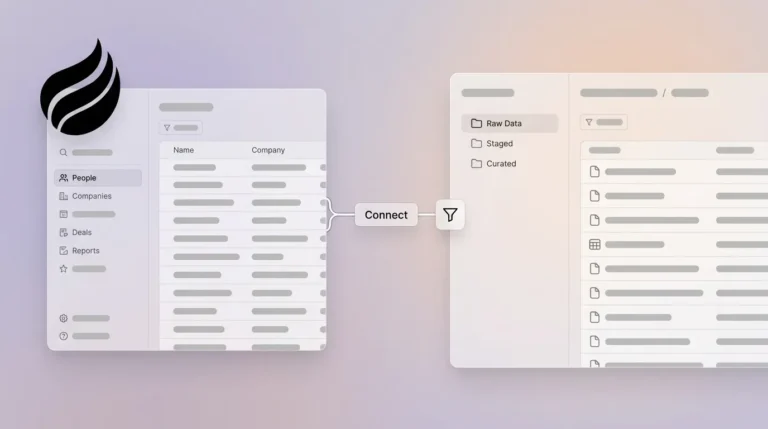
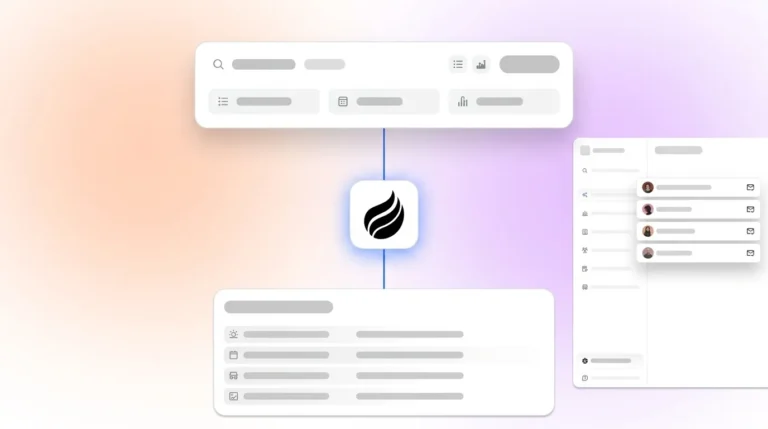
Overview: Coffee acts as a dedicated CRM agent for companies with 1-20 employees that want to remove manual data entry completely. Traditional software behaves like a static container, while Coffee operates as an autonomous agent that solves the classic “good data in, good data out” challenge.
Key Strengths:
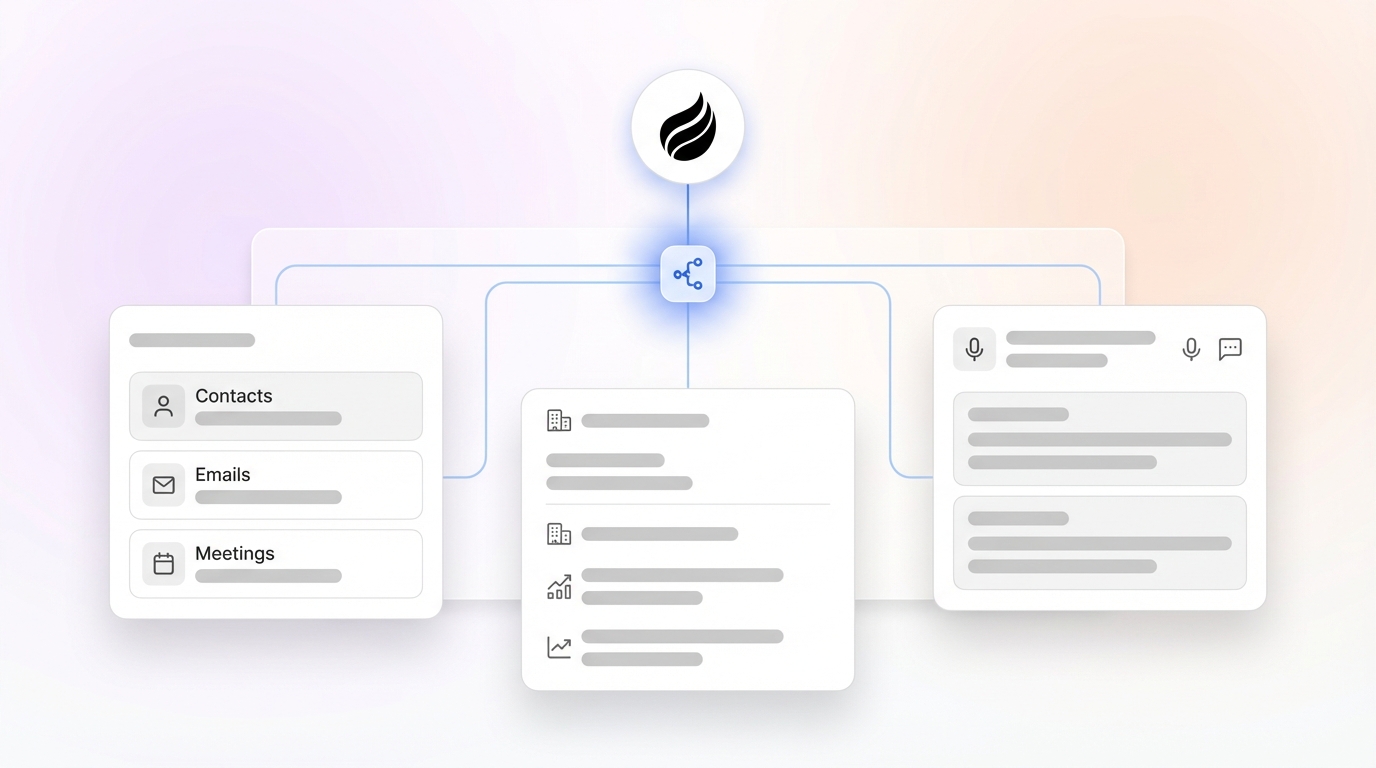
- Automatic contact and company creation through Gmail and Google Workspace integration
- AI meeting bot that joins calls, creates summaries, and drafts follow-up emails
- Pipeline Compare feature that shows week-over-week changes without spreadsheets
- Support for structured data, such as contact fields, and unstructured data, such as email text and call transcripts
- Built-in data warehouse that preserves the historical context usually lost in legacy CRMs
- Flexible deployment as a standalone CRM or as a companion app for existing Salesforce or HubSpot setups

Limitations: Coffee does not target large enterprises with complex custom workflows or heavily regulated industries that require lengthy security reviews.
Best For: Tech-forward founders and early sales teams that prefer modern automation instead of legacy CRM complexity.
Pricing & Setup: Coffee uses simple seat-based pricing that includes unlimited agent labor. Teams connect Google Workspace and activate the agent within minutes.
2. Salesflare – Top Auto-Logging CRM
Overview: Salesflare scores 9.7/10 for startups and focuses on reducing manual data entry through strong email and LinkedIn integration.
Key Strengths:
- Automatic contact data pulled from emails and social profiles
- Pipeline tracking with deal updates triggered by email activity
- Visual Kanban boards that support forecasting
- Highest G2 rating (4.8/5) for pipeline automation
Limitations: Salesflare handles unstructured data less deeply than agent-based systems.
Best For: Small sales teams that rely heavily on email and want straightforward pipeline management.
3. HubSpot – Best Free Tier with AI Features
Overview: HubSpot’s Breeze AI adds auto-data enrichment and conversation intelligence on top of a generous free plan that includes core automation.
Key Strengths:
- Free plan that includes basic automation and AI-powered prospecting
- Advanced meeting summaries that include coaching insights
- Predictive lead scoring and automated deal rotation
- Large integration ecosystem that supports complex workflows
Limitations: HubSpot began as a marketing tool with CRM features added later, so the interface can feel complex for small teams. Many advanced automation features sit behind paid tiers.
Best For: Startups that need tight marketing and sales alignment and plan to scale on a single platform.
4. Attio – Best Modern Interface with Real-Time Data
Overview: Attio focuses on real-time data syncing from more than 100 sources and offers a clean, collaborative interface for modern teams.
Key Strengths:
- Real-time enrichment from Clearbit, Apollo, and social profiles
- Dynamic workflows that move deals automatically based on triggers
- AI meeting summaries that include sentiment analysis
- Flexible data model that adapts to unique startup processes
Limitations: Attio still needs significant manual configuration and feels less autonomous than agent-based tools.
Best For: Design-focused teams that want a modern interface and collaborative features and are comfortable configuring workflows.
5. Folk – Best Lightweight Automation for Micro-Teams
Overview: Folk offers no-code automations and integrates with Hunter and LinkedIn for quick profile completion.
Key Strengths:
- Fast setup with a short learning curve
- Automatic data enrichment from multiple sources
- Visual pipeline management with easy collaboration
- Budget-friendly pricing for very small teams
Limitations: Folk includes fewer advanced features than enterprise CRMs and offers limited complex automation.
Best For: Teams of 1-5 people that want basic automation without heavy configuration.
Side-by-Side Comparison Matrix
|
CRM |
Automation Level |
Data Handling |
Startup Fit |
|
Coffee |
Full Agent |
Structured + Unstructured |
Ideal for 1-20 employees |
|
Salesflare |
High Auto-logging |
Structured mainly |
Strong choice for email-heavy teams |
|
HubSpot |
Partial (paid tiers) |
Structured focus |
Scalable but complex |
|
Attio |
Moderate workflows |
Real-time structured |
Best for teams ready to configure |
Manual Labor Savings Calculator: With an average $50 per hour opportunity cost, Coffee saves 8-12 hours weekly per rep, worth $400-600. Partial automation tools like Salesflare save 4-6 hours, worth $200-300. A fully hands-off approach delivers clearly higher ROI for startup teams.

Why Coffee Fits Most Early-Stage Startup Teams
Coffee’s agent model solves the core startup problem of getting reliable CRM data without manual work. The platform supports teams as either a complete standalone CRM or as an intelligent automation layer that enhances existing Salesforce or HubSpot setups.
One case study highlights this impact. A company with tens of millions in revenue still managed sales in spreadsheets before adopting Coffee’s agent. After implementation, automatic data capture from Google Workspace and the Pipeline Compare feature replaced their weekly manual review and supported custom briefing scripts through the API.

Coffee holds SOC 2 Type 2 and GDPR compliance and continues to expand integrations through Zapier and direct APIs. The agent respects security and privacy requirements while still delivering deep automation.
Get started with Coffee and see what a truly hands-off CRM feels like in practice.
Implementation Tips and Common Pitfalls for Hands-Off CRMs
Hands-off CRM success starts with connecting your primary communication tools such as Gmail, Google Calendar, or Microsoft 365. Coffee’s agent activates as soon as you connect your workspace and immediately begins creating contacts and logging activities.
Teams often stumble when they attempt complex data migrations from legacy systems instead of letting the agent build clean records over time. Another common mistake involves skipping trial periods that show automation value before signing annual contracts. Start with a core group of users, then expand as the agent proves its value through reduced manual work.
Keep attention on outcomes like time saved on data entry, pipeline accuracy, and adoption rates. Feature checklists matter less than measurable improvements in daily work.
FAQ
What is the most affordable hands-off CRM for bootstrapped startups?
Coffee delivers strong value with simple seat-based pricing that includes unlimited agent labor. This structure removes surprise costs for data enrichment, meeting recording, or pipeline analytics. HubSpot offers a free tier, but advanced automation features require upgrades that often exceed Coffee’s transparent pricing.
Does Coffee automatically sync with Gmail and LinkedIn?
Yes. Coffee’s agent connects directly to Google Workspace and Microsoft 365 to create contacts, log email interactions, and schedule follow-ups. Data enrichment adds job titles, funding details, and LinkedIn profiles through licensed data partners, so teams avoid manual research and extra tools like ZoomInfo.

How does Coffee compare to Salesflare for automation?
Salesflare focuses on email-based auto-logging, while Coffee delivers deeper agent-driven automation that also handles unstructured data such as call transcripts and email content. Coffee’s built-in data warehouse keeps historical context that a traditional relational database approach can lose during updates.
Which CRM works best for teams of 1-20 employees?
Coffee targets this team size specifically and offers enterprise-grade automation without heavy complexity. The agent scales naturally as the team grows and keeps the simplicity that larger platforms like Salesforce often trade away for breadth of features.
How much time can a hands-off CRM realistically save?
Coffee customers report saving 8-12 hours each week per sales rep through automated data entry, meeting summaries, and pipeline updates. That shift unlocks roughly 35-50% more time for actual selling compared with manual CRM routines.
Conclusion and Next Steps for Startup CRMs
Coffee leads the hands-off CRM space with an autonomous agent that removes manual data entry and surfaces sharper insights for startup sales teams. The focus on companies with 1-20 employees creates a tight fit without enterprise bloat or hidden costs.
Startups that want to move beyond spreadsheets without falling into manual CRM habits gain a clear path with Coffee’s agent. The platform delivers the automation depth and data quality needed for sustainable growth. Get started with Coffee today and move your team to truly hands-off CRM management.