Written by: Doug Camplejohn, CEO & Co-Founder, Coffee
Key Takeaways for MEDDPICC Platforms and Coffee
-
MEDDPICC extends MEDDIC with Paper Process and Competition, which suits complex B2B sales cycles of 90-180+ days with many stakeholders.
-
Coffee leads this space with an autonomous agent that removes 71% of manual data entry from emails, calls, and meetings.
-
Accord, Glyphic AI, DemandFarm, Gong, and Clari support MEDDPICC, but most still depend on manual updates or active buyer participation.
-
Teams see higher win rates when they choose platforms with native Salesforce or HubSpot integration, AI data capture, and fast 2-4 week implementation.
-
Transform complex sales motions with Coffee’s agent-powered automation by exploring Coffee’s pricing and feature plans.
MEDDPICC Framework for Modern Complex B2B Sales
MEDDPICC represents the evolution of sales qualification methodology for complex B2B environments. The framework was originally created by John McMahon in 1996 at Parametric Technology Corporation, where it helped grow annual sales from $300 million to $1 billion.
The methodology focuses on eight critical elements: Metrics, Economic Buyer, Decision Criteria, Decision Process, Paper Process, Identify Pain, Champion, and Competition.
Each element serves a specific purpose in complex deal qualification. Metrics establish quantifiable business impact, and Economic Buyer identification ensures access to budget authority. Decision Criteria and Decision Process map the customer’s evaluation framework and approval workflow.
Paper Process covers procurement and legal requirements that can derail late-stage deals. Identify Pain confirms compelling business reasons for change. Champion development secures internal advocacy. Competition analysis enables effective positioning.
These elements create a shared language for sales teams working on long, multi-threaded deals. Once teams understand the full framework, they often compare MEDDPICC with the simpler MEDDIC model to decide which fits their sales motion.
MEDDPICC vs MEDDIC for Complex Sales Cycles
MEDDPICC extends the original MEDDIC framework by incorporating Paper Process and Competition elements, which suit enterprise deals where these factors can derail opportunities late in the cycle. The Paper Process component focuses on legal, security, and procurement hurdles common in complex B2B sales. Competition tracking supports proactive positioning against rivals throughout the sales cycle.
MEDDPICC offers a deeper qualification than MEDDIC for mid-market teams handling 90-180+ day cycles, multiple approvals, and process risks. Coffee’s agent supports sales methodologies including BANT, MEDDIC, and SPICED, and its Pipeline Compare features track deal progression automatically.
Top MEDDPICC Platforms Ranked for Complex B2B Teams
1. Coffee: Agent-Powered Sales Automation
Coffee leads the market with its autonomous agent approach to sales process enforcement.
Unlike traditional platforms that require manual data entry, Coffee’s Intelligence layer, introduced in February 2026, lets users define and store deep context on business model, product specifics, ICP, and competitors for tailored AI suggestions and insights. The agent automatically populates sales data from emails, calls, and calendar interactions.
Key Strengths:
-
Autonomous data capture that removes 71% of manual entry time
-
Native Salesforce and HubSpot companion mode for in-CRM workflows
-
Custom Meeting Briefings and Summaries launched in February 2026 that support tailored formats for executive summaries or technical breakdowns
-
Pipeline Compare feature that tracks deal progression automatically
-
Simple seat-based pricing with unlimited agent labor included

Best For: Small to mid-market teams with weak CRM data hygiene that want comprehensive automation.
Implementation: 2-4 weeks with Google Workspace or Microsoft 365 integration.
2. Accord: Mutual Action Plan Collaboration
Accord specializes in buyer-seller collaboration through mutual action plans that incorporate MEDDPICC elements. The platform creates shared workspaces where prospects and sales teams track decision criteria, stakeholder alignment, and process milestones together.
Key Strengths:
-
Buyer engagement tracking and mutual close plans
-
Stakeholder mapping with engagement analytics
-
Integration with major CRM platforms
-
Champion development through shared accountability
Limitations: Requires active buyer participation and offers limited automation for data capture.
Best For: Teams with engaged prospects that agree to formal mutual action plans.
3. Glyphic AI: Conversation Intelligence for MEDDPICC
Glyphic AI focuses on extracting MEDDPICC insights from sales conversations using advanced natural language processing. The platform analyzes call transcripts to identify economic buyers, pain points, and competitive mentions automatically. It also automates CRM updates and generates follow-up actions.
Key Strengths:
-
Advanced conversation analysis for MEDDPICC elements
-
Real-time coaching during calls
-
Integration with popular conferencing tools
-
Automated qualification scoring
Limitations: Concentrates on conversation-driven insights rather than full-process automation.
Best For: Teams that prioritize conversation intelligence with CRM automation.
4. DemandFarm: Enterprise Account Planning
DemandFarm serves enterprise key account management teams using Salesforce or HubSpot, offering stakeholder mapping, org charts, whitespace analysis, and AI-powered relationship insights launched in 2024. The platform supports MEDDPICC through structured account planning workflows with automated qualification features.
Key Strengths:
-
Comprehensive stakeholder mapping and org charts
-
Whitespace analysis for expansion opportunities
-
Native Salesforce and HubSpot integration
-
AI-powered relationship risk alerts
Limitations: Heavy focus on account planning rather than full-funnel execution.
Best For: Enterprise teams with formal account planning programs.
5. Gong: Revenue Intelligence and Deal Insights
Gong offers a large integration ecosystem that connects to more than 100 sales tools, including Salesforce, but it relies on dashboard-dependent architecture with keyword-based Smart Trackers that can cause alert fatigue and low engagement. The platform provides conversation analytics that can surface MEDDPICC elements from recorded calls.
Key Strengths:
-
Extensive integration ecosystem
-
Advanced conversation analytics
-
Deal risk identification
-
Competitive intelligence tracking
Limitations: Requires manual CRM updates and depends on dashboard usage for value.
Best For: Large teams with dedicated revenue operations support.
6. Clari: Forecasting and Pipeline Management
Clari delivers deep Salesforce-native integration for access across custom objects, supporting roll-up forecasting and pipeline inspection for enterprise complex sales cycles, but it requires manual rep submissions that introduce bias and an 8-12 week implementation.
Key Strengths:
-
Advanced forecasting capabilities
-
Deep Salesforce integration
-
Pipeline inspection and analysis
-
Executive-level reporting
Limitations: Manual data submission creates bias, and the implementation timeline is lengthy.
Best For: Enterprise teams with strict forecasting requirements.
Side-by-Side Comparison of MEDDPICC Platform Features
|
Platform |
MEDDPICC Automation |
CRM Integration |
AI Features |
Best For Complex B2B |
|---|---|---|---|---|
|
Coffee |
Full agent automation |
Native Salesforce/HubSpot |
Autonomous data capture |
Excellent |
|
Accord |
Manual with templates |
API integrations |
Engagement analytics |
Good |
|
Glyphic AI |
Conversation-based |
Automated CRM sync |
NLP conversation analysis |
Good |
|
DemandFarm |
Automated workflows |
Native Salesforce/HubSpot |
Relationship insights |
Excellent |
Coffee’s agent-led approach reduces the stack fragmentation that appears with manual platforms. Bottom-up AI forecasting in platforms like Oliv AI improves accuracy by 25-30 percentage points by removing rep submission bias. This improvement highlights the value of automated data capture compared with manual entry systems.
Choosing and Implementing a MEDDPICC Platform
Mid-market B2B teams see the strongest results when they choose platforms that integrate natively with existing CRM systems and minimize manual data entry. Structured qualification processes like MEDDPICC lead to 41% higher win rates and 26% shorter sales cycles when teams pair them with the right technology.
Teams should consider the total cost of ownership beyond initial licensing fees, because implementation timelines directly affect real costs.
Simple integrations for Salesforce-native account planning tools take 4-8 weeks with clean data, while full enterprise setups span 3-6 months, including training and customization. Longer timelines often signal platforms that need heavy customization and add workflow complexity, which teams should avoid.
Pilot programs work best when they track conversion rates from meetings to opportunities, opportunity-to-close rates, forecast accuracy, and user adoption.
Start a Coffee pilot to experience automated MEDDPICC enforcement with less implementation friction than traditional tools.
Frequently Asked Questions About MEDDPICC Platforms
Best MEDDPICC Platform for Salesforce Users
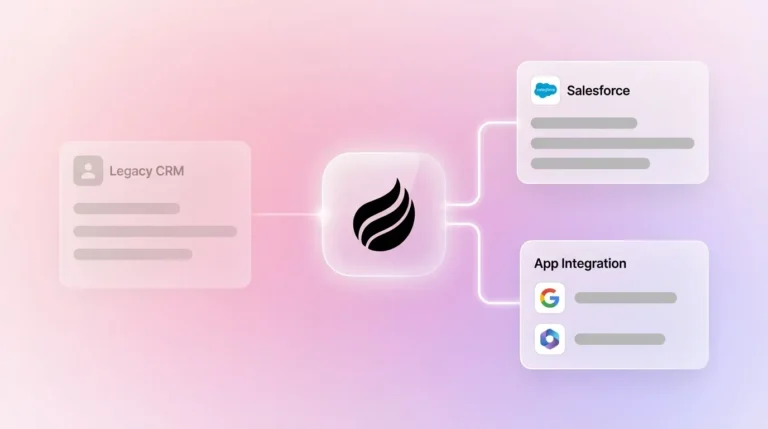
Coffee provides comprehensive Salesforce integration as a companion app that acts as an intelligent agent on top of existing Salesforce instances.
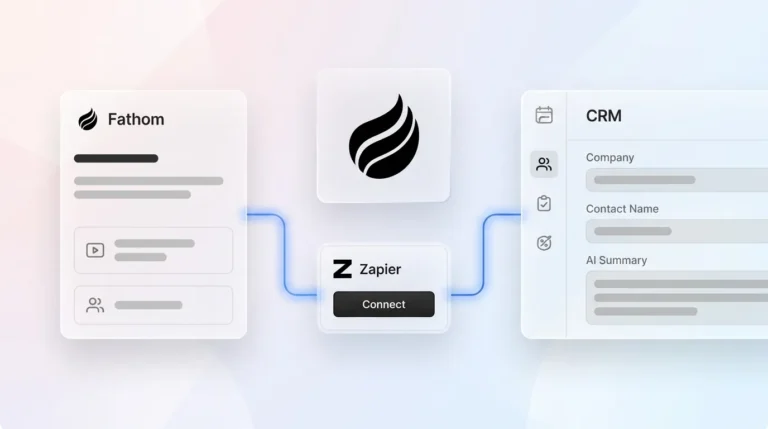
The Coffee agent automatically syncs sales data, enriches records, and maintains CRM hygiene without forcing users to switch between multiple tools. Unlike manual platforms that require reps to input data into Salesforce fields, Coffee’s agent captures information from emails, calls, and meetings automatically.

How MEDDPICC Differs from MEDDIC in Complex Sales
MEDDPICC extends MEDDIC by adding Paper Process and Competition elements designed for complex B2B sales environments. Paper Process covers procurement, legal, and security requirements that can derail enterprise deals late in the sales cycle.
Competition tracking supports proactive positioning throughout the sales process. For deals with multiple stakeholders, lengthy approval processes, and competitive evaluations, MEDDPICC delivers more comprehensive qualification than the original MEDDIC framework.
AI Tools That Support MEDDPICC Qualification
Coffee’s agent provides advanced AI support for sales qualification by capturing and structuring data from unstructured sources like emails and call transcripts.
The agent structures notes according to sales methodologies such as BANT, MEDDIC, or SPICED. It also generates custom meeting briefings based on stored context and tracks deal progression through Pipeline Compare features. This approach removes the manual data entry that typically consumes most sales reps’ time.

How Coffee Compares to Gong for Complex Sales Teams
Coffee delivers full MEDDPICC automation through its agent, while Gong focuses primarily on conversation intelligence with manual CRM updates. Coffee’s agent automatically populates CRM fields, generates meeting summaries, and tracks deal progression without human intervention.
Gong requires sales reps to review conversation insights and then update CRM records manually, which adds workflow steps. Teams that want complete automation rather than a conversation analysis layer gain more efficiency with Coffee.
Common Implementation Pitfalls for MEDDPICC Platforms
The most common pitfall involves treating MEDDPICC as a rigid checklist instead of a flexible qualification framework. Teams also underestimate integration complexity and fail to secure executive sponsorship for adoption.
Another frequent mistake is choosing platforms that require extensive manual data entry, which leads to poor user adoption and incomplete qualification data. Successful implementations focus on automation, leadership support, and gradual rollout with clear success metrics rather than enforcing every element on day one.
Conclusion: Why Coffee Leads MEDDPICC Automation
Coffee stands out as the leading platform for complex B2B sales teams in 2026 because it delivers unmatched automation through its intelligent agent approach. Traditional platforms rely on manual data entry and often add workflow complexity. Coffee’s agent removes the busywork mentioned earlier while still maintaining accurate sales qualification data.
Review Coffee’s plans and automation capabilities to turn your sales process from a manual chore into a durable competitive advantage.