
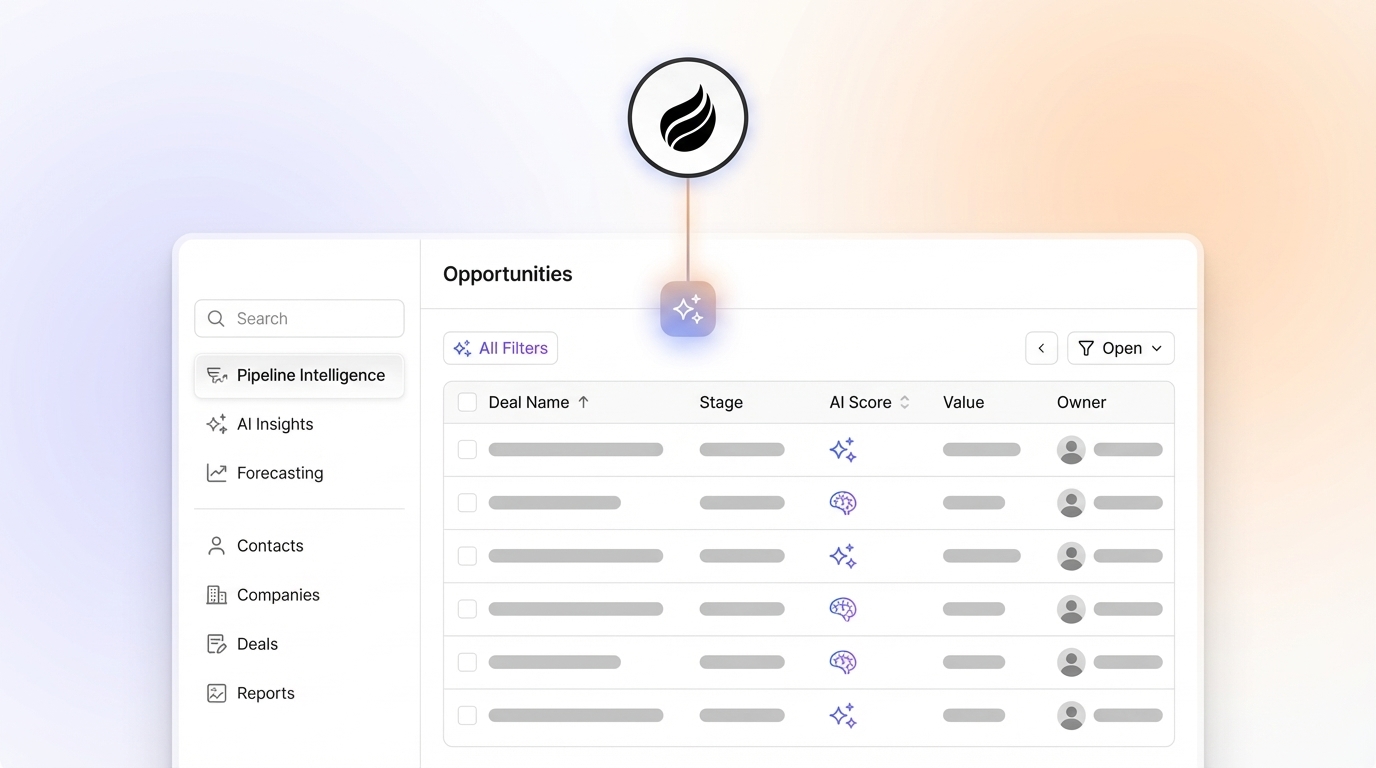
In today’s B2B sales landscape, accurate pipeline management and forecasting remain critical challenges for sales leaders. With complex buyer journeys, fragmented data, and outdated tools, many teams struggle to predict revenue outcomes and identify risks early. The market has evolved, shifting from rigid, manual legacy CRMs to AI-driven platforms that prioritize real-time insights and automation. These advancements aim to address inefficiencies, offering sales teams actionable data to drive better decisions. This article examines the limitations of traditional systems, explores the growing role of pipeline intelligence tools, and highlights Coffee’s AI-first CRM and Companion App as a notable example of this trend.
Challenges with Legacy CRMs in Modern Sales Environments
Legacy CRMs often hinder sales teams by failing to adapt to the demands of today’s fast-paced, data-heavy B2B sales processes. Designed for simpler times, these systems struggle to provide the flexibility and visibility needed for effective pipeline management.
Fragmented Data and Manual Workloads Create Hidden Inefficiencies
Sales tech stacks today often consist of disconnected tools, each handling a specific task but lacking integration. Sales reps toggle between platforms like HubSpot for CRM, ZoomInfo for data enrichment, and SalesLoft for outreach. This creates a fragmented view of the customer journey, pushing reps to maintain separate records in tools like Notion or spreadsheets. On top of this, manual data entry consumes significant time. Roughly 71% of sales reps report spending too much time on administrative tasks, leaving only a fraction of their week for actual selling.
Limited Visibility Leads to Forecasting Errors and Missed Deals
Without real-time pipeline updates, sales leaders often miss critical shifts in deal progression. Legacy systems may not reflect current data, delaying the identification of at-risk opportunities. This lack of timely insight results in unexpected outcomes at the end of quarters, as warning signs go unnoticed until deals stall or fall through.
Complex Buyer Journeys Overwhelm Outdated Pipeline Tracking
Modern B2B sales involve multiple stakeholders and non-linear buying paths, which traditional CRMs are ill-equipped to handle. These systems often assume a straightforward progression through sales stages, failing to accommodate the dynamic nature of buyer behavior. As a result, follow-ups become inconsistent, and key touchpoints with decision-makers are missed.
How AI-Driven Pipeline Intelligence Addresses Sales Challenges
AI-powered pipeline intelligence tools offer a practical way to overcome the limitations of legacy CRMs. By automating data capture and delivering actionable insights, these platforms aim to streamline processes and improve forecasting accuracy. They represent a shift toward proactive sales management, where teams can anticipate issues and act before problems escalate.
Key Benefits of AI in Pipeline Management
AI tools bring specific advantages that directly tackle common pain points in sales operations. Here’s how they add value:
- Automated data updates reduce the time reps spend on administrative tasks, allowing more focus on client interactions.
- Real-time analysis highlights pipeline changes, helping leaders address risks early.
- Integrated systems consolidate multiple tools into a single platform, cutting costs and simplifying workflows.
- Predictive insights use historical data to guide reps on prioritizing high-value opportunities.
Coffee as a Leading Example of AI-First Pipeline Intelligence
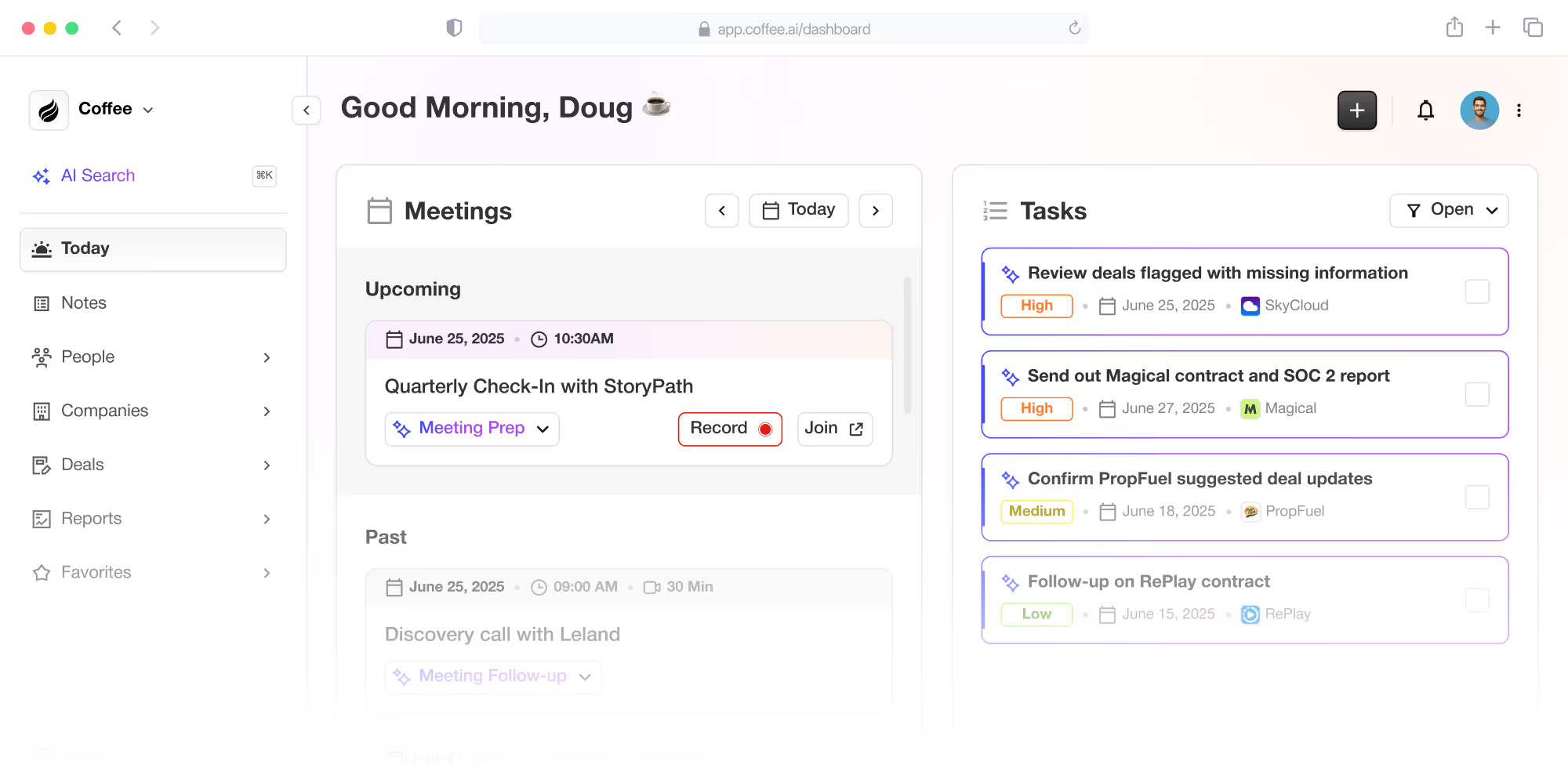
Among the wave of AI-driven solutions, Coffee stands out with its focused approach to pipeline management. Its AI-first CRM and Companion App are designed to adapt to how sales teams operate, whether as a standalone system for growing businesses or as an enhancement to existing platforms like Salesforce or HubSpot. Coffee prioritizes automation and real-time data to make pipeline management a strategic asset rather than a chore.
What Sets Coffee Apart in Pipeline Management?
Coffee addresses core issues in traditional systems with features built for efficiency and clarity. Key aspects include:
- Automatic data capture from email and calendar interactions, eliminating 8-12 hours of weekly manual updates for reps.
- AI-generated insights that highlight deal progression and risks, supporting proactive decisions.
- A Pipeline Compare feature that shows week-over-week changes in a single view, simplifying reviews.
- A unified platform combining data enrichment, call recording, and forecasting, reducing reliance on multiple tools.
- User-friendly design that aligns with how sales reps work, encouraging consistent adoption.
Interested in seeing how Coffee can refine your pipeline processes? Request access to explore its capabilities.
Comparing Coffee to Legacy CRMs for Pipeline Effectiveness
Understanding the differences between AI-driven tools like Coffee and traditional CRMs helps clarify their potential impact on sales outcomes. Below is a breakdown of key features:
|
Feature |
Coffee AI-First CRM / Companion App |
Legacy CRM (e.g., Salesforce/HubSpot) |
|
Data Capture & Enrichment |
Fully automated with real-time updates, built-in enrichment |
Often manual, may need extra tools for enrichment |
|
Pipeline Visibility |
Instant updates with Pipeline Compare, AI insights |
Updates may lag, visibility depends on setup |
|
Forecasting Accuracy |
Improved by current data and AI analysis |
Often inconsistent due to outdated or incomplete data |
|
Rep Productivity |
Boosted by removing manual tasks, saving 8-12 hours weekly |
Lowered by time spent on administrative work |
Practical Advantages of Adopting AI for Sales Pipeline Management
Implementing AI-driven pipeline intelligence can bring measurable improvements to sales operations. Companies using these tools often see better control over their sales cycles and more reliable revenue predictions.
Better Forecasting Through Timely Data
AI tools analyze current and historical data to spot patterns, helping sales teams anticipate outcomes. This allows managers to intervene early on deals at risk, improving overall forecast reliability without depending on guesswork.
Streamlined Workflows for Sales Teams
By automating repetitive tasks and consolidating tools, AI platforms free up time for reps to focus on building relationships and closing deals. This efficiency can directly impact productivity and morale.
Common Questions About Pipeline Intelligence and Coffee
How Does Coffee’s Approach Differ from Standard CRM Reporting?
Coffee goes beyond static reporting by automating data capture and providing a clear view of pipeline changes through its Pipeline Compare feature. Unlike traditional CRMs that often show outdated snapshots, Coffee offers up-to-date insights for faster, better-informed decisions.
Can Coffee Work Alongside My Current CRM System?
Yes, Coffee’s Companion App integrates with Salesforce or HubSpot, adding automation and AI insights without disrupting your existing setup. After a straightforward authentication process, data syncs between systems, and users can choose which insights to transfer back to their primary CRM.
What Specific Issues Does Coffee Resolve for Sales Teams?
For reps, Coffee cuts out 8-12 hours of weekly data entry by automatically updating records from email and calendar activity. For leaders, it simplifies pipeline reviews with instant visibility into changes and provides AI insights to guide strategy, tackling data fragmentation head-on.
How Does Coffee Handle Data Quality and Updates?
Coffee maintains data accuracy by automatically updating records from real interactions and enriching them with details like job titles and company information from licensed partners. This continuous process reduces outdated or low-quality data in the pipeline.
What Makes Coffee’s AI Unique Compared to Other Sales Tools?
Coffee’s AI operates on a comprehensive dataset that includes structured records and unstructured inputs like emails or call transcripts. Supported by a built-in data warehouse, it retains historical context to deliver relevant, actionable guidance for sales teams.
Looking Ahead: AI as the Future of Pipeline Management
The inefficiencies of traditional CRMs, from manual workloads to delayed insights, create significant hurdles for sales teams aiming to stay competitive. AI-driven solutions like Coffee’s CRM and Companion App address these issues with automation, real-time visibility, and proactive intelligence. As part of a broader shift toward smarter sales tools, Coffee illustrates how technology can turn pipeline management into a key strength. Ready to explore this approach for your team? Request access to Coffee’s platform today.