
Key Takeaways
- Sales teams lose 71% of time on manual contact creation, while top tools automate discovery, enrichment, and CRM syncing to speed revenue.
- Coffee ranks #1 with an AI agent that auto-creates contacts from emails and calendars, integrates with Salesforce and HubSpot, and saves 8-12 hours weekly.
- Database tools like Apollo and ZoomInfo offer massive contact lists but require manual searches and carry higher costs than agent-led automation.
- Key selection criteria include AI speed, data accuracy, CRM integration quality, multichannel support, and total cost of ownership.
- Transform your sales process with Coffee’s agent-powered automation, and get started with Coffee today for seamless contact creation.
How We Ranked These Sales Outreach Tools
Our ranking methodology focuses on automated contact creation, data enrichment depth, CRM integration quality, multichannel support, pricing transparency, and setup simplicity. Poor data quality remains the biggest pipeline killer, as one Reddit user noted, “ZoomInfo data bounces destroy entire sequences.” The rise of AI agents, with 62% of organizations experimenting with autonomous prospecting, positions agent-powered solutions like Coffee as the clear future of sales automation.
Top 8 Automated Sales Outreach Tools for Contact Creation
1. Coffee – AI Agent That Handles Contact Creation for You
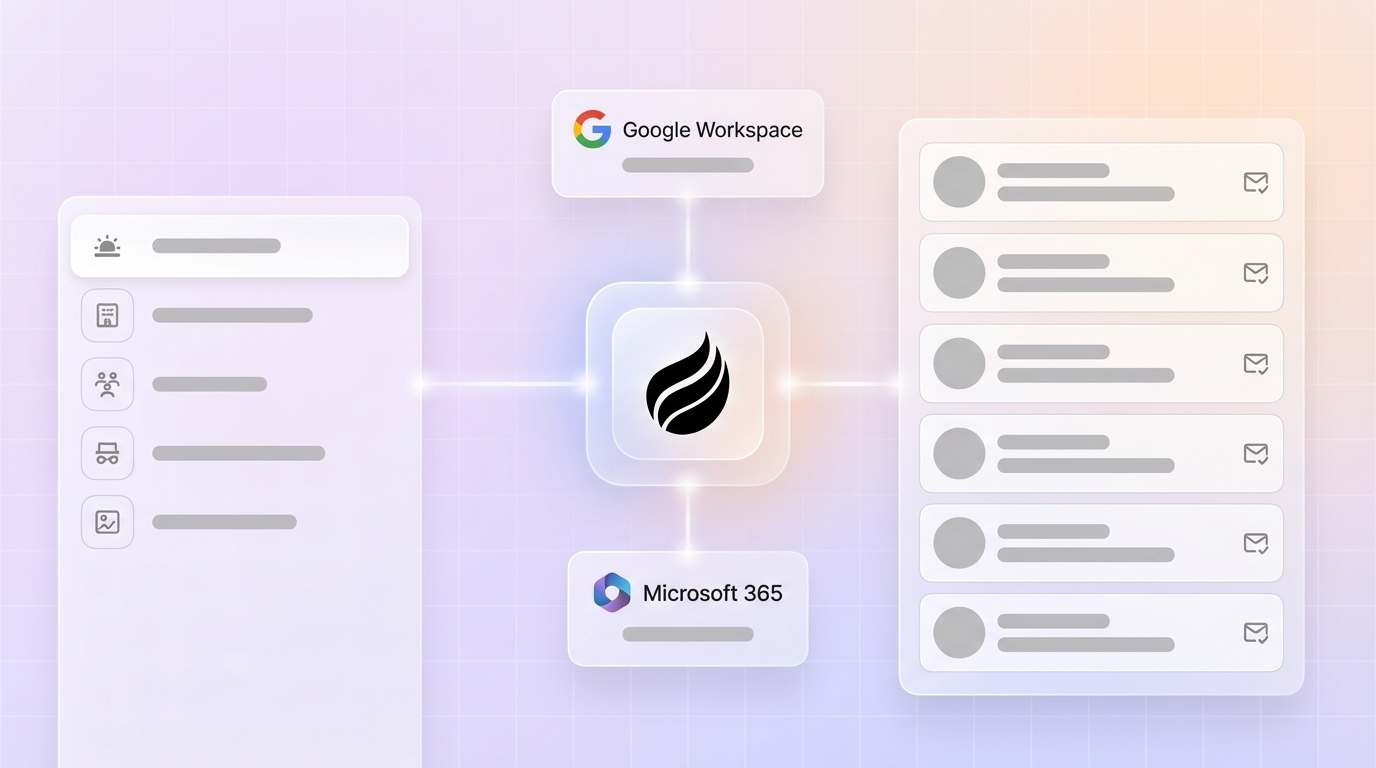
Coffee’s AI agent automatically creates and enriches contacts by scanning Google Workspace or Microsoft 365 emails and calendars, so reps avoid manual data entry. Unlike database-heavy competitors, Coffee acts as an intelligent CRM agent that keeps good data flowing in and accurate insights flowing out.

Strengths:
- Auto-creates contacts from emails and calendars without relying on external databases
- Salesforce and HubSpot integration through simple authentication with bi-directional sync
- Saves 8-12 hours per week on data entry and enrichment work
- Built-in meeting management with AI-powered briefings and follow-ups
- Simple seat-based pricing with unlimited agent labor included

Limitations: Currently connects to some tools through Zapier, with deeper native integrations planned.
Ideal for: Small to mid-market teams on Salesforce or HubSpot that want to remove CRM data grunt work.
Pricing: Seat-based model with no complex metering.
CRM Integration Score: 10/10 (Salesforce and HubSpot companion agent).
Try Coffee now and see agent-powered contact automation in your own CRM.

2. Apollo – Database-Heavy Contact Discovery at Scale
Apollo combines a massive 275M+ verified contact database with multichannel outreach, which suits teams that value database volume more than automated creation. It works well for outbound programs that rely on constant list building.
Strengths:
- Extensive verified contact database with real-time enrichment
- Strong Salesforce, HubSpot, and Pipedrive integrations
- Comprehensive filtering and search options
- Multichannel sequences with email and LinkedIn
Limitations: Pricing starts at $59-149 per user monthly, which can grow quickly for larger teams. Workflows support automation but still depend on database searches.
Ideal for: Mid-market teams with budget for ongoing database subscriptions.
CRM Integration Score: 8/10.
3. Clay – AI-Powered Prospect List Building
Clay offers AI-driven list building with natural language commands, so users can create targeted prospect lists through a conversational interface. It fits teams that want flexible, data-rich workflows.
Strengths:
- Natural language list building, such as “Find VPs of Sales at $10M+ SaaS companies”
- AI-powered data enrichment from multiple sources
- Flexible workflow automation for complex use cases
- Strong data accuracy for highly targeted searches
Limitations: Steeper learning curve that requires some technical setup skills.
Ideal for: Technical teams that feel comfortable with AI workflow builders.
CRM Integration Score: 7/10.
4. LeadIQ – CRM-Native Prospecting Inside Your Workflow
LeadIQ focuses on tight CRM integration with automated contact syncing and activity logging directly inside Salesforce and HubSpot. Reps can capture contacts while prospecting and send them straight into the CRM.
Strengths:
- Native CRM contact creation and syncing
- Browser extension for LinkedIn prospecting
- Automated activity logging for cleaner records
- Real-time contact verification
Limitations: Limited multichannel capabilities outside email.
Ideal for: CRM-focused teams that prioritize accurate, up-to-date records.
CRM Integration Score: 9/10.
5. Reply.io – Multichannel Outreach Automation
Reply.io excels at multichannel sequences that combine email, LinkedIn, and phone outreach with AI-powered lead qualification. It suits teams that run complex outbound cadences.
Strengths:
- Comprehensive multichannel automation across email, LinkedIn, and calls
- AI assistant for ideal customer profile identification
- Contact verification and enrichment features
- Strong HubSpot and Salesforce connectivity
Limitations: Starts at $49 per user monthly, with higher costs for advanced capabilities.
Ideal for: Teams that need sophisticated multichannel sequences.
CRM Integration Score: 8/10.
6. Salesloft – Enterprise-Grade Sales Orchestration
Salesloft delivers enterprise-level sales orchestration with advanced automation and strong data partnerships at premium pricing. It supports complex sales motions across large teams.
Strengths:
- Enterprise orchestration for large sales organizations
- Advanced analytics and reporting for leadership
- Deep CRM integrations for Salesforce-centric teams
- Comprehensive training and support programs
Limitations: Multichannel plans cost $187+ per user monthly with add-ons.
Ideal for: Large enterprises with complex, multi-step sales processes.
CRM Integration Score: 9/10.
7. Instantly – Budget-Friendly Email Automation
Instantly offers affordable email automation with basic contact creation, which works well for cost-conscious teams starting outbound. It focuses on simple campaigns and deliverability.
Strengths:
- Competitive pricing for core automation features
- Simple setup and easy-to-use interface
- Strong focus on email deliverability
- Basic CRM integrations for syncing contacts
Limitations: Best for straightforward use cases, with advanced AI features locked in higher plans.
Ideal for: Small teams with basic automation needs.
CRM Integration Score: 6/10.
8. ZoomInfo – Enterprise Contact Database
ZoomInfo offers a comprehensive B2B contact database with advanced filtering, yet it still requires significant manual work for contact creation. Teams often pair it with other tools for execution.
Strengths:
- Massive verified global database
- Advanced filtering and search capabilities
- Intent data and buying signals for targeting
- Enterprise-grade compliance features
Limitations: Costs $55,000-$75,000 annually for 25 users and still requires manual database searches.
Ideal for: Large enterprises that value database size more than automation depth.
CRM Integration Score: 7/10.
Comparison Tables and Key Tradeoffs
|
Tool |
Auto-Creation |
CRM Integration |
Starting Price |
|
Coffee |
Yes (emails and calendars) |
Native SF/HubSpot |
Seat-based |
|
Apollo |
Workflow-based |
Strong |
$59-149/user |
|
Clay |
AI-powered |
Good |
Custom |
|
LeadIQ |
CRM-native |
Excellent |
Custom |
|
Tool |
Best For |
Key Limitation |
|
|
Coffee |
Automated agent workflows |
Newer integrations |
|
|
Apollo |
Database volume |
Database dependency |
|
|
Reply.io |
Multichannel sequences |
Scaling costs |
|
|
ZoomInfo |
Enterprise databases |
Premium pricing |
Coffee leads in total cost of ownership and automation depth, while Apollo and ZoomInfo dominate on database size but rely on database-driven workflows. The main tradeoff in 2026 sits between automated agent workflows and manual or semi-manual database searches.
Steps to Automate Sales Outreach and Pick a Tool
Follow these steps to implement automated contact creation successfully.
- Audit Current Data Gaps: Identify where manual entry consumes the most time and slows pipeline creation.
- Prioritize CRM-Native Agents: Choose tools like Coffee that operate inside your existing Salesforce or HubSpot workflow.
- Test Integration Quality: Confirm bi-directional sync and automated activity logging before rollout.
- Pilot with Small Teams: Start with 5-10 users, refine workflows, then expand across the organization.
Avoid common pitfalls such as choosing database-heavy tools that require constant manual searches or platforms with weak CRM integration. Coffee’s SOC2 and GDPR compliance protects data throughout the automation process. Start with Coffee and remove these integration headaches.
FAQ
What is the best automated sales outreach tool for HubSpot users?
Coffee offers the strongest HubSpot integration with an AI agent that automatically creates contacts from email and calendar data, syncs bi-directionally, and removes manual data entry. Unlike database tools that require separate subscriptions, Coffee works natively inside HubSpot to maintain clean, accurate contact data.
How can I avoid common data accuracy pitfalls in sales outreach automation?
Select agent-powered tools like Coffee that create contacts from verified internal sources such as emails and calendars instead of external databases that may hold outdated information. Automated agents capture real interactions and preserve historical context, which reduces human error compared with manual entry systems.
Which tools offer strong free trials for automated contact creation?
Coffee provides a comprehensive free trial that lets you test its AI agent’s contact creation with your actual email and calendar data. Apollo also offers trial access to its database features, although contact credits remain limited. Coffee’s trial shows real automation value without forcing a database subscription.
What AI agent trends shape sales outreach in 2026?
Agentic prospecting now drives the biggest shift, with 62% of organizations testing AI agents that research accounts, identify decision-makers, and create personalized outreach autonomously. These agents analyze behavioral signals such as email engagement and website visits to score prospects automatically and move beyond passive databases toward active sales assistance.
How do multichannel automation rules connect with CRM integration?
Top multichannel tools like Reply.io, combined with Coffee’s CRM sync, create unified workflows where email, LinkedIn, and phone activities log to your CRM automatically. This setup preserves a complete prospect interaction history without manual updates and supports better follow-up timing and personalization across every channel.
Conclusion: Why Coffee Leads Automated Contact Creation
Coffee stands out as a powerful solution for automated contact creation and removes the manual data grind that consumes 71% of sales teams’ time. Its AI agent approach reflects the future of sales automation, with proactive intelligence that fits directly into existing CRM workflows. While database-heavy competitors demand expensive subscriptions and manual searches, Coffee automates the full contact lifecycle from creation and enrichment through pipeline management.
The most effective next step involves testing Coffee’s agent capabilities with your own sales data. Get started with Coffee today and shift your team from data entry work to strategic selling.