Written by: Doug Camplejohn, CEO & Co-Founder, Coffee
Key Takeaways
- Sales reps lose most of their week to manual data entry, and Coffee autonomous CRM removes that work with agent-led automation.
- Close CRM suits high-velocity dialing teams but still depends on heavy manual input for contacts and activities.
- Monaco adds light AI assistance yet still needs human oversight, which limits meaningful productivity improvements.
- Coffee automates data entry, meeting intelligence, pipeline management, and integrations while using a straightforward seat-based pricing model.
- For SMBs replacing manual processes, start saving time with Coffee’s autonomous CRM and redirect that effort toward revenue.
Autonomous CRM Explained and How We Evaluate Platforms
Autonomous CRM shifts CRM from passive storage to active, agent-led automation that handles routine work for sales teams. Traditional CRMs depend on manual input, while autonomous systems like Coffee use intelligent agents that capture, enrich, and log customer interactions from email, calendar, and communication platforms. Coffee’s agent connects to Google Workspace and Microsoft 365 to create contacts, companies, and activities without human intervention, and its List Builder feature generates targeted prospect lists from natural language commands. This evaluation framework for SMB CRM selection focuses on six areas: data entry automation, meeting orchestration and intelligence, pipeline management and forecasting accuracy, technology stack consolidation, user experience and adoption, and total cost of ownership. Companies leveraging AI in CRM are 83% more likely to exceed sales goals, so automation depth becomes a key advantage for small teams that want growth without extra administrative work.

How Each CRM Handles Automation and Daily Sales Work
Coffee Autonomous CRM for Hands-Off Maintenance
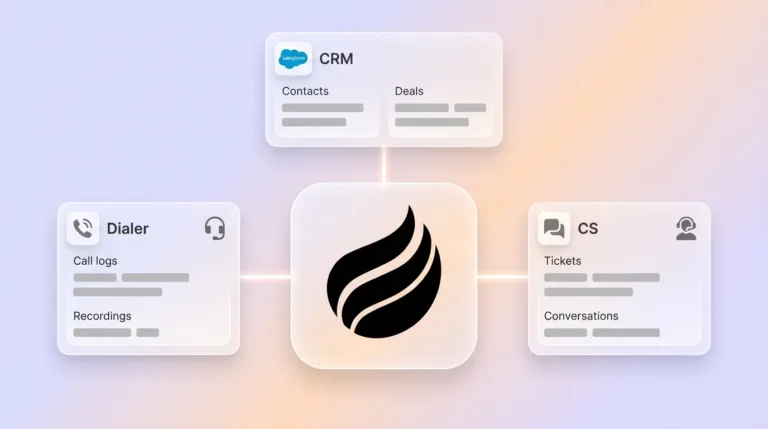
Coffee operates as a true autonomous agent for small to mid-sized teams that want full automation of CRM maintenance. The platform supports two deployment models, either as a standalone CRM for teams adopting an AI-first stack or as a companion app that upgrades existing Salesforce and HubSpot environments. Coffee’s agent automatically creates and enriches contacts from Google Workspace or Microsoft 365 communications, generates meeting briefings and post-call summaries, and uses Pipeline Compare to track deal changes week over week. The system includes SOC 2 Type 2 compliance and a built-in data warehouse that preserves historical context, which protects data and keeps long-term account history intact as teams scale. This foundation powers Coffee’s natural language List Builder for prospect identification, using enriched history to improve targeting quality. Coffee connects with Zapier, Salesforce, and HubSpot while keeping pricing simple with seats instead of complex usage metering, so expanded usage does not trigger surprise fees. The platform replaces separate enrichment tools, call recording software, and manual pipeline management, giving teams a single autonomous agent instead of a patchwork of tools.

Close CRM for Call-First, Manual-Entry Teams
Close CRM focuses on high-velocity sales teams that prioritize calling and SMS outreach. The platform includes built-in dialing with no per-minute charges for US and Canada calls, along with contact management and sales pipeline tracking. Close offers strong calling features, email sequences, and basic reporting for teams that rely heavily on phone-based prospecting. Close Solo plan starts at $9/seat/month annually, which makes it accessible for small teams that want a dialer-centric tool. However, Close requires significant manual data entry for contact creation, activity logging, and deal updates, so reps must log meetings, notes, and follow-up tasks themselves. The platform does not capture data autonomously from email or calendar systems, which can consume substantial time for teams managing complex sales cycles or multiple communication channels beyond phone calls.
Monaco CRM for Visual Pipelines with Light AI Help
Monaco CRM provides AI-augmented pipeline management with visual workflow customization and collaboration features. The platform offers basic artificial intelligence for data insights and process automation, along with customizable pipeline stages and team collaboration tools. Monaco integrates with common business applications and includes reporting dashboards for sales performance tracking. The system supports workflow customization and some automated data enrichment, which helps teams standardize processes. Monaco’s AI still needs human oversight and intervention for accurate results, so its automation remains limited compared to agent-driven platforms. The product functions as an AI-augmented tool rather than a fully autonomous agent, and users still handle data entry, validation, and system maintenance. This approach fits teams that want some AI support while keeping tight control over CRM processes, yet it does not remove the manual workload that reduces sales rep productivity.
Side-by-Side Comparison Table and Automation Insights
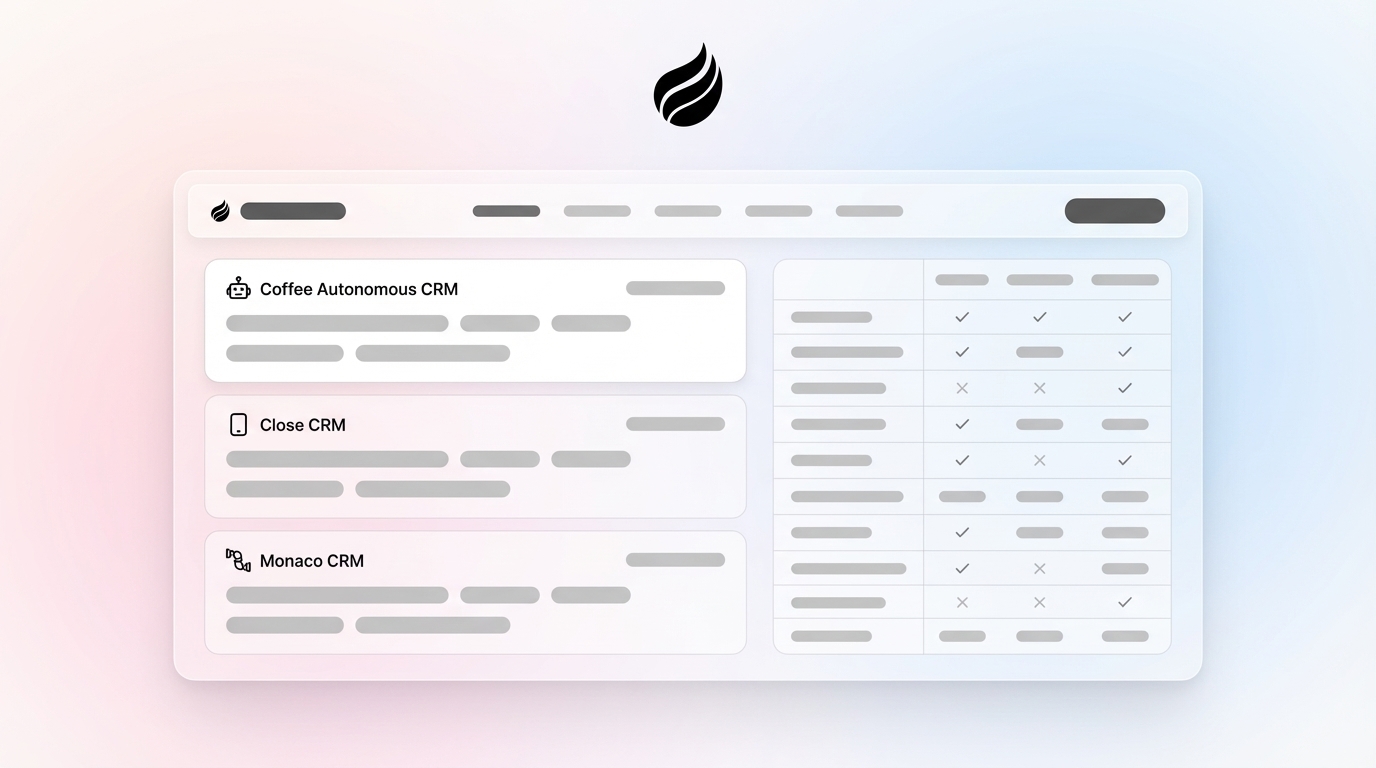
The following table shows how each platform handles the six core evaluation areas, with a focus on how deeply each one automates daily CRM work.
| Feature | Close CRM | Monaco CRM | Coffee Autonomous CRM |
|---|---|---|---|
| Data Entry Automation | Manual input required | Basic AI assistance | Full agent automation |
| Meeting Intelligence | Manual notes | Limited AI insights | Auto briefings & summaries |
| Pipeline Management | Manual tracking | Visual pipelines | Pipeline Compare automation |
| Pricing Model | $9-139/user/month | Custom pricing | Simple seat-based |
| Setup Time | Moderate | Complex | Simple authentication |
| Integrations | Limited native | Standard APIs | Zapier, SF, HubSpot |
Coffee leads in automation depth and data quality assurance by removing the manual work that defines traditional CRM usage. While Close pricing starts at $9/user/month, the hidden cost appears in the 8–12 hours each week that reps spend on data entry instead of selling. Coffee’s agent-first architecture improves total cost of ownership by consolidating multiple tools and removing administrative overhead. The ability to run as both standalone CRM and companion app gives deployment flexibility that competing solutions lack, which makes Coffee a strong fit for SMBs that value productivity more than manual control.

Verdict Matrix, Use Cases, and Total Cost of Ownership
The choice between these three platforms depends on how much manual work your team accepts versus how much automation you want. Choose Close CRM if your team relies almost entirely on high-volume phone prospecting and prefers hands-on control of data entry, even with the time cost. Select Monaco CRM if you want a middle ground, with visual pipeline customization and basic AI assistance while keeping human oversight of data management. Choose Coffee autonomous CRM if you want to remove manual data entry and assign CRM maintenance to an agent that runs in the background. Coffee delivers the lowest total cost of ownership through stack consolidation and significant weekly time savings on administrative tasks. The platform’s companion mode supports gradual migration from existing Salesforce or HubSpot setups without vendor lock-in, while its standalone option replaces legacy CRM for teams that want modern automation. Free trials let teams compare autonomous and manual approaches directly before making a long-term decision.
Implementing Coffee and Avoiding Common Pitfalls
Coffee setup only requires Google Workspace or Microsoft 365 authentication, and the agent begins automatic data capture within minutes. Teams often skip an initial data audit, yet using Coffee’s enrichment capabilities to clean existing contact records first creates better results after rollout. Many organizations underestimate the productivity gains from removing manual data entry, which can cause unrealistic expectations about how quickly sales processes will evolve. Reddit discussions frequently describe frustration with CRMs that promise automation but still demand constant manual upkeep, which underscores the value of truly autonomous behavior. Launch a Coffee pilot to test agent-led automation with a smaller group before expanding to the full team.
FAQ
What is autonomous CRM?
Autonomous CRM uses intelligent agents to handle data entry, enrichment, and logging without human intervention. This approach replaces passive CRM databases that depend on manual input and removes the need for sales reps to act as data entry clerks.
How does Close CRM compare to Coffee for data entry?
Close CRM requires manual data entry for contacts, activities, and deal updates, which consumes a large share of a rep’s administrative time. Coffee’s autonomous agent manages data entry through its Google Workspace and Microsoft 365 integrations, so reps can focus on selling instead of updating records.
What is the best AI CRM for startups in 2026?
Coffee autonomous CRM leads the market for startups that want real automation without ongoing maintenance overhead. Its agent-first architecture, simple seat-based pricing, and ability to run as standalone CRM or companion app make it well suited for growing teams that need scalable automation instead of complex software management.
What are Monaco’s automation limitations?
Monaco provides basic AI assistance but still needs human oversight for data validation and system maintenance. It functions as an AI-augmented tool rather than a fully autonomous agent, so users continue to manage data entry, pipeline updates, and contact enrichment manually, which limits productivity gains compared to agent-driven solutions.
How does Coffee pricing compare to Close CRM?
While Close starts at $9/user/month, Coffee delivers stronger total cost of ownership through stack consolidation and removal of manual labor costs. Coffee’s straightforward seat-based pricing includes unlimited agent automation, which removes hidden time costs from data entry and reduces the need for separate enrichment or intelligence tools.
Conclusion: Why Coffee Stands Out for SMB Automation
Coffee autonomous CRM emerges as a strong 2026 choice for SMBs that want to remove manual data entry and rely on an intelligent agent instead of passive software. The combination of autonomous data handling, meeting intelligence, and pipeline automation creates meaningful productivity gains for modern sales teams. Explore Coffee’s pricing and trial options to see autonomous CRM in action.