
In today’s fast-paced sales environment, inconsistent tracking within CRM systems can disrupt workflows, reduce forecast accuracy, and stall revenue growth. Many sales teams spend too much time on manual data entry or struggle with fragmented information scattered across multiple tools. As the market for CRM solutions evolves, AI-powered platforms are emerging as a way to address these challenges by automating processes and unifying data. This guide dives into the landscape of sales process tracking, examines the benefits and trade-offs of AI-driven solutions, and highlights tools like Coffee as part of a broader trend toward intelligent automation. You’ll find actionable steps to streamline tracking, minimize administrative burdens, and boost sales performance within your Salesforce ecosystem or standalone setup.
Why Inconsistent Sales Process Tracking Hurts Performance
Inconsistent sales process tracking creates inefficiencies that directly affect your bottom line. Many teams encounter unreliable data in CRM systems due to manual updates or disconnected tools, wasting time that could be spent on selling.
Fragmented data often stems from setups where information isn’t automatically captured or synced. Sales reps might log hours entering details by hand, leading to errors or incomplete records. This impacts forecast accuracy, as outdated or missing data obscures pipeline health. Poor data quality can reduce forecast precision by significant margins, affecting strategic planning.
Without a clear view of pipeline changes, identifying bottlenecks or stalled deals becomes a manual, time-intensive process. Sales managers struggle to coach effectively when they lack visibility into rep activities, while operations teams waste effort reconciling conflicting data sources.
The consequences extend beyond missed deals. Unreliable tracking slows response times to market shifts and hinders consistent lead follow-ups, which are vital for conversion rates. Addressing these gaps with automation can improve data reliability and free up time for high-value tasks.
Building the Foundation for AI-Powered Sales Tracking
Setting up AI-driven sales tracking starts with the right technical foundation to ensure smooth implementation. A solid base helps transition from manual inconsistencies to automated, accurate management.
Your core setup should include a CRM platform like Salesforce or HubSpot, integration with email and calendar tools such as Google Workspace or Microsoft 365, and compatibility with communication apps like Zoom or Microsoft Teams. These connections allow AI to capture customer interactions without manual input.
Unlike traditional methods where reps manually update records, AI processes data from emails, meetings, and calls in real time. This reduces errors and creates a complete picture of customer touchpoints. Initial setup for AI tools like Coffee often takes just 1-2 weeks, with noticeable improvements in data quality within a month.
Be prepared for a short adjustment period as teams adapt to new workflows. With proper training, benefits like reduced admin tasks and consistent data become evident quickly, paving the way for long-term efficiency gains.
Step-by-Step: Setting Up Consistent Sales Tracking with AI CRM
Step 1: Map Out Your Sales Process Stages
Start by defining each stage of your sales pipeline with clear criteria for progression. This creates a uniform framework that ensures every team member tracks opportunities the same way.
Outline key milestones like “Initial Contact,” “Discovery,” or “Proposal,” and set specific actions needed to advance through each stage. Involve your team in this process to align on practical definitions and encourage adoption. Tools like Coffee can track progression based on real interactions, minimizing subjective updates.
Step 2: Automate Data Collection with AI
Eliminate manual data entry by using AI to capture customer interactions automatically. This saves time and improves record accuracy across your CRM.
Coffee connects with email and calendar systems to build contacts, log activities, and update deal information without rep input. It handles both structured data, like contact details, and unstructured data, such as email content, to reduce silos. Automation ensures sales teams can focus on engaging clients rather than updating records.
Step 3: Enhance Meetings with AI Support
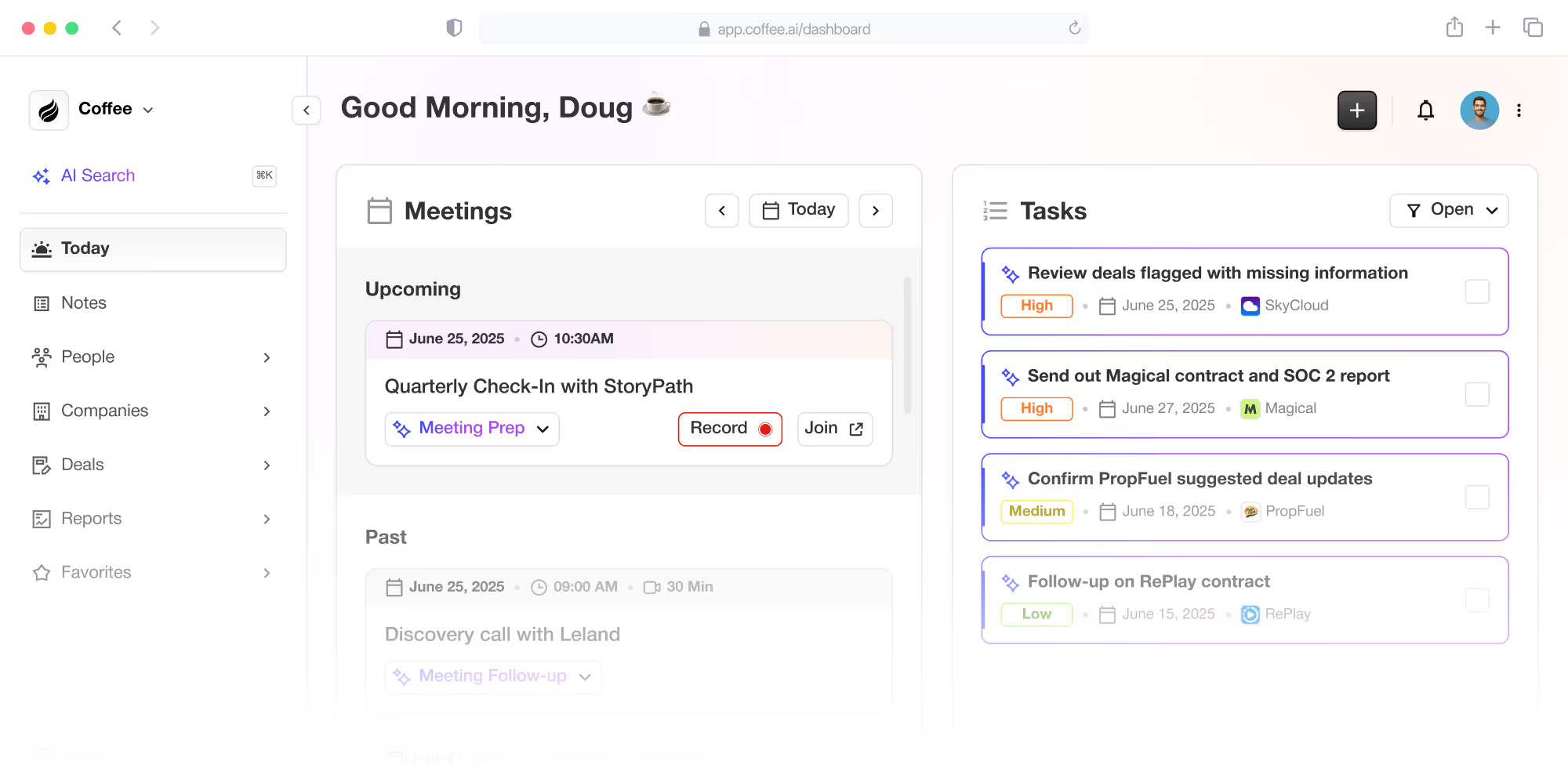
Turn meetings into strategic opportunities by using AI to manage preparation, recording, and follow-up. This keeps interactions aligned with deal goals and ensures accurate documentation.
With Coffee, reps get pre-meeting briefings with attendee and company details. During calls, an AI bot on platforms like Zoom records and transcribes discussions. Post-meeting, it summarizes key points, identifies next steps, and drafts follow-up emails. These summaries can align with frameworks like BANT or MEDDIC, standardizing deal qualification for better analysis.
Step 4: Monitor Pipeline Health in Real Time
Gain immediate insight into your pipeline with AI tools that highlight changes and issues. Real-time visibility helps reps prioritize deals and managers focus coaching efforts.
Coffee’s pipeline comparison feature tracks weekly shifts, showing new, progressed, or stalled deals with a single view. This removes the need for manual reporting and allows quick identification of areas needing attention, supporting active pipeline management.
Step 5: Connect AI Tools with Salesforce
Enhance your existing Salesforce setup by integrating AI capabilities without disrupting current workflows. This hybrid approach brings automation while preserving familiar processes.
Coffee’s Companion App syncs data with Salesforce through a straightforward setup, letting users choose which insights to update in their records. This gradual adoption maintains data consistency across systems while introducing time-saving automation.
Step 6: Measure Success with Key Metrics
Track the impact of AI-driven sales process consistency with specific metrics. Focusing on measurable outcomes helps quantify value and identify areas for improvement.
Coffee supports accurate reporting on metrics like time spent in each pipeline stage, conversion rates, and data completeness. These insights reveal inefficiencies and show progress, with reps often saving 8-12 hours weekly on admin tasks after implementation.
Comparing AI Tools Like Coffee to Traditional CRM Tracking
AI-powered solutions offer distinct advantages over traditional CRM systems for sales tracking. Below is a breakdown of key differences that impact efficiency and adoption.
- Data Entry: AI tools like Coffee automate logging from emails and calls, while traditional systems rely on manual input from reps.
- Data Accuracy: Coffee enriches and unifies data for reliability, whereas legacy CRMs often suffer from incomplete or fragmented records.
- Pipeline Insights: Real-time updates in Coffee contrast with outdated, manual reporting in older systems.
- Meeting Support: Coffee provides automated briefings and summaries, unlike traditional setups where reps handle everything manually.
- Team Adoption: Designed for productivity, Coffee encourages use, while legacy CRMs are often seen as burdensome.
- System Complexity: Coffee consolidates functions, reducing the need for multiple tools common in traditional setups.
As an example of AI innovation, Coffee acts as a productivity partner for sales reps, automating routine tasks and delivering actionable pipeline insights. It stands out in a growing field of tools aiming to simplify CRM processes. Request access to explore Coffee’s capabilities firsthand.
How AI Tools Improve Sales Tracking Consistency
Precision Prospecting with Smart Tools
Identify high-potential leads using AI features like Coffee’s List Builder. This tool lets you search for prospects with specific criteria through natural language, combining detailed company data for targeted outreach.
Custom Connectivity for Broader Impact
Extend the value of sales tracking by integrating AI tools with other systems via APIs. Coffee’s API enables tailored connections, allowing access to sales data for customized workflows across your operations.
Moving Beyond Basic Tracking
Once consistent tracking is in place, use AI to gain deeper insights into sales performance. Platforms like Coffee provide a robust data foundation for advanced analytics, helping refine strategies over time.
Common Questions About Sales Tracking with AI
How Does Coffee Handle Data Fragmentation in Salesforce?
Coffee consolidates data by syncing with email, calendar, and call transcription services. Its centralized structure logs interactions uniformly, addressing gaps that can occur in some CRM configurations.
Can Coffee Improve Forecast Accuracy?
Coffee boosts forecast reliability with automated data capture and real-time pipeline views. Features like weekly comparisons ensure data remains consistent for better predictions.
Why Do Sales Reps Adopt Coffee More Readily?
Coffee focuses on productivity, automating repetitive tasks and saving reps an estimated 8-12 hours weekly. This practical value integrates tracking seamlessly into daily work.
Does Coffee Affect Salesforce Customizations?
Coffee integrates as a companion to Salesforce, preserving existing customizations. It connects via APIs, enhancing data without altering established workflows.
How Soon Do Results Appear After Implementing Coffee?
Data consistency often improves within the first week as interactions are captured. Tangible benefits, like time savings and clearer pipeline views, typically emerge within 30 days.
Conclusion: Strengthen Sales with AI-Driven Tracking
Consistent sales process tracking is a cornerstone of effective sales operations. As part of a wider shift toward automation, tools like Coffee use AI to streamline data entry, integrate customer interactions, and provide real-time pipeline clarity, whether as a standalone platform or alongside Salesforce.
With potential time savings of 8-12 hours per rep each week and stronger data accuracy, Coffee helps teams shift focus to relationship-building and deal-closing. It exemplifies how AI is reshaping CRM for better performance. Request access to see how Coffee can elevate your sales consistency and productivity.