Written by: Doug Camplejohn, CEO & Co-Founder, Coffee
In today’s competitive landscape, sales leaders face mounting pressure to drive revenue while managing tight budgets. The sales technology market reflects this challenge, with CRM systems evolving from basic record-keeping tools to complex platforms aiming to streamline operations. Yet, many traditional systems still weigh teams down with manual tasks and fragmented solutions, costing valuable time and resources. Industry data highlights the scope of this issue, with sales reps spending only about 35% of their time on actual selling due to administrative burdens. This gap between potential and reality has sparked a shift toward AI-driven solutions that prioritize automation and efficiency. In this guide, we explore seven practical ways an AI-powered CRM can help sales teams reclaim time, cut costs, and boost productivity, spotlighting tools like Coffee as part of this broader trend toward intelligent sales operations.
Why Traditional Sales Operations Drain Productivity and Increase Costs
Many sales teams lose ground due to outdated CRM systems and manual processes that create hidden costs. These inefficiencies often appear as lost productivity, unreliable data, and bloated tech expenses.
Sales reps frequently spend hours on data entry instead of engaging with prospects. Reports estimate that 71% of reps feel overwhelmed by these tasks, leaving just a fraction of their week for revenue-focused work. This imbalance directly impacts performance and morale.
Fragmented tools compound the problem. Teams often rely on separate systems for CRM, outreach, data enrichment, and call tracking, leading to higher costs and wasted time switching between platforms. On top of that, manually entered data is often incomplete or outdated, skewing forecasts and causing missed opportunities. This cycle erodes trust in CRM systems, further reducing adoption by reps.
Discover Coffee: A Leader in AI-Driven Sales Efficiency
As part of the growing movement toward AI-first solutions, Coffee stands out by tackling the core frustrations of traditional sales processes. Unlike legacy CRMs that rely on manual input, Coffee automates repetitive tasks and delivers real-time insights, helping sales reps focus on closing deals. This platform exemplifies how AI can unify fragmented workflows into a single, efficient system.
Key features of Coffee include:
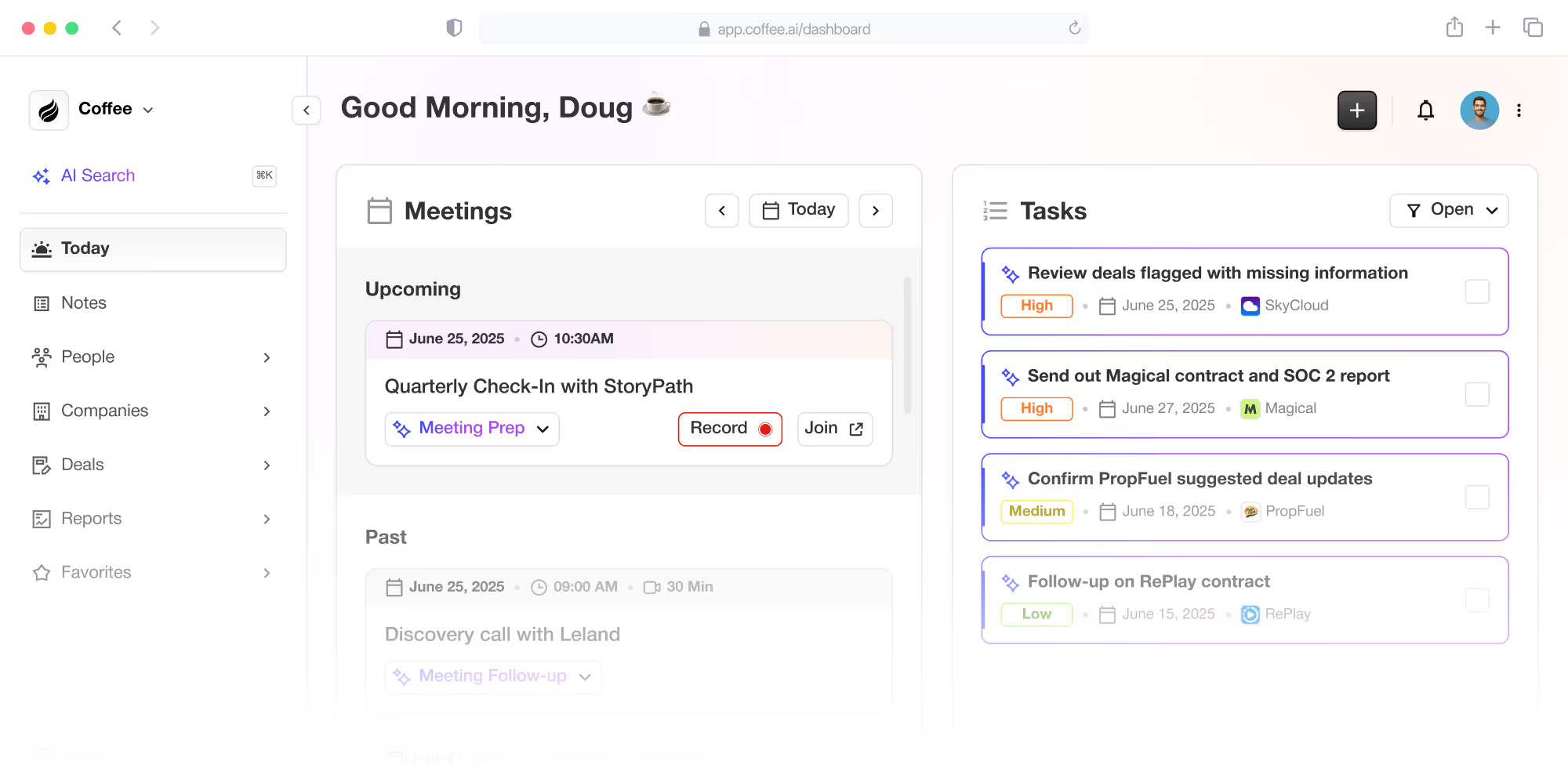
- Automated data entry that scans emails and calendar invites to create and update contact records with details like job titles and company size.
- AI-assisted meeting workflows, offering pre-call briefings, call recording, transcription, and post-meeting summaries with follow-up drafts.
- Pipeline analysis with historical data and week-over-week comparisons for quick, actionable insights.
- Unified platform design that replaces multiple tools, cutting software expenses and simplifying operations.
- Natural language queries for building prospect lists, speeding up lead identification.
Curious about how this works in practice? Take a closer look at Coffee’s interface and capabilities below.
Interested in exploring the benefits for your team? Request access to Coffee and see how AI can redefine your sales process.
7 Practical Ways AI CRM Enhances Productivity and Cuts Costs
1. Stop Wasting Time on Manual Data Entry
Manual data entry pulls sales reps away from their core job of selling. Tools like Coffee integrate with Google Workspace or Microsoft 365 to automatically capture data from emails and meetings, updating records with relevant details. This can save reps an estimated 8 to 12 hours each week, freeing them to focus on building client relationships.
To implement this, connect Coffee to your email and calendar accounts. Set up automatic syncing to ensure every interaction updates your CRM without lifting a finger, keeping records accurate and current.
2. Maintain Accurate Data for Stronger Decisions
Incomplete or outdated data hampers sales forecasting and planning. AI tools like Coffee improve data quality by automating updates and pulling verified information from trusted partners. With cleaner data, teams can make informed choices about where to focus their efforts.
Set up automated validation checks within Coffee to spot duplicates or stale records. Regularly review AI-generated data health reports to keep your CRM reliable over time.
3. Streamline Meeting Prep and Follow-Ups
Preparing for meetings and drafting follow-ups eats into selling time. Coffee automates these steps by providing pre-meeting summaries of attendees and past interactions, recording calls on platforms like Zoom or Teams, and creating post-meeting action items and email drafts. This cuts hours of admin work for each rep.
Activate Coffee’s meeting assistant for your calls and customize briefing settings. Train your team to use the automated follow-up emails to maintain deal momentum without delay.
4. Simplify Your Tech Stack to Save Money
Sales teams often juggle numerous tools, driving up costs and complexity. Coffee combines CRM, data enrichment, call recording, and pipeline tracking into one platform, reducing the need for multiple subscriptions. This consolidation lowers expenses and boosts efficiency by minimizing context switching.
Review your current toolset to identify overlapping functions. Calculate potential savings by comparing your total spend against a unified solution like Coffee, while maintaining key capabilities.
5. Support Reps with AI Tools for Better Engagement
Many reps avoid CRMs that feel like a chore. Coffee changes this by acting as a helpful assistant, automating data capture and offering timely insights. This allows reps to prioritize client interactions over paperwork, leading to higher usage rates and better data across the board.
Start training with Coffee’s most useful daily features, like meeting summaries. Monitor adoption rates and share quick wins to build enthusiasm among your team.
6. Use Pipeline Insights for Smarter Planning
Manual pipeline tracking often leads to missed signals and poor resource use. Coffee captures historical pipeline data and offers instant comparisons to show changes over time, highlighting new opportunities or stalled deals. Managers can act early on risks and allocate resources effectively.
Incorporate Coffee’s pipeline comparison tool into weekly reviews for data-driven talks. Use trend analysis to refine processes and improve conversion rates.
7. Target Leads Faster with AI Precision
Finding the right prospects can be slow and inefficient. Coffee’s List Builder uses natural language searches to create targeted lead lists, such as identifying specific roles in companies of a certain size or funding level. This sharpens focus and cuts down prospecting time.
Teach your team to craft precise queries with Coffee’s List Builder. Track conversion rates to fine-tune criteria and improve outreach results.
Ready to rethink your sales approach? Request access to Coffee and start leveraging AI for real results.
How Coffee Stacks Up Against Traditional CRM for Efficiency
| Feature | Coffee AI CRM | Traditional CRM Systems | Productivity Impact |
|---|---|---|---|
| Data Entry | Automated through AI | _manual, time-intensive | Saves 8-12 hours per rep weekly |
| Data Quality | Enhanced by AI updates | Prone to errors | More reliable insights |
| Meeting Workflows | Automated briefings and follow-ups | Manual and slow | Frees up rep time |
| Tech Stack | Unified solution | Fragmented tools | Reduces costs and complexity |
Common Questions About AI CRM and Cost Savings
How Does AI CRM Lower Costs for Sales Teams?
An AI CRM like Coffee cuts costs by automating data entry, saving reps 8 to 12 hours weekly. It also reduces software expenses through tech stack consolidation and improves resource use with pipeline insights, minimizing effort on low-value leads.
Can AI CRM Add Value If We Use Salesforce or HubSpot?
Yes, Coffee works alongside Salesforce or HubSpot as a companion app, syncing data through simple setup. It adds value by automating tasks and providing AI insights, enhancing productivity without replacing your existing system.
How Does AI CRM Handle Data Security?
Coffee prioritizes security with SOC 2 Type 2 and GDPR compliance, protecting customer data. It also maintains privacy by not using client information to train AI models, ensuring confidentiality.
When Will We See Returns from AI CRM?
Many teams notice productivity boosts within a week of using Coffee, with cost savings often visible in 30 to 60 days. Automation delivers quick time savings, while benefits like better data and lower tool costs grow over time.
Do Small Teams Benefit from AI CRM?
Smaller teams, especially with 1 to 20 members, gain significant advantages from Coffee’s standalone CRM. Its straightforward pricing and quick setup deliver enterprise-level AI features, amplifying impact with minimal complexity.
Wrapping Up: Elevate Your Sales with AI-Powered Efficiency
Outdated sales processes and disjointed tools hold teams back from their full potential. The seven approaches discussed offer a clear path to streamline operations using AI automation. Solutions like Coffee address critical pain points, from cutting manual work to providing sharper data insights, while reducing tech expenses. This shift doesn’t just save money, it redefines how sales teams operate. Ready to take the next step? Request access to Coffee and empower your team with smarter tools.