Written by: Doug Camplejohn, CEO & Co-Founder, Coffee | Last updated: June 29, 2026
Key Takeaways for HubSpot Call Logging Costs
- Native HubSpot calling is free but only captures basic fields and relies on manual notes, which limits data quality.
- Third-party dialer integrations add about $15–$60 or more per user each month, plus weeks of setup and ongoing RevOps work.
- AI-agent automation like Coffee delivers transcripts, AI summaries, and structured data with very little implementation time.
- Teams of 5–50 reps usually see the lowest total cost of ownership and strongest data completeness with AI-agent solutions.
- Review Coffee’s pricing to understand how AI-agent automation can streamline your HubSpot call logging today.
How This Guide Evaluates HubSpot Call Logging Options
This guide evaluates every approach against six criteria so RevOps and sales leaders can build a clear budget case.
Per-user monthly pricing covers the direct license or seat cost added to an existing HubSpot subscription. 5- and 20-rep TCO projects that per-user cost across realistic team sizes to highlight scale economics. Implementation effort and time measures internal hours and calendar weeks before the first call logs automatically. Data quality and completeness looks at whether the solution captures structured fields such as duration, outcome, and associations, along with unstructured content like transcripts, summaries, and next steps. Ongoing administrative burden reflects the RevOps hours needed each month to maintain mappings, fix sync errors, and manage user provisioning. Long-term scalability considers whether per-seat cost, integration complexity, or vendor lock-in slows growth as the team scales from 5 to 50 reps.
Side-by-Side Cost Comparison for HubSpot Call Logging (2026)
The table below applies these six criteria across all three approaches so you can compare cost, effort, and data quality at a glance.
| Criterion | Native HubSpot Calling | Third-Party Dialer Integration | AI-Agent Automation (Coffee) |
|---|---|---|---|
| Per-user/month (added cost) | $0 (included in Sales Hub) | $15–$60+ | Low incremental seat fee |
| 5-rep monthly TCO (added) | $0 | $75–$300+ | Lowest in category |
| 20-rep monthly TCO (added) | $0 | $300–$1,200+ | Scales linearly at low seat rate |
| Implementation time | 1–2 days | Several weeks | Hours (OAuth connection) |
| Data quality | Structured fields only | Structured + partial transcript | Structured + full transcript + AI summary |
| Ongoing admin burden | Low–Medium | High (sync errors, mapping) | Low (agent-managed) |
| Scalability | Limited by HubSpot tier caps | High cost at scale | Linear, no new infrastructure |
Note: Third-party dialer pricing reflects published 2026 ranges for platforms such as Aircall and Dialpad. HubSpot Sales Hub tier details are available on the HubSpot pricing page.
Compare Coffee’s pricing to see how AI-agent automation stacks up for your current team size.
Native HubSpot Calling: Fast Setup with Limited Data Depth
Native HubSpot calling comes bundled into Sales Hub Starter, Professional, and Enterprise tiers, so teams avoid a separate vendor. Admins can usually enable the feature and configure call outcomes within one or two business days, which keeps initial setup simple.
Data capture focuses on structured fields such as call duration, outcome disposition, associated contact or deal, and a manual notes field. Transcription appears only on higher-tier plans and relies on HubSpot’s AI transcription. That transcription does not automatically create structured summaries or push next steps into task records. HubSpot’s documentation confirms that call recordings and transcripts are stored but still require manual review to pull out action items.
Hidden costs show up in three main areas. Calling minutes are capped by tier, so Sales Hub Starter includes limited credits per user each month and charges overages. Manual note entry also consumes rep time, and industry data consistently shows that reps spend an outsized share of time on post-call admin instead of selling. Manager visibility into call quality then depends on how carefully reps complete fields, which creates a data quality ceiling that settings alone cannot solve.
Third-Party Dialers: Rich Telephony with Integration Overhead
Third-party dialers such as Aircall, Dialpad, Kixie, and RingCentral connect to HubSpot through native integrations or Zapier and automate logging of call records and recordings. On higher plans, they can also capture transcripts. In 2026, per-user pricing ranges from about $15 to $60 per month for tools like Aircall and Dialpad, which sits on top of existing HubSpot seat costs.
For a small team, these dialers add several hundred dollars per month. For a larger team, the extra cost can exceed one thousand dollars monthly before implementation work. Implementation often takes several weeks and usually needs an IT or RevOps resource to configure field mappings, test sync reliability, and train reps on a new dialing interface.
Ongoing administrative work becomes the most underestimated cost. Sync errors between the dialer and HubSpot can create duplicate activity records, broken contact associations, and missing call data that RevOps must audit on a regular basis. Gartner research on sales technology notes that integration maintenance drives a large share of unplanned RevOps labor. Many teams that buy a dialer for automation later find that integration upkeep absorbs part of the time savings they expected.
AI-Agent Automation with Coffee: Companion Layer Above Your Dialer
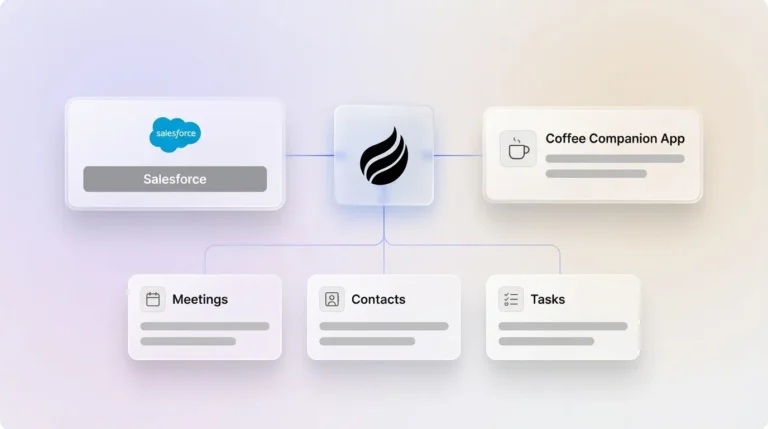
AI-agent companion apps form a third category that operates above the dialer layer. Coffee deploys as a companion app on top of an existing HubSpot instance and connects through a single OAuth authentication to Google Workspace or Microsoft 365. Teams avoid a new phone system, SIP configuration, or a long IT project, and the Coffee Agent usually becomes operational within hours.
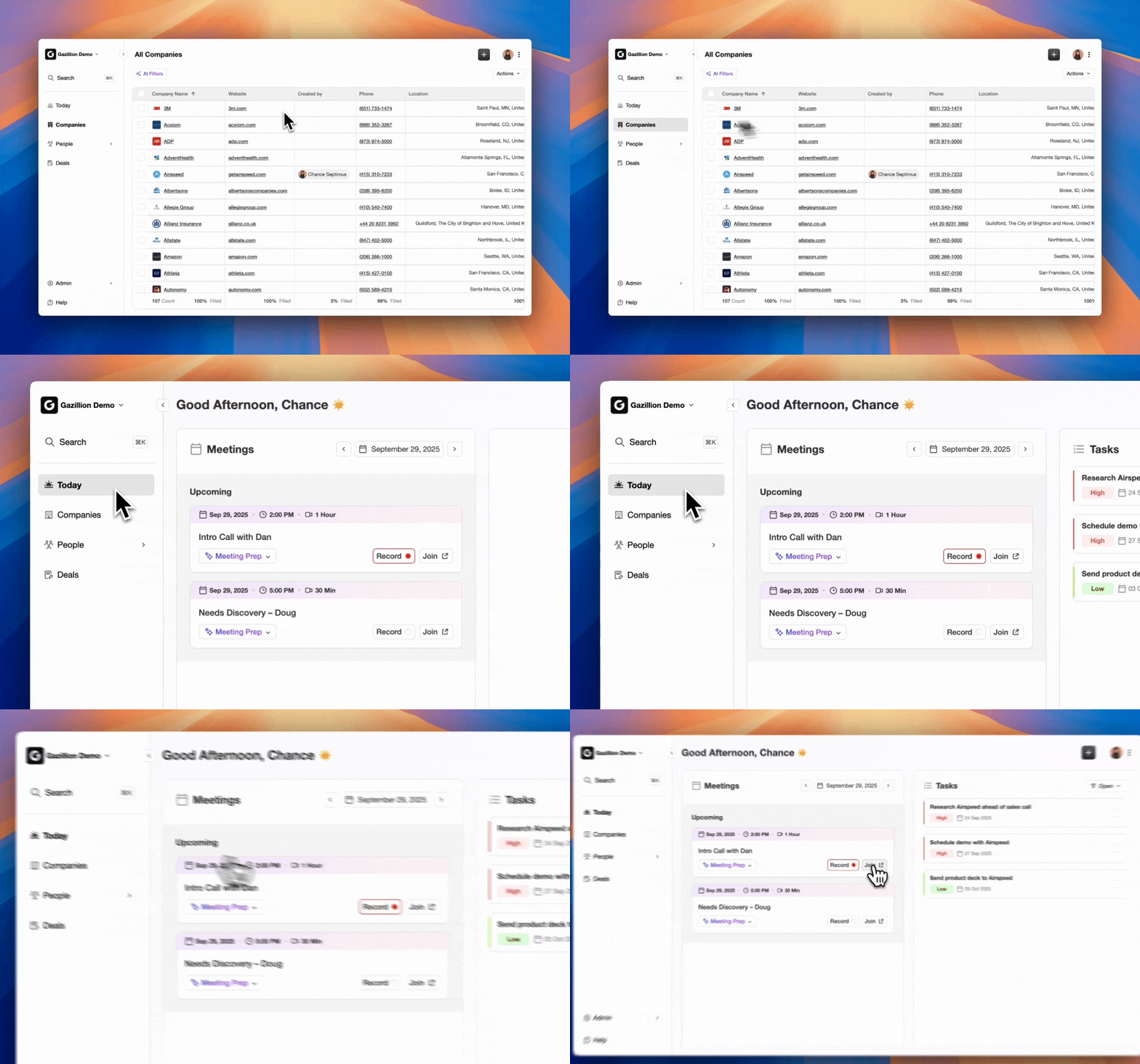
After connection, the Coffee Agent joins calls on Zoom, Google Meet, or Microsoft Teams, records and transcribes the conversation, and generates a structured summary with next steps. It then writes this information back to the correct HubSpot contact, company, and deal records automatically. This process captures structured fields and unstructured content such as the full transcript, the AI-generated summary, clear action items, and qualification signals mapped to frameworks like BANT, MEDDIC, or SPICED.

Coffee’s seat-based pricing charges for human seats, and the agent’s work is included. Teams avoid per-minute overages, sync error remediation costs, and a second telephony subscription. For a 20-rep team, this setup removes substantial monthly dialer overhead while still delivering richer data capture than native HubSpot calling or most dialer integrations. View Coffee’s per-seat pricing to calculate your team’s total cost of ownership.
Coffee’s company context highlights that 71% of sales reps report spending too much time on data entry, which directly reduces time available for actual selling. The Coffee Agent addresses this by removing post-call manual logging from the rep’s workload.
Scenario-Based Recommendations for HubSpot Teams
Early-stage teams with fewer than five reps and limited call volume often do well with native HubSpot calling at first. Zero added cost and quick setup make it a practical interim option while leaders define call processes.
Established mid-market organizations with 10–50 reps, existing HubSpot instances, and a need for consistent pipeline data face a different tradeoff. Dialers introduce recurring cost and implementation complexity without guaranteeing complete data. AI agents preserve the current HubSpot investment, keep the rep’s dialing behavior unchanged, and deliver higher-quality activity data at a lower total cost. For RevOps leaders who need reliable data for forecasting, the agent’s structured output such as summaries, next steps, and qualification fields improves pipeline reviews without extra tools.
Risks and Limitations Across Native, Dialer, and AI-Agent Options
Native HubSpot calling carries the risk of partial automation. Reps who skip post-call notes leave gaps in activity records, which compound into unreliable pipeline data over time. Minute caps also create budget uncertainty as usage grows.
Third-party dialers carry the risk of overbuying. Teams that adopt a full telephony platform mainly for HubSpot logging end up paying for features like IVR, call routing, and PSTN infrastructure that RevOps may not need. Integration fragility remains an ongoing operational risk, and vendor lock-in raises switching costs as the team scales.
AI-agent automation introduces its own constraints. Coffee currently extends to tools outside core HubSpot and Google or Microsoft ecosystems through Zapier, with deeper native integrations planned. Teams with heavily customized HubSpot workflows should confirm field mapping needs during onboarding. AI-generated summaries also require a quick rep review before sending follow-up emails, which protects accuracy but adds a short post-call step.
Decision Framework for Choosing a Call Logging Approach
Use the following criteria to identify the right approach for your team. Each option solves a different constraint. Native calling focuses on zero added cost but sacrifices data depth. Dialers add telephony features and flexibility while increasing integration work. AI agents prioritize complete data capture and lower incremental TCO without changing your phone system.
Choose native HubSpot calling if: your team has fewer than 5 reps, call volume is low, budget is tight, and limited unstructured data is acceptable for now.
Choose a third-party dialer if: your team needs outbound power dialing, call routing, or IVR features that go beyond activity logging, and your RevOps team can handle integration maintenance.
Choose AI-agent automation (Coffee) if: your team has 5–50 reps on HubSpot, needs complete call data capture without a new phone system, lacks RevOps capacity for integration upkeep, and must keep incremental TCO as low as possible.
Frequently Asked Questions About Coffee and HubSpot
How long does it take to implement AI-agent call logging automation on HubSpot?
Coffee’s companion app connects to HubSpot through a single OAuth authentication and starts logging call activity the same day. Teams avoid IT projects, SIP configuration, and training on a new dialing interface. Most organizations become fully operational within a few hours of connecting their Google Workspace or Microsoft 365 account.
What internal expertise is required to manage AI-agent HubSpot call logging?
No specialized technical expertise is necessary. The Coffee Agent manages field mapping, contact association, and data sync on its own. A RevOps admin or Head of Sales can complete setup without engineering support. Ongoing administration stays light because the agent handles most error resolution and record association automatically.
Will switching to AI-agent automation require migrating existing HubSpot call data?
No migration is required. Coffee operates as a companion layer on top of the existing HubSpot instance, and historical call records remain unchanged. The agent starts writing new activity data from the connection date forward, so current records, reports, and workflows continue without disruption.
How does AI-agent call data quality compare to manual logging or dialer integrations?
AI-agent automation usually produces higher data completeness than manual logging because it does not depend on rep behavior. Compared with dialer integrations, Coffee captures structured fields and full unstructured content such as transcripts, AI summaries, next steps, and qualification signals in a single automated pass. Dialers often log structured fields reliably but may need extra configuration or add-on plans to reach similar transcript-level detail.
Is Coffee secure and compliant for mid-market sales teams?
Coffee is SOC 2 Type 2 certified and GDPR compliant. Call recordings and transcripts do not train public AI models. For mid-market teams in non-regulated industries, Coffee meets standard enterprise security expectations without the multi-year review cycles common in sectors like healthcare or financial services.
Conclusion: Why AI Agents Often Win on Cost and Data
The 2026 cost to automate HubSpot call activity logging ranges from $0 per user each month for native calling, which carries data limits and usage caps, to about $15–$60 per user each month for third-party dialers that add infrastructure complexity and maintenance work. AI-agent automation delivers more complete data capture at the lowest incremental TCO for many mid-market HubSpot teams and does so with same-day implementation and no new phone system.
For RevOps and sales leaders who need clear per-user cost numbers and a strong TCO story, the AI-agent path removes many hidden costs that make native and dialer options more expensive than list prices suggest. Calculate your exact cost for automated HubSpot call logging using Coffee’s pricing details today.