
Key Takeaways
- Traditional CRMs that depend on manual data entry and fragmented workflows create low-quality data, poor user experience, and reduced adoption.
- Agent-based CRMs use AI-driven agents to capture data, manage meetings, and analyze pipeline activity so sales teams can focus on selling.
- Successful CRM automation requires clear build-versus-buy decisions, cultural alignment, and strong data governance and compliance.
- Organizations avoid common pitfalls by prioritizing data quality, consolidating point solutions, and managing change across revenue teams.
- Coffee provides an actionable path to intelligent, agent-based CRM automation for modern revenue teams, and executives can review options through Coffee’s pricing and plans.
The Critical Evolution of CRM: Why Traditional Models Fall Short in 2026
Traditional CRM systems depend on constant manual maintenance yet deliver diminishing returns. As AI reshapes customer interactions and revenue operations, the gap between what legacy systems provide and what teams need continues to grow.
The core problem is reliance on manual data entry and disconnected workflows. Sales representatives spend most of their time on administrative work instead of selling, which encourages skipped or incomplete updates. That behavior drives the familiar “garbage in, garbage out” pattern that undermines forecasting, reporting, and leadership confidence.
Many established CRMs also carry technical debt from decades of customization. Others expanded into CRM from different product origins. Both models struggle to handle the unstructured data behind most customer interactions, such as emails, call transcripts, and meeting notes. Historical context often disappears when fields update in basic relational databases, which limits the value of analysis and automation.
The impact is clear: poor user experience, low adoption, and widespread use of shadow tools like spreadsheets and point solutions. Teams juggle multiple products for enrichment, recording, and forecasting, which increases costs and fragments data.
Agent-Based CRM: How AI CRM Agents Change the Sales Experience
CRMs are shifting from software that assists humans to agents that act on their behalf within defined guardrails. This agent-based model combines AI, conditional logic, and workflow automation to handle tasks that previously required human reps or managers.
Agent-based CRMs follow a different principle: software should complete the work, not only log it. AI agents automate data capture and enrichment, meeting preparation and follow-up, pipeline monitoring, and customer interaction tracking. Human oversight remains central, but routine steps move to software.
Modern AI agents can:
- Capture and structure data directly from emails, calendars, and call transcripts so every interaction is logged without manual effort.
- Prepare meeting briefings, join calls as AI participants, and generate summaries with clear action items.
- Monitor pipeline changes automatically and deliver analysis based on complete, reliable data.
This approach turns “good data in, good data out” into a default outcome. Agents ingest and structure ground-truth data from multiple sources, which creates a reliable foundation for analytics, forecasting, and planning.
Coffee: A Practical Path to Intelligent CRM Automation
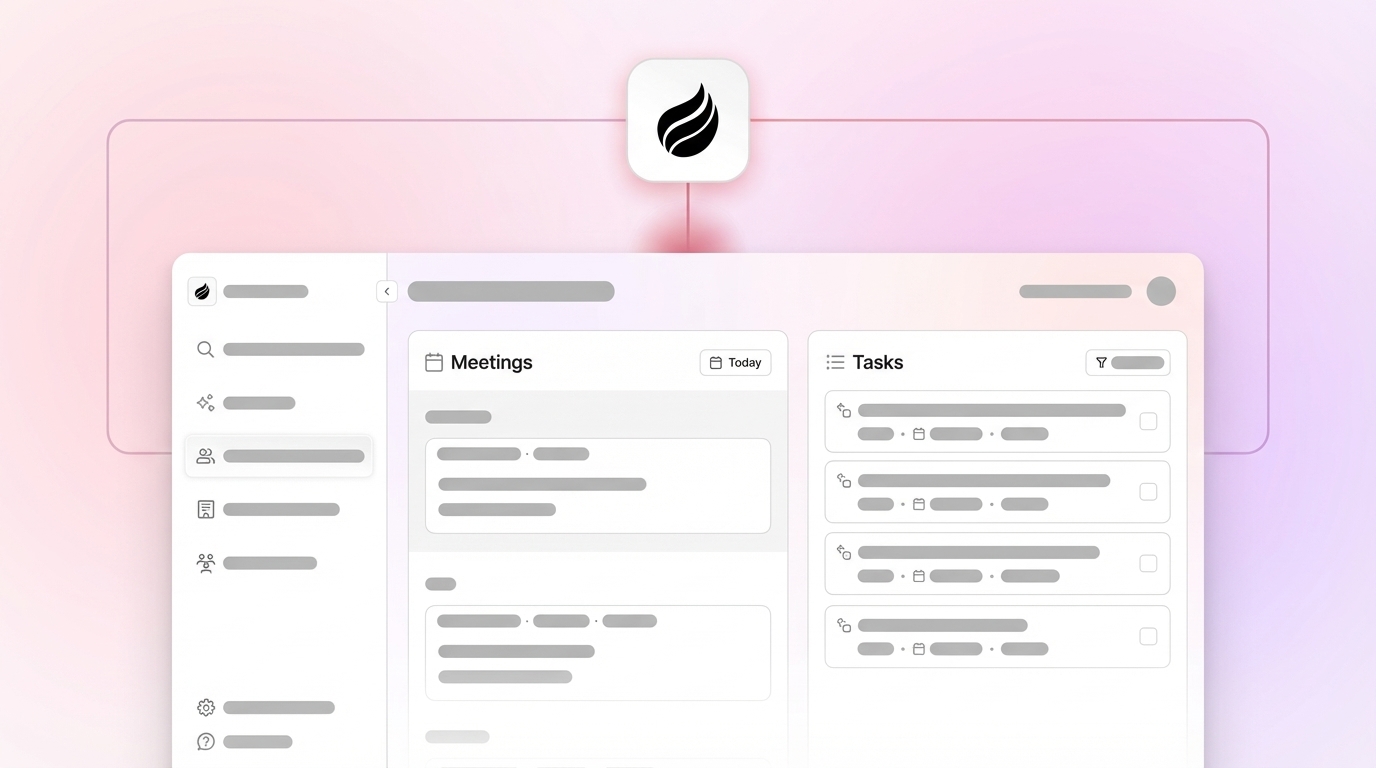
Coffee applies the agent-based model directly to customer relationship management. The platform treats the CRM as a working AI agent that reduces manual data entry, manages meetings, and provides pipeline intelligence so revenue teams can focus on high-value work.

Coffee supports two primary deployment models. The standalone AI-first CRM serves small and mid-sized businesses that want an automated system without the burden of legacy tools. The companion app for Salesforce and HubSpot adds an intelligent layer on top of existing CRMs, without requiring a full migration.
Coffee’s agent focuses on four main areas:
- The agent handles data entry by creating and enriching contacts, companies, and activities. It unifies structured and unstructured data from emails, calls, and meetings into a single, coherent view.
- The agent orchestrates meetings by preparing briefings, generating summaries, and drafting follow-up emails immediately after calls.
- The agent delivers pipeline intelligence by tracking changes automatically and providing accurate insights for forecasting and coaching.
- The agent consolidates the stack by covering use cases that often require separate tools, which can lower software cost and reduce operational complexity.

By delegating administrative work to an AI agent, Coffee helps teams treat the CRM as a partner in the sales process instead of a reporting obligation.
Executives can review implementation options and pricing details through Coffee’s pricing page.
Strategic Considerations for Implementing CRM Automation and AI Agents
Effective CRM automation starts with a clear build-versus-buy decision. In-house development often demands significant engineering capacity, long timelines, and ongoing support. Specialized platforms like Coffee deliver ready-made automation, so internal teams can spend more time on strategy and revenue.
Leadership teams benefit from assessing organizational readiness across sales, revenue operations, and IT. Stakeholders need a shared understanding of how agent-driven workflows will change daily work, metrics, and accountability. Many organizations start with a focused pilot, validate results, then expand to more teams and regions.
ROI expectations should include more than cost savings. Gains typically come from higher data quality, more selling time, better forecasting, and a smoother customer experience. IDC forecasts that nearly half of new CRM investment by 2026 will go toward data architecture, AI infrastructure, and analytics, which reflects this shift from licenses to intelligence.
Data governance and compliance now sit at the center of CRM selection. AI compliance, explainability, and transparency are required considerations for CRMs that use machine learning for lead scoring or decision support. Executives need clear visibility into how AI agents operate and how automated decisions are controlled.

Avoiding Strategic Pitfalls in Your Automation Journey
Many CRM automation initiatives fail because teams underestimate the human side of change. AI agents can remove manual work, but success depends on explaining how automation supports reps, managers, and operations rather than replacing them.
Another common pitfall is focusing on long feature lists instead of outcomes. Organizations see better results when they target specific issues like missing activity data, time-consuming meeting prep, or unreliable forecasts, then match automation capabilities to those use cases.
Data quality also requires careful attention. Automation alone does not correct poor inputs. Effective solutions use agents that capture information at the source and enrich it automatically, which is a core design principle for Coffee’s agent.
Fragmented point solutions create additional risk. Forrester’s 2025 State of RevOps survey reports that 58 percent of B2B companies cite process misalignment as a primary barrier to growth, which is driving more unified revenue architectures across marketing, sales, and customer success. Unified, agent-led platforms help reduce this misalignment.
Lagging AI adoption can also erode competitive position. AI adoption in lifecycle marketing reached about 85 percent by 2025, which indicates that intelligent automation has moved into standard practice rather than experimental use.
Executives who want to move quickly can review available deployment paths and next steps on Coffee’s pricing and implementation page.
Conclusion: Intelligent CRM Automation as a 2026 Executive Priority
CRM strategy in 2026 centers on intelligent agents rather than additional manual workflows. Organizations that continue to rely on manual updates and disconnected systems will find it harder to compete with teams that use AI agents to maintain data quality, manage meetings, and guide pipeline decisions.
Coffee offers both a standalone AI-first CRM and a companion layer for Salesforce and HubSpot, which gives executives flexible options for modernizing their revenue stack. These approaches support better data, more productive sales teams, and more confident forecasting.
Organizations that act now on agent-based CRM automation will be better positioned for growth beyond 2026. Leaders who want to explore this shift can start by reviewing Coffee’s plans and deployment options.
Frequently Asked Questions (FAQ) about Intelligent CRM Automation
How can AI-driven CRM agents resolve the garbage-in, garbage-out problem that affects traditional CRMs?
Coffee’s agent captures and structures high-quality data directly from emails, calendars, and call transcripts. The system enriches records automatically and reduces dependence on manual updates, which improves accuracy and consistency from the start.
With a fragmented market of point solutions, how does an agent-based CRM consolidate the tech stack for growing teams?
Coffee’s agent covers CRM data management, contact enrichment, call recording and analysis, and pipeline intelligence in one platform. This consolidation reduces the number of tools that sales teams must manage, lowers license costs, and keeps customer data consistent across activities.
What is the primary difference between a traditional CRM and an agent-based CRM like Coffee?
Traditional CRMs act as data containers that depend on human input. Agent-based CRMs like Coffee function as active workers that capture information, manage tasks, and generate insights within agreed guardrails. This shift allows sales professionals to focus more on relationship building and deal strategy instead of administrative entry.
How does Coffee address concerns about data security and privacy with its AI agent?
Coffee maintains SOC 2 Type 2 and GDPR compliance and applies strict privacy controls. Customer data is not used to train public AI models, and the security architecture is designed for sensitive revenue and customer information.
What ROI can organizations expect from implementing intelligent CRM automation like Coffee?
Organizations typically see time savings when representatives recover hours each week that previously went to manual updates and meeting administration. Better data quality supports more accurate forecasts and decisions, and consolidating tools into Coffee can reduce software spend while improving user adoption.