
The sales technology landscape is undergoing a profound shift as artificial intelligence reshapes how businesses manage customer relationships and drive revenue. Over the past decade, traditional Customer Relationship Management (CRM) systems have struggled to keep pace with the demands of modern sales teams, often due to outdated architectures and manual processes. Meanwhile, the rise of AI has introduced new possibilities for automating routine tasks, unifying fragmented data, and delivering actionable insights in real time. This evolution reflects a broader trend in the market, where efficiency and adaptability are essential for staying competitive. AI-first CRM platforms are at the forefront of this change, offering sales leaders tools to streamline operations and empower their teams. In this guide, we’ll explore the challenges of legacy systems, the benefits of AI-driven solutions, and how platforms like Coffee exemplify this innovative approach.
Our goal is to provide sales leaders with a clear understanding of AI-first CRM contact management. We’ll detail how these systems address inefficiencies, highlight key considerations for adoption, and offer practical insights for implementation. By focusing on data-backed benefits and real-world applications, this guide aims to help you make informed decisions about integrating AI into your sales strategy.
Challenges with Traditional CRM Contact Management
Legacy CRM systems often fall short in meeting the needs of today’s sales teams. Designed as centralized databases for customer information, many of these platforms require significant manual effort, which can reduce productivity and limit scalability.
Older CRM architectures, some dating back decades, were not built for the dynamic, data-intensive nature of modern sales environments. While updates to user interfaces have improved usability, the underlying structures often struggle to integrate with newer technologies or handle diverse data types like email content or call transcripts efficiently. This mismatch creates gaps in automation and insight generation, leaving sales teams with tools that demand more input than output.
Manual Data Entry Drains Productivity
A major drawback of traditional CRMs is the time spent on manual tasks. Sales reps spend over 60% of their time on administrative duties like data entry instead of selling. After each interaction, whether a call or meeting, they must log notes, update records, and ensure accuracy, often at the cost of engaging with prospects.
This repetitive workload not only cuts into selling time but also risks errors or incomplete data. Inconsistent customer profiles hinder decision-making, while slower response times and reduced account planning capacity can lead to missed opportunities. For growing organizations, these inefficiencies make scaling operations a significant challenge.
Data Silos Limit Customer Insights
Fragmented data is another persistent issue with many traditional CRMs. Sales teams often juggle multiple tools for different functions, such as outreach, enrichment, or call logging. This creates isolated pockets of information, making it hard to build a complete picture of customer interactions.
The rigid database designs in older systems are typically optimized for structured data, not the unstructured inputs like conversation logs that are vital for deep analysis. As a result, teams miss out on patterns or insights that could inform strategy, ultimately affecting sales outcomes.
What Is AI-First CRM Contact Management?
AI-first CRM contact management marks a departure from static data storage to dynamic, intelligent systems that support sales teams proactively. These platforms are built with AI at their core, automating data collection, enhancing customer profiles, and providing insights that improve performance without constant user intervention.
Central to this approach is the idea that accurate AI depends on quality data. AI-first systems prioritize capturing information directly from sources like emails and calendars, creating a reliable foundation for analysis. Over time, they become more effective, adapting to user needs rather than adding to their workload.
Key Features of AI-First Contact Management
AI-first CRMs stand out through specific capabilities that address legacy system shortcomings. Here’s what sets them apart:
- Automated Data Collection: These systems pull interaction data from emails, calendars, and other platforms, eliminating manual updates. They also enrich profiles with relevant external information.
- Meeting and Task Automation: AI prepares briefing materials before meetings and generates summaries or follow-ups afterward, cutting down on administrative time.
- Unified Customer Data: By consolidating touchpoints into a single view, AI-first CRMs ensure teams have access to comprehensive, up-to-date context for every interaction.
How Coffee Enhances CRM with AI Innovation
As an example of the AI-first trend, Coffee offers a purpose-built solution that tackles the limitations of traditional CRMs. Designed with artificial intelligence as its foundation, Coffee integrates automation and user-focused features to create a platform that supports sales reps directly. Its approach emphasizes practical benefits, ensuring that the system enhances daily workflows rather than complicating them.
Coffee operates on the principle that high-quality data is essential for effective AI. By automating data capture from sources like email and calendar events, it maintains accuracy and completeness without manual effort. This focus not only saves time but also drives better decision-making through reliable insights.
Here are some specific ways Coffee improves contact management:
- Removes Manual Updates: Contacts are created and updated automatically from digital interactions, saving an estimated 8 to 12 hours weekly for sales reps. Both structured data, like contact details, and unstructured data, such as meeting notes, are seamlessly organized.
- Streamlines Meeting Processes: Before calls, Coffee provides relevant background on attendees and past interactions. Post-meeting, it drafts summaries and action items, ensuring follow-ups are handled efficiently.
- Delivers Pipeline Visibility: With features like Pipeline Compare, leaders can track deal progress over time, identifying trends or stalls without manual reporting.
- Simplifies Tool Use: Coffee combines CRM, data enrichment, and forecasting into one system, reducing the need for multiple tools and ensuring consistent data access.
- Boosts User Engagement: By focusing on features that make sales reps’ jobs easier, Coffee encourages consistent use, leading to better data and stronger outcomes.
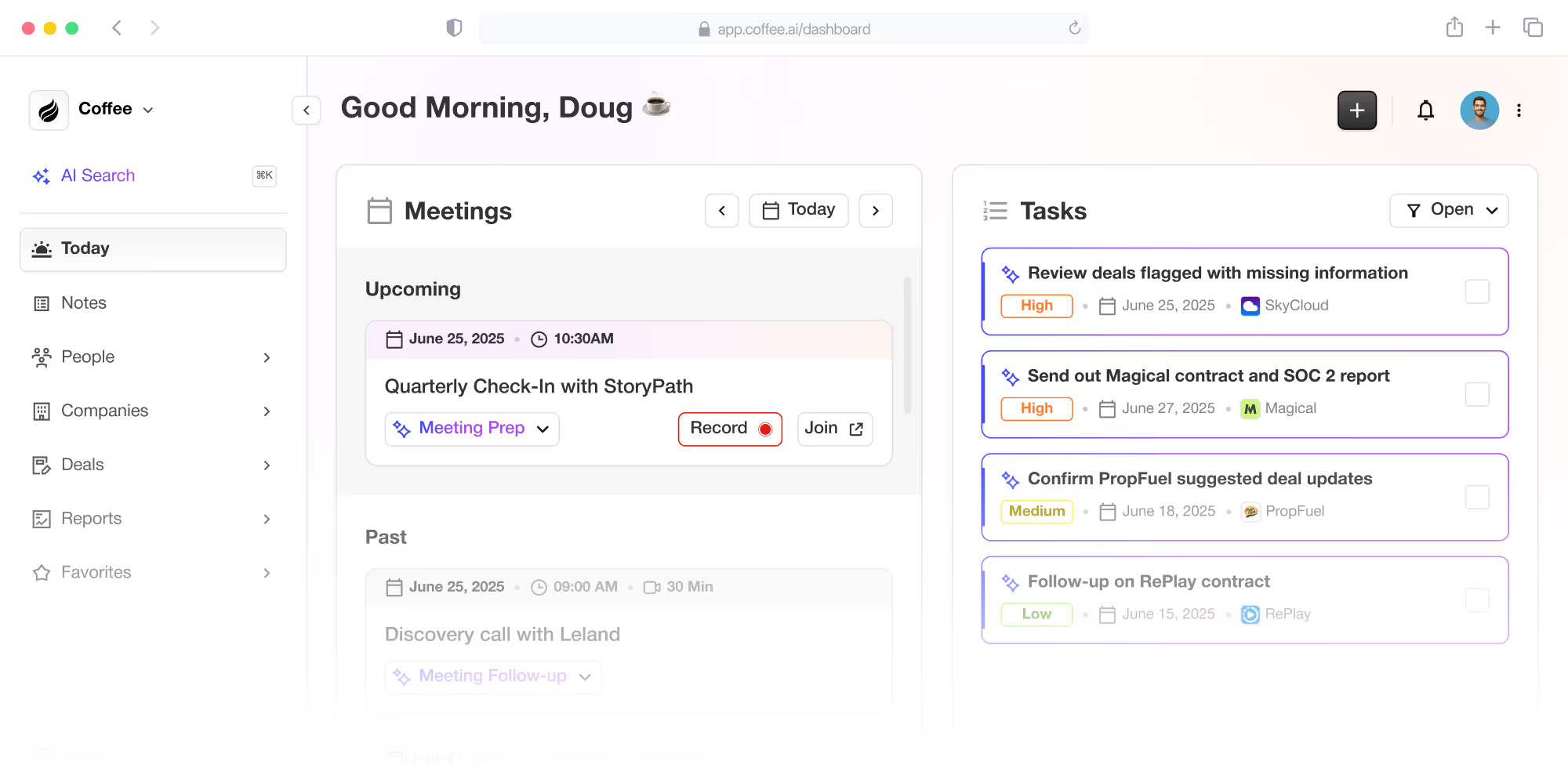
Interested in seeing how Coffee can improve your sales process? Request access to explore its AI-first capabilities.
Planning Your Move to AI-First CRM: Key Factors
Adopting an AI-first CRM involves more than selecting a tool. It requires aligning the technology with your organization’s goals, technical infrastructure, and team readiness. Sales leaders need to weigh how these systems fit into long-term growth plans and prepare for the operational changes they bring.
Successful adoption depends on evaluating data quality, team skills, integration needs, and metrics for success. A thoughtful approach can maximize the benefits of AI-driven automation while minimizing disruption.
Should You Build or Buy an AI CRM Solution?
Deciding between building a custom AI CRM or purchasing an existing platform involves weighing time, cost, and expertise. Developing internally demands significant resources and technical knowledge, often delaying results. On the other hand, buying a solution like Coffee provides faster access to specialized features and support, allowing for quicker impact through tailored integrations.
Measuring the Impact of AI CRM
To assess the value of an AI-first CRM, track specific outcomes like time saved on administrative tasks, improved data accuracy, and faster deal cycles. Establish baseline figures before implementation, then monitor progress in areas such as user adoption and pipeline reliability. This data-driven approach helps confirm the system’s benefits over time.
Driving Adoption Through Change Management
Transitioning to an AI CRM requires addressing both technical setup and team dynamics. Many sales reps are wary of new tools due to past experiences with systems that added work without clear value. Start by communicating how the platform will directly help them, such as by reducing repetitive tasks.
Focus initial training on practical benefits, not just features. Identify team members to champion the system, roll it out in phases, and gather feedback to adjust workflows. This builds trust and ensures the tool supports sales performance without overwhelming users.
Comparing Coffee to Traditional CRMs
Coffee’s AI-first design offers distinct advantages over many legacy CRM systems, particularly in automation and user experience. By embedding AI into every aspect of contact management, it addresses common pain points more effectively.
The table below highlights key differences in functionality and impact:
|
Aspect |
Legacy CRMs |
Coffee (AI-First CRM) |
|
Data Capture |
Mostly manual, often needs additional tools |
Automatic from email and calendar |
|
Data Quality |
Can be inconsistent or siloed |
Unified and updated in real time |
|
System Design |
Older structures, less flexible for AI |
Built for AI, handles diverse data types |
|
User Impact |
Often adds to workload |
Supports reps with automation |
Coffee’s focus on the individual user creates a system that sales reps find valuable, encouraging consistent engagement compared to many traditional platforms.
Overcoming Obstacles in AI-First CRM Implementation
Implementing an AI CRM comes with challenges that can impact its success. Unrealistic timelines or insufficient focus on team preparation often lead to underwhelming results. Recognizing these potential issues allows for better planning and execution.
The most effective rollouts balance technical capabilities with organizational support, ensuring teams are equipped to adopt and benefit from the system.
Common Implementation Mistakes
One frequent error is underestimating the effort needed to shift team habits. Prioritizing only the tool’s features while ignoring cultural fit can lower usage rates. Another misstep is focusing on extensive feature sets rather than specific goals, resulting in overly complex systems. Finally, transferring low-quality data from old CRMs can weaken AI performance. Starting with fresh, automated data capture often yields better results.
Aligning Teams and Rolling Out Gradually
For a smooth implementation, involve key groups like sales, IT, and operations early to address their needs. Begin with essential features that deliver immediate value, such as contact automation, before adding advanced AI tools. This phased approach allows for adjustments without disrupting sales activities. Maintain open communication and track progress against clear goals to keep everyone invested in the process.
Want to ensure a successful AI CRM rollout? Request access to Coffee for support with your strategy.
Answers to Common AI CRM Questions
How Does AI CRM Improve Forecast Reliability?
AI-driven CRMs enhance forecasting by analyzing historical trends and current pipeline data. Tools like Coffee’s Pipeline Compare track deal movements over time, offering sales leaders clearer visibility for resource planning and decision-making.
Can AI CRM Reduce Administrative Tasks?
Yes, AI CRMs significantly cut down on routine work. Coffee automates logging interactions, preps for meetings, summarizes outcomes, and drafts follow-ups, freeing up an estimated 8 to 12 hours per week for sales reps to focus on client relationships and closing deals.
Do Small Businesses Benefit from AI CRM?
Small and medium-sized businesses gain substantial efficiency from AI CRMs, especially those moving beyond basic tools like spreadsheets. Coffee’s Standalone CRM suits teams of 1 to 20 by providing automation and insights without the complexity of larger systems.
How Is Data Security Handled in AI CRM?
Data protection is a priority for AI-first CRMs. Coffee adheres to standards like SOC 2 Type 2 and GDPR, safeguarding customer information. It also ensures data isn’t used for AI training without explicit consent, maintaining privacy.
What Sets AI-First CRMs Apart from Legacy Systems with AI Features?
The difference lies in design and data handling. Legacy CRMs with added AI often rely on manually entered data, limiting effectiveness. AI-first systems like Coffee are built to integrate diverse data types automatically, ensuring stronger insights and a more supportive experience for users.
Conclusion: Gain an Edge with AI-First CRM
AI is redefining how sales teams operate, offering a clear advantage over outdated, manual CRM approaches. Platforms that prioritize automation and intelligence enable organizations to focus on relationships and results rather than processes.
Coffee stands out in this space by removing data entry burdens, streamlining meeting tasks, enhancing pipeline visibility, and unifying tools into an intuitive system. It serves as a practical example of how AI-first CRMs can support sales reps directly, setting a standard for user-friendly innovation.
Adopting AI-first contact management positions your team for long-term success in a competitive market. Don’t let legacy systems slow you down. Request access to Coffee today to see how AI can optimize your sales pipeline.