
Key Takeaways
- AI upstarts threaten incumbents by replacing 20+ tools that cost millions each year, with 47% of martech decision-makers citing stack complexity as a key blocker.
- Sales reps waste 71% of their time on admin tasks, spending only 29% actually selling, so agent automation can save 8-12 hours weekly.
- AI-native startups scale fast through labor replacement, with companies like Cursor reaching $500M ARR and a $10B valuation in just 15 months.
- Incumbents face API gating backlash as software vendors introduce new data access fees and API tolls, which creates costly barriers for enterprise AI tools.
- Coffee’s agent delivers “Good Data In/Out” as both standalone CRM and Salesforce or HubSpot companion, giving it a distinct position in the CRM market.
AI Agents Reshape a $109B CRM Market
- The CRM market reaches $109B in 2026 as AI agents disrupt incumbents like Salesforce through labor replacement, saving reps 8-12 admin hours weekly.
- 47% of martech leaders cite stack complexity as a top blocker, while reps waste 71% of time on non-selling work across fragmented tools.
- AI upstarts like Cursor scale to $500M ARR in 15 months by consolidating tools and automating workflows that traditional CRMs cannot handle.
- Incumbents risk API toll backlash and deeper data silos, while Coffee offers flexible standalone or companion deployment for almost any stack.
- Teams that adopt Coffee’s agent-first “Good Data In/Good Data Out” approach gain an edge in CRMageddon, so get started with Coffee today.
The New CRM Reality: From Databases to Active Intelligence
AI agents are turning CRMs from passive databases into active systems that actually do work. CRMageddon captures this shift, as incumbents like Salesforce face AI-native challengers such as Coffee. The CRM market is forecasted to reach $109.07 billion in 2026 and grow at 9.8% annually through 2030, with 91% of companies with 10+ employees already using CRM software. Mid-market leaders who feel stuck in manual data entry and scattered tools now face a clear choice. Teams that back agent-first systems will keep pace with an automated sales landscape, while others fall behind.
Why CRMageddon Matters for Revenue Leaders
CRMageddon marks the shift from CRMs that store data to agents that perform labor. Legacy platforms like Salesforce carry decades of configuration debt and require constant human upkeep. The new model centers on labor replacement, where AI agents handle data entry, meeting workflows, and pipeline intelligence without human intervention. Concepts like the “wedge playbook” describe how AI companions enter existing systems and expand over time, while “GTM silos” explain how dozens of tools fracture customer data. Exclusive a16z insights show how AI-native companies can reach $500M ARR in 15 months. The real winners will maintain clean, reliable data through agents instead of relying on inconsistent human input. Get started with Coffee to align with this new standard.
Incumbents vs Upstarts: The CRM Battlefield
The CRM landscape now splits between incumbents defending market share and upstarts attacking with agent-first designs. Salesforce and HubSpot benefit from network effects and high switching costs, yet they struggle with deep architectural limits. Their systems cannot natively handle unstructured data such as emails or call transcripts, and they depend on simple relational databases where history disappears when fields change. Fragmentation makes this worse: 47% of martech decision-makers cite stack complexity as a key blocker, and BCG analysis shows companies waste 30-50% of sales budgets on inefficient processes tied to fragmented data. Upstarts like Coffee exploit these gaps with two clear options: a standalone CRM for SMBs and a companion app that upgrades existing Salesforce or HubSpot setups. This flexibility lets Coffee win accounts without forcing a risky rip-and-replace decision.
Build vs Buy: How to Add Agents Without Breaking Your Stack
The build-versus-buy question becomes more nuanced once agents enter the picture. Full rip-and-replace projects carry heavy risk, so many teams favor a wedge strategy where AI companions sit on top of current systems and expand over time. The ROI case for agents is direct and measurable. Eliminating manual data entry saves 8-12 hours per rep each week, while stack consolidation cuts the $3-5 million in annual waste from fragmented data for companies with $10M sales budgets. Adoption also improves when software handles the busywork, which contrasts sharply with today’s reality where 67% of reps do not expect to hit quota and 84% missed targets in 2023. Pricing models now evolve as well. Incumbents still rely on per-seat pricing, while outcome-focused structures gain traction as agents deliver real labor replacement. Coffee’s simple seat-based pricing with unlimited agent work included fits neatly into this transition.

How Agent-First CRM Actually Works in Practice
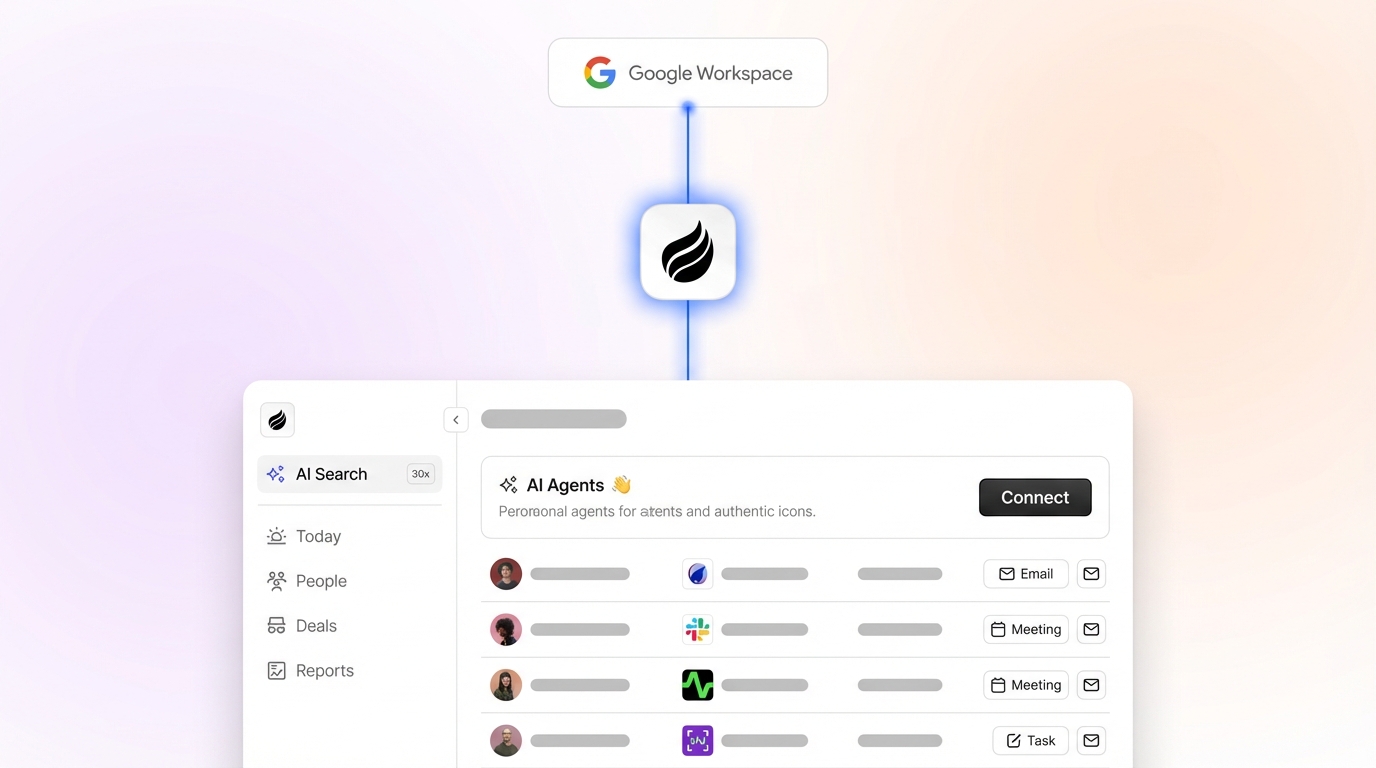
Modern revenue leaders now favor an agent-first approach that starts with “Good Data In/Good Data Out.” Coffee brings this to life through three core capabilities that define CRM success. First, the agent automates data entry and enrichment by scanning Google Workspace or Microsoft 365, creating contacts and companies, and enriching them with titles and funding data. Second, it manages meeting workflows by preparing briefings, joining calls for transcription, and producing summaries with clear next steps. Third, it delivers pipeline intelligence through a built-in data warehouse that powers Pipeline Compare views, so leaders can see week-over-week changes without exporting spreadsheets. Pipeline reviews then shift from interrogation to strategy. Get started with Coffee to bring these agent-first practices into your team.

Assessing Your Readiness for AI Agents
Most organizations fall into three stages of agent readiness. Level 1 teams still live in spreadsheet chaos, with founders and early sellers tracking prospects in Google Sheets or Notion. Level 2 teams use manual CRMs like HubSpot or Pipedrive but struggle with adoption and unreliable data. Level 3 teams recognize that software should perform the work, not just store it, and they are ready for agents. The choice then becomes simple. SMBs with 1-20 reps who want to avoid legacy complexity benefit from Coffee as a standalone CRM. Larger or more established teams that already rely on Salesforce or HubSpot can deploy Coffee as a companion app. Implementation follows a clear sequence: connect workspace tools, let the agent enrich existing data, then review insights in intuitive dashboards. The strongest signal of readiness is leadership agreement that human data entry no longer scales.

Hidden Risks for Mature Revenue Teams
Experienced teams face specific pitfalls during CRMageddon. Heavy dependence on incumbent APIs creates exposure as vendors like Salesforce add new data access fees and API tolls, echoing past conflicts between Plaid and major banks. Ignoring the chance to collapse silos means missing consolidation gains while competitors simplify their stacks. Clinging to per-seat pricing becomes costly as outcome-based alternatives mature. The most damaging risk appears when “shadow CRMs” spread, and reps abandon the official system for personal tools and spreadsheets. Data quality then collapses. Smart teams deploy agents early so their CRM becomes a strategic asset instead of a drag on productivity.
How to Win CRMageddon with Coffee
Organizations that embrace agents will outperform those that cling to manual CRM habits. The battle now pits incumbents that defend legacy architectures against upstarts that deliver labor replacement through intelligent automation. Coffee stands out by working as both a standalone CRM and a companion app, so teams can hire the agent without uprooting their stack. Get started with Coffee to consolidate tools, reclaim selling time, and position your team to win the CRM revolution.
Frequently Asked Questions
What is CRMageddon?
CRMageddon describes the AI-driven battle between incumbent CRM providers such as Salesforce and HubSpot and AI-native challengers like Coffee. This shift targets the $109 billion CRM market through labor replacement, where AI agents automate manual tasks that currently consume 71% of sales reps’ time. The term highlights a decisive choice between passive databases that demand human maintenance and active agents that perform work on their own.
Why are incumbent CRM providers vulnerable?
Incumbent CRMs remain vulnerable because their architectures carry decades of legacy constraints and struggle with unstructured data. They depend on human data entry, which leads to poor adoption and unreliable records. API gating and new access fees create customer frustration, similar to past clashes between banks and fintech firms. Most importantly, these systems do little to reduce the 71% of sales rep time lost to administrative work instead of selling.
How does Coffee disrupt the CRM market?
Coffee disrupts the market with an agent-first architecture that replaces more than 20 fragmented tools with one intelligent system. The Coffee Agent automates data entry, meeting workflows, and pipeline intelligence, saving reps 8-12 hours each week. Its dual deployment model, either as a standalone CRM for SMBs or as a companion app for Salesforce and HubSpot, lets Coffee serve teams regardless of their current stack. Unlike passive databases, Coffee’s agent maintains “Good Data In/Good Data Out” through autonomous processing and a built-in warehouse.

Can Coffee integrate with existing Salesforce installations?
Yes, Coffee runs as a Companion App that upgrades existing Salesforce or HubSpot environments through simple authentication. The agent enters the current system, enriches records, and writes insights back into the primary CRM. This approach lowers implementation risk while improving data quality and user experience from day one. Teams keep their system of record and gain automated data entry, meeting intelligence, and pipeline analysis.
What about data security and compliance?
Coffee provides enterprise-grade security with SOC 2 Type 2 certification and GDPR compliance. Customer data never trains public AI models, so proprietary information stays protected. The agent works within established security controls and accesses only approved data sources through authenticated connections. This posture addresses enterprise concerns while still enabling powerful data processing.
How much time does Coffee actually save sales teams?
Coffee typically saves sales reps 8-12 hours per week by automating data entry, meeting preparation, and admin work. Today, reps spend only 29% of their time selling, with the rest lost to CRM upkeep and coordination. Coffee handles contact creation, enrichment, activity logging, meeting summaries, and follow-up drafts. That shift frees more than half a workday each week for higher-value selling.

What is Coffee’s pricing model?
Coffee uses straightforward seat-based pricing where customers pay for human users, and the agent’s unlimited labor comes included. This structure avoids complex metering for LLM calls or process volume. Budgeting stays predictable, and customers benefit from heavier agent usage without extra fees. This model also positions Coffee well as the market moves toward outcome-based pricing.
Is Coffee suitable for enterprise organizations?
Coffee focuses on small and mid-sized companies with growing sales teams rather than global enterprises with highly customized workflows. Ideal customers feel the pain of manual data entry and want modern automation without legacy overhead. Coffee does not target massive organizations like Chase or PwC that require deep customization and lengthy security reviews. This focus on the mid-market allows faster implementation and a smoother user experience.
How do AI upstarts achieve rapid seven-figure growth?
AI-native startups grow quickly by replacing expensive human labor with specialized agents that deliver immediate ROI. Small teams can build focused products that automate high-cost workflows and scale revenue without matching headcount growth. The modern AI stack supports rapid iteration and deployment. Companies like Cursor show this potential by reaching $500M ARR and a $10B valuation in just 15 months. Coffee follows a similar playbook by automating sales admin work that currently wastes billions in productivity across the CRM market.