
Small businesses face a unique challenge in today’s competitive market: standing out while managing limited resources. Conversational intelligence platforms, when tailored to specific needs, can offer a powerful solution by turning everyday interactions into data-driven strategies. The market for these tools has grown rapidly, with many businesses seeking ways to optimize sales and customer service through AI-powered insights. However, not all platforms deliver value out of the box. Generic systems often fail to address the specific workflows, customer profiles, and industry demands of smaller enterprises. This guide explores seven customization options that can help small businesses align conversational intelligence with their goals, ultimately driving measurable growth. Backed by research and real-world applications, these options highlight the importance of adaptability in today’s technology landscape. We’ll also look at tools like Coffee, a platform that exemplifies this trend toward personalization, alongside fair comparisons of trade-offs with other solutions.
Why Customization Matters for Small Business Conversational Intelligence
Customization turns conversational intelligence from a generic tool into a strategic asset. Without it, small businesses often struggle with platforms that misunderstand their industry terms, clash with existing systems, or provide irrelevant data. This can lead to low team adoption and wasted resources.
Tailored solutions solve these issues by aligning with specific business needs. Small businesses benefit from features like intent recognition and multi-channel support to match these tools to their unique processes. The result is actionable insights from every customer interaction, directly supporting revenue growth.
Three core challenges are addressed through customization: team resistance to unfamiliar tools, data that doesn’t fit the business context, and poor integration with current systems. Proper tailoring turns these hurdles into strengths, helping small businesses gain a competitive edge.
Coffee: A Customizable AI-Driven Platform for Small Businesses
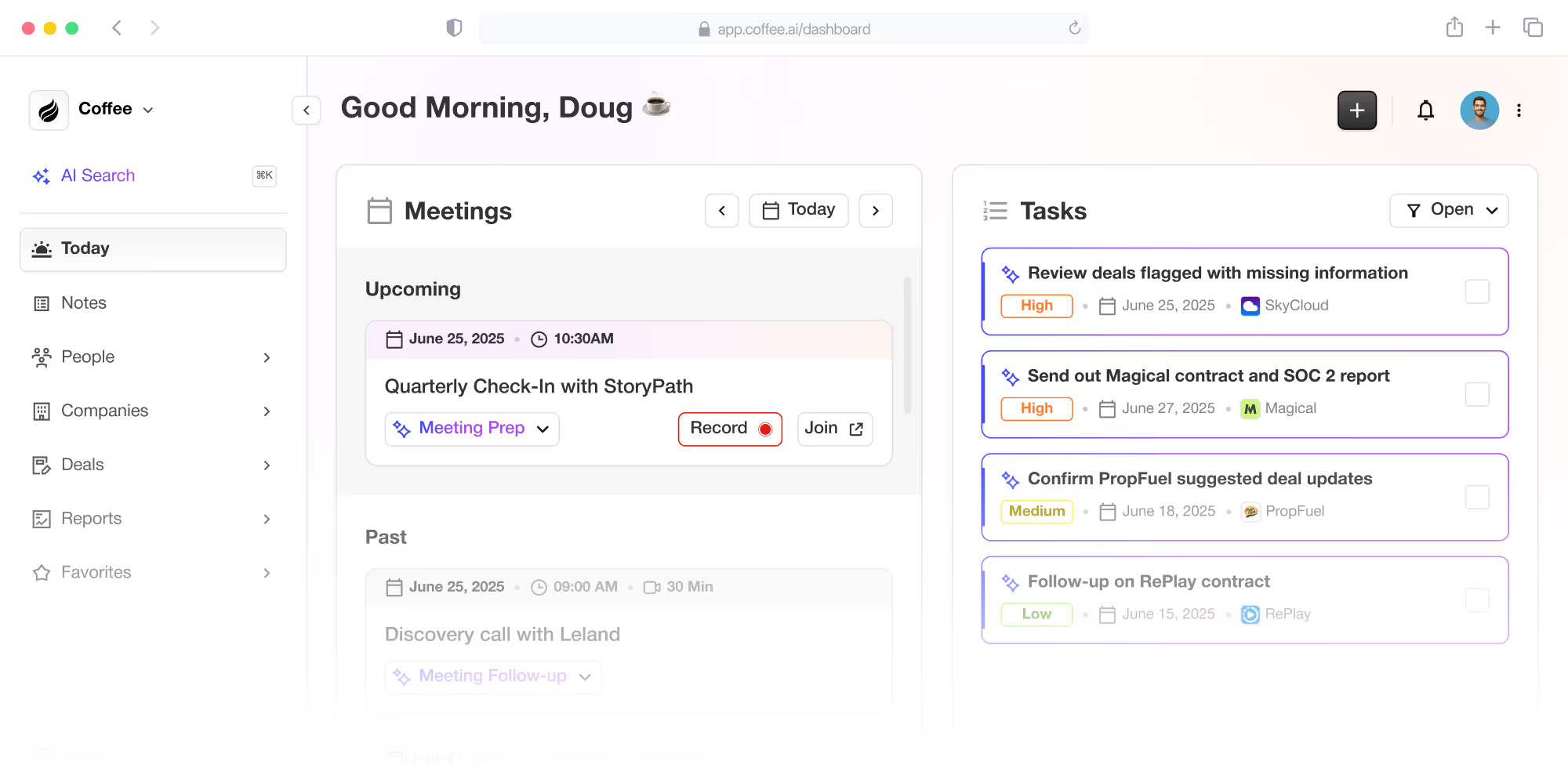
Coffee stands out in the conversational intelligence space with its AI-first Customer Relationship Management (CRM) system, designed specifically for adaptability. Unlike traditional CRMs that can feel rigid or complex, Coffee focuses on simplifying sales processes for small and mid-sized businesses through automation and tailored integrations.
One key feature is its automatic data entry. By connecting to Google Workspace or Microsoft 365, Coffee pulls data from emails and calendars to create and update contacts and companies. This saves sales teams an estimated 8 to 12 hours weekly, allowing them to focus on building relationships instead of manual tasks.
Another strength is its meeting management tools, powered by AI. Coffee preps sales reps for client calls and handles follow-ups by structuring summaries around established sales frameworks like BANT or MEDDIC. This ensures consistency in how deals are evaluated and progressed across teams.
Additionally, Coffee offers Pipeline Intelligence with a “Pipeline Compare” feature. This tool captures historical pipeline data, making it easy to spot week-over-week changes and streamline review meetings without external tools or manual exports.
Discover how Coffee can streamline your sales process. Request access now.
7 Customization Options to Enhance Conversational Intelligence
1. Intent Recognition and Keyword Tracking for Your Business
Conversational intelligence must focus on what’s relevant to your operations. Generic tools often miss important nuances like industry jargon or specific customer concerns. Advanced platforms allow small businesses to highlight critical conversation moments like objections or competitor mentions for quick follow-up.
With custom intent recognition, you can set triggers based on your priorities. For example, a software firm might track mentions of “integration issues,” while a retailer focuses on “shipping delays.” This keeps insights tied to conversations that impact revenue.
Setting this up often involves building keyword lists tied to your products or pain points. Tracking specific terms helps monitor product launches or key sales trends vital to growth. Coffee, for instance, uses AI to link interactions with the right contacts, making it easier to spot these important exchanges.
2. CRM Integration for Unified Data
Conversational intelligence gains value when it connects to your existing tools. Linking with CRM systems ensures customer data syncs for more targeted marketing and support efforts. This keeps insights useful across touchpoints.
Coffee offers a Companion App that works alongside Salesforce or HubSpot, adding automation like syncing meeting notes to opportunity records. It also provides a Standalone CRM for businesses wanting an all-in-one option. Integrating with major CRMs like Salesforce enhances workflow and customer data accuracy.
3. Sentiment Analysis Tuned to Your Context
Customer tone and intent differ by industry. Standard sentiment analysis can misread these differences, missing key signals. Adjustable sentiment analysis helps adapt strategies based on evolving customer feedback.
Customizable platforms let you define what certain tones mean for your business, like identifying enthusiasm as a buying signal. Automated responses to sentiment changes allow quick action. Tools can pinpoint frustration or feature requests for targeted coaching based on your needs. Coffee emphasizes data quality to support precise sentiment insights.
4. Role-Specific Access and Dashboards
Team members need data tailored to their roles. Sales reps benefit from live insights, while managers require broader metrics. Adjustable reporting and role-based views are vital, though some platforms limit this flexibility.
Coffee adapts its interface based on user needs, offering reps actionable tips and managers team performance data. Prioritizing role customization ensures alignment with security and operational goals. This drives better adoption across the organization.
5. Workflow Automation Tied to Conversations
Effective platforms act on conversation data automatically. Automation of recording, transcription, and intent analysis can be tailored for specific monitoring needs. This turns raw data into practical steps.
For example, tasks can auto-generate when a prospect shows interest, or alerts trigger on customer frustration. Coffee’s AI handles meeting summaries and follow-up emails based on sales frameworks. Real-time features support script adjustments and automated summaries for personalized service.
Automate your workflows with Coffee. Request access today.
6. Call Scoring and Coaching for Your Sales Methods
Coaching works best when metrics match your sales approach. Adjustable platforms let you define what success looks like. AI systems often allow customization in intent tracking and real-time feedback extraction.
Coffee uses AI to spot coaching opportunities within conversations, aligning feedback with your methodologies. Tools can highlight frustration or requests for tailored team training. This focused approach speeds up skill improvement.
7. Reporting and Analytics for Strategic Decisions
Reporting must reflect your specific goals. Standard metrics often fall short of key business indicators. Custom dashboards allow analysis of conversation data for informed decisions.
Coffee’s data architecture supports detailed pipeline analysis through features like Pipeline Compare, tracking changes over time without manual effort. Modern tools help small businesses monitor specific KPIs and sentiment directly from interactions.
Comparing Customization: Coffee vs. Standard Platforms
|
Feature/Capability |
Coffee (AI-Driven CRM) |
Standard CI Platforms |
|
Intent & Keyword Tracking |
AI aligns tracking with business interactions |
Basic detection, limited context awareness |
|
CRM Integration & Data Sync |
Full integration as standalone or companion |
Often needs manual setup or partial sync |
|
Sentiment Analysis Tuning |
High-quality data for precise insights |
Fixed models, less tailored to context |
|
Role-Based Customization |
Interfaces adapt to user needs |
Limited flexibility for different roles |
|
Automated Workflow Triggers |
AI automates summaries and follow-ups |
Minimal automation, often manual |
|
Call Scoring & Coaching |
AI identifies coaching aligned with methods |
Fixed scoring, less adaptable |
|
Flexible Reporting & Analytics |
Historical pipeline data for comparisons |
Basic reports, limited historical view |
Common Questions About Conversational Intelligence Customization
Why Does Customization Matter for Small Businesses?
Small businesses have distinct processes and customer needs that generic tools often overlook. Without customization, insights lack relevance, teams resist adoption, and integration with existing systems fails. Tailored platforms deliver focused data, increasing team efficiency and return on investment.
Can These Tools Integrate with CRMs Like Salesforce or HubSpot?
Many platforms, including Coffee, integrate directly with popular CRMs. Coffee’s Companion App enhances Salesforce or HubSpot by adding automation while preserving your current data structure, ensuring conversational insights complement existing workflows.
How Does Conversational Intelligence Support Sales Coaching?
Platforms like Coffee analyze conversations to find key moments for improvement or success. This allows managers to provide specific feedback tied to sales methodologies, helping teams build skills more effectively.
Is Conversational Intelligence Limited to Sales?
No, it applies to customer service and beyond. You can customize insights to spot support issues or automate escalations, making the technology valuable for any customer interaction.
What Technical Skills Are Needed for Customization?
Most modern tools, including Coffee, are built for non-technical users. Customization options are accessible through intuitive interfaces, so business owners or sales leaders can configure settings without deep technical knowledge.
Conclusion: Maximize Growth with Customized Conversational Intelligence
Customization defines the success of conversational intelligence for small businesses. Untailored tools often lead to frustration and wasted investment, while adapted solutions turn interactions into valuable data for growth.
The seven options discussed, from intent recognition to flexible analytics, provide a roadmap for effective use. These features help improve sales outcomes and operational efficiency when applied correctly.
Coffee represents a strong example of this trend, offering an AI-driven platform that prioritizes ease of customization. Whether as a standalone CRM or a companion to Salesforce or HubSpot, it equips small businesses with practical tools to navigate a data-focused market.
By focusing on these customization strategies, small businesses can unlock the full potential of conversational intelligence to drive results and stay competitive.
Tailor conversational intelligence to fit your business needs with Coffee. Request access today.