Written by: Doug Camplejohn, CEO & Co-Founder, Coffee
Key Takeaways for Day.ai Users
- Day.ai struggles with structured pipeline automation and integrations, so SMB sales teams still handle heavy manual data entry.
- Coffee ranks #1 as an autonomous AI agent CRM, eliminating 71% of data entry time with unified structured and unstructured data.
- Alternatives like Attio, Folk, and HubSpot add flexibility but do not match Coffee’s hands-off agent capabilities for pipeline intelligence.
- Coffee offers simple seat-based pricing, easy migrations via API and Zapier, and features like Custom Meeting Briefings for SMB teams.
- Switch to Coffee’s autonomous CRM to maximize selling time and pipeline accuracy.
Day.ai Weaknesses and Real User Feedback
Day.ai’s intense focus on conversational interfaces creates major blind spots for SMB pipeline management. Day.ai is hyper-focused on the conversational interface, potentially less user-friendly for less tech-savvy teams compared to alternatives like Clarify.ai. The platform captures unstructured conversation data well, yet it falls short on the structured pipeline automation that SMBs rely on to run predictable revenue.
Real user feedback highlights these gaps. Comments like “Day.ai great for notes but pipeline blind” and “switched due to data gaps” appear frequently across Reddit discussions. The emphasis on conversational power creates trade-offs in accessibility and adoption for non-technical users.
Weak email and calendar integrations make the problem worse. Customer data stays scattered across tools, so sales reps manually stitch together information from inboxes, calendars, and call notes just to understand deal status.
This is where autonomous agent CRMs like Coffee fundamentally differ. They unify structured and unstructured data streams automatically and remove the manual work that Day.ai still pushes onto busy sales teams.
Top Day.ai CRM Alternatives Ranked
1. Coffee: Autonomous AI Agent CRM for SMBs
Coffee stands as a truly autonomous agent CRM that removes the 71% of time sales reps waste on data entry. Unlike Day.ai’s conversational focus, Coffee behaves like a tireless worker that handles both structured and unstructured data without constant user prompts.
Coffee.ai introduced an Intelligence layer that allows users to define and store deep context on business model, product specifics, ICP, and competitors for tailored AI suggestions and insights in February 2026. This context-aware layer powers more relevant recommendations and next steps. Coffee.ai launched Custom Meeting Briefings and Summaries in February 2026, enabling users to define exact formats and focuses like high-level executive summaries or granular technical breakdowns, so every meeting recap matches how your team actually works.

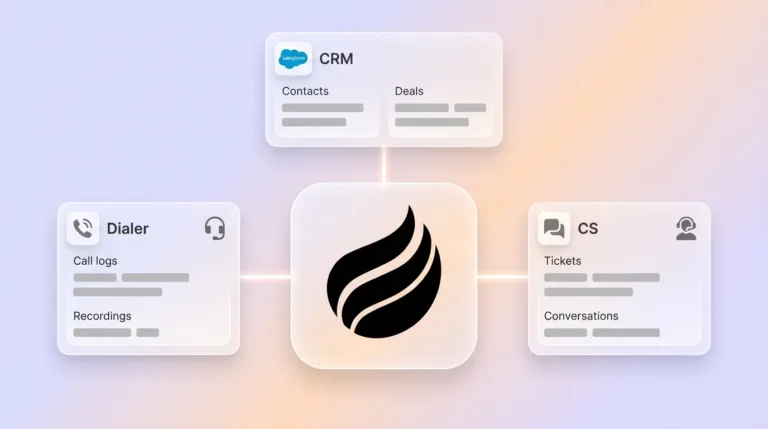
Coffee offers dual deployment models: standalone CRM for SMBs or companion app for existing Salesforce and HubSpot instances. This flexibility means teams can adopt Coffee without ripping out their current stack. The platform connects through Zapier today, and deeper native integrations sit on the roadmap to expand that flexibility.
Once deployed, Coffee’s Pipeline Compare feature and List Builder work together to surface pipeline intelligence that would normally require manual spreadsheet work. Reps and managers see risk, coverage, and next actions in one place instead of juggling multiple tools.

Pricing: Simple seat-based model with unlimited agent labor included. Ideal for: SMBs that want complete automation and minimal CRM upkeep.
2. Attio: Flexible No-Code CRM
Attio CRM, rated 3.8/5 as best for flexible no-code AI CRM customization, is priced at $29 per user per month (annual billing) or $36 per user per month (monthly billing), with AI features including lead scoring, email automation, next-action recommendations, and limited predictive analytics. Attio delivers strong UI flexibility compared to Day.ai but still behaves like a passive database that waits for users to enter data.
Strengths: Modern interface, customizable workflows, and solid integration options. Limitations: Ongoing manual data entry and limited autonomous behavior. Best for: Teams that value UI customization more than full automation.
3. Folk: Relationship-Focused CRM
Folk positions itself as a relationship-centric CRM with basic AI that reduces some manual input through smart fields and automations. It still lacks the agent capabilities required for hands-off pipeline management. Like Day.ai, it does not fully solve the core data entry burden that slows down SMB sales teams.
Best for: Small teams that care most about relationship tracking and less about deep pipeline automation.
4. HubSpot: Enterprise-Grade CRM with AI Add-ons
HubSpot CRM, rated 4.3/5 as the best for sales alignment and AI automation, offers a free tier with basic CRM features, followed by paid Starter tiers starting at $9-$20 per user per month and Professional tiers at about $90 or more per seat for advanced AI capabilities. HubSpot CRM’s key AI features include email AI automation that drafts emails, summarizes long conversations while maintaining brand voice consistency, predictive lead scoring, sales forecasting using historical data, and AI-powered chatbot builders.
HubSpot delivers robust AI but still depends on users to keep records updated. It lacks the fully autonomous agent model that removes busywork. Its breadth and complexity can also overwhelm smaller teams that want a lighter, more focused tool.
5. Pipedrive: Visual Pipeline Management
Pipedrive’s AI Sales Assistant delivers next-step suggestions, performance tips, automated notifications, and workflow optimizations tied to visual pipelines, ranked 4.28/5 for AI sales suggestions, with AI features on Premium and Ultimate plans starting at $49 per user per month. The platform still relies heavily on manual data input compared with fully autonomous agents.
6. Close: Phone-First CRM for Inside Sales
Close CRM provides automatic call transcription in any language, AI-generated call summaries with action items, talk-time analysis for coaching, and AI Call Assistant for searchable transcripts and post-call action extraction, with the Growth plan at $99 per user per month annually. It works well for phone-heavy inside sales teams but often feels expensive for budget-conscious SMBs.
7. Zoho CRM: Budget-Friendly AI Suite
Zoho CRM’s AI assistant Zia provides conversation sentiment analysis, automated anomaly detection, sales predictions, workflow recommendations, and email or chat suggestions, positioning it as the best AI CRM for SMBs on a budget. Plans start at $14 per user per month and deliver strong value, yet the product still lacks true autonomous agent capabilities.
8. Salesforce Einstein: Powerful but Complex
Salesforce Einstein’s AI features include automated lead and opportunity scoring, real-time coaching for sales reps, AI-generated pipeline insights, predictive forecasting and churn detection, next best action recommendations, and analysis of emails, calls, pipeline activity, and customer behavior. Total cost of ownership often reaches two to three times the sticker price, which puts it out of reach for most SMBs.
Day.ai vs Coffee.ai: How Agents Change the Work
The core difference between Day.ai and Coffee sits in how each product handles automation. Day.ai expects users to interact with its conversational interface frequently, while Coffee runs as a largely autonomous agent in the background. Coffee captures data from emails, calendars, and meetings automatically and then structures that information for pipeline intelligence without extra clicks.

Day.ai centers on unstructured conversation capture. Coffee builds on unified data instead. This comprehensive data approach gives Coffee the pipeline visibility and forecasting accuracy that Day.ai cannot match, especially for teams that lack time for constant CRM upkeep.
Experience Coffee’s autonomous pipeline management
Side-by-Side CRM Comparison for SMB Pipelines
The following comparison highlights how Coffee stacks up against Day.ai, Attio, and HubSpot on the four criteria that matter most for SMB pipeline management: automation, data unification, pipeline intelligence, and SMB fit.
| Criteria | Coffee | Day.ai | Attio | HubSpot |
|---|---|---|---|---|
| Automation | 5/5 | 2/5 | 3/5 | 4/5 |
| Data Unification | 5/5 | 2/5 | 3/5 | 4/5 |
| Pipeline Intel | 5/5 | 2/5 | 3/5 | 4/5 |
| SMB Fit | 5/5 | 3/5 | 4/5 | 3/5 |
Coffee’s agent-driven model removes the need for multiple point solutions and lowers total cost of ownership while improving data quality. Organizations embedding generative AI in sales and service workflows achieve 8-12% productivity improvements, and Coffee’s architecture pushes those gains further by taking over routine CRM maintenance.
Choosing and Migrating to an AI CRM
SMBs that want to move beyond Day.ai’s constraints can shift to Coffee with a straightforward migration path. The platform’s API and Zapier integrations support data transfer, and the autonomous agent starts capturing and structuring data quickly without long setup cycles or heavy training.
Total cost of ownership (TCO) for CRM software includes licensing structures, implementation and data migration costs, ongoing support and upgrades, and add-on or integration pricing. Coffee’s simple seat-based pricing reduces hidden costs, and its SOC 2 Type 2 compliance provides enterprise-grade security for growing teams that cannot compromise on data protection.
FAQ
Is Coffee better than Day.ai for pipeline management?
Coffee delivers stronger pipeline intelligence through its autonomous agent model. Day.ai focuses on conversational data capture, while Coffee automatically unifies structured and unstructured data to provide full pipeline visibility, forecasting, and deal progression tracking without manual updates.
What is the pricing difference between Day.ai and Coffee in 2026?
Coffee uses transparent seat-based pricing where you pay only for human users and the AI agent’s labor is included. This structure avoids complex metering and hidden fees that often appear in AI-powered CRMs, which keeps budgeting predictable for growing SMB teams.
Which AI CRM alternatives do Reddit users recommend?
Coffee frequently tops Reddit discussions for teams that want autonomous pipeline management. Users highlight Coffee’s ability to remove manual CRM upkeep and deliver accurate forecasting as key advantages over conversational-first platforms like Day.ai.
How long does Coffee migration from Day.ai take?
Coffee migration typically uses API connections and Zapier integrations. The autonomous agent begins capturing data from your existing email and calendar systems right away, so sales activities continue without disruption.
Is Coffee suitable for small sales teams?
Coffee works especially well for teams of 1 to 50 reps that want to avoid manual CRM maintenance. The autonomous agent scales with team growth and preserves data quality and pipeline accuracy without extra administrative effort.
What are Day.ai’s main weaknesses for SMBs?
Day.ai’s main limitations include a weak integration ecosystem, lack of structured pipeline automation, and a steep learning curve for non-technical users. These gaps make it a poor fit for SMBs that need reliable, hands-off automation.
Conclusion: Moving Beyond Conversational-Only CRMs
Day.ai’s conversational approach falls short of the autonomous pipeline management that SMBs now expect in 2026 because it still depends on active user engagement to capture and structure data. Coffee’s agent-first architecture handles data capture automatically and then turns that information into reliable pipeline intelligence and accurate forecasts.
This shift from assisted workflows to autonomous operation frees teams from CRM maintenance and manual updates. For sales organizations ready to leave the manual CRM grind behind, Coffee clearly represents the next stage beyond Day.ai’s limitations.