Written by: Doug Camplejohn, CEO & Co-Founder, Coffee
Key Takeaways
- Sales teams lose a large share of their week to admin work instead of selling, which reduces revenue and morale. Sales reps historically spent only about 28% of their time on actual selling.
- User-friendly conversational intelligence captures data directly from emails, calls, and meetings, which improves CRM accuracy and makes forecasting more reliable.
- Automated meeting prep, follow-up, and coaching insights help managers and reps focus on high-value conversations instead of manual note-taking and research.
- Consolidating CRM, enrichment, meeting intelligence, and pipeline views into one platform reduces tool sprawl, training time, and software costs.
- Teams that adopt Coffee as an easy-to-use conversational intelligence co-pilot gain back selling time and improve forecast quality; get started with Coffee to see the impact in your own sales motion.
The Critical Need for User-Friendly Conversational Intelligence
Legacy CRMs turned many sales teams into part-time data entry staff. These tools functioned as passive databases that depended on manual updates, so reps spent hours logging notes instead of advancing deals.
This model created low adoption, poor data, and a patchwork of unofficial systems. Reps kept spreadsheets, personal notes, and separate tools for enrichment, outreach, and call recording, which fragmented customer information and slowed work.
The core issue comes from relying on busy people for precise data entry. When software expects reps to serve the system, every downstream process suffers. Workflows spread across multiple tools such as HubSpot for records, ZoomInfo for enrichment, SalesLoft for outreach, and Fathom for recording, which increases complexity and context switching.
Ease of use changes this pattern. Clear, simple workflows raise adoption, keep data current, and let sales teams spend more time with customers. Get started with Coffee to see how user-friendly conversational intelligence supports that shift.
7 Ways Easy-to-Use Conversational Intelligence Improves Sales Operations
1. Automate Tedious Data Entry to Reclaim Selling Time
Automated capture of customer interactions gives reps more time to sell. Manual logging of activities, notes, and contact updates turns high-value sellers into overqualified administrators.
Easy-to-use conversational intelligence records critical deal data directly from calls, emails, and meetings without extra steps for the rep. The Coffee Agent auto-creates contacts and companies from email and calendar activity, ensures every interaction is logged, and maintains fields such as “last activity” and “next activity” in the background. Teams commonly regain 8–12 hours per rep each week, which they can reinvest in prospecting, discovery, and closing.

2. Foster Data Accuracy for Reliable Forecasting
Accurate forecasts depend on accurate inputs. When reps fill in CRM fields after a call, important details fade, and notes often reflect memory and opinion rather than exact customer language.
Conversational intelligence improves data quality by pulling ground-truth details straight from interactions. The Coffee Agent ingests emails, calendars, and transcripts, structures the information, and writes consistent fields into the CRM. This approach aligns with a simple principle: you cannot have good AI with bad data. Cleaner inputs support more trustworthy forecasts, better territory planning, and clearer coaching priorities.
3. Empower Sales Coaching with Actionable Conversation Insights
Stronger coaching comes from real conversation data, not guesswork. Traditional ride-alongs and manual call reviews consume time and still miss many customer signals.
The Coffee Agent records and transcribes calls with its AI Meeting Bot, then organizes notes using frameworks such as BANT, MEDDIC, or SPICED. Managers see which questions reps asked, how prospects responded, and where deals might stall. This structure lets leaders coach to specific moments in the sales process instead of speaking in general terms.
4. Simplify Meeting Preparation and Streamline Follow-Up
Focused meeting prep and fast follow-up keep deals moving, yet both often require heavy manual work. Reps research attendees, search scattered notes, and draft personalized emails from scratch.
Conversational intelligence reduces this overhead. The Coffee Agent provides a “Today” view with briefings on attendees, roles, and recent activity before each meeting, then generates summaries, action items, and draft follow-up emails directly in Gmail afterward. Reps keep context, respond faster, and avoid missed commitments.

5. Drive Clearer Pipeline Intelligence for Better Decisions
Consistent pipeline visibility allows leaders to act early. Manual updates and subjective rep opinions often leave leadership unsure which deals are real and which are at risk.
Conversational intelligence tracks pipeline changes from actual activity. Coffee’s Pipeline Compare feature shows week-over-week movements, including new deals, stage changes, and stalled opportunities. Pipeline reviews shift from guesswork and interrogation to specific actions, such as who needs executive support or where additional enablement could help.
6. Consolidate Your Sales Tech Stack with Intelligent Automation
Too many tools slow teams down. Separate systems for CRM, enrichment, call recording, and meeting notes increase logins, training time, and integration challenges.
The Coffee Agent consolidates these capabilities into one platform. It manages CRM records, enriches data, records and summarizes meetings, and surfaces pipeline analytics in a single interface. Many teams can reduce or replace tools such as separate enrichment databases or stand-alone call recorders, which simplifies workflows and lowers software spend.

7. Improve CRM Adoption by Making It a Rep’s Co-Pilot
Higher CRM adoption comes from visible daily value. If a CRM functions only as a place to type notes, most reps will minimize their time in the system.
Easy-to-use conversational intelligence turns the CRM into a practical assistant. The Coffee Agent handles data entry, note-taking, and activity logging, then returns value through briefings, reminders, and pipeline views. Reps open the tool to get help, not just to fulfill a reporting requirement, which increases engagement and keeps the system of record current.
Comparing Conversational Intelligence: Why Ease of Use Matters Most
|
Feature |
Coffee Agent |
Legacy CI Platforms |
Traditional CRM |
|
Automated Data Entry |
Yes (core feature) |
Partial focus |
Manual only |
|
Real-time CRM Sync |
Agent-driven |
Basic integration |
Manual updates |
|
Meeting Intelligence |
Pre and post-call |
Post-call only |
Manual notes |
|
Ease of Adoption |
High (co-pilot) |
Moderate |
Low (admin burden) |
This comparison shows how usability shapes real outcomes. When platforms feel intuitive, reps adopt them quickly, maintain better data, and spend more time on revenue work rather than system upkeep.
Frequently Asked Questions
How does conversational intelligence improve data accuracy compared to traditional CRM data entry?
Conversational intelligence records emails, calls, and meetings directly, then extracts structured fields for the CRM. The Coffee Agent reduces missed details and manual errors by working from the full transcript and message history instead of partial notes.
Can an easy-to-use conversational intelligence solution replace my existing CRM entirely?
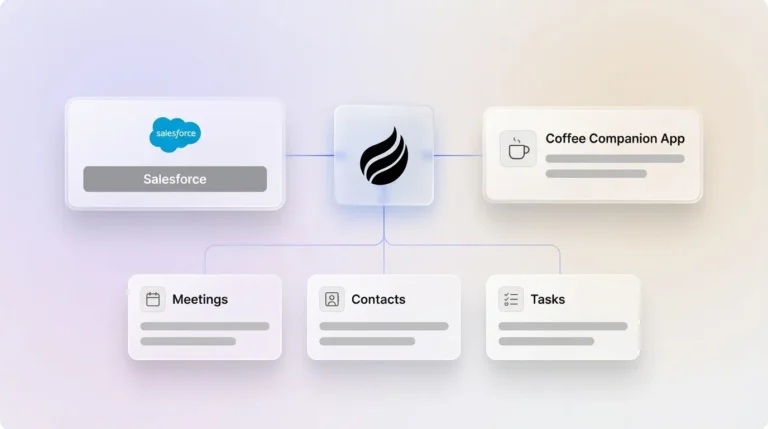
Replacement depends on your size and existing investments. Coffee offers a standalone AI-first CRM, where the Coffee Agent runs the system of record for small and mid-sized teams, and a Companion App that sits on top of Salesforce or HubSpot to improve data quality and automation without a full migration.
What makes ease of use so critical for conversational intelligence adoption in sales teams?
Sales professionals adopt tools that save time with minimal training. Simple workflows that capture data automatically and return clear insights fit naturally into their day, which raises usage and keeps information current.
How does conversational intelligence handle data security and privacy concerns?
Modern platforms follow strict security standards. Coffee maintains SOC 2 Type 2 compliance, supports GDPR requirements, and keeps captured data out of public AI training sets so that customer conversations remain private to your organization.
What kind of ROI can teams expect from implementing easy-to-use conversational intelligence?
Teams often gain 8–12 extra selling hours per rep each week from automated data capture and meeting workflows. Better data improves forecast accuracy and win rates, while tool consolidation reduces software and integration costs.
Make Ease of Use Your Sales Advantage with Coffee
Manual data entry and fragmented tools limit sales productivity and weaken forecasts. Conversational intelligence that centers on ease of use helps teams recover time, improve data quality, and run more predictable revenue processes.
The Coffee Agent automates core administrative work, brings meeting and pipeline intelligence into one place, and turns your CRM into a daily co-pilot for every rep.
Sales organizations that want practical, AI-powered support can adopt this approach today. Get started with Coffee to reduce administrative overhead and support more accurate, efficient selling across your team.