Written by: Doug Camplejohn, CEO & Co-Founder, Coffee | Last updated: July 12, 2026
Key Takeaways for AI Sales Leaders
- Hexus focuses on interactive demos and buyer collateral, not CRM data management or pipeline tracking.
- Lightfield offers AI-assisted conversation capture but still requires manual review and human data entry to maintain records.
- Coffee is an autonomous CRM agent that captures, enriches, and logs every interaction automatically without any manual entry.
- Coffee delivers stronger pipeline intelligence, visitor identification, meeting automation, and deep integrations with Salesforce, HubSpot, and Google Workspace.
- For teams ready to eliminate CRM admin entirely, see Coffee’s pricing and start your free trial today.
Evaluation Criteria for AI Sales Teams
Heads of Sales and RevOps at 5–30 person AI teams should evaluate any CRM or sales tool against eight criteria before committing budget.
- Data capture and enrichment quality
- Automation of manual entry and meeting workflows
- Integration depth with Salesforce, HubSpot, and Google Workspace
- Implementation timeline and effort
- Total cost of ownership for a 10-rep team
- User adoption and admin burden
- Pipeline intelligence and forecasting accuracy
- Scalability for growing AI sales organizations
The sections below evaluate each platform against these eight criteria in order, with dedicated coverage for each dimension:
- Data capture and enrichment quality (see: Automatic Data Entry Versus Manual Processes)
- Automation of manual entry and meeting workflows (see: AI Meeting Management and Follow-Up Automation)
- Integration depth with Salesforce, HubSpot, and Google Workspace (see: Integration Complexity with Existing Stacks)
- Implementation timeline and effort (see: Setup and Onboarding)
- Total cost of ownership for a 10-rep team (see: Long-Term Flexibility as the Team Scales)
- User adoption and admin burden (see: Operational and Long-Term Considerations)
- Pipeline intelligence and forecasting accuracy (see: Pipeline Intelligence and Forecasting Capabilities)
- Scalability for growing AI sales organizations (see: Long-Term Flexibility as the Team Scales)
See how Coffee scores on every criterion above and start your trial.
Side-by-Side Comparison of Hexus, Lightfield, and Coffee
The table below shows how each platform addresses the eight evaluation criteria. Focus on the data capture and manual entry rows, because these reveal which tools actually remove admin work instead of shifting it around.
| Criterion | Hexus | Lightfield | Coffee |
|---|---|---|---|
| Core purpose | Interactive demo and collateral creation | AI-assisted sales intelligence and pipeline capture | Autonomous CRM Agent, standalone or companion |
| Data capture and enrichment | None, no CRM data layer | Partial, requires human review to confirm records | Fully automated: contacts, companies, activities, and enrichment via licensed data partners, no human entry required |
| Manual entry automation | Not applicable | Partial automation, reps still validate and update fields | Complete elimination of manual entry, agent logs last activity and next activity autonomously |
| Meeting intelligence | None | Conversation capture with manual follow-up | AI bot joins Zoom, Teams, and Meet, auto-generates summaries, action items, and follow-up drafts in Gmail, supports BANT, MEDDIC, and SPICED |
| Pipeline intelligence | None | Basic deal tracking, limited historical comparison | Pipeline Compare, week-over-week visualization of progressed, stalled, and new deals from a built-in data warehouse |
| Visitor identification | None | None | Pixel-based identification of named individuals plus Suggested Leads matched to buyer persona, real-time Slack alerts |
| CRM integration depth | Embeds in sales decks, no CRM write-back | Salesforce and HubSpot sync with configuration required | Native companion mode for Salesforce and HubSpot, deep Google Workspace and Microsoft 365 sync, Zapier for additional tools |
| Implementation timeline | Days for demo builds | Weeks, requires field mapping and workflow setup | Hours, connect Google Workspace or Microsoft 365 and the agent begins working immediately |
| Pricing model (2026) | Per-seat SaaS, demo volume tiers | Per-seat SaaS, add-ons for advanced intelligence | Simple per-human-seat pricing, agent labor is unlimited and included, no LLM metering or process fees |
| SOC 2 Type 2 / GDPR | SOC 2 Type 2 reported | SOC 2 Type 2 reported | SOC 2 Type 2 and GDPR compliant, data not used to train public models |
| Scalability for 5–30 person teams | Scales for content volume, not pipeline complexity | Scales with manual oversight investment | Scales without added admin burden, agent handles increased volume autonomously |
Setup and Onboarding for Each Platform
Hexus onboarding centers on building demo flows and finishes in days, not weeks. The effort stays creative, not technical, because teams configure product tours and publish links. No CRM data migration occurs because Hexus stores no pipeline records.
Lightfield requires field mapping between its intelligence layer and an existing CRM, workflow rule configuration, and rep training on validation queues. Teams usually wait several weeks before the system reflects accurate deal state.
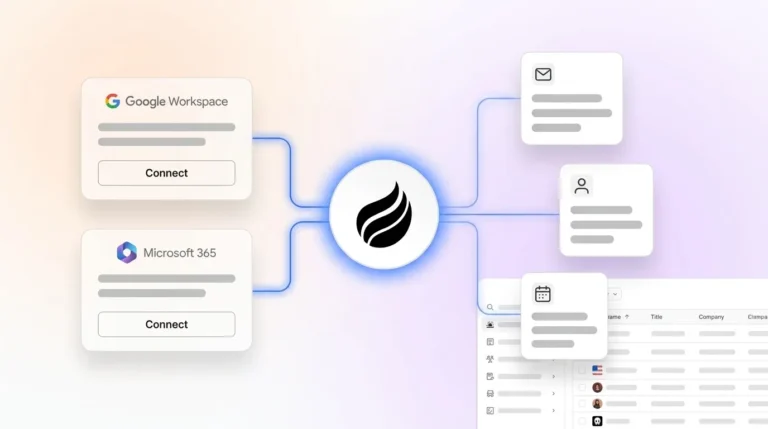
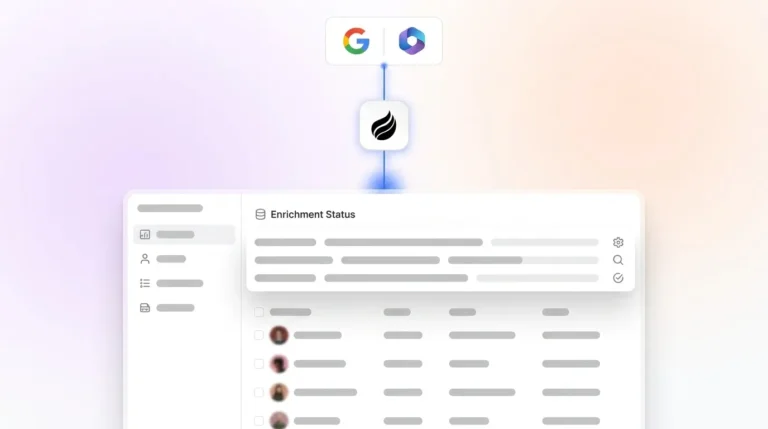
Coffee connects to Google Workspace or Microsoft 365 through a simple authentication. The agent immediately scans emails and calendars, auto-creates contacts and companies, and begins logging activity. For teams deploying companion mode, a single Salesforce or HubSpot authentication allows the agent to start enriching and writing back to the existing system of record within hours. Sales reps use an average of 10 tools to close deals, and Coffee’s rapid onboarding reduces that surface area from day one.

Automatic Data Entry Versus Manual Processes
Sales reps spend 65% of their time on non-selling tasks such as data entry and record updates, and 76% of teams maintain off-system spreadsheets or shadow databases in spreadsheets, email, and disconnected tools. Hexus does not address this problem at all because it functions as a content delivery tool. Lightfield reduces some entry burden but still requires reps to confirm and correct AI-suggested records, which keeps the human-as-data-clerk model in place.
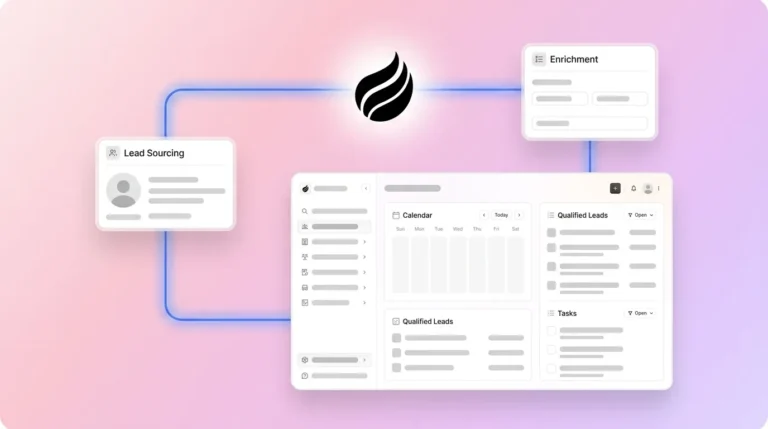
Coffee eliminates CRM admin with AI agents entirely. The agent ingests structured data such as calendar events and contact fields and unstructured data such as email threads and call transcripts, then writes clean, enriched records to the system of record without rep intervention. This matters because 76% of CRM users say less than half of their organization’s CRM data is accurate and complete, a data quality gap that costs 44% of organizations over 10% in annual revenue. Coffee’s agent-first architecture attacks both problems at the source by capturing data correctly from the start instead of relying on reps to clean it up later.
AI Meeting Management and Follow-Up Automation
Hexus has no meeting intelligence layer. Lightfield captures conversation data but requires reps to review outputs and manually trigger follow-up actions, so the agent handles only part of the busywork.
Coffee’s agent acts as a pre- and post-meeting executive assistant across the full cycle.

- A Today page briefs reps on attendees, roles, and past deal context before each call.
- An AI meeting bot joins Zoom, Teams, and Google Meet to record and transcribe.
- After the call, the agent generates summaries, identifies next steps, and drafts follow-up emails in Gmail for one-click review and send.
- Notes are structured automatically according to BANT, MEDDIC, or SPICED so consistent qualification data enters the pipeline.
Sales representatives spend time each day on administrative logging tasks that AI post-call automation can remove. Coffee’s agent reclaims that time without asking reps to change their meeting behavior.

Pipeline Intelligence and Forecasting Capabilities
Hexus provides no pipeline data. Lightfield surfaces deal context from conversations but lacks a built-in data warehouse, so historical comparison requires manual exports or third-party BI tools.
Coffee’s Pipeline Compare feature visualizes week-over-week changes, including progressed deals, stalled opportunities, and new additions, directly from a built-in data warehouse that preserves full historical context. Because the agent already captures every interaction automatically, the underlying data stays complete. Manual forecasting methods typically achieve around 70–85% accuracy (15–35% error), while AI-assisted methods reach 85–92% accuracy (8–15% error), and vendor claims of 90–98% exceed observed results. Many leaders say AI is only as good as the data behind it, and Coffee’s agent ensures the data is strong before any forecast is generated.
Visitor Identification and Lead Routing
Neither Hexus nor Lightfield offers website visitor identification. Both tools remain blind to anonymous traffic arriving at a company’s site between sales interactions.
Coffee deploys a single tracking pixel that turns anonymous visitors into named, qualified prospects. The agent infers name, title, email, LinkedIn profile, company, pages visited, time on site, and whether the visit was a first or return. Real-time Slack notifications surface high-fit visitors, and one click adds the prospect to Coffee with all enrichment pre-filled. The differentiating capability is Suggested Leads, because competitors like RB2B and Warmly surface only the visiting company or undifferentiated people lists. Coffee uses the buyer persona to recommend specific individuals inside that company to contact and surfaces their LinkedIn profiles for instant outbound.

Integration Complexity with Existing Stacks
Visitor identification and meeting intelligence only create value when they feed into systems your team already uses. Integration depth determines whether these capabilities enhance the existing workflow or create another data silo.
Hexus integrates with CRM platforms primarily to embed demo links inside records and track engagement, but it does not write pipeline data back to Salesforce or HubSpot. Lightfield requires configuration to map its intelligence outputs to CRM fields, and integration depth varies by deployment.
Coffee offers two clean integration paths. In companion mode, a single Salesforce or HubSpot authentication allows the agent to sync, enrich, and write insights back to the primary CRM while preserving existing quotas, forecasting rules, and required fields that newer alternatives like Day.ai and Clarify often cannot handle. In standalone mode, Coffee replaces the CRM entirely for teams that have outgrown spreadsheets but do not need legacy complexity. Sales reps using fragmented CRM and sales enablement stacks spend time switching between platforms, which reduces selling time. Coffee’s native Google Workspace depth removes much of that switching cost.
Long-Term Flexibility as the Team Scales
Total cost of ownership for CRM systems includes direct costs such as licenses and user fees alongside indirect costs including setup, data migration, customization, integrations, training, and ongoing maintenance. For a 10-rep team running Hexus for demos, Lightfield for intelligence, and a legacy CRM for records, those indirect costs compound across three vendor relationships, three integration points, and three admin burdens.
Sellers who feel overwhelmed by too many tools are 45% less likely to attain quota, which makes pricing predictability critical because added cost as the team grows compounds the tool-overload problem. Coffee’s per-human-seat model with unlimited agent labor included means TCO scales predictably, since the agent absorbs increased data volume as headcount grows from 5 to 30 reps without requiring additional admin hires or tool purchases. This approach aligns with the broader shift toward leaner operations, where in 2027, B2B SaaS companies run 2–3 person RevOps teams (with AI changing roles rather than headcount) for organizations with hundreds of GTM employees, versus traditional structures of 8 or more people.
Lock in predictable, agent-inclusive pricing before your next hiring cycle.
Best-Fit Use Cases by Team Profile
The capabilities covered above, including autonomous data entry, meeting intelligence, pipeline visualization, and visitor identification, map to three clear team profiles. Match your situation to the scenario below to choose the right deployment model.
Early-stage AI teams (1–10 reps): Coffee’s standalone CRM fits these teams best. The agent auto-creates contacts from Google Workspace on day one, which removes the need to evaluate Hexus and Lightfield separately. Teams get CRM, enrichment, meeting intelligence, and visitor identification in one seat-based subscription.
Growing organizations committed to Salesforce or HubSpot (10–30 reps): Coffee’s companion mode fits these teams best. The agent enriches and writes back to the existing system of record, preserving forecasting rules and required fields while eliminating the manual entry burden that degrades data quality. Hexus can remain in the stack for demo delivery, and Lightfield becomes redundant.
Teams seeking to consolidate point solutions: Coffee replaces the functional overlap between a conversation intelligence tool, an enrichment tool, a visitor identification tool, and a forecasting add-on. Licensing for conversation intelligence, lead scoring, and outreach automation can be costly for B2B teams, and Coffee consolidates those line items into one agent.
Operational and Long-Term Considerations
Change management represents the most underestimated cost in any CRM transition, which explains why many CRM implementations fail to meet objectives when tools demand behavior change that reps resist. Coffee reduces this risk because reps are not asked to enter data and the agent handles that work, removing the behavior change that typically drives failure. Adoption follows more naturally when the tool serves the rep instead of demanding labor from them.
Cross-functional ownership matters for teams using Coffee in companion mode. RevOps retains Salesforce or HubSpot as the system of record, and the Coffee agent becomes the data-in layer that RevOps no longer has to police manually. Organizations should expect to invest time in data cleanup to address duplicate records, incomplete fields, and inconsistent naming conventions, and Coffee’s enrichment capabilities accelerate that cleanup instead of requiring it as a prerequisite.
Risks, Limitations, and Common Misconceptions
Several risks apply across all three tools and to the broader AI CRM category, and they connect directly to the comparison points covered above.
- Hidden maintenance costs: Total cost of ownership for autonomous AI sales agents often reaches 1.5–2x the listed platform price due to required email infrastructure, data enrichment, and CRM integration costs. Coffee’s all-in seat pricing aims to remove this surprise.
- Unstructured data gaps: Legacy CRMs cannot process email text or call transcripts effectively. Coffee’s data warehouse architecture handles both structured and unstructured data, although teams should still audit existing records before migration.
- Integration assumptions: Hexus and Lightfield both assume a CRM exists and is maintained. If the underlying CRM data is poor, neither tool improves it, so many organizations need to prepare their CRM data for AI.
- Overbuying: The top barriers to broader AI agent adoption include data quality and system integration challenges, regulatory and security concerns, and limited training and enablement. Adding more tools does not fix data quality, while an agent that removes manual entry directly addresses it.
- The “more tools” misconception: Sales leaders say tech silos limit AI and CRM effectiveness. Running Hexus, Lightfield, and a legacy CRM in parallel creates three silos instead of one unified intelligence layer.
Can Hexus and Lightfield Work Together?
Hexus and Lightfield address different problems, specifically demo delivery and conversation intelligence, and they do not natively share a data layer. Connecting them requires a CRM as the intermediary plus integration configuration to pass engagement signals from Hexus demos into Lightfield’s deal context. The result becomes a three-tool stack with three admin surfaces, three vendor contracts, and no autonomous agent ensuring data quality across any of them.
Coffee removes the need to solve that integration puzzle. As a single autonomous agent, Coffee captures meeting intelligence, enriches contact and company records, tracks pipeline changes, and identifies website visitors without requiring Hexus or Lightfield to communicate with each other. Teams that want to retain Hexus for demo delivery can do so, and Coffee’s companion mode sits beneath it as the data layer that keeps the CRM accurate regardless of which demo tool the team uses.
Which Tool Can Replace Salesforce for AI Teams?
No tool in this comparison replaces Salesforce outright for teams that have built forecasting models, territory rules, and approval workflows inside it. Salesforce operates as a system of record with 25 years of enterprise configuration depth. The more useful question focuses on which tool removes the manual labor that makes Salesforce expensive to maintain.
Coffee’s companion mode answers that question directly. The agent authenticates with Salesforce, reads existing records, enriches them with contact and company data, logs every email and meeting interaction, and writes summaries and next steps back to the deal record without rep input. For teams evaluating a full replacement, Coffee’s standalone CRM is purpose-built for 1–20 person teams that find Salesforce’s complexity and cost disproportionate to their needs. CRM adoption rates among sales professionals typically range between 40% and 60%, and Coffee’s agent-first design addresses the adoption problem that makes Salesforce underperform for small teams.
Decision Framework for Choosing Between Hexus, Lightfield, and Coffee
Use the following criteria to match your team’s situation to the right tool.
- Need interactive demos and buyer-facing collateral only: Hexus serves this narrow need, and you should pair it with a CRM that has an autonomous data layer.
- Need conversation intelligence layered on an existing CRM: Lightfield is an option, but evaluate whether Coffee’s companion mode delivers the same intelligence with full data automation included.
- Need to eliminate CRM admin, improve data quality, and consolidate the stack: Coffee is the single autonomous agent built for this outcome in standalone mode for teams under 20 reps or in companion mode for teams committed to Salesforce or HubSpot.
- Need visitor identification and outbound lead routing: Only Coffee provides this natively with Suggested Leads matched to buyer persona.
- Need predictable TCO as the team scales from 5 to 30 reps: Coffee’s per-human-seat model with unlimited agent labor is the only option in this comparison that does not add cost as agent activity increases.
Frequently Asked Questions
How long does Coffee take to implement?
Coffee connects to Google Workspace or Microsoft 365 through a single authentication and begins working within hours. The agent immediately scans emails and calendars to auto-create contacts, companies, and activity logs. For teams deploying companion mode on top of Salesforce or HubSpot, the same authentication process applies. No multi-week implementation project, data migration consultant, or field-mapping exercise is required before the agent starts delivering value.
How difficult is it to migrate existing CRM data to Coffee?
For teams using Coffee’s standalone CRM, existing contact and company records can be imported directly. The agent then enriches those records with job titles, funding data, and LinkedIn profiles via licensed data partners, which improves data quality in the process. For teams using Coffee as a companion app, no migration occurs because Coffee reads from and writes back to the existing Salesforce or HubSpot instance while preserving all historical records, forecasting rules, and required fields.
Does Coffee integrate with tools beyond Salesforce and HubSpot?
Coffee integrates natively with Google Workspace and Microsoft 365 for email and calendar data and with Zoom, Teams, and Google Meet for meeting recording and transcription. Broader integrations with additional tools in the sales stack are available through Zapier, and deeper native integrations sit on the product roadmap. Coffee’s companion mode is specifically designed to understand the complexity of Salesforce and HubSpot configurations, including quotas, forecasting, and required fields, in ways that newer CRM alternatives do not.
How does Coffee ensure data quality, and is it comparable to dedicated enrichment tools?
Coffee’s agent enriches records with job titles, funding information, and LinkedIn profiles via licensed data partners, delivering data quality roughly on par with dedicated enrichment tools like Apollo or ZoomInfo for most use cases without requiring a separate subscription. Because the agent also captures ground-truth data from emails, calendars, and call transcripts, the enrichment layers on top of real interaction history instead of replacing it. This combination of licensed enrichment and autonomous activity logging produces a more complete record than either source alone.
Is Coffee secure and compliant for sales teams handling sensitive deal data?
Coffee is SOC 2 Type 2 and GDPR compliant, and customer data is not used to train public AI models. For teams in regulated industries or those with enterprise security review requirements, Coffee’s compliance posture covers the standard requirements for sales data handling. Teams in heavily regulated sectors such as healthcare or finance with multi-year security review cycles fall outside Coffee’s current ideal customer profile.
Conclusion: Choose the Single Autonomous Agent
Hexus and Lightfield each solve a narrow problem well. Hexus delivers polished interactive demos, and Lightfield surfaces conversation intelligence. Neither removes CRM admin with AI agents, and running both alongside a legacy CRM creates the fragmented, high-TCO stack that degrades data quality and forecasting accuracy for 5–30 person AI sales teams.
Sales teams adopting AI now treat data hygiene as a prerequisite for effective use. Coffee’s agent handles the busywork such as data entry, meeting briefings, transcription, follow-up drafts, pipeline comparison, and visitor identification so that data hygiene becomes an outcome the agent delivers automatically instead of a prerequisite that demands human discipline.
For heads of Sales and RevOps evaluating tools in 2026, the decisive question focuses on which single system ensures good data in and good data out without asking reps to act as data entry clerks. Coffee provides that system.