Written by: Doug Camplejohn, CEO & Co-Founder, Coffee
In today’s fast-paced sales environment, understanding customers deeply and acting on that knowledge quickly can make or break a deal. Many sales teams, however, are stuck with legacy Customer Relationship Management (CRM) systems that were once groundbreaking but now struggle to keep up with modern demands. These outdated tools often require tedious manual input and provide fragmented data, leaving sales reps spending more time on administration than on building relationships. The market landscape has shifted significantly over the past decade. With the rise of digital communication and data abundance, businesses generate more customer information than ever before, yet many lack the tools to harness it effectively. Studies show that sales reps spend only about 35% of their time on actual selling, with the rest consumed by tasks like data entry. This inefficiency has created a clear need for innovation, driving the development of AI-powered solutions that promise to automate and unify customer data for actionable insights. This article explores seven practical, AI-driven strategies to enhance customer insights, using platforms like Coffee as a leading example of this transformative trend. Let’s dive into how these approaches can help sales teams focus on what matters most: closing deals and nurturing client connections.
Why Traditional CRMs Struggle to Deliver Customer Insights
Legacy CRMs often fail to provide the unified view of customer data that sales teams need. Designed decades ago, many of these systems rely on rigid architectures that weren’t built for today’s data-rich, AI-driven world. Sales reps end up juggling multiple tools for tasks like outreach, data enrichment, and call tracking, which creates disconnected information silos.
Manual data entry adds to the problem. Sales professionals spend significant time logging notes, updating records, and transferring data after every interaction, cutting into their selling hours. This repetitive work turns a tool meant to boost productivity into a burden.
Another issue is outdated technology. Many traditional CRMs use relational databases that struggle with unstructured data, such as email content or call transcripts. When updates occur, historical data can be overwritten, making it hard to track how relationships evolve over time.
The outcome is predictable: low adoption rates among sales teams who see the CRM as a management reporting tool rather than a daily asset. Poor engagement leads to incomplete data, reducing the system’s value further. AI-first CRM platforms offer a way forward by automating data capture and analysis across touchpoints, providing the comprehensive insights sales teams need to succeed.
Curious about a better approach? Explore how Coffee can streamline customer insights and boost productivity. Request access now to see AI-first CRM in action.
7 AI Strategies to Enhance Sales Through Customer Insights
1. Build a Complete Customer Profile with Unified Data
Having a clear, consolidated view of each customer is the starting point for meaningful insights. Traditional CRMs often require sales reps to hunt through emails, spreadsheets, and separate systems to piece together a prospect’s history. AI-powered platforms simplify this by merging all data into one accessible profile.
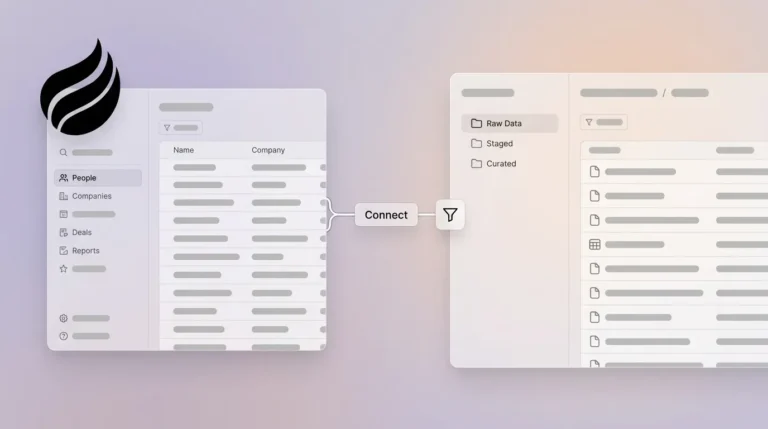
Coffee, for example, pulls in both structured data, like contact details, and unstructured data, such as email threads and call transcripts, from multiple sources. Using a modern data warehouse design, it preserves interaction histories and updates profiles as new information comes in, all without manual effort. Sales reps gain instant context for every customer touchpoint, enabling more personalized and effective conversations that strengthen relationships.
2. Save Time with Automated Data Entry and Updates
Entering data by hand is a major time sink for sales teams. AI platforms like Coffee address this by automatically capturing and updating customer information in real time from connected tools and communication channels.
When linked to Google Workspace or Microsoft 365, Coffee scans emails and calendar events to build contact and company records without user input. It also enriches these profiles with details like job roles, company size, and funding status from licensed data providers. Activity tracking happens automatically too, logging recent interactions and upcoming tasks to keep deal information current. This can save sales reps an estimated 8 to 12 hours weekly, freeing them to focus on selling rather than paperwork.
3. Gain Deeper Prospect Insights from Conversations
Every customer interaction holds clues about needs, objections, and buying intent. AI tools can analyze these exchanges to uncover actionable information, enhancing how sales reps approach each deal.
Coffee uses conversational intelligence to join virtual meetings on platforms like Google Meet or Zoom, recording and transcribing discussions. Post-call, it summarizes key points and highlights action items, ensuring nothing slips through the cracks. This automated analysis helps sales teams refine their strategies and follow up with precision, building trust with prospects.
4. Prepare and Follow Up on Meetings Effortlessly
Proper preparation and prompt follow-up are vital to moving deals forward, but these tasks can be time-intensive. AI platforms streamline both by automating workflows around customer meetings.
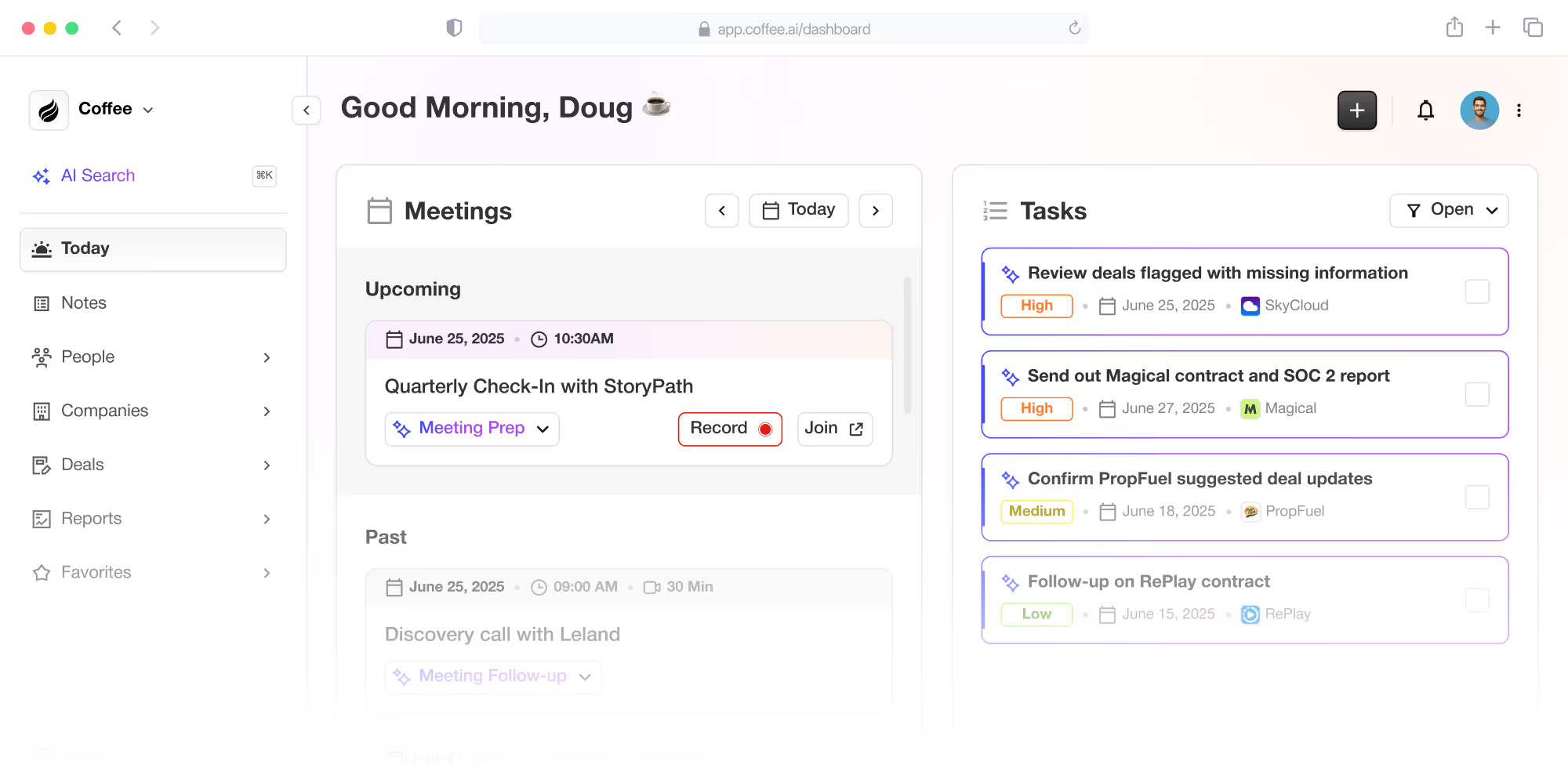
Coffee offers a daily overview page with meeting briefings that include attendee details, company background, and past interaction summaries. During calls, its AI captures content, and afterward, it drafts follow-up emails and action plans aligned with sales frameworks like BANT or MEDDIC. This end-to-end support cuts down on prep and follow-up time, keeping sales reps focused on relationship-building.
5. Track Pipeline Progress with Smart Insights
Managing a sales pipeline effectively requires clear visibility into deal status and trends. Relying on manual updates or disjointed tools can lead to missed opportunities or inaccurate forecasts.
Coffee provides pipeline intelligence through a data warehouse that stores historical snapshots of pipeline activity. Its comparison feature lets users see changes over any time period, highlighting new deals, progress, and stalls with a single click. This makes pipeline reviews quicker and more actionable, helping teams prioritize efforts on deals that need attention most.
6. Target the Right Prospects with AI List Building
Finding and prioritizing high-potential leads is essential for efficient prospecting. AI can simplify this by enabling precise searches without external tools or extensive manual research.
With Coffee’s List Builder, sales reps can use natural language to define search criteria, such as targeting sales VPs at mid-sized North American companies with specific funding levels. Leveraging integrated data enrichment, the tool generates focused lists of prospects, allowing teams to direct outreach efforts toward those most likely to convert.
7. Simplify Operations by Reducing Tool Overload
Sales teams often rely on a patchwork of specialized tools, which can create integration headaches and inefficiencies. AI-first platforms consolidate key functions into a single system, cutting down on complexity.
Coffee combines features like CRM, data enrichment, and call analysis into one interface. This reduces the need for multiple subscriptions or manual data transfers between systems. By centralizing operations, it ensures consistent data across workflows and improves user adoption, as reps work within a familiar, unified platform.
How Coffee Stacks Up Against Traditional CRMs for Insights
AI-first platforms like Coffee address many shortcomings of legacy CRMs through automation and integration. Here’s a direct comparison of key areas.
| Feature Area | Coffee (AI-First CRM) | Legacy CRMs |
|---|---|---|
| Data Collection | Automatic across all communication channels | Manual, often incomplete or scattered |
| Customer Profile | Unified and updated in real time | Fragmented, needs manual assembly |
| Insights Delivery | AI-driven for pipeline and meetings | Manual analysis, limited automation |
| Rep Efficiency | Saves 8-12 hours weekly via automation | Time-intensive due to manual tasks |
| System Design | Modern, AI-ready data warehouse | Older, struggles with new data types |
| Tool Integration | Unified, reduces multiple subscriptions | Needs many add-ons and integrations |
This table shows how platforms like Coffee use intelligent design to overcome the limitations of traditional systems. Where legacy CRMs demand heavy manual input, AI-first solutions automate processes to deliver real-time, actionable customer insights.
Steps to Successfully Adopt AI for Customer Insights
Adopting AI-driven tools requires careful planning to maximize impact. Start by identifying specific sales challenges, such as reducing data entry time or improving deal visibility, to set clear goals and measure progress.
Ensure strong data integration by connecting the AI platform to all relevant sources, like email and calendar tools. This allows systems like Coffee to pull comprehensive interaction histories for richer insights.
Focus on user adoption through training. Help sales teams see how AI tools enhance their work by automating routine tasks, letting them spend more time on selling. Address security concerns early by confirming compliance with standards like SOC 2 and GDPR, which Coffee supports with robust data protection measures.
Finally, track performance with baseline metrics on productivity or pipeline accuracy. Monitor improvements over time to fine-tune the system’s impact. Ready to elevate your sales process? Request access to Coffee and experience how AI can reshape customer relationships.
Common Questions About AI CRMs and Customer Insights
How Does Coffee Handle Data Security?
Coffee prioritizes data protection with SOC 2 Type 2 and GDPR compliance. It uses strict access controls and governance policies to safeguard customer information, focusing on secure processing of user-specific data for insights.
Can Coffee Work Alongside Our Current CRM?
Coffee offers a Companion App that integrates with existing CRM systems. Through a straightforward setup, it syncs data and allows users to choose which enriched insights to transfer back, enhancing data quality without disrupting workflows.
How Does Coffee’s Data Enrichment Compare to Standalone Tools?
Coffee’s built-in enrichment pulls details like job titles and company funding from licensed partners, matching the quality of many dedicated tools for most needs. This integrated approach cuts costs and simplifies processes by eliminating separate subscriptions.
What Sets Coffee Apart from Legacy CRMs in Insights?
Coffee stands out through automation and data unification. Unlike legacy systems that rely on manual input and fragmented records, Coffee gathers and connects customer data from multiple sources automatically, delivering real-time context for every interaction.
How Soon Can We Expect Results from AI Insights?
Many teams notice productivity boosts within weeks of using Coffee, as automated data handling cuts down on manual tasks. Strategic gains, like better pipeline tracking, grow over time as the system compiles detailed customer profiles, with full benefits seen after consistent adoption.
Why Coffee Leads the Way in AI-Driven Customer Insights
Legacy CRMs, with their reliance on manual processes, often hinder sales teams from accessing the real-time customer intelligence needed to excel. AI-powered platforms mark a significant step forward, and Coffee stands out as a prime example of this shift. By automating data capture, unifying customer profiles, and providing actionable insights, it helps sales reps focus on relationship-building and deal-closing.
The seven strategies discussed, from automated data entry to pipeline intelligence, show how AI can transform sales operations. Coffee embodies these capabilities, offering a unified tool that saves time and enhances decision-making. As part of a broader movement toward intelligent sales tools, it addresses the pain points of traditional systems with a modern, user-friendly approach.
Sales leaders face a choice: stick with outdated, fragmented systems that sap efficiency or adopt AI-driven solutions like Coffee that turn customer data into a competitive edge. Organizations making this shift can expect improved productivity and stronger client connections. Don’t let manual processes hold your team back. Request access to Coffee today and see how AI can redefine your sales approach.