Written by: Doug Camplejohn, CEO & Co-Founder, Coffee
In today’s fast-paced sales environment, leaders grapple with a complex challenge, making high-stakes decisions using data that is often incomplete or outdated. The market landscape for customer relationship management (CRM) tools has evolved significantly over the past decade. Traditional CRM systems, once seen as the backbone of sales operations, frequently fall short in delivering real-time insights due to manual processes and fragmented data. As a result, many sales teams spend more time managing tools than closing deals. However, a new wave of AI-first CRM platforms has emerged, promising to bridge these gaps by integrating artificial intelligence to automate workflows, unify data, and provide actionable intelligence. This shift reflects a broader trend in the industry toward data-driven decision-making, where technology empowers teams to focus on strategy over administration.
This guide dives into how AI-first CRM tools, like Coffee, improve decision-making for sales teams by delivering real-time insights and reducing manual workloads. It offers a clear path for sales executives and revenue leaders who want to stay ahead in a competitive market. We’ll explore the drawbacks of legacy CRMs, highlight the practical benefits of AI-first solutions, compare their trade-offs with balance, and provide an actionable plan for adoption. Coffee stands as a prominent example of this growing trend, showcasing how AI can redefine sales efficiency while addressing specific organizational needs.
Why Legacy CRMs Struggle to Support Modern Sales Decisions
Legacy CRM systems often create obstacles for sales teams aiming to make informed, timely decisions. Many of these platforms were built for a different era, lacking the flexibility to integrate with today’s tools or handle dynamic data needs.
- Fragmented Data: Sales operations now rely on multiple tools, from outreach software to call analytics. With traditional CRMs, data often remains scattered across these systems, forcing reps to manually connect the dots, which delays decisions.
- Manual Workloads: Reps frequently spend hours inputting data after meetings or calls. This not only consumes valuable time but also increases the risk of errors, with studies indicating that sales reps dedicate only about 35% of their time to actual selling.
- Outdated Architecture: Many older CRMs struggle to incorporate AI or manage diverse data sets, limiting their ability to provide meaningful trends or predictive insights for strategic planning.
- Low Adoption Rates: When CRMs feel cumbersome, reps often bypass them, using personal spreadsheets or other tools instead. This creates incomplete datasets, further weakening the system’s value for decision-making.
How AI-First CRM Strengthens Sales Decision-Making
AI-first CRM platforms shift the focus from static data storage to dynamic intelligence, analyzing interactions and offering real-time recommendations. This allows sales leaders to base decisions on current, comprehensive information rather than outdated reports.
Instant Insights for Quick Adjustments
Platforms like Coffee track customer interactions in real time, spotting key opportunities as they arise. With automatic data logging, deal updates happen without manual effort, enabling leaders to act on fresh information instead of waiting for delayed pipeline reviews.
Clear Pipeline Visibility for Better Planning
Coffee offers a feature called Pipeline Compare, which uses historical data to show week-over-week changes in deal status. This visual tool helps leaders quickly assess progress, identify risks, and allocate resources, saving hours compared to manual pipeline analysis.
Time-Saving Automation for Growth
By automating data entry and enrichment, Coffee frees up an estimated 8 to 12 hours per week for sales reps. This extra time lets teams focus on building relationships and closing deals, directly impacting revenue growth.
Curious about boosting your sales efficiency with AI? Request access to Coffee’s platform and see automation in action.
Coffee: A Leading AI Tool for Smarter Sales Decisions
As part of the broader movement toward AI-driven sales solutions, Coffee exemplifies how an AI-first CRM can enhance decision-making. Designed with intelligent automation and a unified data structure, it prioritizes ease of use and actionable insights over administrative tasks, distinguishing itself from traditional systems.
What Sets Coffee Apart in Sales Technology
Coffee aims to be a tool that sales reps genuinely appreciate, functioning as a supportive partner rather than a chore. Its design focuses on practical benefits for daily workflows. Key aspects include:
- Automated Data Capture: Coffee scans emails and calendars to create and update contacts and activities, pulling in details like job titles or company funding from data partners, with no manual input needed.
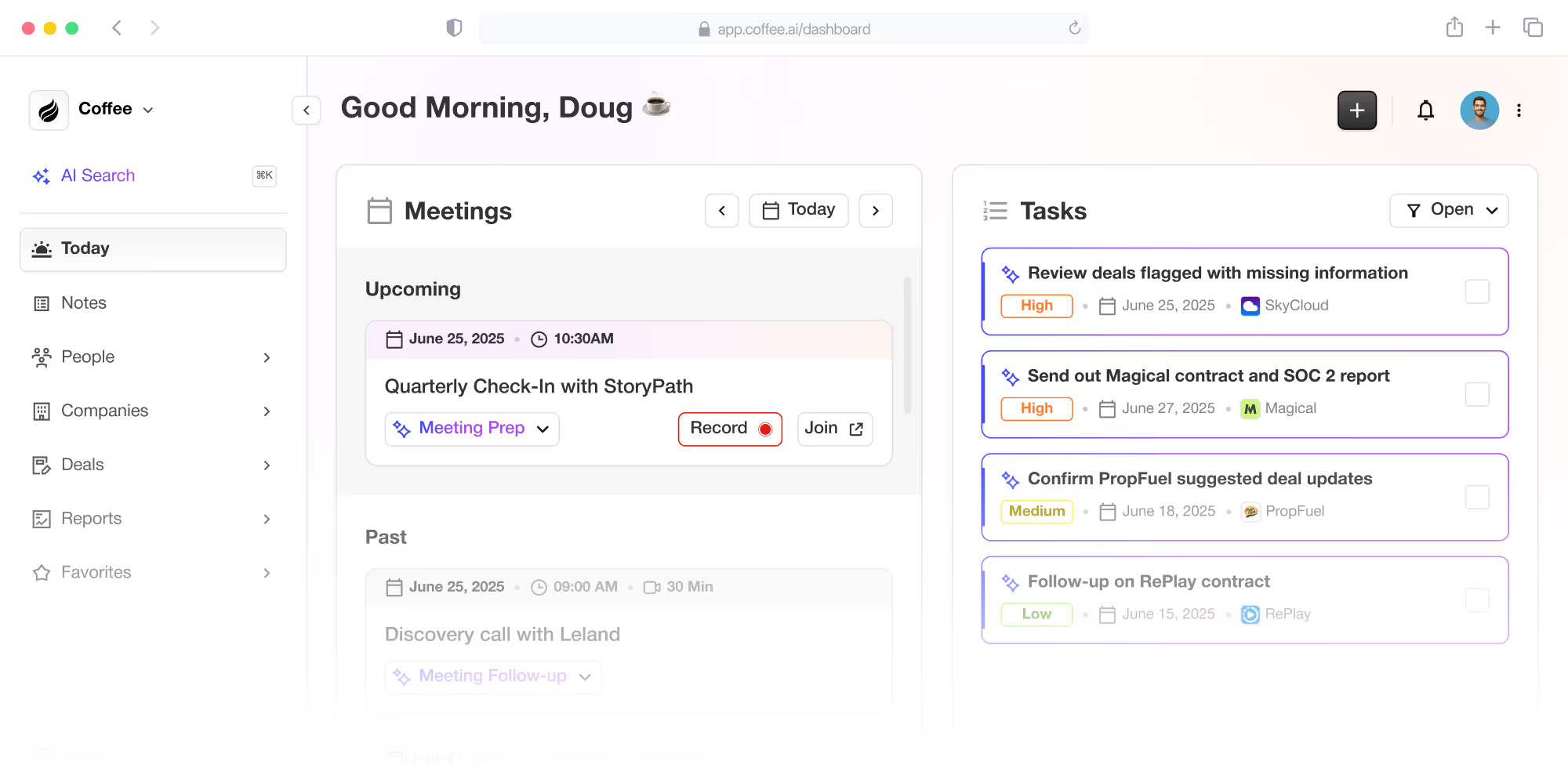
- Streamlined Meeting Processes: Before meetings, it provides briefings with attendee and company details. Post-meeting, it summarizes key points and drafts follow-ups, reducing admin time significantly.
- Advanced Pipeline Tracking: Using a data warehouse, Coffee’s Pipeline Compare shows deal changes over time, helping leaders spot trends or issues instantly without manual analysis.
- Integrated Tools: Coffee combines CRM, data enrichment, and call transcription into one system, reducing the need for multiple subscriptions and simplifying data flow.
- User-Friendly Design: By prioritizing features that save time, Coffee encourages consistent use, leading to better data quality and stronger AI insights.
Practical Features for Decision Support
Coffee includes several tools to improve sales outcomes. Its automatic data entry pulls from connected email and calendar accounts to keep records current. For meetings, it offers pre-call briefings, transcribes discussions, and creates structured summaries using sales frameworks like MEDDIC. The Pipeline Compare tool provides detailed visuals of deal progress, while a List Builder feature supports targeted outreach with natural language search for prospects. These capabilities reduce manual effort and enhance strategic focus.
Adaptable Use: Full CRM or Add-On Solution
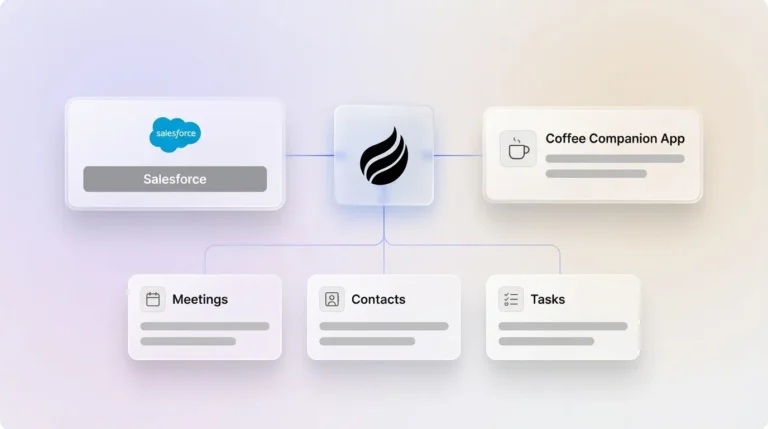
Coffee fits various needs with two deployment options. As a standalone CRM, it suits smaller teams of 1 to 20 employees looking for a modern, quick-to-implement solution. For larger organizations with existing CRMs, it acts as a companion app, adding AI features without replacing current systems. Integration is straightforward, syncing data to enrich records while allowing users to control what updates are applied, preserving established processes.
Your Plan for Adopting AI-First CRM Technology
Adopting an AI-first CRM like Coffee requires careful planning and team alignment to ensure smooth integration and lasting value. A thoughtful approach helps secure quick wins and long-term success.
Evaluating Your Team’s Readiness
Start by assessing your organization’s current setup. Check the quality of your existing customer data, as AI tools need accurate inputs for reliable outputs. Review your tech stack for overlaps or gaps that a unified system could address. Gather feedback from sales reps on current pain points to tackle during the switch. Finally, confirm that leadership across sales, operations, and IT agrees on goals and metrics for the transition.
Step-by-Step Rollout for Minimal Disruption
A phased rollout helps manage the change. Begin with a small group of 3 to 5 users to test data flows and AI settings. Next, activate key features like meeting automation and pipeline tools gradually to build familiarity. Then, expand to the full team with thorough training, tracking usage and feedback to refine the setup. For those using Coffee as a companion app, secure API connections ensure seamless data sync with existing CRMs.
Encouraging Team Buy-In and Consistent Use
User adoption is critical for success. Highlight how Coffee saves reps 8 to 12 hours weekly through automation. Offer varied training options, like live demos and tutorials, to suit different learning styles. Share early success stories, such as faster deal closures, to build momentum. Keep feedback loops open to address concerns and ensure the tool meets evolving needs.
Ready to improve your sales decisions with AI? Request access to Coffee and explore its impact on your team’s performance.
Key Challenges to Avoid with AI-Driven Sales Tools
While AI-first CRMs offer clear benefits, certain challenges can undermine success if not addressed. Planning for these risks upfront helps maximize the tool’s value.
Preventing New Data Isolation
Without proper integration, AI tools can create separate data pools instead of unifying them. Coffee counters this with its companion app option, enhancing existing CRMs rather than replacing them. Organizations should set clear policies to ensure data flows cohesively across systems, using Coffee as the central hub for enriched insights while maintaining core records elsewhere for compliance.
Balancing AI Insights with Human Judgment
AI excels at data analysis but can’t fully replace human intuition in sales. Leaders should use Coffee’s recommendations as a guide, not a final decision, blending them with personal experience and customer nuances. Regular reviews of AI suggestions versus outcomes help fine-tune reliance on automation, ensuring a balanced approach.
Ensuring Strong User Engagement
Even powerful tools fail without consistent use. Coffee’s design focuses on user benefits, but companies must still invest in training and support. Track adoption rates alongside financial returns, as engaged users contribute to better data and stronger AI results.
Managing the Scope of Change
Switching to an AI-first CRM is a major operational shift. Underestimating the effort needed for adjustment can slow progress. Strong executive backing, clear communication, and 3 to 6 months of active support help ease the transition, ensuring teams adapt effectively to new workflows.
|
Feature |
Traditional CRM |
Coffee AI-First CRM |
|
Pipeline Analysis |
Often requires manual effort |
Pipeline Compare for instant insights |
|
Data Accuracy |
Manual input risks errors |
Automatic updates and enrichment |
|
Data Timeliness |
Updates can lag |
Real-time activity logging |
|
Workflow Efficiency |
Limited automation |
Full admin task automation |
Common Questions About AI-First CRM for Sales
What Makes AI-First CRM Better for Decisions Than Traditional Systems?
AI-first CRMs like Coffee use automation and unified data to deliver current, actionable insights. Unlike some legacy systems focused on past data, Coffee analyzes interactions continuously, enabling decisions based on the latest information. Its Pipeline Compare tool, for instance, provides instant visibility into deal trends, saving time over manual reviews.
How Do Sales Leaders Gain from AI CRM Tools?
Sales leaders get a clearer view of pipeline health with automated tools like Coffee’s Pipeline Compare, aiding in resource planning and issue resolution. Automatic tracking of activities offers solid data for coaching reps, while reduced data management time frees leaders to focus on growth strategies.
How Can Coffee Support My Team, With or Without an Existing CRM?
Coffee adapts to different setups. As a standalone CRM, it’s ideal for smaller teams wanting a modern, unified system. As a companion app, it enhances existing CRMs with AI features like data enrichment and pipeline analysis, without disrupting current processes. Both options improve data quality and save time for strategic focus.
What Challenges Come with AI CRM Adoption, and How Are They Managed?
Common hurdles include data accuracy, user acceptance, and system integration. Coffee tackles data issues with automatic capture and enrichment from emails and calls. It boosts adoption by offering time-saving features like meeting summaries. Integration is simplified through easy connections to existing platforms, maintaining workflow continuity.
How Does Coffee Improve Pipeline and Forecasting Accuracy?
Coffee enhances pipeline management with automated data snapshots, showing changes over time. The Pipeline Compare feature highlights deal progress, stalls, and velocity trends, giving leaders a detailed, immediate view for better forecasting and planning compared to manual methods.
Conclusion: AI-First CRM Shapes the Future of Sales
Moving from traditional CRMs to AI-first platforms marks a significant change in how sales teams access insights and make decisions. Coffee addresses longstanding issues like scattered data and heavy admin tasks by automating processes and delivering real-time analysis through features like Pipeline Compare. It transforms CRM into a practical tool that reps value, aligning with the industry’s push toward smarter, technology-driven sales strategies.
As markets grow more competitive, the edge provided by AI-enhanced decision-making will only become more critical. Companies adopting this technology now can optimize their resources and expand customer engagement effectively. Coffee’s flexible options, either as a full CRM or an add-on, ensure accessibility for teams at any stage, supporting growth without workflow disruption.
The strongest sales strategies will blend human expertise with AI capabilities, using tools like Coffee to make quicker, more informed choices at every customer touchpoint. Explore this future today and see the difference it makes.
Elevate your sales approach with AI. Request access to Coffee’s platform and discover improved decision-making for your team.