
The sales industry today faces a dynamic and ever-evolving landscape. Businesses operate in a fast-paced environment where digital tools and data-driven decisions shape success. However, many sales teams remain tethered to outdated CRM systems built for a different time, creating a frustrating gap between the potential for growth and the reality of daily inefficiencies. This disconnect costs companies revenue, slows down deal cycles, and hampers their ability to compete in a market that rewards agility and insight. As the demand for streamlined processes grows, a shift toward AI-powered solutions is reshaping how sales teams function, offering a way to overcome the limitations of traditional tools. Platforms like Coffee are leading this change, representing a broader trend toward intelligent automation that prioritizes productivity and real results.
Statistics paint a clear picture of the problem. Around 71% of sales reps report spending too much time on data entry, while only about 35% of their working hours go toward actual selling activities. This imbalance highlights a critical flaw in tools meant to support sales teams, pushing organizations to seek alternatives that align with modern needs.
AI-driven CRM systems offer a practical solution. By automating repetitive tasks and delivering actionable insights, these platforms free up time for sales reps to focus on building relationships and closing deals. Coffee, as an example of this trend, integrates intelligent features to simplify workflows and enhance efficiency, reflecting the industry’s move toward smarter technology. Curious about how this works in practice? Request access to Coffee and see how AI can redefine your team’s productivity.
Why Legacy CRMs Slow Down Your Sales Team
Many sales organizations rely on CRM systems that no longer fit today’s fast-moving business world. Designed for past challenges, these traditional platforms often demand time-consuming manual input, which cuts into the hours reps could spend engaging with clients. This inefficiency creates bottlenecks that affect overall performance.
Picture a sales rep after an important client meeting. Ideally, they would quickly log notes, update deal progress, and schedule follow-ups while details are fresh. With older CRMs, however, they often face clunky interfaces and manual data entry, delaying updates and risking forgotten insights. Momentum fades, and opportunities can slip away.
Fragmented tools compound the issue. Sales teams frequently juggle separate systems for CRM data, contact details, call recordings, and pipeline tracking. Managing multiple platforms not only raises costs but also scatters information, making it hard to maintain a unified view of customer relationships.
The impact goes beyond logistics. Complicated CRM systems frustrate reps, leading some to bypass them entirely by using personal spreadsheets or notes. This creates inconsistent data and weakens the organization’s ability to strategize effectively. Financially, the cost is steep as well, with lower productivity translating to longer sales cycles and missed quotas despite heavy investments in technology.
How AI-First CRMs Drive Sales Efficiency
Modern sales teams need tools that prioritize automation and insight over manual effort. AI-first CRMs meet this demand by capturing customer interactions automatically and offering data-driven guidance to move deals forward. These systems shift the focus from data management to active selling.
AI acts as a powerful enhancer, handling routine tasks and providing real-time suggestions. Unlike older CRMs that simply store information, platforms with built-in intelligence, such as Coffee, actively support reps by streamlining processes and uncovering opportunities hidden in the data. This approach turns a CRM into a vital ally for sales success.
Key advantages of adopting an AI-first CRM include:
- Reduced manual data entry, with systems like Coffee automatically updating contacts and activities, saving reps an estimated 8 to 12 hours weekly.
- Automated workflows that prepare meeting materials, summarize discussions, and draft follow-up communications.
- Enhanced pipeline visibility through features that track changes and simplify reviews without complex exports or add-ons.
- A unified tech stack, consolidating CRM functions, data enrichment, and forecasting into one cost-effective platform.
Ready to boost your team’s output with AI? Request access to Coffee and explore how smart design can elevate your sales process.
Discover Coffee: A Modern AI CRM for Sales Teams
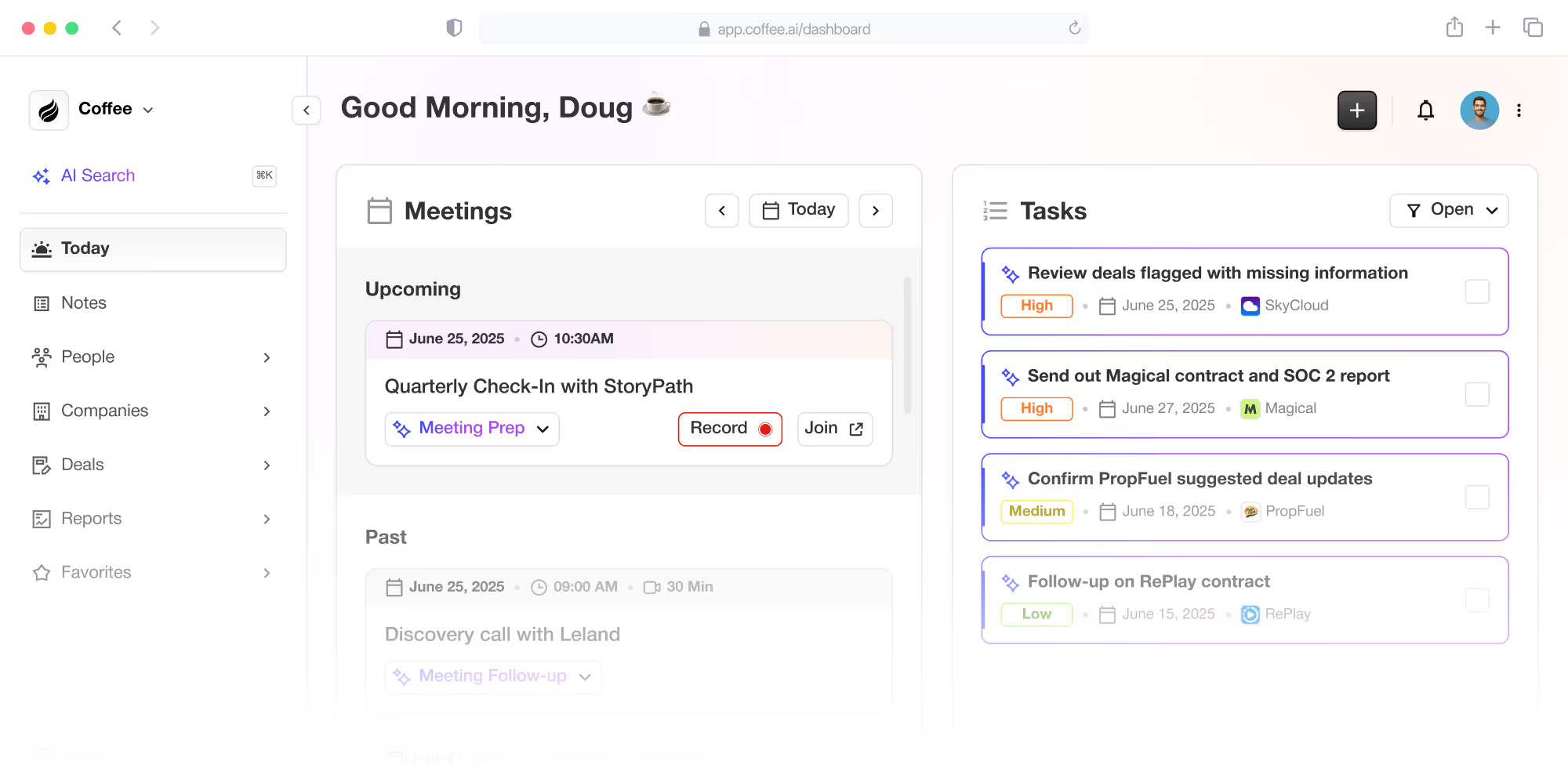
Coffee stands at the forefront of CRM innovation, crafted to tackle the persistent challenges of traditional systems. Built with AI as a core component, it eliminates time-wasting tasks by automatically syncing customer interactions from email, calendars, and communication tools. This saves sales reps an estimated 8 to 12 hours each week, allowing them to prioritize client engagement over administration.
Notable features of Coffee include:
- AI-driven meeting support, offering pre-meeting briefings, real-time call transcription, and post-meeting summaries with action items.
- Automatic contact and company updates, pulling data from connected systems and enriching it with relevant business details.
- Pipeline management with a ‘Compare’ tool that highlights weekly changes for better forecasting on a mobile-friendly interface.
- Prospecting tools that let reps create targeted lists using natural language queries, backed by robust data enrichment.
The Bigger Picture: AI as a Sales Game-Changer
AI in CRM goes beyond convenience, offering a strategic edge by turning raw data into actionable outcomes. It processes interactions continuously, spots trends, and recommends next steps, acting as a virtual assistant that empowers reps to make informed decisions quickly.
With AI, CRM platforms evolve into dynamic tools. They automate activity logging for accuracy and prepare materials for meetings, ensuring follow-ups happen promptly. This reduces workload while maintaining high-quality customer engagement, a critical factor in competitive markets.
Comparing Coffee to Traditional CRMs
| Feature | Traditional CRM | Coffee AI CRM |
|---|---|---|
| Data Entry | Manual, often delayed | Automatic from email, calendar, calls |
| Insights | Basic data access | AI-generated actionable guidance |
| Automation | Limited functionality | Task handling, meeting notes, email drafts |
| User Experience | Often cumbersome | Intuitive, rep-friendly design |
Real Results: Measuring AI CRM Impact on Sales
Adopting an AI-driven CRM like Coffee delivers concrete benefits. Reps gain back hours each week, directly boosting their ability to close deals. This time savings often leads to shorter sales cycles and higher quota achievement. Additionally, streamlined data access improves decision-making, as teams can act on insights faster.
On a qualitative level, modern tools enhance job satisfaction. Sales reps using intuitive, supportive CRMs feel more engaged, which can lower turnover rates and strengthen team morale. Better customer interactions also result from having comprehensive, up-to-date information at hand. Interested in these outcomes for your organization? Request access to Coffee and start improving your sales performance.
Common Questions About AI CRMs Answered
How Does AI Improve Sales Productivity?
AI enhances productivity by automating repetitive tasks and offering real-time insights. With Coffee, reps save an estimated 8 to 12 hours weekly on admin work, redirecting focus to client relationships and deal-closing activities.
Can AI CRMs Cut Down on Admin Time?
Yes, platforms like Coffee significantly reduce time spent on administrative duties. Automation handles data entry, meeting summaries, and follow-up communications, freeing reps for revenue-focused tasks.
What Sets AI CRMs Apart from Older Systems?
AI CRMs like Coffee stand out with automation for data management, meeting support, and pipeline tracking. They also prioritize user-friendly design, making them tools that sales teams appreciate using compared to the often rigid interfaces of traditional systems.
What Security Measures Should Be Considered for AI CRMs?
Protecting customer data is critical with AI CRMs. Companies should look for platforms with strong security standards, such as SOC 2 Type 2 compliance and GDPR alignment. Coffee incorporates thorough safeguards and transparent data policies to keep information secure in all scenarios.
Conclusion: Elevate Your Sales with Coffee
The direction of sales technology points clearly toward AI integration. Older CRM systems that bog down reps with manual tasks are becoming a liability in a market that values speed and efficiency. Embracing smarter tools is no longer optional for organizations aiming to stay ahead.
Coffee exemplifies this shift, addressing long-standing sales challenges with a design focused on automation and ease of use. It enables teams to maximize productivity while maintaining strong customer connections. Don’t let outdated technology limit your potential. Request access to Coffee now and see how AI can drive your sales growth.