
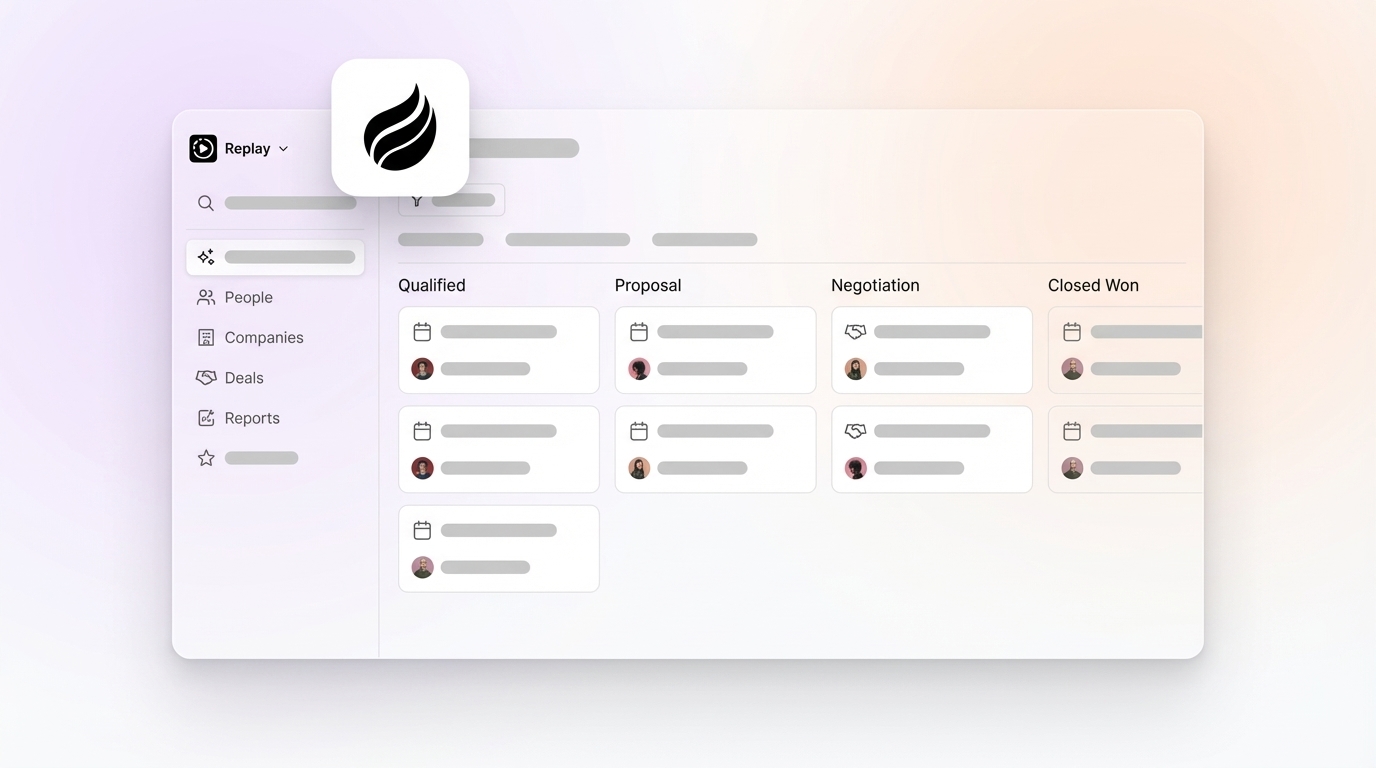
Predicting revenue through pipeline forecasting remains a cornerstone of sales strategy, yet the market landscape reveals persistent challenges and evolving solutions. Many organizations still rely on manual processes and fragmented data systems, which often result in inconsistent forecasts and lost productivity. Recent studies highlight that sales reps spend a significant portion of their time on administrative tasks rather than selling, pointing to a critical need for automation and streamlined data management. With the rise of AI technologies, tools like Coffee are addressing these pain points, offering a glimpse into a future where data-driven insights and automation redefine sales operations. This article dives into the hurdles of traditional forecasting, evaluates key criteria for modern tools, and explores how Coffee exemplifies the shift toward AI-powered efficiency.
Ready to enhance your pipeline forecasting? Request access to Coffee’s AI-driven platform and explore automated revenue prediction.
Why Traditional Pipeline Forecasting Falls Short
Manual processes in traditional pipeline forecasting drain valuable time and often yield unreliable results. Sales reps frequently spend hours on data entry instead of engaging with clients, with 71% reporting excessive administrative workload. This not only hampers individual output but also weakens the data quality crucial for accurate forecasts.
Data collection remains fragmented across emails, calls, and meetings. Legacy CRM systems depend on manual input, leading to missed details and inconsistent records. This gap between raw interactions and updated CRM data fuels a cycle of low adoption, incomplete information, and diminished trust in forecasts.
Many teams resort to unofficial tools like spreadsheets to manage data, further complicating accuracy. Solutions that automate data capture and integration, such as Coffee’s AI-driven approach, directly tackle these issues by updating records at the source and boosting efficiency.
Key Factors for Choosing a Pipeline Forecasting Tool
Selecting a forecasting tool requires a focus on capabilities that improve revenue prediction and streamline operations. Here are the essential criteria to consider for modern solutions.
- Data Accuracy and Depth: High-quality forecasts rely on detailed data from both structured sources like deal stages and unstructured inputs like email content. Timely, automated capture ensures data remains current and unbiased.
- Automation for Efficiency: Tools should minimize manual tasks across data collection and analysis, allowing sales teams to prioritize strategic work over administrative duties.
- Integration with Existing Systems: Compatibility with platforms like Salesforce or HubSpot is vital. Effective tools either stand alone or enhance current workflows without disruption.
- Forward-Looking Insights: Advanced solutions offer actionable recommendations by identifying at-risk deals and suggesting ways to advance opportunities.
- User-Friendly Design: Adoption hinges on ease of use. Platforms that reduce workload encourage consistent engagement and improve data quality.
- Overall Cost and Value: Consider implementation, training, and maintenance expenses. Tools that combine multiple functions can lower costs and simplify operations.
Coffee’s AI-Powered Approach to Pipeline Forecasting
Coffee stands out in the market with an AI-first CRM design that targets the root causes of forecasting challenges, such as poor data quality and manual input. By unifying data collection and automating workflows, it offers a practical solution for sales teams.
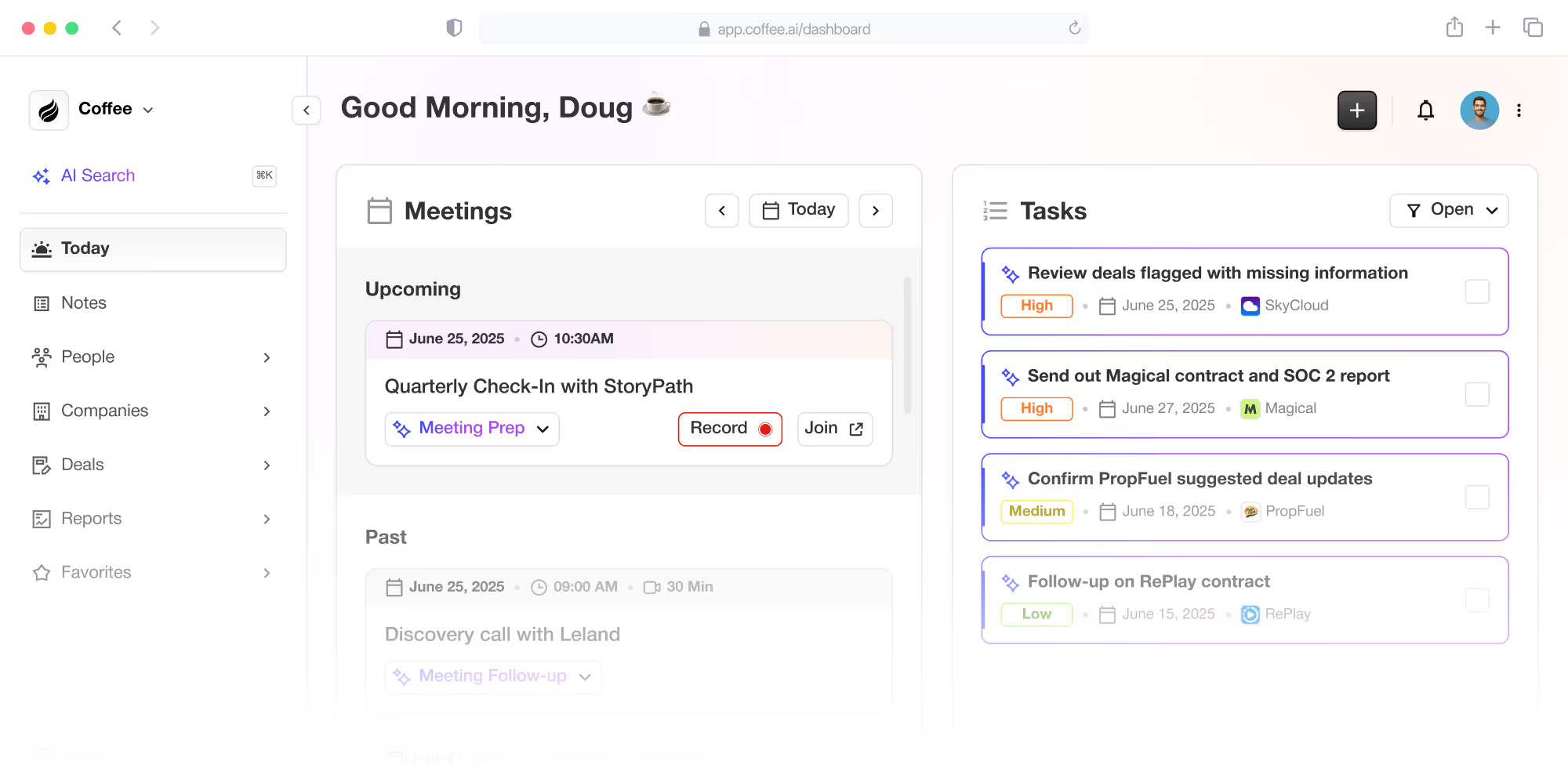
Once connected to Google Workspace or Microsoft 365, Coffee scans emails and calendars to automatically create contacts and companies. It logs activities like recent and upcoming interactions, linking them to relevant records without user effort. Built-in data enrichment adds details like job titles, company information, and LinkedIn profiles, reducing reliance on separate tools.
Its “Pipeline Compare” feature uses a data warehouse to track historical pipeline changes, showing week-over-week updates on deals and prospects at a glance. For meetings, Coffee’s AI provides pre-meeting briefings with attendee details and past interaction summaries, while an AI bot transcribes calls on platforms like Zoom and generates follow-up drafts aligned with sales methodologies like BANT or MEDDIC.
For users of Salesforce or HubSpot, Coffee’s Companion App integrates smoothly, enhancing existing CRMs with automated data updates and insights. Additionally, the List Builder feature supports targeted prospecting through natural language searches, leveraging enriched data for outbound efforts. This all-in-one automation makes Coffee a compelling choice for revenue intelligence.
Ready to improve your forecasting accuracy? Request access to Coffee’s platform today.
Specific Advantages of Coffee for Forecasting
Coffee delivers measurable benefits for organizations aiming to refine pipeline forecasting and sales processes. Here’s how it aligns with key evaluation criteria.
|
Feature / Criterion |
Coffee’s AI-Driven Platform |
|
Core Focus |
AI-First CRM with Unified Data and Automation |
|
Forecasting Approach |
AI-Native with Data Warehouse for Historical Tracking |
|
Data Input Automation |
Removes Manual Entry via Automated Contact and Activity Updates |
|
Pipeline Analysis Speed |
“Pipeline Compare” Shows Instant Weekly Changes Without Calculations |
Improved Data Quality for Forecasts
Coffee captures customer interactions automatically, ensuring consistent and complete records. Its data warehouse stores pipeline history for trend analysis, enhancing prediction reliability over time.
Streamlined Operations Through Automation
By automating data entry, enrichment, and pipeline tracking, Coffee cuts down on repetitive tasks. The “Pipeline Compare” tool provides quick insights into changes, saving hours of manual analysis.
Enhanced CRM Compatibility
With its Companion App, Coffee improves data quality in Salesforce or HubSpot without requiring a full system overhaul. This integration adds value while maintaining existing workflows.
Insightful Deal Management
Leveraging historical data, Coffee identifies patterns in deal progress, offering actionable feedback on pipeline health and areas needing attention.
Is Coffee the Right Choice for Your Sales Operations?
Deciding on Coffee depends on your team’s specific needs and goals. It offers targeted benefits for certain challenges and setups.
- Struggling with CRM Adoption and Data Issues? Coffee’s automation suits teams facing low engagement or poor data quality, addressing unofficial data tracking by making the system user-friendly.
- Looking for a Consolidated AI Platform? Small to mid-sized firms benefit from Coffee’s all-in-one design, combining CRM, enrichment, and forecasting without multiple vendors.
- Already Using Salesforce or HubSpot? The Companion App adds automation to current setups, supporting a gradual shift to enhanced workflows while preserving data history.
Weighing the Long-Term Value of Coffee
Assessing Coffee involves looking beyond features to its broader impact on efficiency and growth. Automation saves reps an estimated 8-12 hours weekly on manual tasks, redirecting focus to client interactions. A single platform reduces the complexity of managing multiple tools.
As teams expand, Coffee’s automated data handling scales effortlessly. Its focus on usability drives adoption by offering clear, immediate benefits. Clean, unified data also sets the stage for advanced AI applications down the line.
Interested in discovering automated pipeline intelligence? Request access to Coffee and see how it boosts forecasting and productivity.
Common Questions About Coffee
Will Coffee replace my current Salesforce or HubSpot CRM?
Coffee functions as both a standalone CRM and a Companion App that works with Salesforce or HubSpot. The app enhances existing systems by automating data updates and adding pipeline insights without needing a full replacement.
How does Coffee reduce manual data entry for forecasting?
Coffee automatically updates contacts, companies, and activities from emails and calendars. Its data warehouse tracks pipeline history, and the “Pipeline Compare” feature shows weekly changes, removing the need for manual logs or spreadsheets.
Conclusion: Driving Revenue Predictability with Coffee
Coffee’s AI-powered platform offers a practical way to achieve reliable revenue forecasts and improve sales efficiency. By automating data processes from capture to analysis, it tackles the core issues behind forecasting errors.
Features like Pipeline Compare, automated meeting tools, and CRM integration provide accurate insights and reduce workload. For sales leaders and operations teams aiming for predictable revenue while focusing on client engagement, Coffee stands as a valuable option in the evolving landscape of sales technology.
Ready to refine your pipeline forecasting? Request access to Coffee’s platform and experience the benefits of automated, data-driven predictions.