Written by: Doug Camplejohn, CEO & Co-Founder, Coffee
Key Takeaways
- Sales teams lose 71% of time on manual data entry, which cripples forecast accuracy as CRM data decays by 34% each year.
- Pipeline intelligence tools use AI agents for automated data capture, risk scoring, and revenue predictions that can exceed 98% accuracy.
- Coffee leads as an autonomous CRM agent, removing manual entry through email, calendar, and call automation plus Pipeline Compare insights.
- Top tools like Clari, Gong, and Outreach offer partial automation but fall behind full agents on data quality and integration depth.
- Transform your pipeline with Coffee’s seat-based pricing and native Salesforce and HubSpot support, and get started with Coffee today.
Pipeline Forecasting for Modern Sales Teams
Pipeline forecasting predicts future revenue by analyzing active deals in your sales pipeline using AI risk scores, historical conversion patterns, and real-time deal movement. Pipeline forecasting focuses on opportunities moving through defined sales stages and estimates likely close dates and amounts, rather than every possible revenue source.
Your pipeline includes all active opportunities, no matter their close probability. Your forecast includes only deals likely to close within a specific timeframe, based on AI analysis and historical performance. Modern pipeline intelligence tools capture activity automatically, send risk alerts for stalled deals, and show week-over-week changes without manual spreadsheet exports.
Traditional forecasting often fails because legacy CRMs depend on manual data entry, which creates a “garbage in, garbage out” problem where poor data quality costs organizations 15-25% of revenue annually. Agent-powered tools solve this problem by capturing data from emails, calendars, and call transcripts automatically, which keeps inputs accurate and makes forecasting outputs more reliable.
Top 10 Pipeline Intelligence Tools for Forecasting in 2026
1. Coffee: Autonomous CRM Agent for Zero-Touch Forecasting
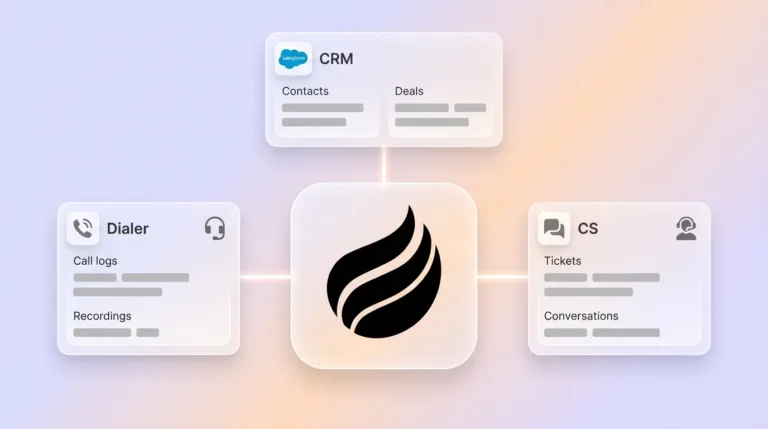
Coffee acts as an autonomous CRM agent that removes manual data entry and delivers accurate pipeline insights through automated data capture and Pipeline Compare views. The agent scans Google Workspace emails and calendars to create contacts and companies, enriches records with job titles and funding data, and logs all activities without human effort.

The Pipeline Compare feature shows week-over-week changes and highlights progressed deals, stalled opportunities, and new additions, which turns pipeline reviews into strategic conversations instead of interrogation sessions. Coffee’s agent joins Zoom, Teams, and Meet calls to record and transcribe conversations, then generates AI summaries, identifies next steps, and drafts follow-up emails in Gmail for user review.

Coffee supports two deployment models. Small companies with 1 to 20 employees can use the Standalone AI-first CRM as a modern alternative to manual systems. Larger teams on Salesforce or HubSpot can use the Companion App, which adds an intelligent agent layer on top of existing CRM data. The agent handles structured and unstructured data through a built-in data warehouse that preserves historical context, unlike legacy systems that lose information when fields change.
Coffee’s strengths include full automation of data entry, accurate pipeline analysis, native Salesforce and HubSpot integration, and simple seat-based pricing without complex metering. Current limitations include a roadmap for deeper integrations beyond Zapier, although the platform already serves SMB and mid-market teams effectively. The List Builder feature supports natural language prospecting, such as “Find VPs of Sales in North America at $10M+ funding companies using Salesforce.”

2. Clari: Enterprise Revenue Intelligence Platform
Clari provides enterprise-grade revenue intelligence with AI-driven deal inspection, automated forecast rollups, and scenario modeling. The platform analyzes pipeline health to predict revenue outcomes and supports weighted pipeline forecasting with HubSpot integration. Its core forecasting still depends heavily on manual deal updates, supported by some email and calendar automation.
3. Gong: Conversation Intelligence with Forecasting Insights
Gong delivers conversation intelligence and revenue insights through call analysis, deal visibility, and conversation-informed forecasting. The platform excels at coaching and buyer intent analysis. Teams still need manual data entry for complete pipeline management and forecasting coverage.
4. Outreach: Revenue Workflow and Deal Health Monitoring
Outreach functions as an AI Revenue Workflow Platform with Deal Health monitoring and engagement tracking. The tool focuses on outbound sequences and engagement data, then surfaces pipeline health insights based on activity patterns and correlations.
5. Salesforce Einstein: Native AI Forecasting in Salesforce
Salesforce Einstein offers native forecasting inside the Salesforce ecosystem and analyzes historical patterns and opportunity data. The platform includes built-in AI capabilities but still relies on manual data entry and does not operate as an autonomous agent.
6. HubSpot Forecasting: Visual Pipeline for HubSpot Users
HubSpot Forecasting provides visual pipeline management with probability-based revenue predictions and real-time updates. The native tool integrates with HubSpot’s marketing and sales features, while still requiring manual opportunity management and updates.
7. People.ai: Activity Capture and Revenue Intelligence
People.ai automatically captures sales activities and delivers revenue intelligence using email and calendar integration. The platform focuses on activity-based insights and pipeline analysis, while keeping its primary emphasis on data capture instead of autonomous workflow execution.
8. InsightSquared: Analytics-First Forecasting Platform
InsightSquared offers AI models that learn from historical conversions and provides deal-level analysis with visual dashboards. The platform specializes in analytics and reporting, including customizable forecast views and detailed pipeline performance metrics.
9. Forecast: Predictive Analytics for Complex Pipelines
Forecast delivers AI-guided forecasting with scenario modeling and multi-dimensional analysis. The platform focuses on predictive analytics and deal health scoring, which supports complex sales environments that need detailed probability assessments.
10. Aviso: WinScore Forecasting and Deal Risk Analysis
Aviso provides AI-powered forecasting with WinScore technology, sentiment analytics, and explainable AI insights. The platform supports multi-scenario modeling and deal risk analysis using conversation intelligence and historical pattern recognition.
The 2026 market shows that over 60% of B2B sales teams now use ML-derived intent scoring as a core qualification method. This shift replaces gut-based assessments with evidence-based evaluation. Agent-powered automation leads this change, and Coffee pioneers autonomous deal execution and accurate pipeline intelligence. Get started with Coffee to join this agent-driven approach.
Side-by-Side Comparison of Leading Tools
| Tool | Automation Level | Forecast Accuracy | CRM Integrations | Pricing Model |
|---|---|---|---|---|
| Coffee | Full Agent | High | Salesforce/HubSpot Native | Seat-based |
| Clari | Partial Automation | 85-90% | Salesforce/HubSpot | Enterprise |
| Gong | Call Recording | 80-85% | Multiple CRMs | Per User |
| Outreach | Engagement Focus | 75-80% | Salesforce Primary | Tiered |
Coffee’s full agent automation delivers stronger “good data in” capabilities for stalled deal detection and pipeline accuracy than legacy tools. The agent model removes manual entry bottlenecks that weaken forecast reliability in traditional platforms. Get started with Coffee to experience autonomous pipeline intelligence in your own environment.
Choosing the Right Pipeline Intelligence Tool
Start by mapping your technology stack, because CRM setup and team size shape the right choice. Teams using Salesforce or HubSpot gain the most from Coffee’s Companion App, which acts as an intelligent agent layer on top of existing data. Smaller companies with 1 to 20 employees can deploy Coffee’s Standalone CRM and achieve complete automation from day one.
Evaluate total cost of ownership, not just license fees, since implementation time, training, and maintenance all affect budget. Coffee’s simple authentication and seat-based pricing remove complex metering and can lower overall stack costs through consolidated functionality. Pay close attention to unstructured data support, because tools that only handle structured CRM fields miss critical insights from emails, calls, and calendar activity that drive accurate forecasts.
FAQ
What is pipeline intelligence?
Pipeline intelligence uses AI-powered tools to analyze sales pipeline data, predict revenue outcomes, identify deal risks, and surface clear actions for sales teams. These platforms combine data automation, conversation analysis, and predictive modeling to turn raw pipeline information into strategic forecasting intelligence.
Are there free pipeline intelligence tools for forecasting?
Most enterprise-grade pipeline intelligence tools use paid subscriptions because AI processing and data integrations carry ongoing costs. Basic forecasting features appear in free CRM tiers such as HubSpot’s starter plan. Advanced pipeline intelligence with automated data capture, risk scoring, and agent-powered insights usually requires premium platforms like Coffee, Clari, or Gong.
How does Coffee compare to Clari for pipeline forecasting?
Coffee functions as an autonomous agent that automates data entry and delivers accurate pipeline insights by capturing information from emails, calendars, and calls. Clari focuses on enterprise revenue intelligence and relies heavily on manual deal updates, supported by some automation and scenario modeling. Coffee primarily serves SMB and mid-market teams with simple pricing, while Clari targets large enterprises with complex forecasting requirements.
What are the key 2026 trends in pipeline intelligence?
Agent-powered automation dominates 2026, and more than 60% of B2B teams now use ML-derived intent scoring for pipeline qualification. Zero-touch forecasting is becoming a standard, where AI agents manage deal progression, update CRM fields, and flag risks without human intervention. Deep integration with Salesforce and HubSpot has become a critical requirement for mid-market adoption.
How accurate are AI forecasts with Coffee’s agent technology?
Coffee’s autonomous agent improves forecast accuracy by ensuring high-quality data input through automated capture from emails, calendars, and call transcripts. The agent removes manual entry errors that affect traditional CRMs, and the built-in data warehouse preserves historical context for stronger AI predictions. This “good data in, good data out” approach significantly outperforms legacy systems that depend on human data entry.
Conclusion: Why Agent-Powered Forecasting Wins
Pipeline intelligence tools in 2026 fall into two groups, with legacy platforms that require manual data entry and modern agent-powered solutions that automate forecasting workflows. Coffee’s autonomous agent represents the next stage of pipeline intelligence, cutting the 71% time waste on data entry while delivering accurate pipeline insights through automated capture and Pipeline Compare views.
The agent revolution turns sales teams from data entry clerks into strategic sellers, and Coffee leads this shift with seamless Salesforce and HubSpot integration or a standalone CRM option. Get started with Coffee to experience autonomous pipeline intelligence that fits your current tech stack.