Written by: Doug Camplejohn, CEO & Co-Founder, Coffee | Last updated: January 6, 2026
Key Takeaways
- Sales teams lose significant time to manual CRM data entry and fragmented tools, which reduces selling time and weakens forecast accuracy.
- Agent-led CRM automation shifts CRMs from passive databases to active systems that capture interactions, enrich data, and keep pipeline information current.
- Coffee’s Agent reduces administrative workload by handling data entry, meeting prep, follow-up, and pipeline monitoring while integrating into your existing workflows.
- A clear implementation strategy that fits your team size, tech stack, and change management capacity helps you avoid common pitfalls and realize time savings faster.
- Teams that want a proactive, agent-led CRM experience can get started with Coffee and align their CRM with how they actually sell.
Sales organizations in 2026 face rising pressure to do more with smaller teams and tighter budgets. Traditional CRMs often add to that pressure by creating manual work instead of reducing it. Agent-led automation offers a way to keep data accurate and workflows consistent while giving sales reps more time with customers.
Why the Sales Landscape Demands a Proactive Shift
The traditional CRM model often forces teams to work with the system. Poor user adoption leads to incomplete data, and leadership loses confidence in reports and forecasts. Modern sales teams need tools that capture, process, and act on data automatically so that CRM data reflects real activity instead of ideal process diagrams.
The Legacy CRM Challenge: From Data Silos to Sales Bottlenecks
The Burden of Manual Data Entry
Manual data entry remains one of the largest drains on sales productivity. When reps spend hours logging calls, updating fields, and chasing missing details, they spend less time prospecting, running meetings, and closing deals. This gap creates friction between the cost of the CRM and the actual value it delivers.
Fragmented Data and Outdated Architectures
Many legacy CRMs sit at the center of complex ecosystems where data lives across enrichment tools, outreach platforms, and spreadsheets. Reps must switch between tools and piece together context by hand. Older architectures also struggle with unstructured data from emails and calls, so important nuance gets lost when fields overwrite each other.
The Hidden Cost of Low CRM Adoption
Low adoption often leads to shadow systems like personal spreadsheets and note-taking apps. Managers then see only part of the real pipeline, and forecasts rely on incomplete information. This disconnect reduces trust in CRM data and makes it harder to coach reps or plan accurately.
Coffee’s Agent-Led Approach: Practical Proactive CRM Automation
Coffee’s Agent treats CRM work as a set of tasks that software should handle, not sales reps. The Agent captures interactions, keeps records current, and surfaces relevant insights so that the CRM stays accurate with less manual effort.
Core Philosophy: Good Data In, Good Data Out
Coffee’s Agent ingests and structures data from emails, calendars, and call transcripts without extra work from reps. Clean, complete inputs support more reliable forecasts, better reporting, and clearer visibility into what is actually happening in the pipeline.
Key Agent Features and Functionality
- Automated data entry and enrichment: The Agent scans email and calendar activity to create and update contacts and companies, enriches records with job titles, funding information, and LinkedIn profiles, and logs activities automatically. This approach reduces errors that come from rushed or skipped data entry.
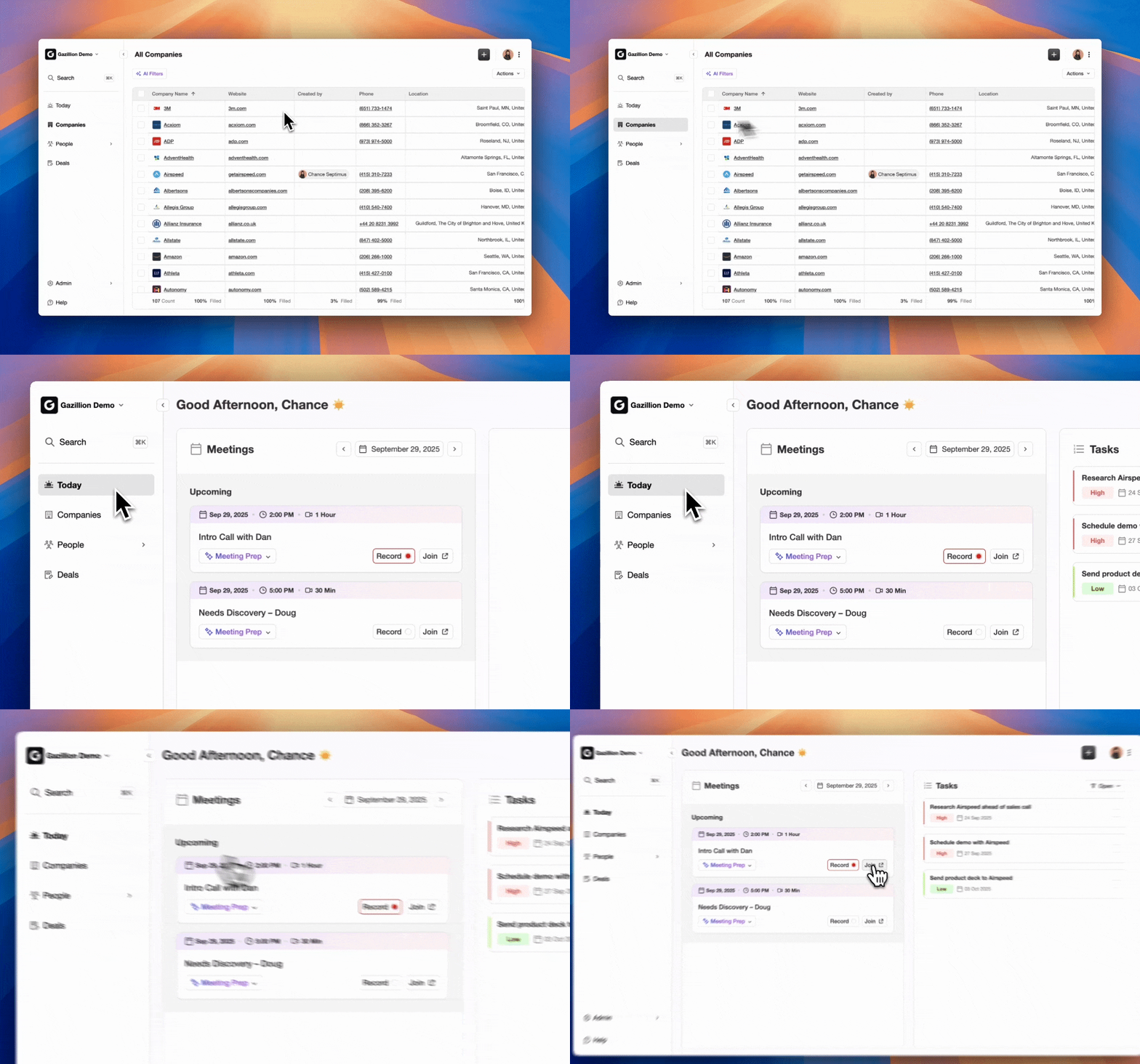
- AI-supported meeting management: The Agent prepares meeting briefs with attendee context, joins calls to record and transcribe, generates summaries with next steps, drafts follow-up emails, and organizes notes based on frameworks such as BANT, MEDDIC, or SPICED.
- Intelligent pipeline monitoring: Pipeline Compare shows week-over-week changes in deals, including new, moved, or stalled opportunities. Leaders can then spend reviews on strategy and coaching instead of reconciling data.
- Natural language list building: Reps can ask the Agent for lists such as “VPs of Sales in North America at companies with more than 10 million dollars in funding using specific CRMs.” The Agent then builds these lists using integrated enrichment.

Beyond Consolidation: One Agent for Several Jobs
Coffee’s Agent handles tasks that many teams spread across multiple tools. The Agent supports CRM management, enrichment, meeting notes, and pipeline tracking in one environment, which reduces both subscription costs and operational complexity.
Teams that want to see this approach in action can get started with Coffee and explore how an agent-led CRM fits into their process.
Strategic Integration: Implementing Proactive CRM Workflow Automation
A successful move to proactive CRM automation starts with selecting the right model for your team and aligning it with your current tools and processes.
How to Choose a Coffee Model for Proactive Efficiency
- Standalone AI-first CRM: This option fits smaller companies that have outgrown spreadsheets but want to avoid a complex setup. The Coffee Agent runs the core CRM experience and handles routine administration so reps can focus on deals.
- Companion app for existing CRMs: This model fits mid-market teams that already use a CRM but struggle with adoption and data quality. The Agent becomes a data entry and activity-capture layer that keeps the system of record accurate without large workflow changes.
Assessing Readiness for Agent-Led Automation
Organizations that consider agent-led automation benefit from a short readiness review. Helpful questions include:
- How accurate and complete is the current CRM data?
- How many tools handle sales data, and where are the biggest gaps or overlaps?
- Who will own day-to-day administration and change management?
- Which outcomes matter most, such as time saved per rep or forecast reliability?
Typical stakeholders include Heads of Sales who want clearer visibility, RevOps leaders focused on process design, and reps who want less administrative work.
Avoiding Strategic Pitfalls in Proactive CRM Adoption
Teams that succeed with agent-led automation usually do three things well:
- Align expectations and timelines instead of expecting instant results without setup.
- Prioritize data governance and security early, especially around email and meeting data.
- Measure specific outcomes such as hours saved and improved field completion, then adjust workflows based on what the data shows.
Sales teams that plan to add proactive automation to their stack can get started with Coffee and test the Agent alongside existing processes.
The Future Is Agent-Led: Why Proactive CRM Automation Matters in 2026
From Reactive to Proactive Engagement
Modern AI makes it possible for CRMs to act instead of waiting. Agent-led systems track activity, surface follow-ups, and organize context so reps can respond to buyers faster and with more relevant information.
Agentic AI and Workflow Automation
Coffee’s Agent executes routine tasks such as logging data, organizing meetings, and tracking pipeline changes. The Agent brings information from emails, calendars, and calls into a single view so teams can coordinate outreach and account strategy with less manual effort.

Ethical AI and Data Privacy in Proactive CRM
Coffee emphasizes data protection with SOC 2 Type 2 and GDPR compliance. Customer data does not train public models, which helps organizations meet internal security standards while adopting automation.
Coffee vs. Traditional CRMs: A Proactive Automation Comparison
|
Feature Category |
Traditional Legacy CRM |
Coffee’s Agent-Led CRM |
|
Data Entry |
Manual, human-dependent, prone to errors |
Automated by an agent, real-time, and more accurate |
|
Data Quality |
Variable quality due to inconsistent human effort |
Consistent structure and enrichment from automated capture |
|
Pipeline Intelligence |
Requires manual updates, often outdated |
Continuous tracking with current deal insights |
|
User Experience |
Often seen as administrative work, lower adoption |
Acts as a co-pilot for reps, encourages regular use |
Teams interested in a side-by-side comparison can review Coffee’s pricing and setup options to see how an agent-led CRM differs from legacy tools.
Conclusion: Enable Your Sales Team with Proactive CRM Workflow Automation
Sales teams that rely on manual CRM processes carry a growing administrative load. Agent-led automation provides a practical alternative that keeps data accurate and workflows consistent without extra effort from reps.
Coffee’s approach addresses core CRM challenges such as incomplete data, fragmented tools, and unreliable pipeline views. The Agent captures activity, enriches records, and supports meetings so that sales teams can focus on conversations and outcomes.
Organizations that plan to compete in 2026 and beyond can benefit from a CRM that contributes to work instead of requesting it. Teams that want to explore this approach can get started with Coffee and evaluate how agent-led automation fits their sales strategy.
Frequently Asked Questions
How does Coffee ensure data security and privacy with proactive automation?
Coffee maintains SOC 2 Type 2 and GDPR compliance and does not use customer data to train public models. These safeguards help organizations use automation while meeting internal and external privacy requirements.
Will Coffee integrate with my existing tech stack beyond major CRMs for proactive workflows?
Coffee currently connects to other tools through Zapier, which supports workflows with a wide range of business applications. Additional native integrations with sales and marketing platforms are in progress to extend the Agent’s reach.
What kind of time savings can teams expect from implementing proactive CRM workflow automation?
Teams typically save several hours per rep each week when they replace manual data entry, meeting prep, and follow-up with automated workflows. Those hours can then shift to prospecting, customer conversations, and late-stage deal work.